

Why Does My Yacht AC Smell?
The smell arrives with the airflow. So does its source.
A smell that comes out of the vents when the air conditioning starts is one of the most common complaints on board. This guide explains what different AC smells can be associated with and which checks help the crew find the cabin or unit involved.
yacht experience
“Every time we switch the AC on, it smells”
AC odours follow recognisable patterns. Which one matches yours tells you a lot about where to look.
Musty burst at start-up
A damp-cellar smell in the first minutes, then fading, may indicate mould or bacteria on a coil or in a pan that dried out while the unit was off.
Sour, vinegar-like air
A sharp, acidic note can be associated with stagnant condensate water and biofilm building up in the fan coil.
Damp, heavy air that never feels fresh
If the cabin feels humid even with the AC running, the unit may not be removing moisture properly or the drain may be partly blocked.
Only one cabin smells
When the rest of the yacht is fine, the fan coil or duct branch serving that single cabin is the most likely place to start.

Why air conditioning is a natural place for smells to start
On most yachts each cabin or area has its own fan coil — a small unit, usually hidden under a bed, in a ceiling or behind a panel, that blows air across a cold coil. Cooling the air makes moisture condense on that coil, and the water drips into a drain pan and runs overboard or to a sump.
When that water does not drain away completely, or dust clogs the filter and coats the coil, the unit becomes warm, wet and dark while it is off. Those are exactly the conditions in which biofilm and mould grow. When the fan starts again, the air carries their smell straight into the cabin.
Filters are only the first line. Replacing a filter can reduce the smell for a while, but it does not clean the coil fins, the pan or the ducting after the unit.
What can make a yacht AC smell
The cause is often a combination of the points below. Each one is linked to the service that addresses it.
Biofilm on the cooling coil
A thin film of bacteria and dirt can form between the coil fins, where the crew cannot clean by hand. It is a frequent source of musty and sour smells.
Yacht AC / Split CleaningStanding water in the drain pan
A pan that does not empty fully, because of a slight tilt, sludge or a partly blocked drain line, keeps water sitting under the coil.
Yacht Fan Coil Deep CleaningClogged or damp filters
Filters loaded with dust hold moisture and odours, and they reduce airflow so the coil stays wetter for longer.
Yacht Fan Coil Deep CleaningDirty supply ducts and grilles
Dust and moisture along the ducts can add a stale smell even after the fan coil itself has been cleaned.
Yacht HVAC & Air Duct CleaningMould in insulation or around the unit
Condensation on cold pipes and duct insulation can lead to mould in the space around the fan coil.
Yacht Mould & Condensation Remediation Biologist
Linda Abenaim, Biologist at Ekonore / AirBio
The "dirty socks" smell from an air conditioner usually comes from microbes growing on a wet coil and in standing condensate. It is strongest when the unit starts, because the fan pushes out everything that grew while it was switched off.
Linda Abenaim · Biologist, Ekonore / AirBio
Run the AC for ten minutes and note whether the smell fades. If it does, the coil and the drain tray are the likely source.
- Coilwet surface where microbes grow
- Condensatewater that should drain away
- Start-upwhen the smell is strongest
Not sure what your systems actually need?
Tell us the yacht, what the crew has noticed and where she is now: a technician calls you back within 24 hours and plans the survey around your programme.
Quick checks to narrow down the source
These checks need no tools beyond a torch and help you give a precise description when you ask for an inspection.
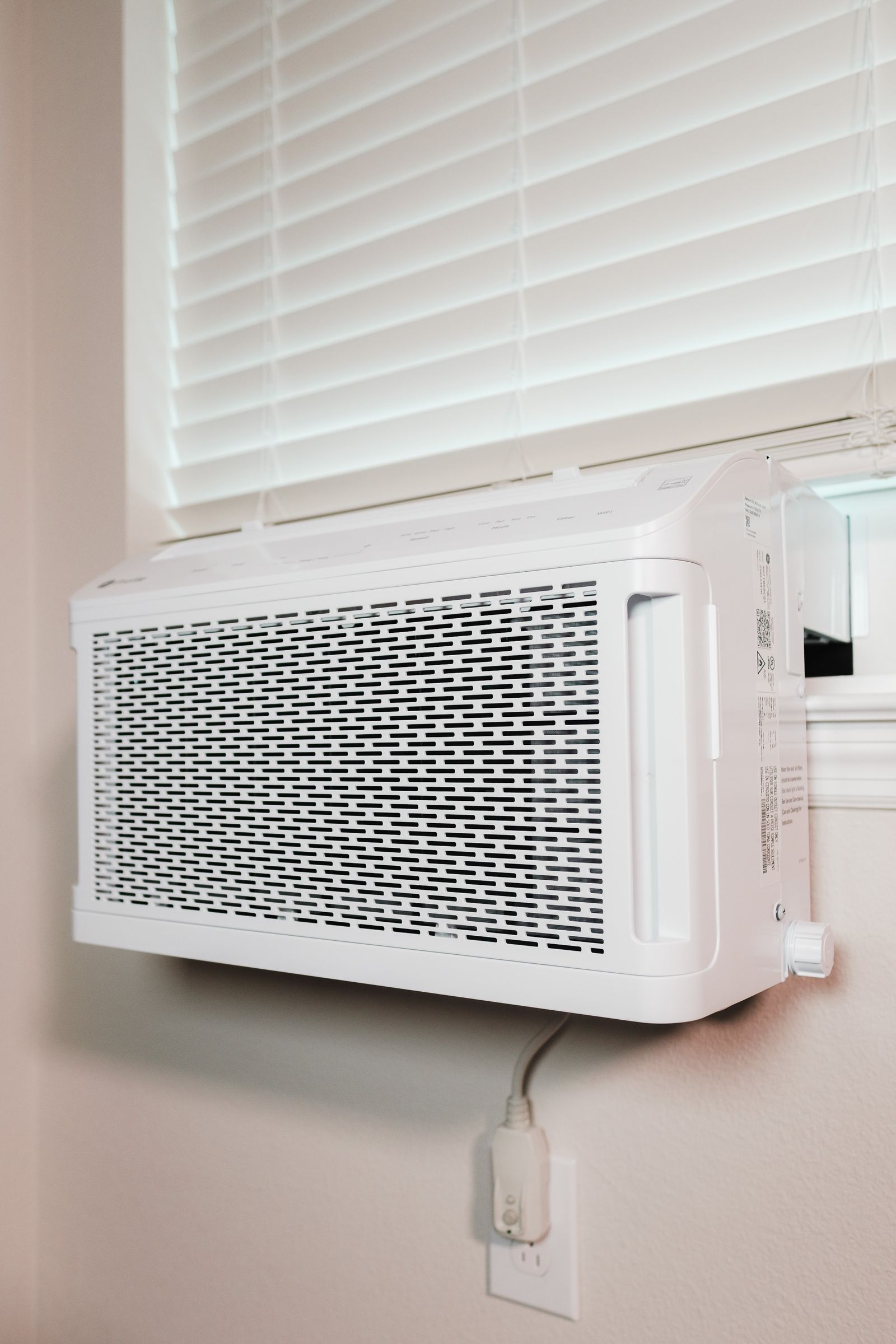
- Make a list of the cabins where the smell appears and whether it is present at start-up only or all the time.
- Remove the accessible filter and look at it against the light: grey, matted or damp filters are a clear sign.
- With a torch, look at the visible part of the coil and drain pan for standing water, dark slime or dust felt.
- Check the grille and the first part of the duct for grey dust or black spots.
- Pour a small amount of clean water into the drain pan, where it is accessible, and see whether it drains away promptly.
- Notice whether the cabin still feels humid after the AC has been running for an hour.
Follow the air from the cabin and back again
Air keeps circulating through the same six components. A problem you notice at the grille almost always starts further upstream.
- 1
Return grille
Cabin air is drawn back in here, carrying dust, fibres and skin cells.
- 2
Filter
Catches part of it. Once loaded it restricts airflow and stops holding anything.
Common source - 3
Fan coil
The coil is wet whenever the system runs; dust that reaches it stays there.
Common source - 4
Condensate tray and drain
Water collects here all season. A slow drain keeps it standing under the bunk.
Common source - 5
Supply ductwork
Short runs, restricted access, and a deposit the airflow passes through every cycle.
Common source - 6
Supply grille
The cabin end: where the smell is noticed and where cleaning usually stops.
Marked in amber: the points where the cause is most often found. Wiping the grille treats the last step of a six-step circuit.
What builds up inside a split unit
Dust reaches the evaporator coil and settles on the wet fins, on the blower wheel and in the condensate tray. In a humid environment this mixture stays damp for most of the season.
The video shows a full internal clean of a split unit. The same components exist in a yacht air handler or fan coil, in a tighter space and with salt-laden air passing through them.

Nobody books a yacht to smell the air conditioning. We trace the odour to the unit that causes it and clean that one, instead of perfuming the whole boat.
Francesco Colombo
CEO · AirBio Marine, a division of AirBio (Ekonore S.r.l.)
Book an air-system surveyWhen the AC needs a proper inspection
If a new filter and a wipe of the grille have not changed the smell, the source is inside the fan coil or the ducts. A technician opens the unit, checks the coil, pan, drain line and fan, and follows the ducts to see how far the contamination goes.
The inspection tells you whether a targeted fan coil cleaning is enough or whether the ducts and the wider system also need attention.
- The smell persists after filters have been replaced.
- You see slime, black spots or standing water in the drain pan.
- Several cabins smell, or the smell is present on a whole deck.
- Guests or crew report the smell, stuffy air or discomfort in a particular cabin.
- The AC has not been serviced internally in the last season or after a lay-up.
What a smelly fan coil can look like inside
Illustrative images, not photos of a specific job: they show the kind of build-up often found where AC odours start, and the same area after cleaning.
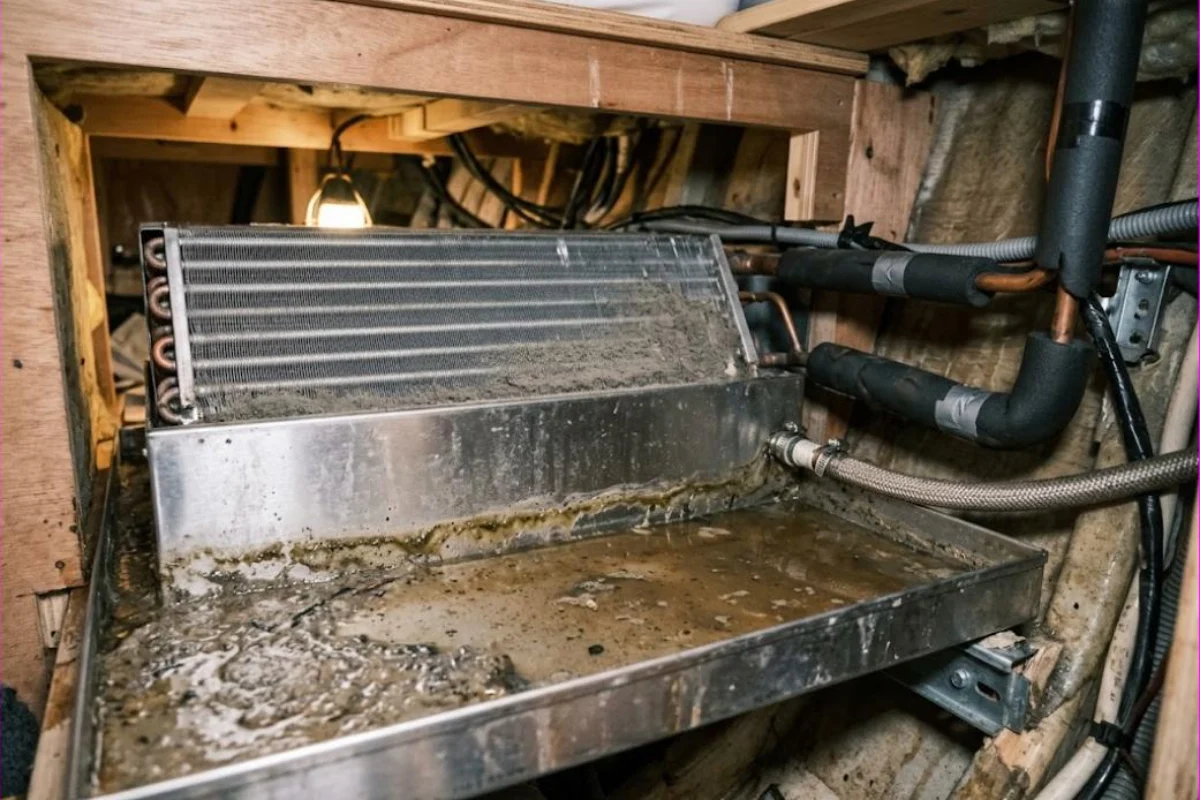
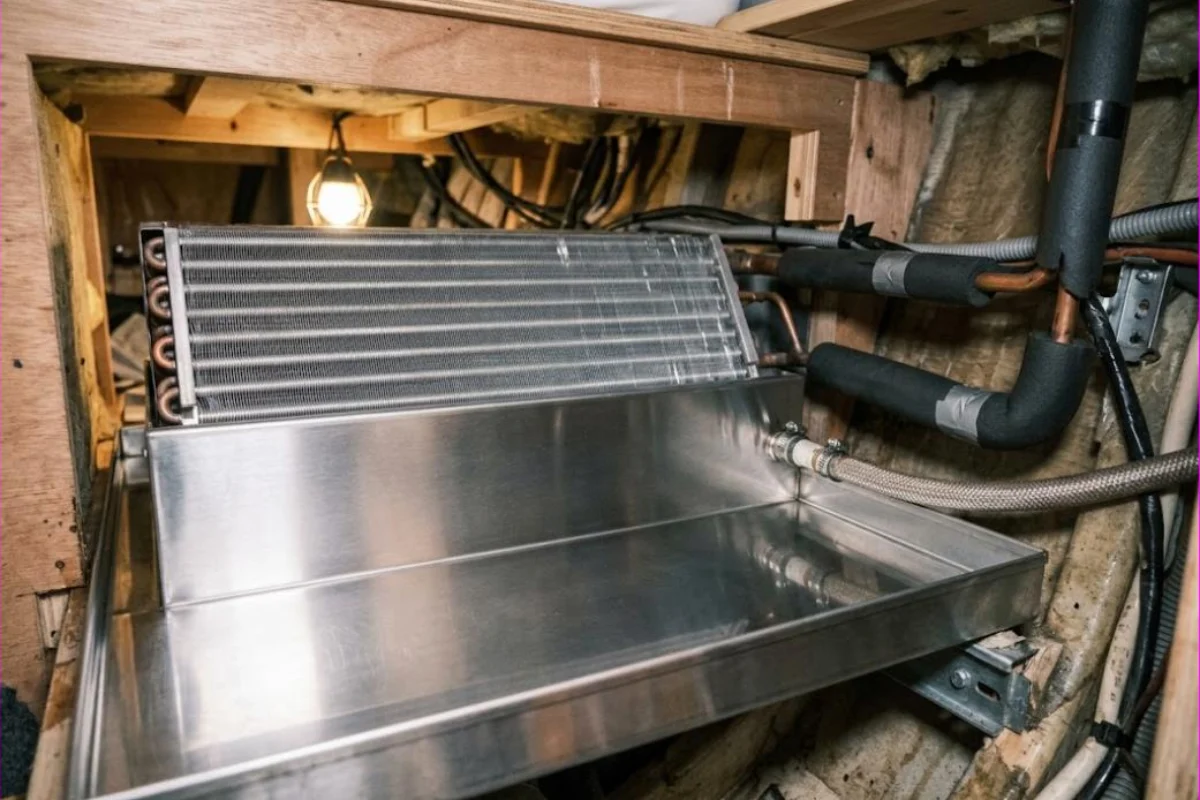
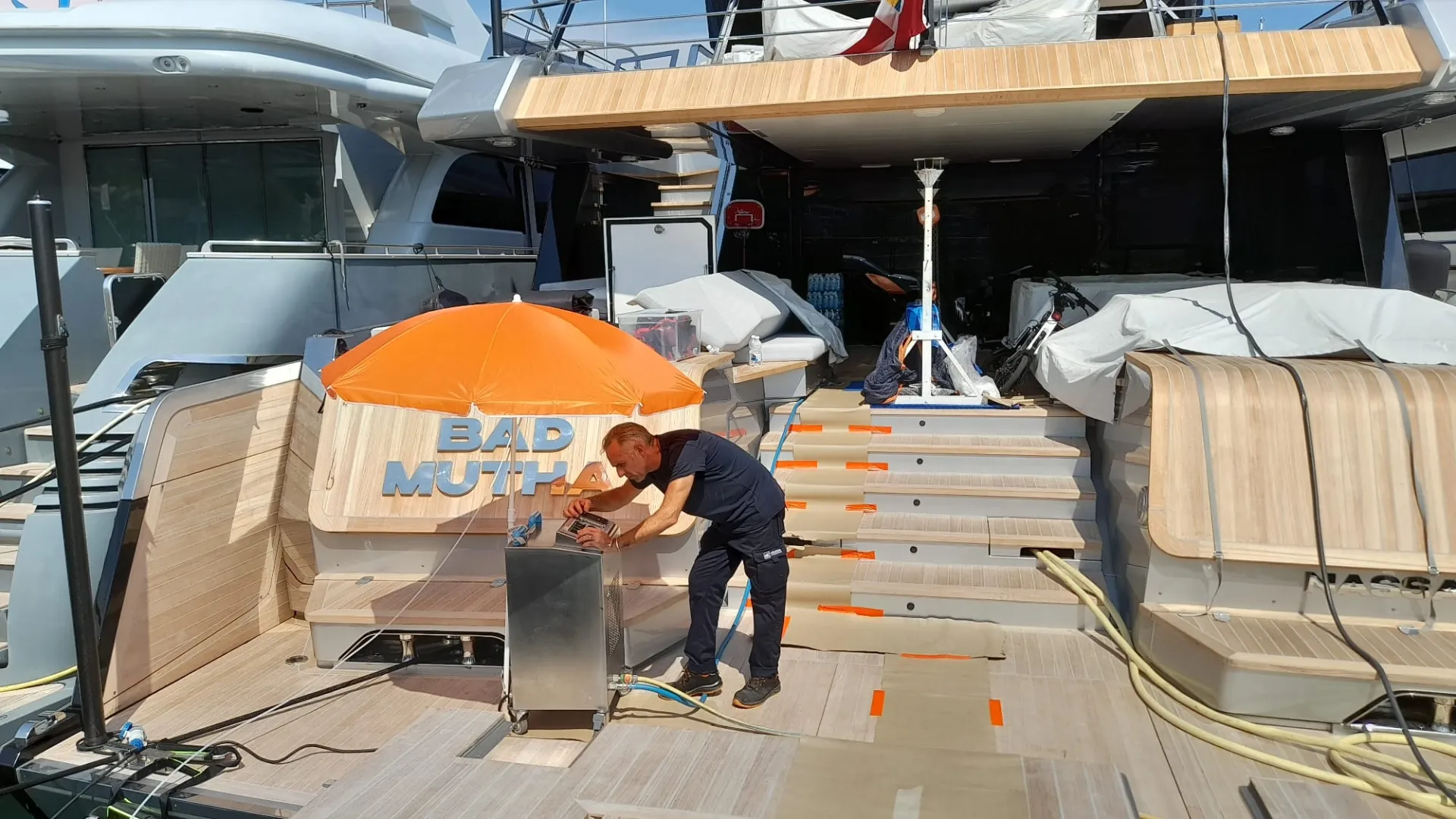
Illustrative visual showing the type of condition we find and the result we work towards. Photos of real AirBio Marine jobs are shown in the gallery below and in every client report.
Questions about yacht AC smells
Why does my yacht AC smell only when I first turn it on?
While the unit is off, the coil and drain pan stay damp and warm, which lets bacteria and mould grow. When the fan starts, the first air carries that smell into the cabin, then it fades as the coil cools and dries the air. The pattern often points to a fan coil that needs internal cleaning rather than a new filter alone.
What does a vinegar smell from the air conditioning mean?
A sour or vinegar-like smell can be associated with stagnant condensate water and biofilm on the coil or in the drain pan. It may also appear where the drain line is partly blocked. It does not tell you exactly which organism is present, but it is a good reason to have the fan coil opened and inspected.
Will changing the filter stop the smell?
A clean filter helps airflow and removes one source of odour, but the smell usually comes from the coil, the pan or the ducts after the filter. If the smell is still there a few days after replacement, the unit needs cleaning inside. Filters should still be checked regularly, as clogged filters make the coil stay wet longer.
Only one cabin smells. Do we need to treat the whole yacht?
Not necessarily. When the smell is limited to one cabin, the fan coil and duct branch serving that cabin are the first things to inspect. If the inspection finds similar conditions in other units, it may make sense to extend the work. The decision should follow what is actually found, not a fixed package.
Can the AC smell come from mould?
Yes, it can. Mould can grow on coil fins, in drain pans, on duct insulation and on surfaces near cold pipes where condensation forms. If you also see dark spots around the unit, grilles or ceiling panels, mention it when booking, because the inspection should then include the surrounding area as well as the air conditioning itself.
Where this comes from
These are the public references behind the way we assess and clean an air system on board. One is health guidance for vessels, the other is the trade standard the industry works to. Neither is a legal requirement for a private yacht.
WHO — Guide to Ship Sanitation, 3rd edition (2011)
The World Health Organization reference for water, air and food hygiene on board vessels. It is guidance, not law, and it is what most port health authorities work from.
ACR, the NADCA Standard for Assessment, Cleaning and Restoration of HVAC Systems
The reference most widely used for how an air handling system should be assessed, cleaned and checked. It is a trade standard, not a legal requirement.
Verified reviews on Trustpilot
Reviews of La BioDisinfestazione | Ekonore Italia, the group AirBio Marine belongs to.
Services for air conditioning odours
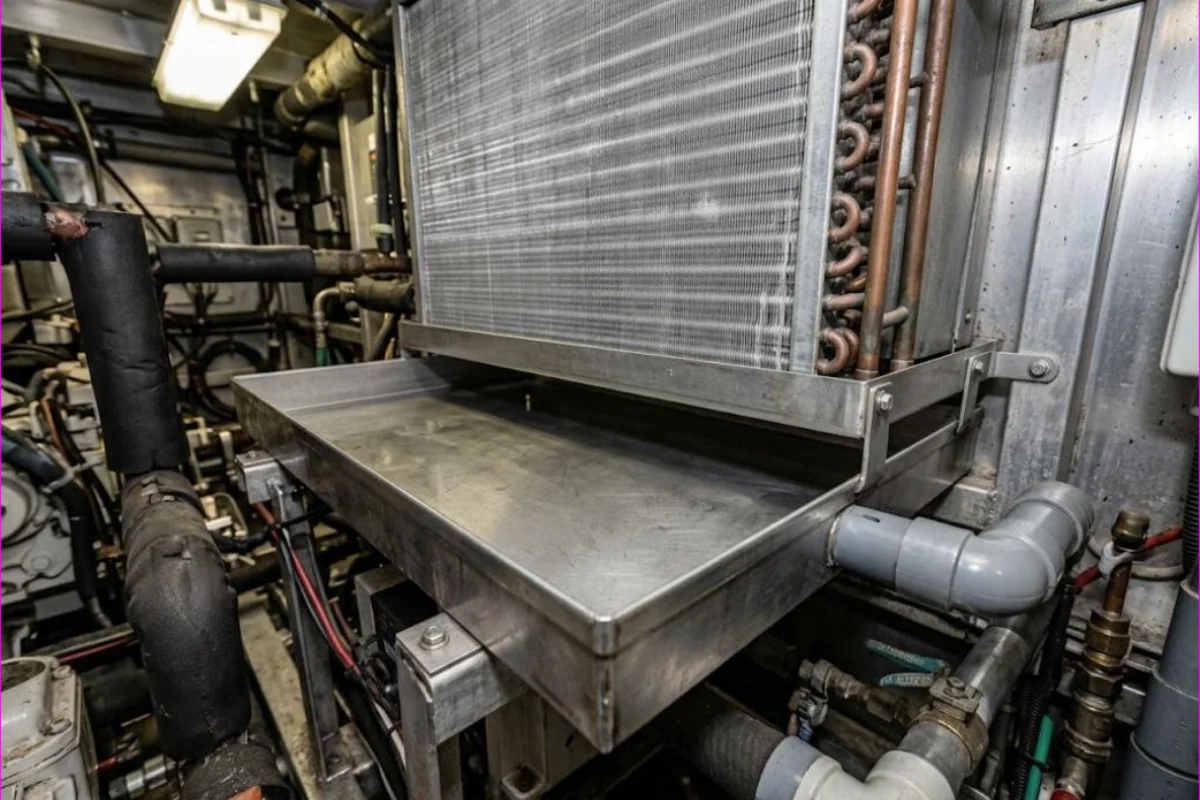
Yacht AC / Split Cleaning
The smell may start deeper inside the system.
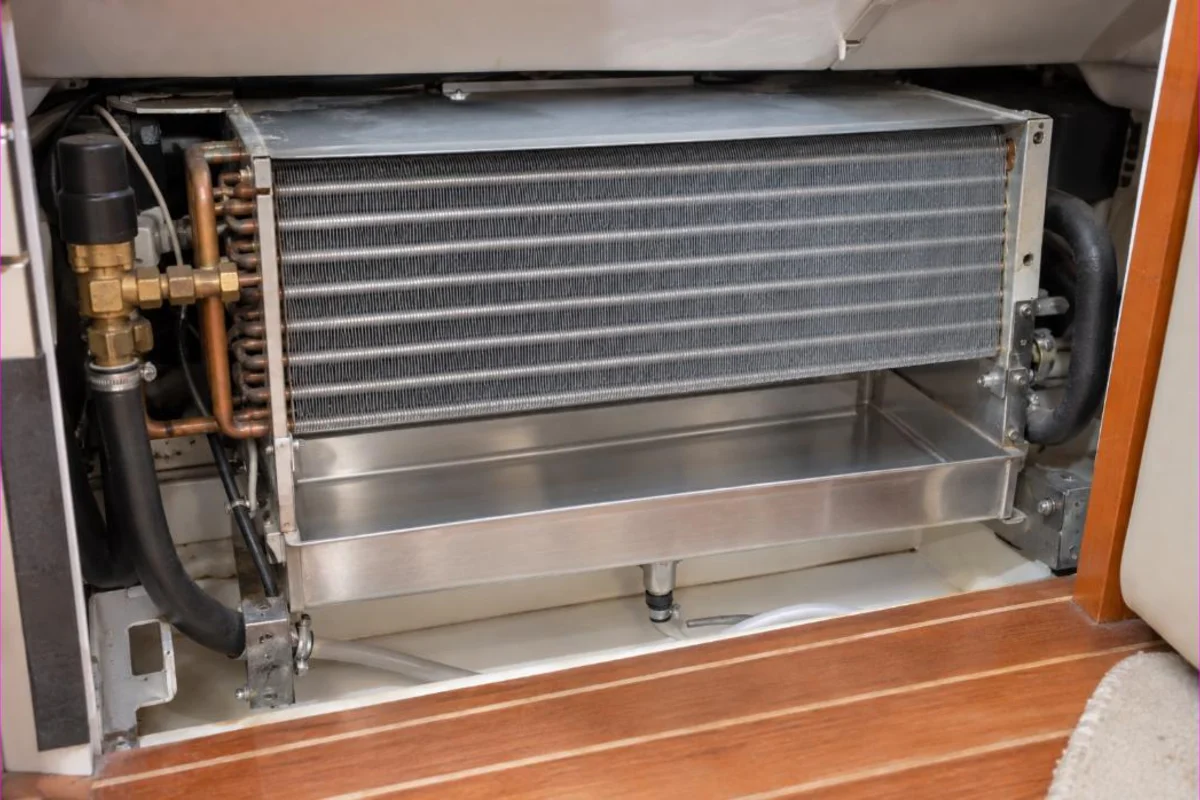
Yacht Fan Coil Deep Cleaning
A new filter does not clean the coil, tray and drain behind it.
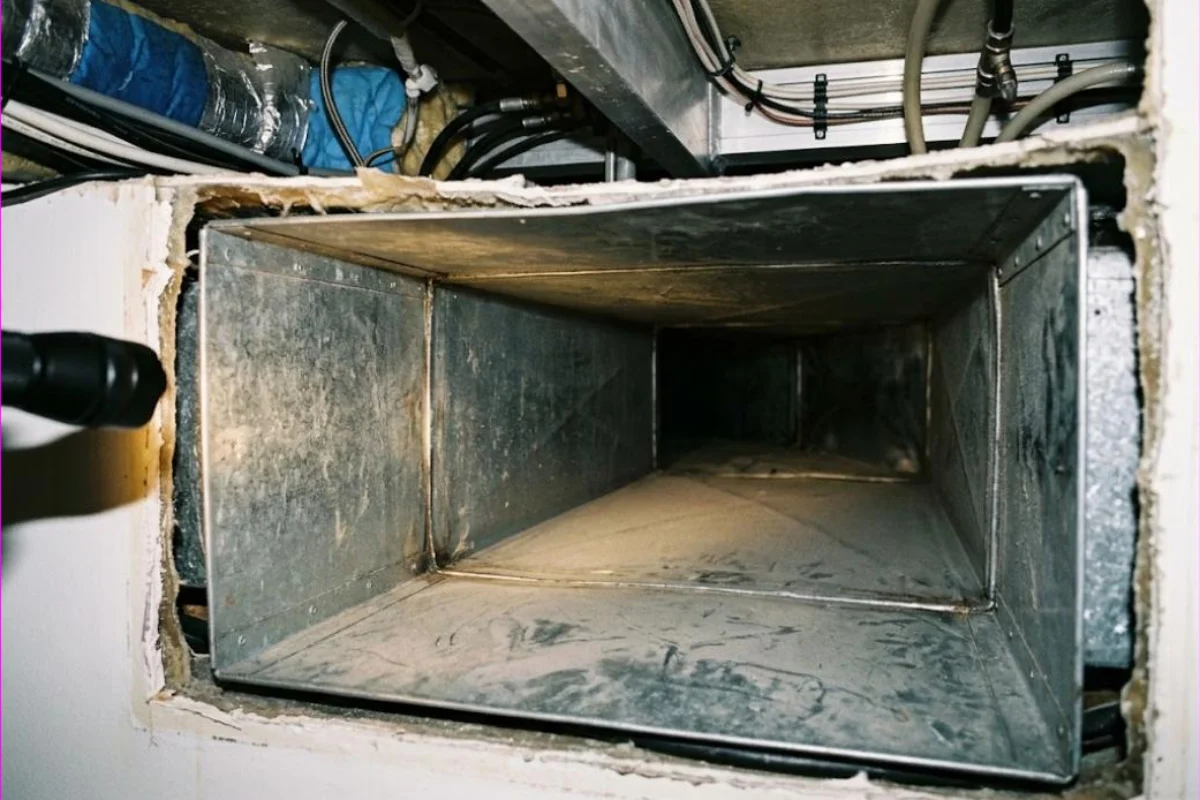
Yacht HVAC & Air Duct Cleaning
Cleaner airflow starts inside the system, not at the vent.
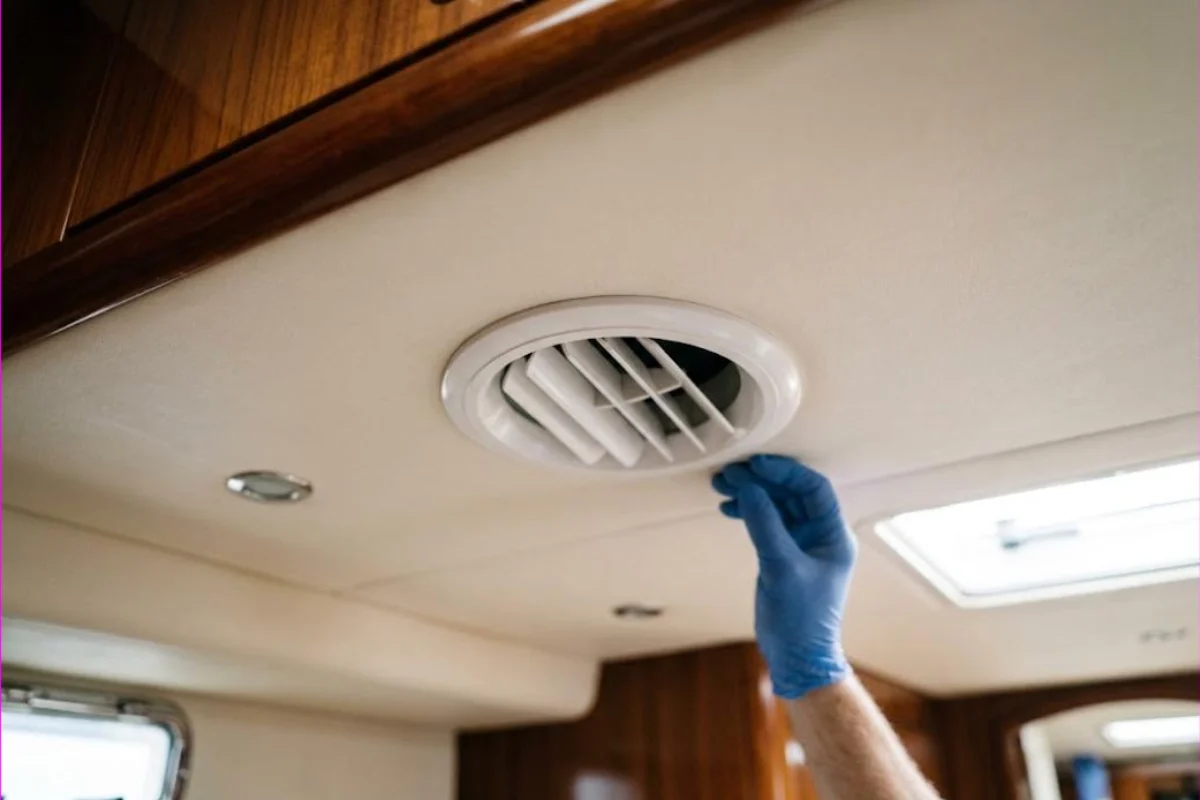
Yacht Mould & Condensation Remediation
Removing the visible mark is only one part of the job.
Book the survey before your next movement
We work in the main Mediterranean marinas and refit yards, with documented results and lab analysis where required.
Tell us about the yacht
Yacht length, marina, systems and what you have noticed on board. A technician reads the message and calls you back to plan the survey.
"*" indicates required fields
Where we work
Italian Riviera and Tuscany marinas and yards — Viareggio, La Spezia, Portofino, Genoa, Sanremo, Livorno, Argentario — and other Mediterranean ports on request.
Documented work
Every job ends with a technical report and photos for the yacht's records.

Not sure where the problem starts?
Let the technical team assess it onboard.
In marina, at the yard or during lay-up. We tell you what needs treating — and what doesn’t.
+39 0584 433 198Expertise.
Peace of mind.