

Cooking Smells and Grease Coming Back from the Galley Extraction
When the extraction stops taking smells out and starts sending them back.
A galley extraction system should remove cooking fumes and grease from the yacht. When smells linger in the saloon or crew mess, or grease drips from the hood, something along the extraction path is usually not working as it should. This guide helps the chef and engineers find where to look.
yacht experience
How the problem shows up
These signs often build slowly over a season, so they are easy to get used to until guests mention them.
Cooking smells in the saloon or cabins
Fried or fishy smells linger long after service, or drift into areas far from the galley.
Grease drops from the hood
Sticky drips on the hood edge, the lights or even onto the cooking surface. The filters or collection trays may be saturated.
The fan is loud but pulls little
The extraction sounds busy, yet steam and smoke hang over the hob. Airflow may be restricted further up.
Rancid smell when the fan starts
A stale, oily smell when the extraction is switched on can be associated with old grease inside the duct.
Why smells and grease come back instead of going out
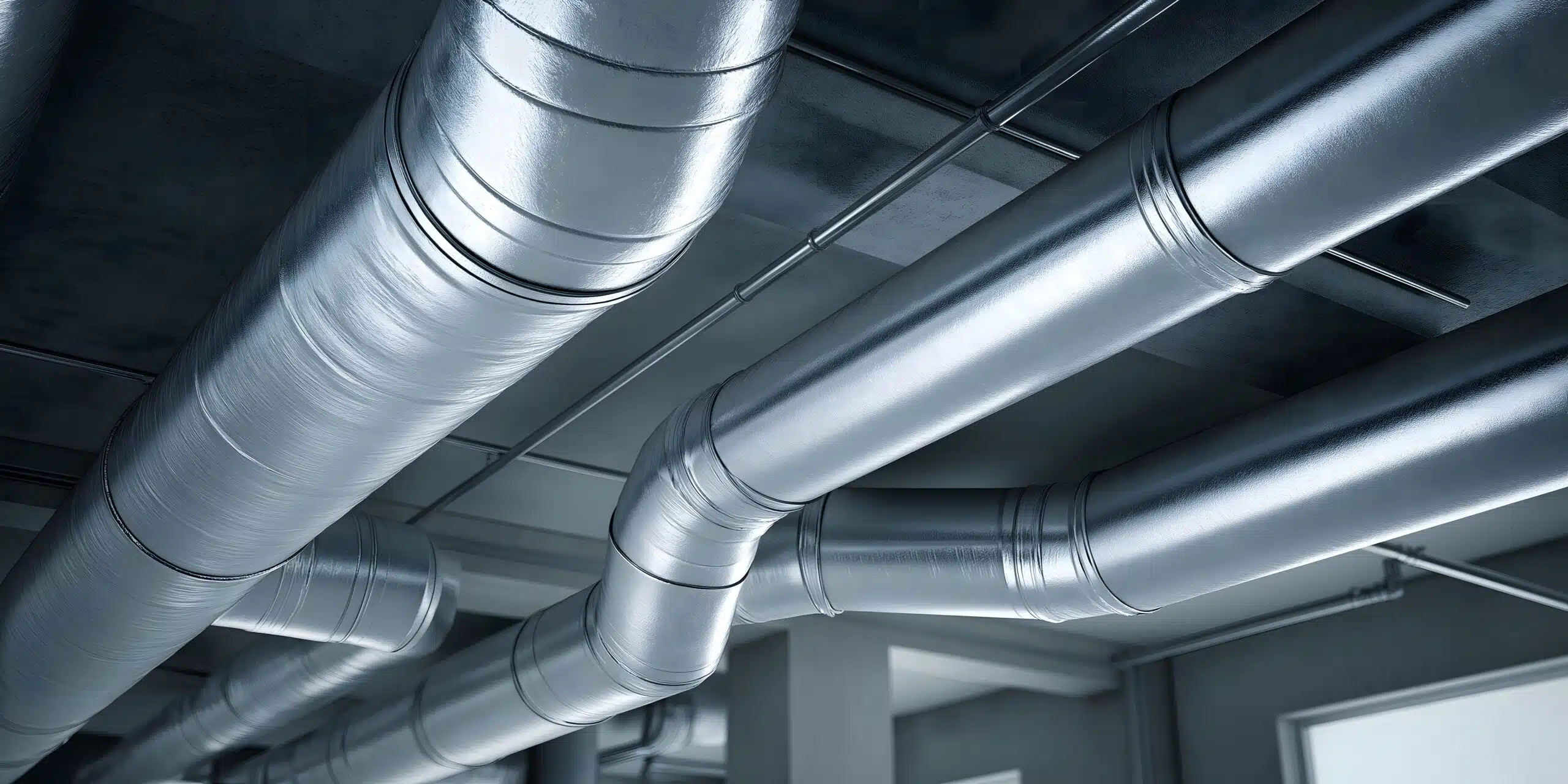
Galley extraction works in a chain: the hood captures fumes above the hob, grease filters trap part of the fat, the extraction duct carries the air through the yacht, and a fan pushes it out through a vent on deck or the hull side. If any link in the chain is dirty, the whole system suffers.
Filters only catch part of the grease. The rest travels as a fine vapour that cools and sticks to the inside of the duct, often at bends and horizontal runs. Over months it becomes a sticky layer that narrows the duct, slows the air and starts to smell rancid. When the airflow drops, fumes are no longer pulled away fast enough and spread into the rest of the yacht.
Grease in the ducts is not only a smell issue. It is combustible, and heat from cooking travels up the same path. This is one reason why chefs, engineers and management companies treat hood and duct cleanliness as part of safety and HACCP procedures in the galley.
Where the problem is likely to start
Start with the parts nearest the hob and move outwards. Each cause points to different work.
Saturated grease filters and hood plenum
Filters and the area behind them can overflow with fat, causing drips and reduced capture of fumes.
Yacht Galley Hood CleaningGrease layer inside the extraction duct
Deposits along the duct narrow the air path, cut extraction and may produce a rancid smell when the fan runs.
Yacht Extraction Duct DegreasingDirty fan and outlet
A fan wheel coated in grease moves less air and can be noisy, even when the hood looks clean.
Yacht Extraction Duct DegreasingOdours absorbed by the interior
Cooking smells that escaped for weeks may have settled into soft furnishings, cabin air and nearby ducts.
Yacht Odour Removal & Source InvestigationAir balance pulling fumes the wrong way
If other areas extract more than the galley, fumes may be drawn into corridors or the air-conditioning return grilles.
Yacht HVAC & Air Duct CleaningWhat the galley and engineering crew can check
These checks can be done during normal galley cleaning, with the cooking equipment off and cool.
- Remove the grease filters and check whether light passes through them or they are clogged with fat.
- Look at the hood plenum behind the filters with a torch for dripping or pooled grease.
- Check the grease collection tray or gutter, if fitted, and empty it.
- Hold a sheet of kitchen paper under the hood with the fan on: note whether it is pulled firmly upward.
- Check the external vent for grease staining or blockage, if it can be reached safely.
- Note the date of the last professional hood and duct cleaning, and any recent menu change to more frying or grilling.
When professional cleaning of hood and ducts makes sense
Daily filter washing is part of good galley practice. Cleaning the plenum, the duct runs and the fan is different work: it needs access through the yacht's structure, degreasing and mechanical cleaning, and care to keep grease out of the galley and interiors.
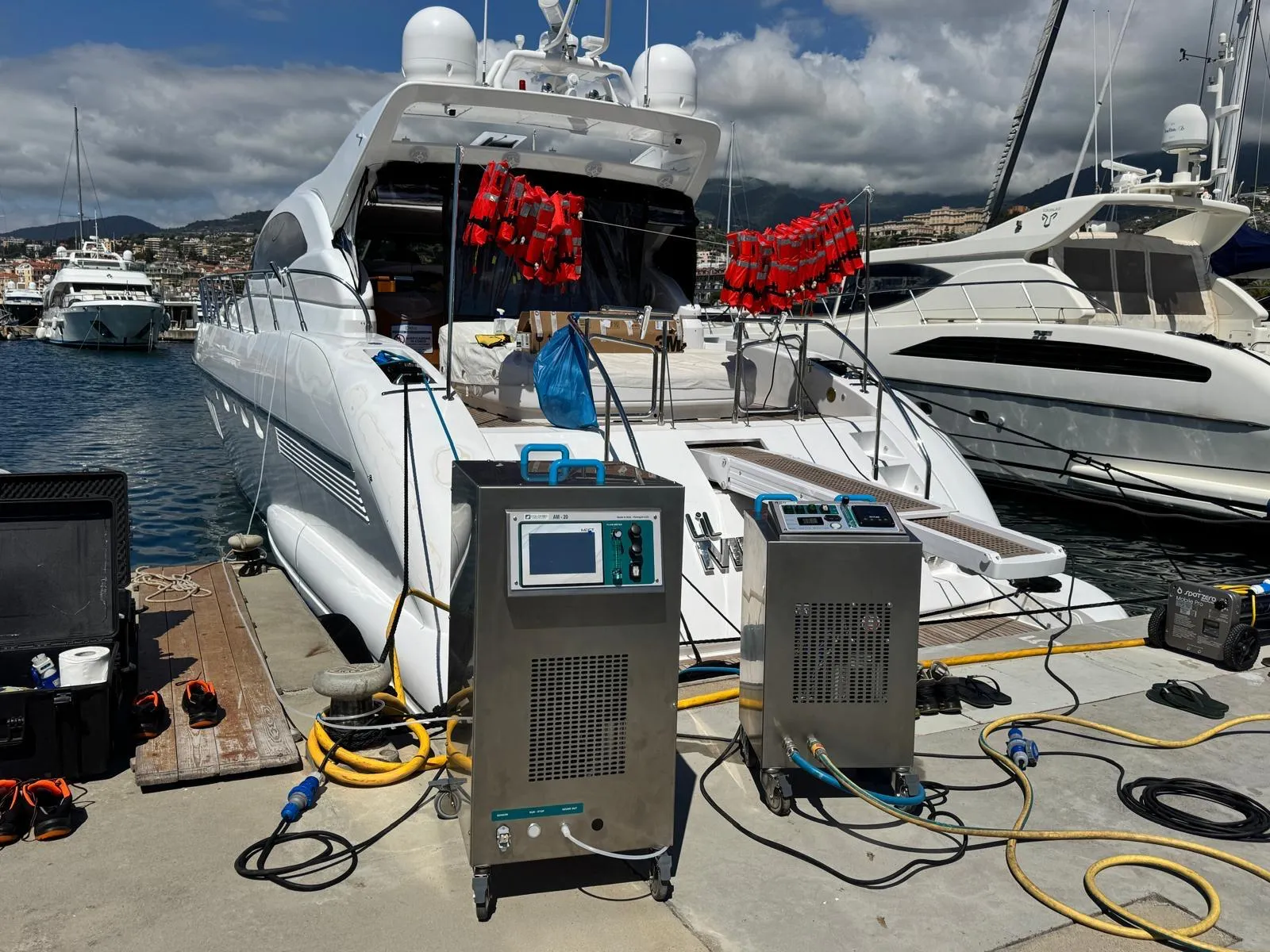
AirBio Marine inspects the hood and reachable duct sections, photographs the deposits and plans cleaning around the chef's service and the yacht's schedule. You receive a report with photos of the areas treated, which is useful for galley records and for the management company.
- Clean filters make little difference to smells or airflow.
- Grease drips from the hood even after filter washing.
- You notice a rancid smell each time the extraction starts.
- The duct has not been cleaned since the last season, or ever, as far as the crew knows.
- A charter, owner trip or galley audit is coming up.
Galley grease and odours: common questions
Why do cooking smells spread through the whole yacht?
Usually because the extraction is not removing fumes fast enough, or because air is being drawn from the galley towards other areas. Clogged filters, grease inside the duct or a dirty fan all reduce extraction. Smells then escape into corridors, the saloon and sometimes the air-conditioning return, which can carry them to cabins far from the galley.
Is washing the grease filters every day enough?
It is an important habit, but filters only trap part of the grease. Fine vapour passes through and settles in the hood plenum, the duct and the fan. These parts cannot be reached during daily cleaning, so they build up over time. Periodic professional cleaning of the whole extraction path complements daily filter care.
Is grease in the galley extraction duct a fire risk?
Accumulated grease is combustible, and the extraction duct carries hot air from the cooking area. For that reason, keeping hood and duct deposits under control is widely treated as part of galley safety. Your management company or flag-state requirements may set expectations; an inspection with photos shows how much grease is actually there.
Can smells stay in the yacht after the extraction has been cleaned?
Yes. If cooking smells escaped for weeks, they may have settled into fabrics, cushions, carpets and nearby air ducts. Cleaning the extraction stops new smells spreading but may not remove what has already been absorbed. In that case an odour treatment of the affected areas can be planned after the source has been dealt with.
Can the galley be cleaned without stopping meals for long?
The work is planned with the chef and captain to fit between services, during a quiet day in marina or when guests are off the yacht. AirBio Marine protects the galley surfaces and equipment around the hood. The exact timing depends on the length and access of the duct, which is assessed during the onboard survey.
Related services
Yacht Galley Hood Cleaning
Hood, plenum, grease filters and first duct section, degreased and documented.
Yacht Extraction Duct Degreasing
Grease and odour remediation along duct runs, bends, fan and discharge.
Yacht Odour Removal & Source Investigation
Bad Smells on a Yacht? Find the Source, Not a Cover-Up.
Tell us about the yacht
Yacht length, marina, systems and what you have noticed on board. A technician reads the message and calls you back to plan the survey.
"*" indicates required fields
Where we work
Italian Riviera and Tuscany marinas and yards — Viareggio, La Spezia, Portofino, Genoa, Sanremo, Livorno, Argentario — and other Mediterranean ports on request.
Documented work
Every job ends with a technical report and photos for the yacht's records.

Not sure where the problem starts?
Let the technical team assess it onboard.
In marina, at the yard or during lay-up. We tell you what needs treating — and what doesn’t.
+39 0584 433 198Expertise.
Peace of mind.