

Yacht Fresh-Water System Sanitization
From tank to shower head: the whole fresh-water network, treated as one system.
For yachts where cleaning the tank alone is not enough. We sanitize the pipes, distribution loops, calorifiers and outlets in guest cabins and crew areas with high-concentration ozonated water, flushing outlet by outlet and measuring the result.
yacht experience
When the problem is in the pipes, not only the tank
Many crews clean the tanks and still find the same complaints a few weeks later. These are the situations that point to the distribution network.
The tank was cleaned but the smell came back
If the tank is clean and the smell returns, the cause may be biofilm in the pipes, calorifier or outlets downstream.
One cabin smells worse than the others
A problem limited to one shower or basin can be associated with a low-use branch or a local dead leg.
Guest cabins unused for weeks
Showers and taps that nobody opens let water stand still in the last metres of pipe.
Lukewarm water in the hot circuit
Hot water that is not really hot, or cold water that warms up in the lines, can favour bacterial growth.
First water from the tap is cloudy
Cloudy or discoloured water that clears after a few seconds may indicate deposits in the line serving that outlet.
After lay-up or a long quiet period
Seasonal inactivity leaves the whole network stagnant, not just the tanks.
How water moves through a yacht, and where it stops moving
On a yacht, fresh water travels from the tanks through a pump and a pressure accumulator, splits into a cold circuit and a hot circuit heated by the calorifier (the hot-water boiler), then runs through a distribution loop to the galley, crew mess, cabins and deck showers.
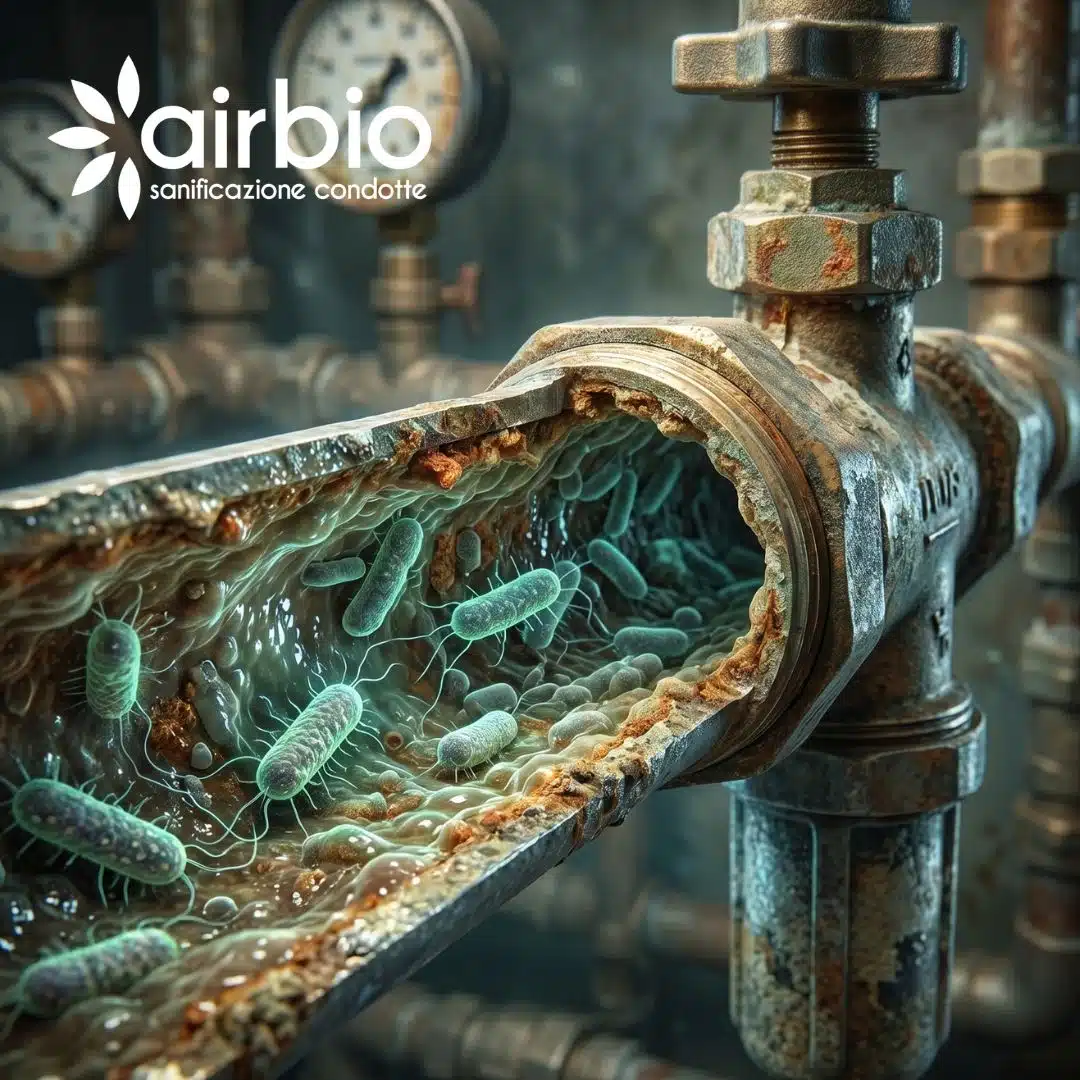
Wherever water slows down or stops, biofilm can form: a slimy layer of bacteria that sticks to the inside of pipes, hoses and shower heads. Typical spots are dead legs — pipe branches with no flow, often left after modifications — and outlets that are rarely used, such as spare guest cabins or crew heads.
Temperature matters too. Hot water that cools down along the line and cold water that warms up in hot technical spaces both sit in the range where bacteria grow more easily. Cleaning the tank alone does not reach any of these points.
Stored fresh water from shore supply or watermaker.
Pressurises the system; water can rest in the accumulator.
Heats water; sediment can settle at the bottom.
Metres of pipe, branches and possible dead legs.
Taps, mixers, hoses and shower heads in daily use.
Spare cabins and crew areas where water stagnates longest.
Signs that the distribution network needs sanitizing
These signs do not confirm contamination on their own. They show where the inspection should start.
Smell at specific outlets
A musty or sulphur smell at one shower or basin may indicate a local biofilm problem.
Slimy or stained shower heads
Dark deposits or slime inside shower heads and hoses can be associated with biofilm.
Temperature drift
Hot water that arrives lukewarm, or cold water that is not cold, at distant outlets.
Known dead legs
Capped or unused branches left after refit or equipment changes.
Seasonal inactivity
Lay-up, yard periods or weeks without guests on board.
An unsatisfactory lab result
A sampling report that recommends corrective action on the water system.
How we map the water system before treatment
We start from the yacht's water system as it really is, which is not always as drawn. With the chief engineer we walk the network from the tanks to the furthest outlets and mark the points that need particular attention.
The result is a treatment plan that lists which circuits, loops and outlets will be treated, in which order, and how the crew will manage water use during the job.
- Tanks, pump, accumulator and calorifier, including drain points
- Layout of hot and cold distribution loops and main branches
- Dead legs, capped branches and modifications from past refits
- Little-used outlets in guest cabins, crew areas and deck showers
- Condition of shower heads, hoses, mixers and aerators
- Hot and cold temperatures at representative outlets
- Any previous water sampling results the crew can share
How we sanitize the fresh-water network
Each system is different, so the sequence is adapted on board. These are the steps of a typical system sanitization.
Protection and planning
We protect floors and interiors, agree isolation points with the chief engineer and plan which areas will be without water and when.
Tanks and calorifier
Tanks are cleaned or checked as needed, and the calorifier is drained where accessible so sediment does not feed the lines.
Ozonated water through the network
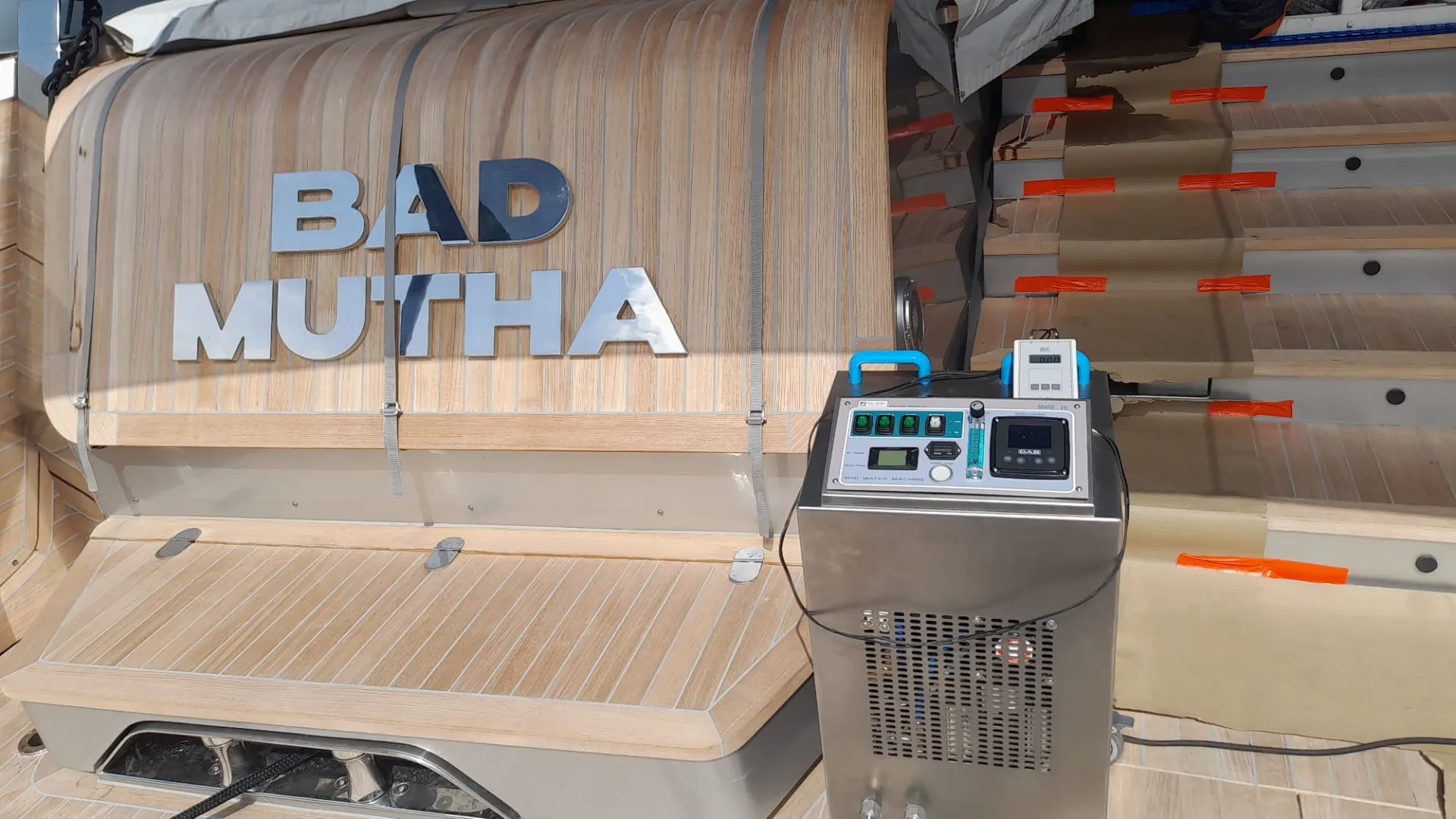
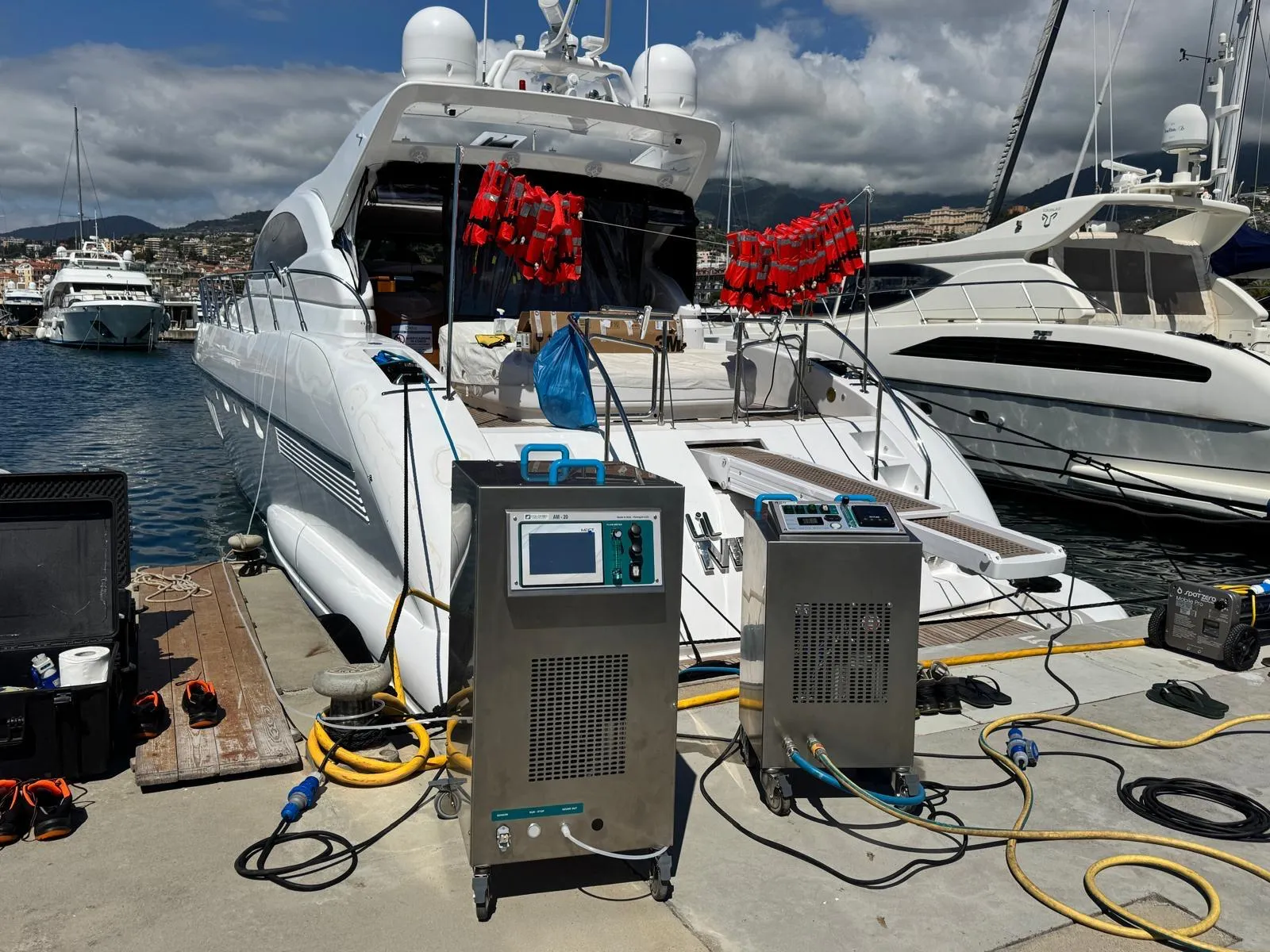
Our AWM-20 or MWM-20 units produce high-concentration ozonated water, which is pushed through pipes and loops to break down biofilm.
Outlet-by-outlet flushing
Each tap and shower is opened in turn, including little-used outlets and branches, so the treated water reaches the end of every line.
Shower heads and fittings
Shower heads, hoses and aerators are removed, cleaned and sanitized, or replacement is recommended where they are too worn.
Residual measurements and report
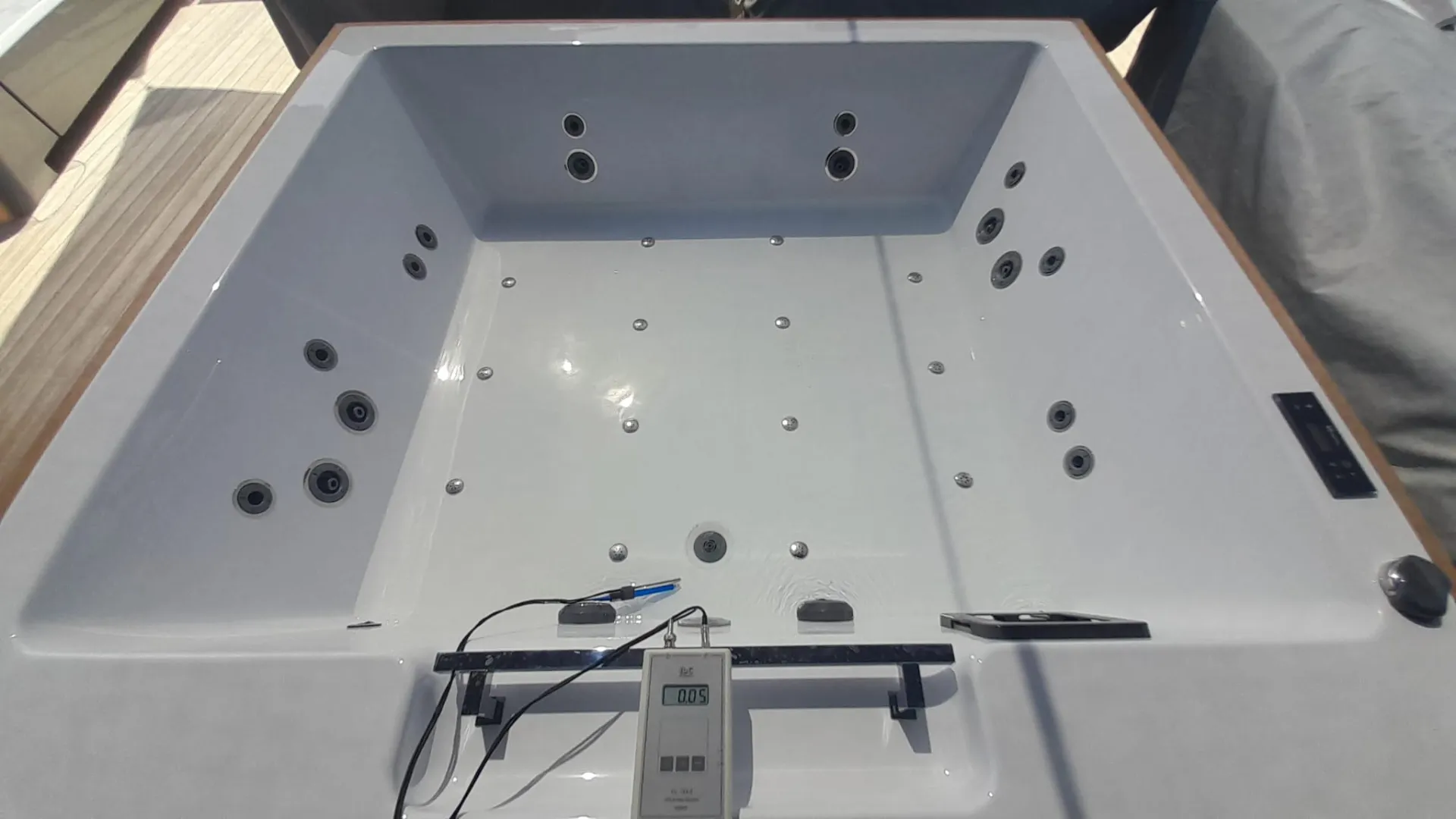
We measure residuals with digital meters after treatment, flush the system back to normal use and deliver a technical report with photos.
Inside a shower hose before and after treatment
These images are illustrative, not photographs of a specific job. They show the kind of biofilm that can line a shower connection and how the same fitting looks after cleaning and sanitization.


Illustrative visual showing the type of condition we find and the result we work towards. Photos of real AirBio Marine jobs are shown in the gallery below and in every client report.
Water system sanitization on board
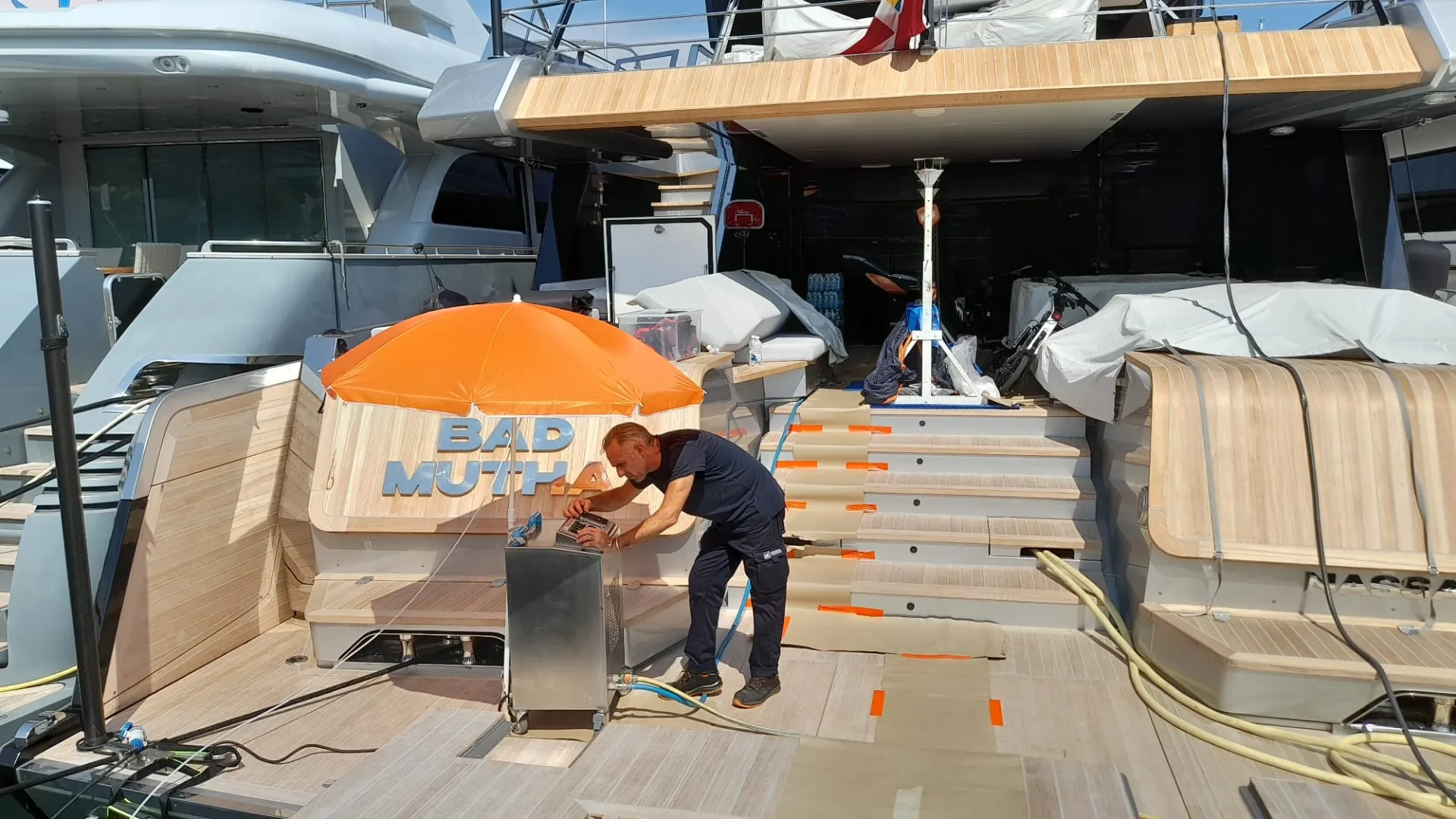
Real photos from AirBio Marine jobs: the ozonated-water unit on the aft deck, our technician connecting it on a protected deck, a residual reading on a deck jacuzzi after treatment and our kit on the quay.
What you receive
Technical report
Circuits, loops and outlets treated, the method used and observations from the inspection.
System notes
Dead legs, low-use branches and weak points found in the network, with photos.
Readings
Residual measurements after treatment and temperatures recorded at representative outlets.
Laboratory certificates
Results from the accredited laboratory, when sampling is part of the job.
Recommendations
Flushing routines for little-used outlets, possible modifications and a maintenance plan.
One report for the yacht's technical history
Every job closes with a written report: what was inspected, what was found, what was treated, photos before and after, readings where taken and recommendations for the next check. Useful for the captain, the management company, the next survey and the next season.
Who this service is for
Wants the full network treated, including the calorifier, loops and dead legs, with isolation points agreed in advance.
Deals with guest complaints about smell or cloudy water in cabins, and needs showers and basins back in service quickly and clean.
Needs a documented system treatment that responds to a sampling result or to management-company water-safety procedures.
Needs cabins that were empty for weeks to deliver fresh water from the first guest shower.
Where we sanitize yacht water systems
We work in Italian Riviera and Tuscany marinas and yards, and in other Mediterranean ports on request.
Monaco
Spain
and beyond
Wherever you are in the Mediterranean, we can be there.
Water system sanitization: frequently asked questions
Why is cleaning the tank not always enough?
Water leaves the tank and passes through the pump, accumulator, calorifier and many metres of pipe before reaching a tap. Biofilm, a slimy bacterial layer, can form anywhere along this route, especially in dead legs and little-used outlets. If these parts are not treated, a clean tank can be refilled with water that picks up contamination on its way to the cabins.
What is a dead leg in a yacht water system?
A dead leg is a section of pipe where water does not flow, such as a branch to removed equipment or an outlet that is capped or never used. Water stagnates there and can warm up, which favours bacterial growth. During the inspection we look for dead legs with the chief engineer and may recommend removing them or flushing them regularly.
How does ozonated water sanitize the pipes?
Our AWM-20 and MWM-20 units produce high-concentration ozonated water, which is pushed through the tanks, pipes and showers. Ozone is a strong oxidiser that helps break down biofilm on internal surfaces. Each outlet is then flushed in turn, and residuals are measured with digital meters before the system goes back to normal use.
Do you treat guest cabins and crew areas separately?
We treat the whole network, but we pay particular attention to outlets with different usage. Guest cabins may stay empty for weeks, while crew heads are used heavily. Little-used outlets are flushed individually so the treated water reaches the end of every line, and their condition is noted in the report.
Does this service include Legionella testing?
Sanitization and testing are different jobs. System sanitization cleans and treats the network. Testing, with samples analysed by an accredited laboratory, measures the result. We can include sampling before and after treatment, or you can arrange it through our Legionella testing or water sampling services.
Can the work be done with the crew on board?
Yes, in most cases. The job is planned with the captain and chief engineer so that water is interrupted only in agreed areas and time windows. Interiors are protected with floor coverings and masking. The work can be carried out in marina, at the yard, during lay-up or between charters.
Related services
Yacht Fresh-Water Tank Cleaning
Clean, sanitized fresh-water tanks, with every step documented for your crew.
Legionella Remediation for Yachts
A positive result is not a reason to treat only the tap where it was detected.
Yacht Water Sampling & Analysis
Objective data on your onboard water, collected properly and explained clearly.
Why Does the Water on My Yacht Smell?
The type of smell is the best clue to where it starts.
Tell us about the yacht
Yacht length, marina, systems and what you have noticed on board. A technician reads the message and calls you back to plan the survey.
"*" indicates required fields
Where we work
Italian Riviera and Tuscany marinas and yards — Viareggio, La Spezia, Portofino, Genoa, Sanremo, Livorno, Argentario — and other Mediterranean ports on request.
Documented work
Every job ends with a technical report and photos for the yacht's records.
Not sure where the problem starts?
Let the technical team assess it onboard.
In marina, at the yard or during lay-up. We tell you what needs treating — and what doesn’t.
+39 0584 433 198Expertise.
Peace of mind.