
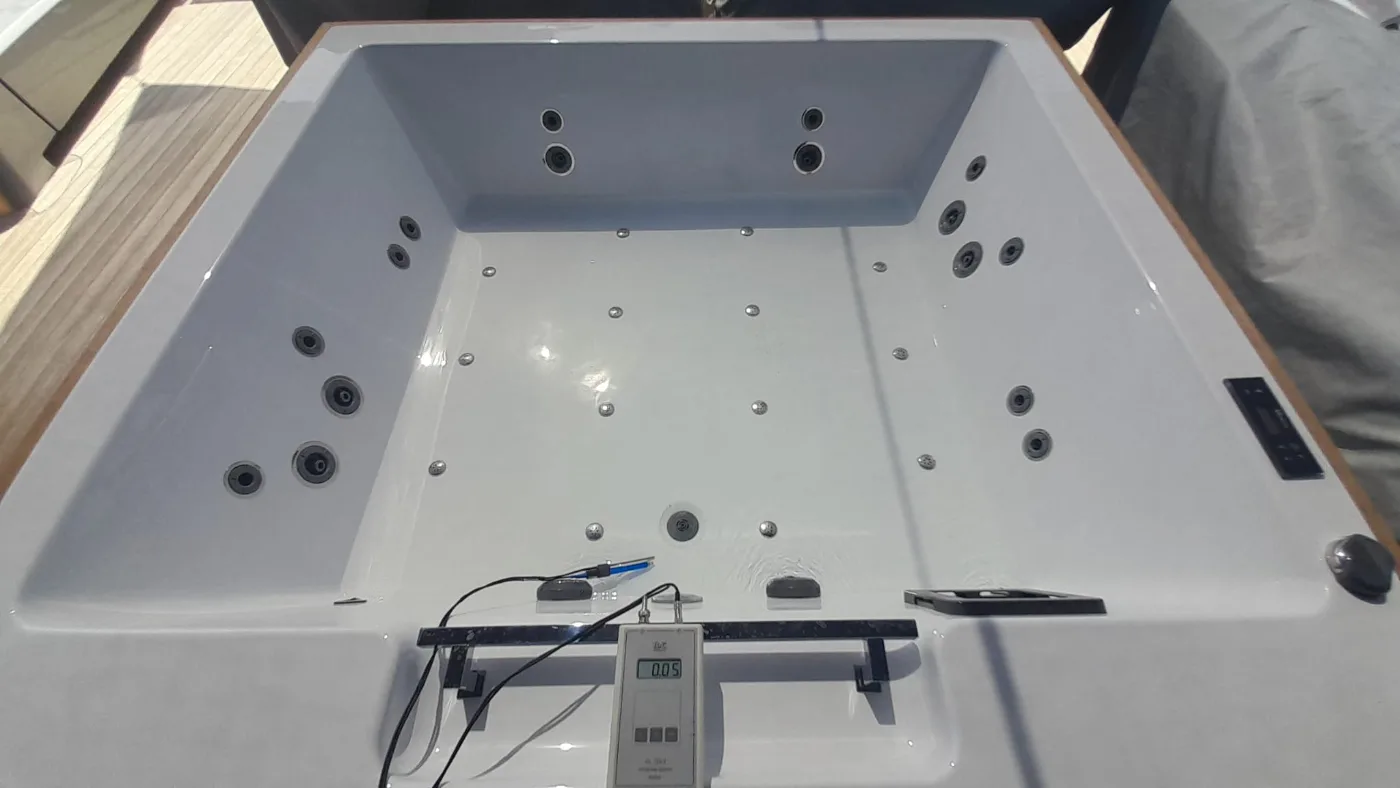
Before and After, System by System
What a dirty fan coil, a greasy galley duct or a neglected water tank actually looks like — and what it looks like once it has been done.
These pairs are reference images of the conditions we are called to and the state a system should be in afterwards. They are there so you can recognise the problem on your own yacht. Photographs taken on specific jobs, with the vessel not identified, are in the case studies.
Fan coils, air handling units and ducts
The air side accounts for most of the calls. In almost every case the problem is not the filter but what is behind it: the wet coil, the condensate tray and the first metres of duct.


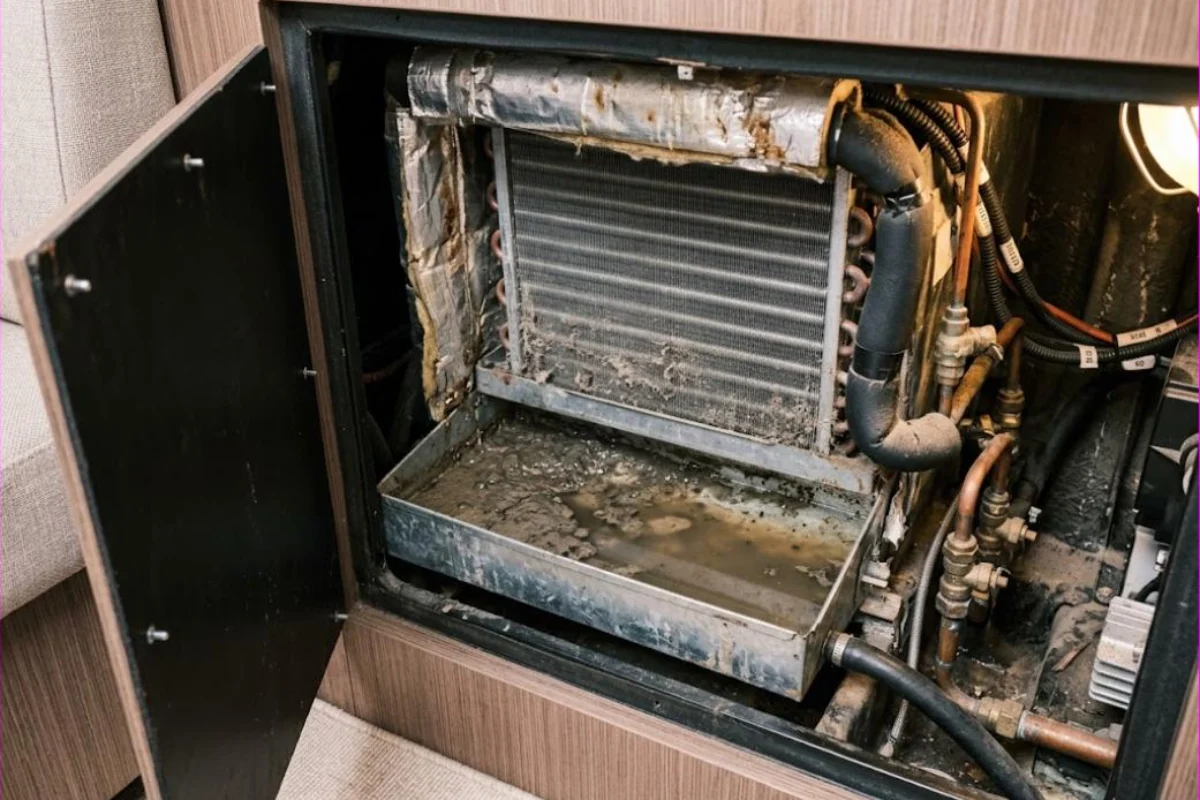
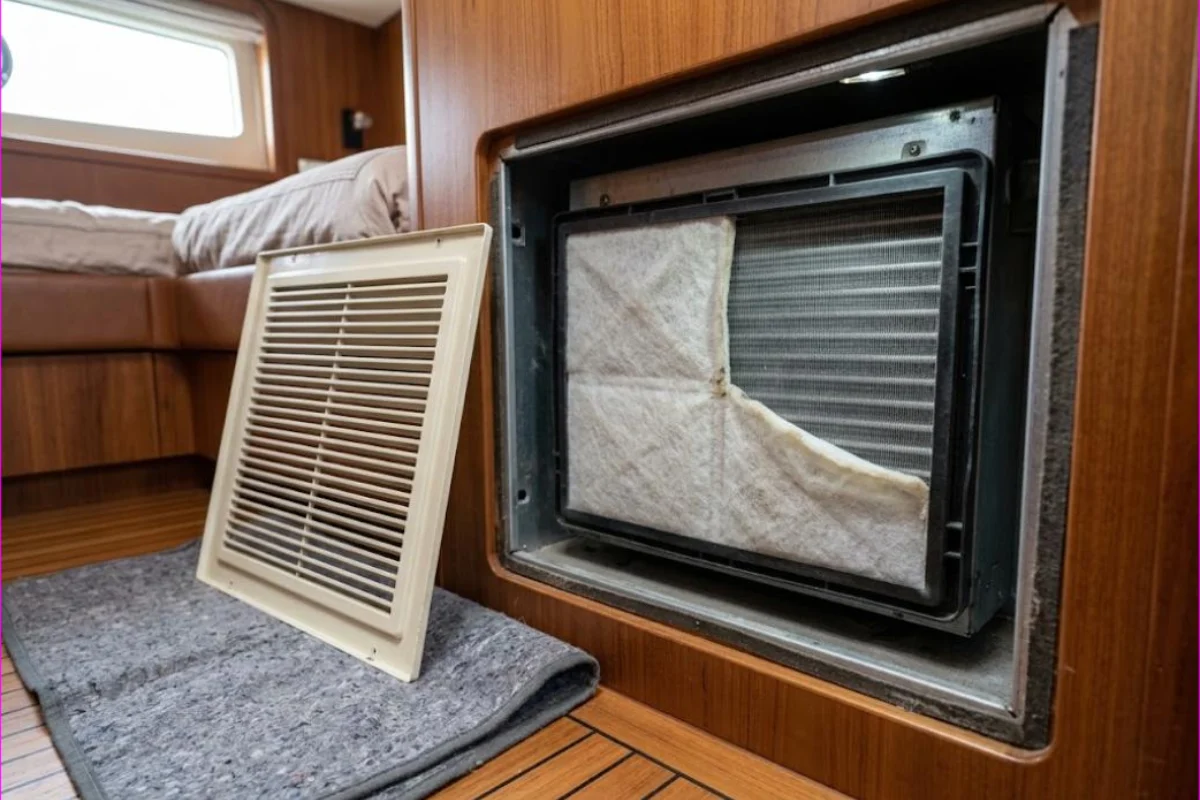
Dust packed between the coil fins and a condensate tray holding water. Once the fins are clear the unit moves the air it was designed to move again. Fan coil cleaning

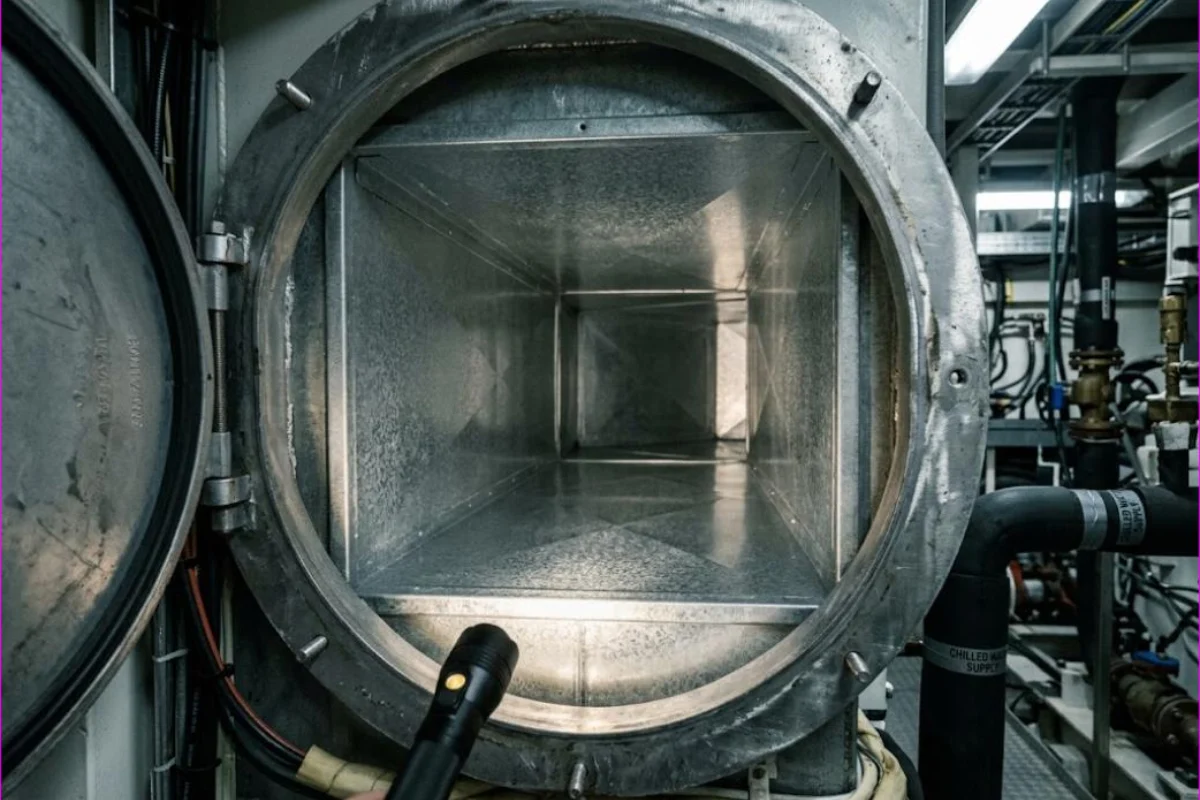
An air handling unit with a dirty filter bank and a fouled coil. This is where a smell that reaches every cabin usually starts. HVAC and duct cleaning
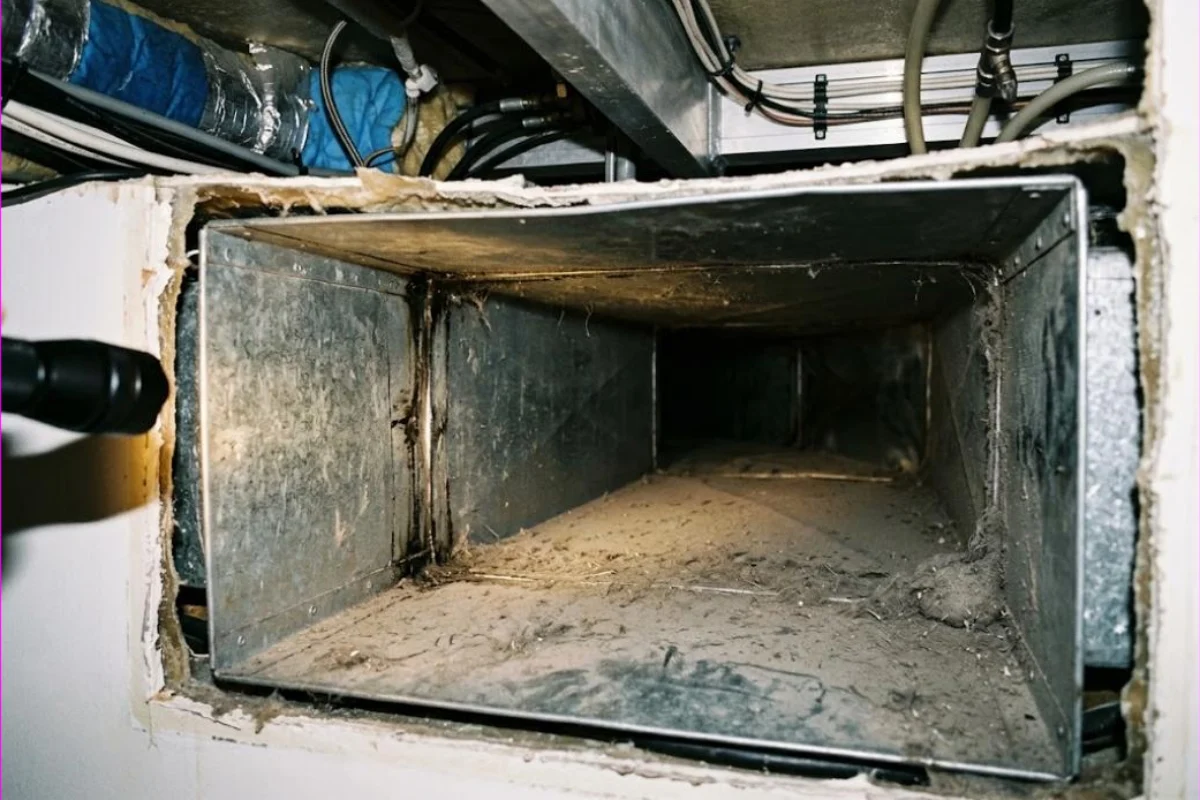
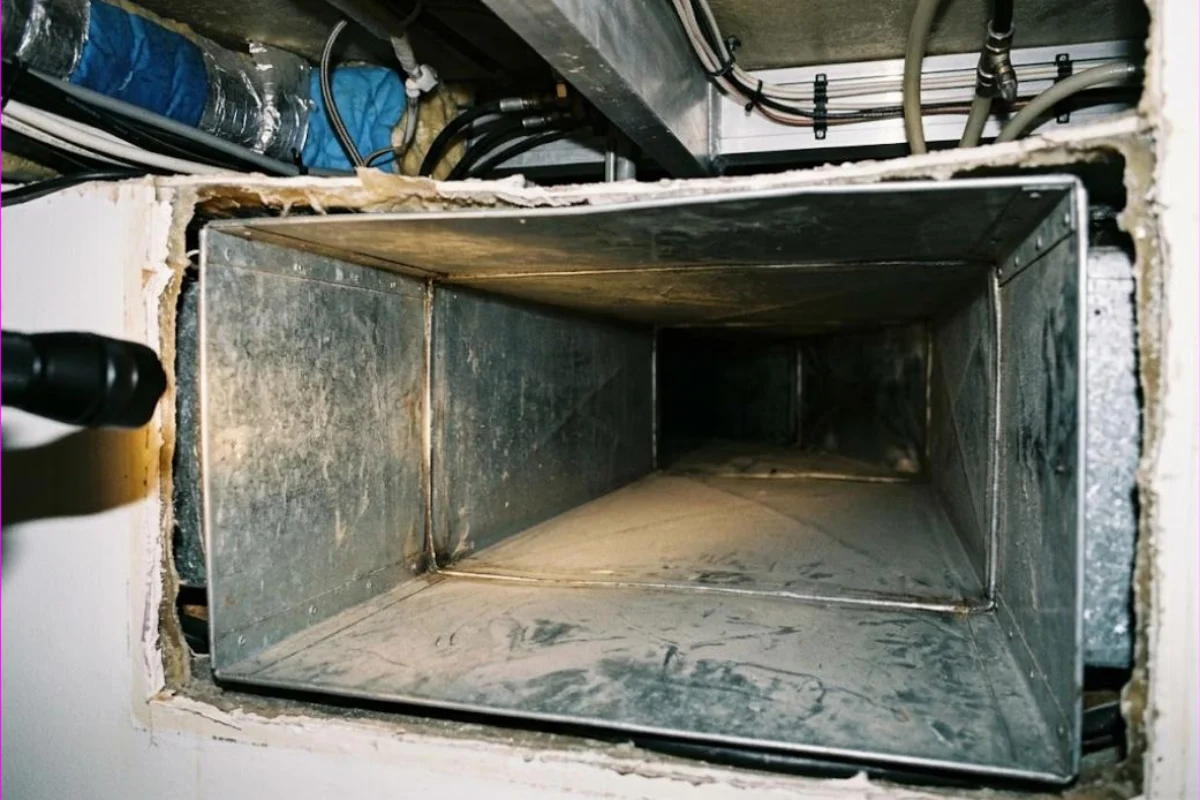
Inside a duct run behind the joinery: dust on the walls and at the flexible joints. Cleaning means opening it, not spraying into the grille. HVAC and duct cleaning
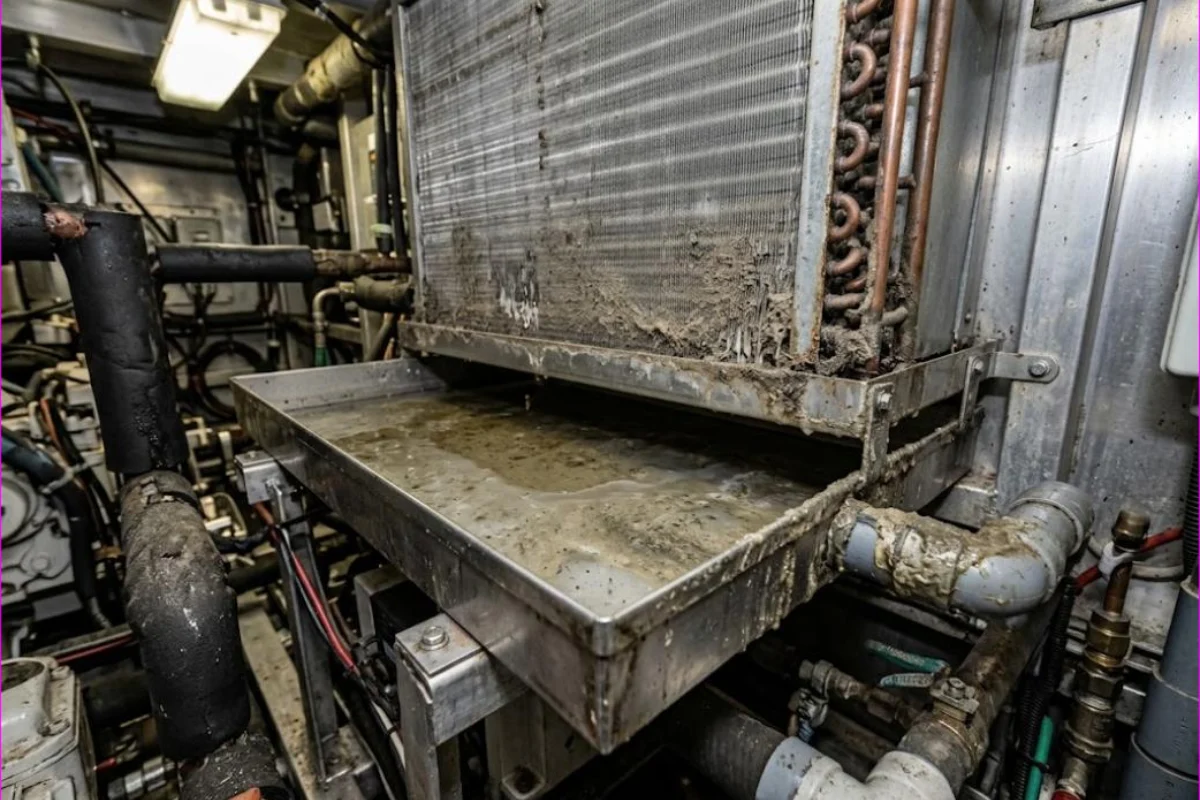
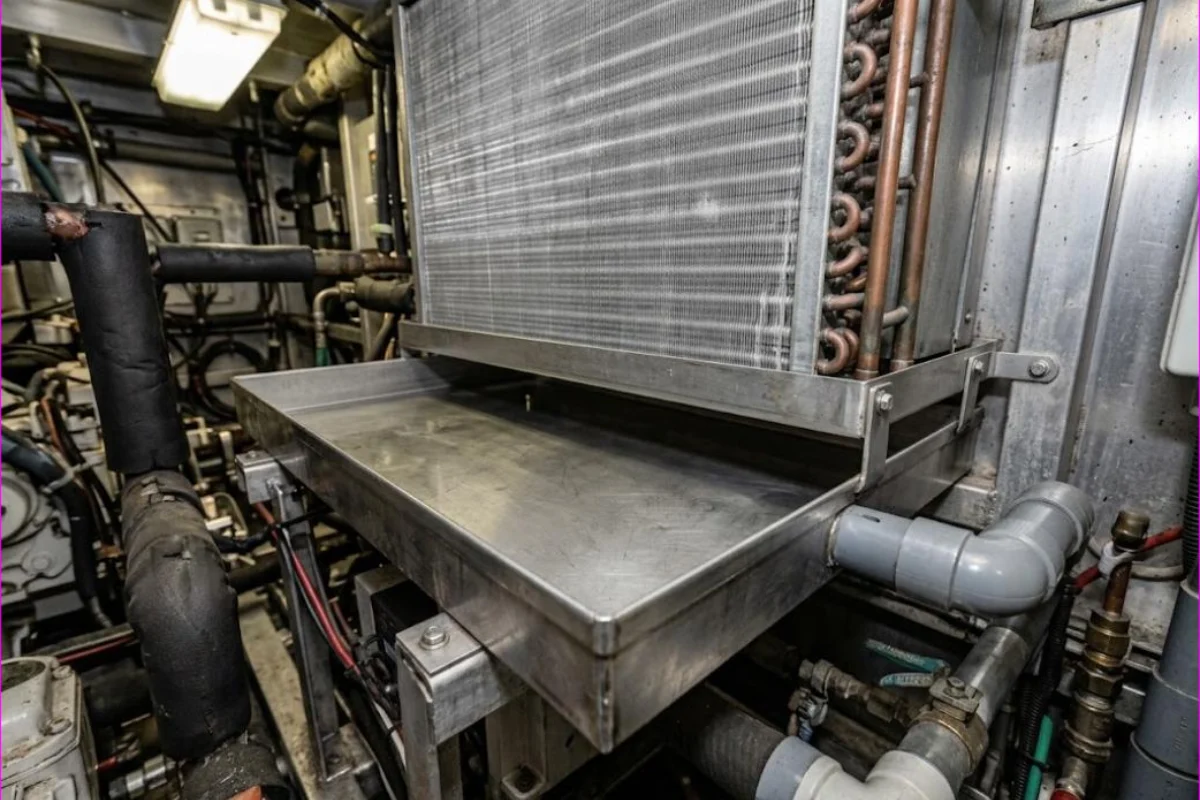
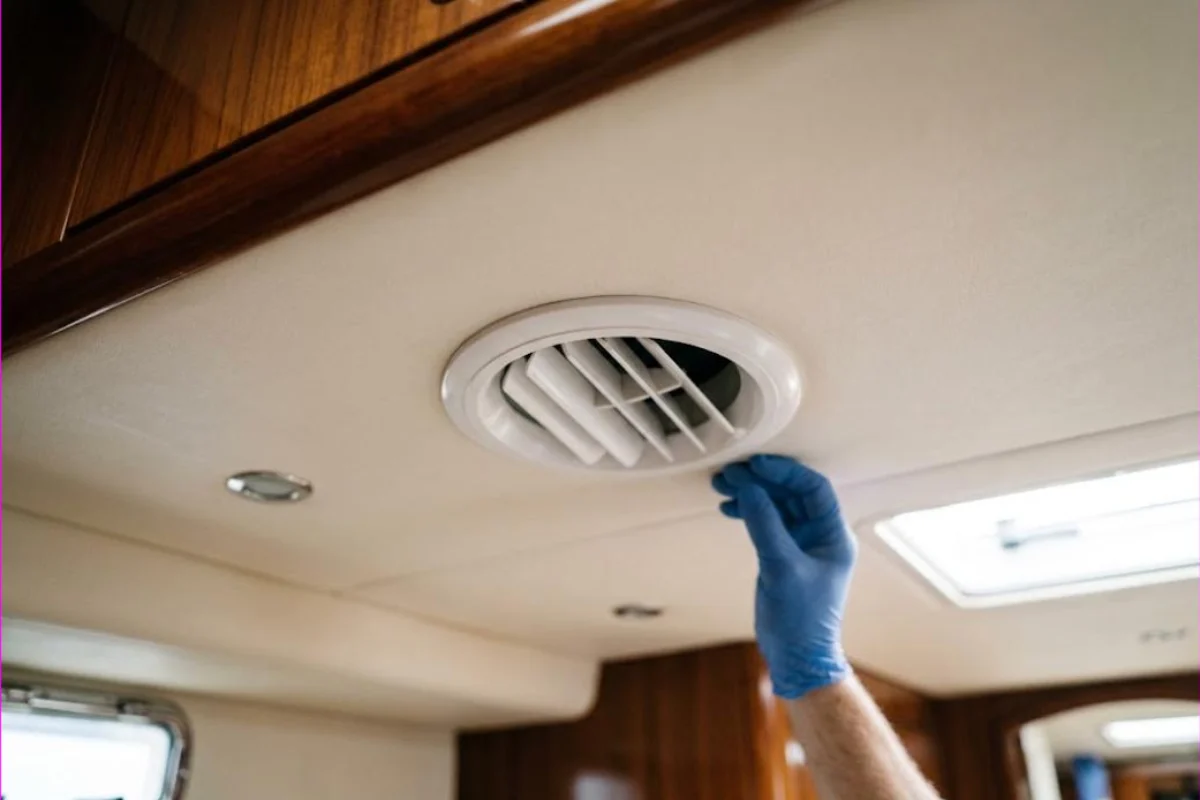
A split or packaged air conditioning unit before and after. Filter, fins, tray and drain line, in that order. AC sanitization
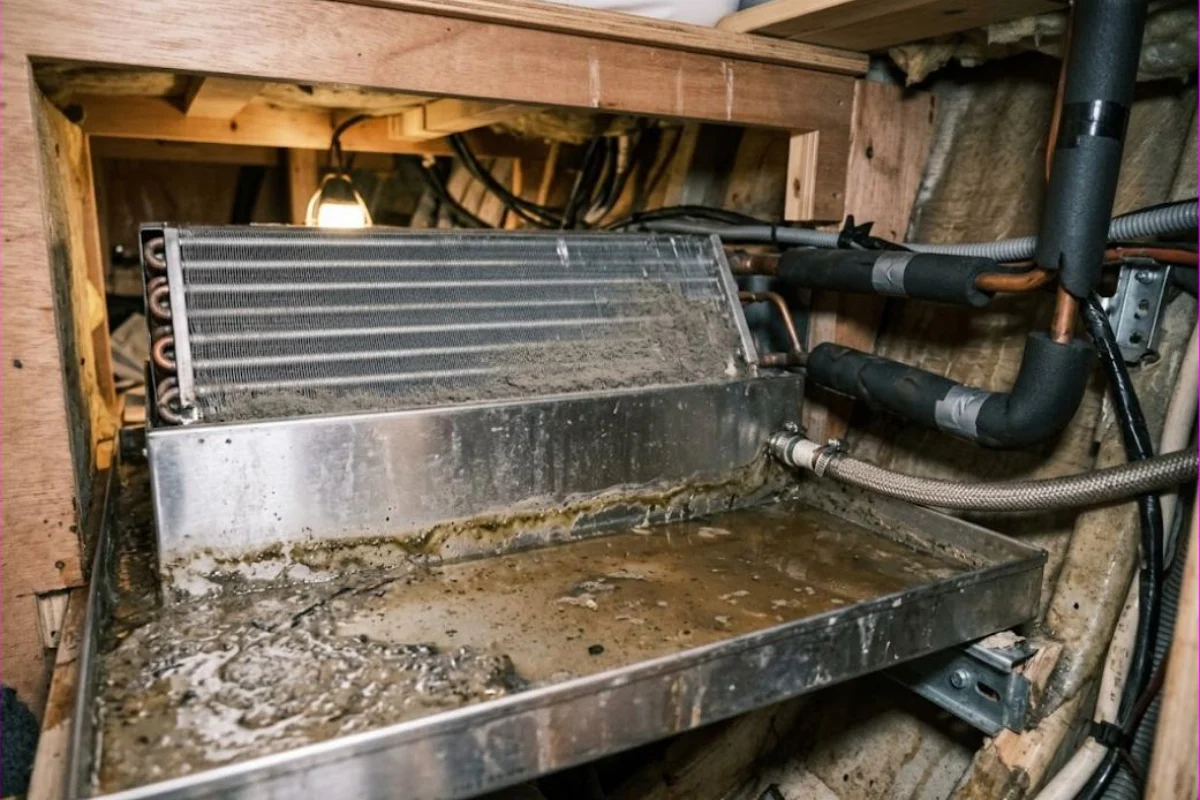
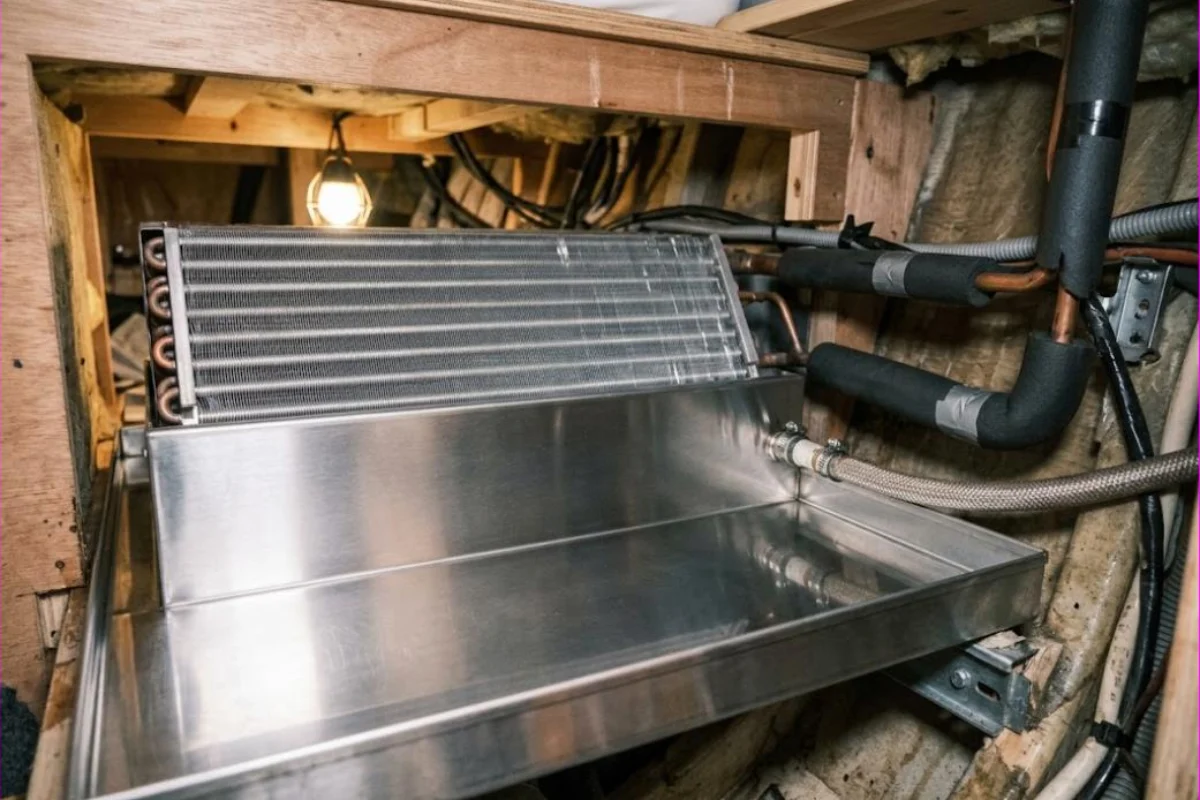
The smell case: nothing looks dramatic from the cabin, and the source is on the wet side of the unit. Why the AC smells
Mould, condensation and odour sources
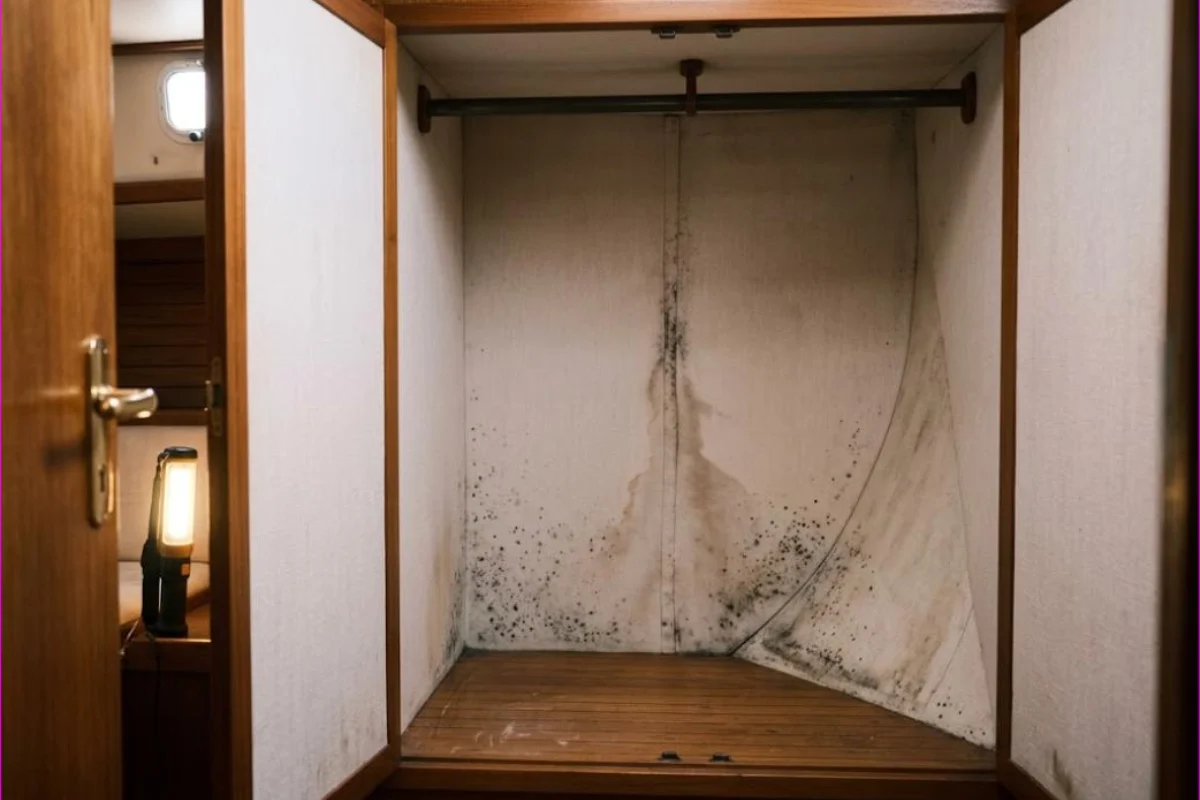

Mould on a headlining or inside a locker. It grows where a surface stays cool and damp, so removing it without fixing the damp brings it back. Mould remediation

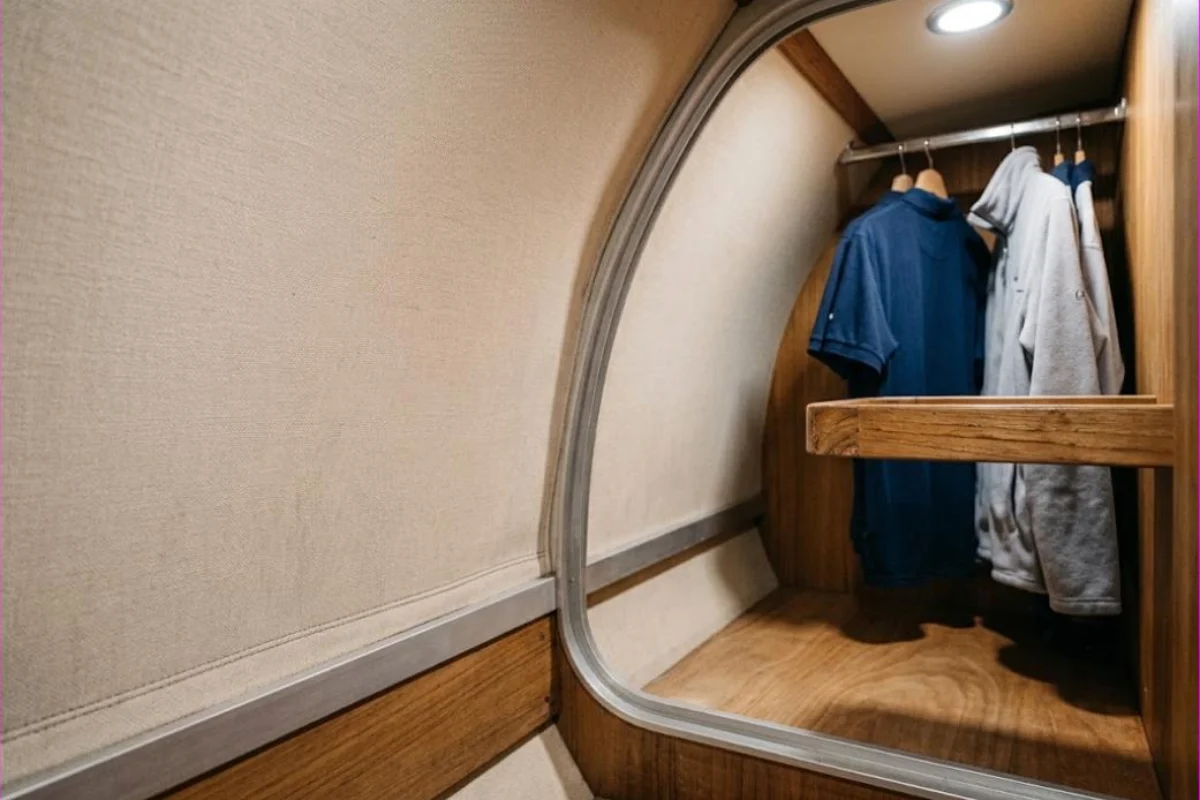
The same surface after treatment. The point of the job is the cause — condensation, a leaking drain line, poor air movement — not the stain. Mould in a cabin

Condensation around a port light and on cold pipework. It is the usual reason a cabin smells of damp after a week closed up. Condensation on board
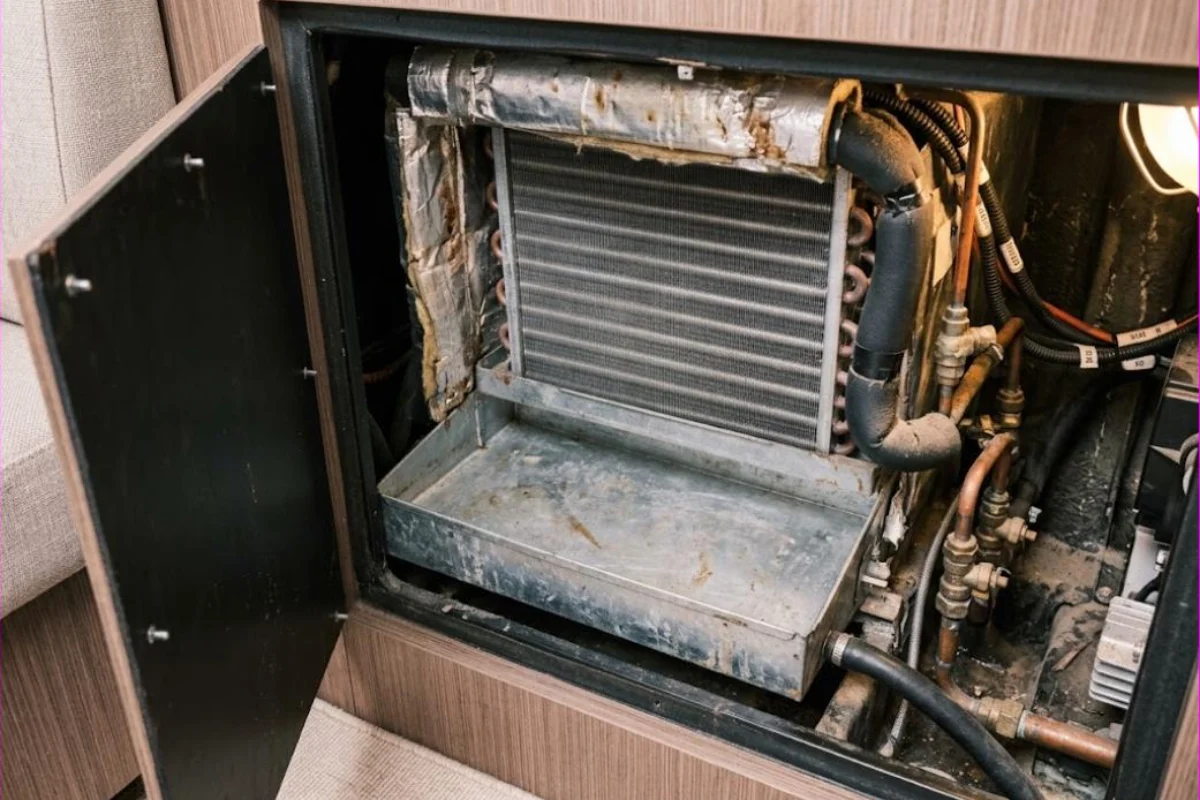
An odour investigation: lifting the sole hatches and following the smell rather than covering it. Odour removal
Canopy, baffle filters and the duct above them
Grease in an extraction duct is the part nobody sees. The filters can look acceptable while the duct behind them is coated.
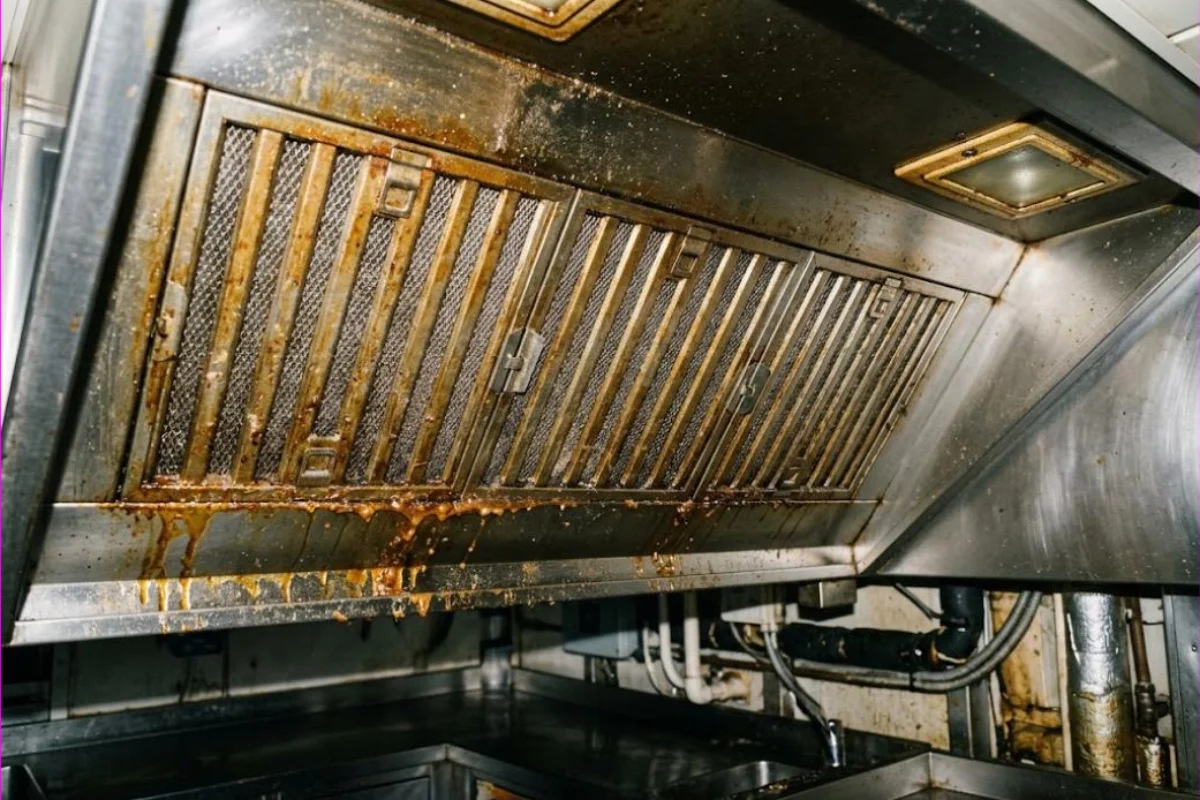

Baffle filters and the inside of the canopy with cooked-on grease. This is a fire load as much as a smell, which is why it is the one job with a fixed interval. Galley hood cleaning
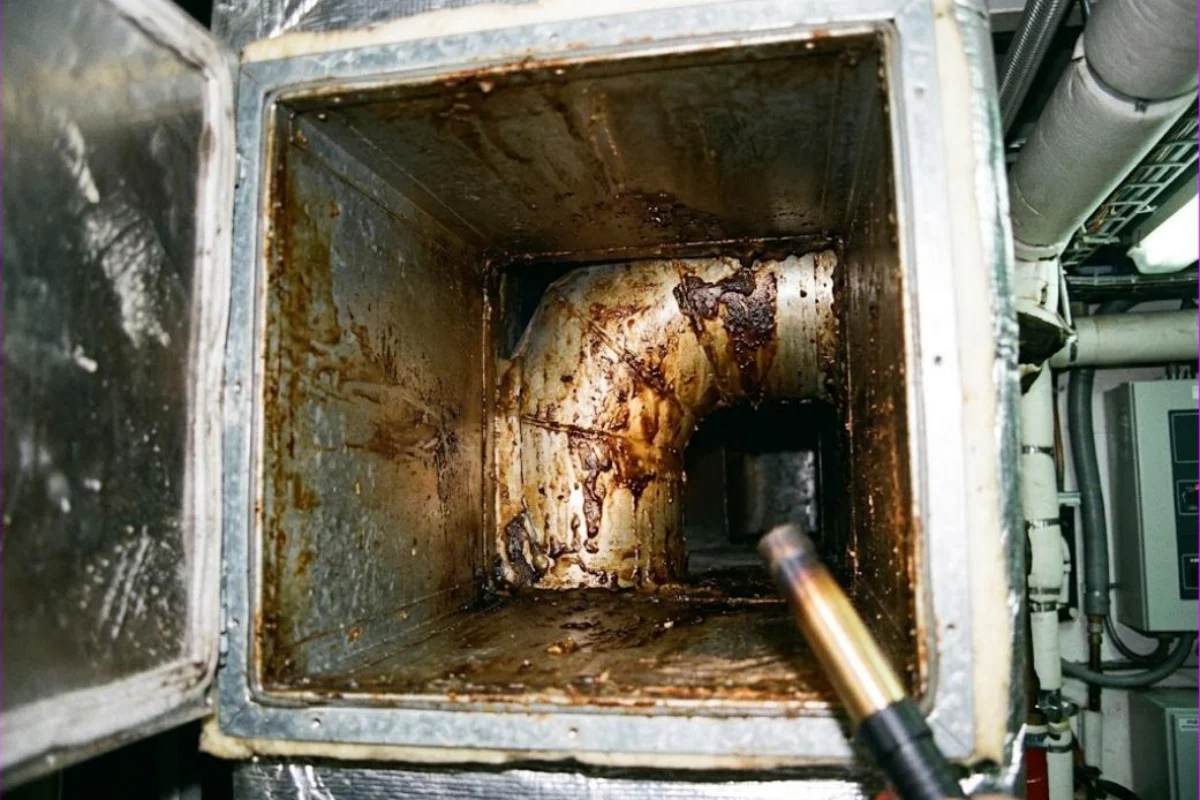

The extraction duct above the canopy, up to the fan. Cleaning the filters and leaving the duct is the most common half-job on board. Extraction duct cleaning
Tanks, calorifier, lines and analysis
On the water side the visible part is the tank, but the problem is usually in the warm, slow-moving parts of the distribution line: the calorifier and the dead legs.
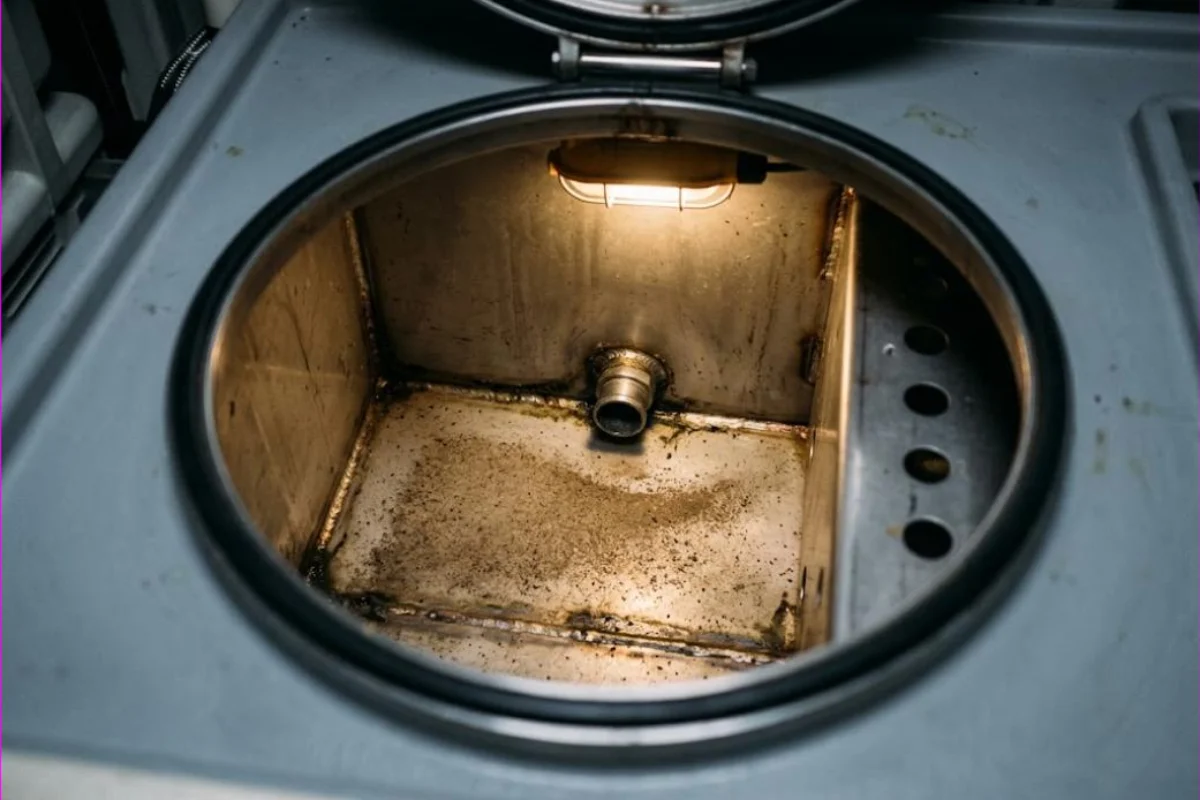

Inside a fresh-water tank: sediment on the bottom and a film on the walls after a season. Emptying it is not the same as cleaning it. Fresh-water tank cleaning


Contamination visible in the tank. When water looks or tastes wrong, this is the first place to open. Water that tastes wrong
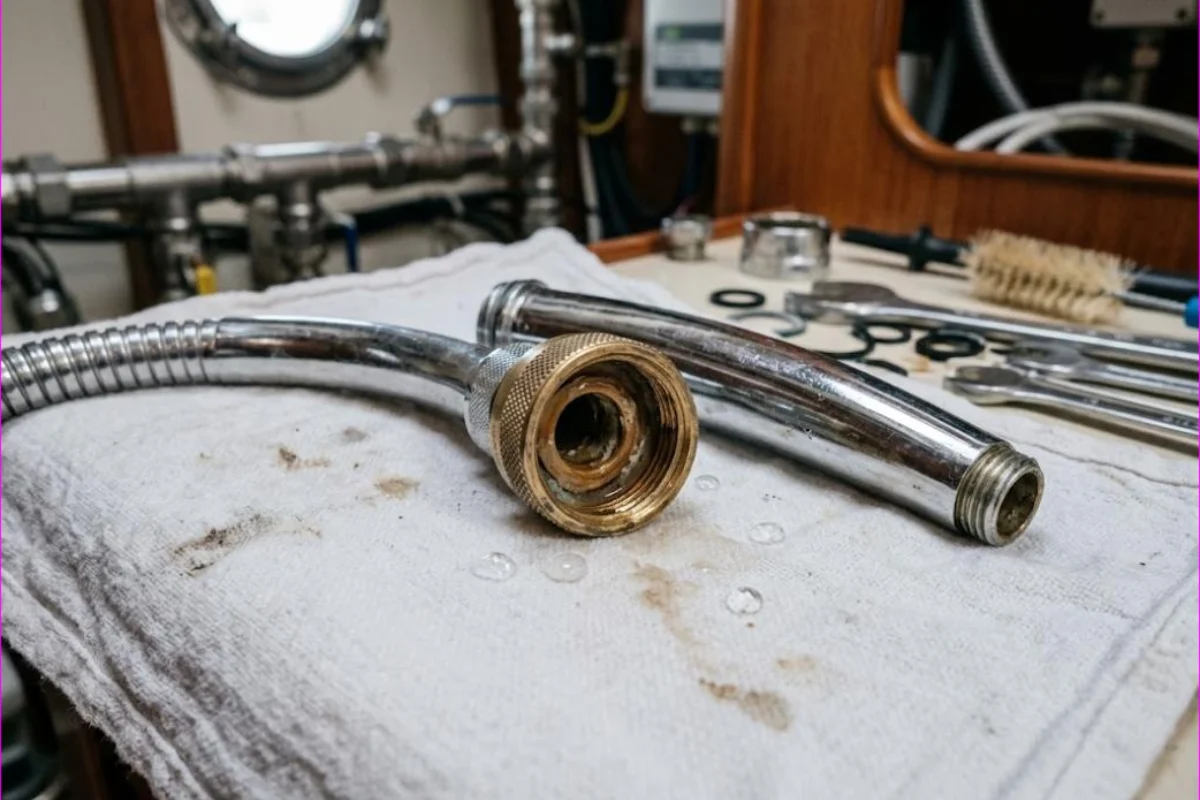

The distribution side: calorifier, lines and the taps furthest from the pump, disinfected and then flushed until the residual is back to normal. Water-system sanitization
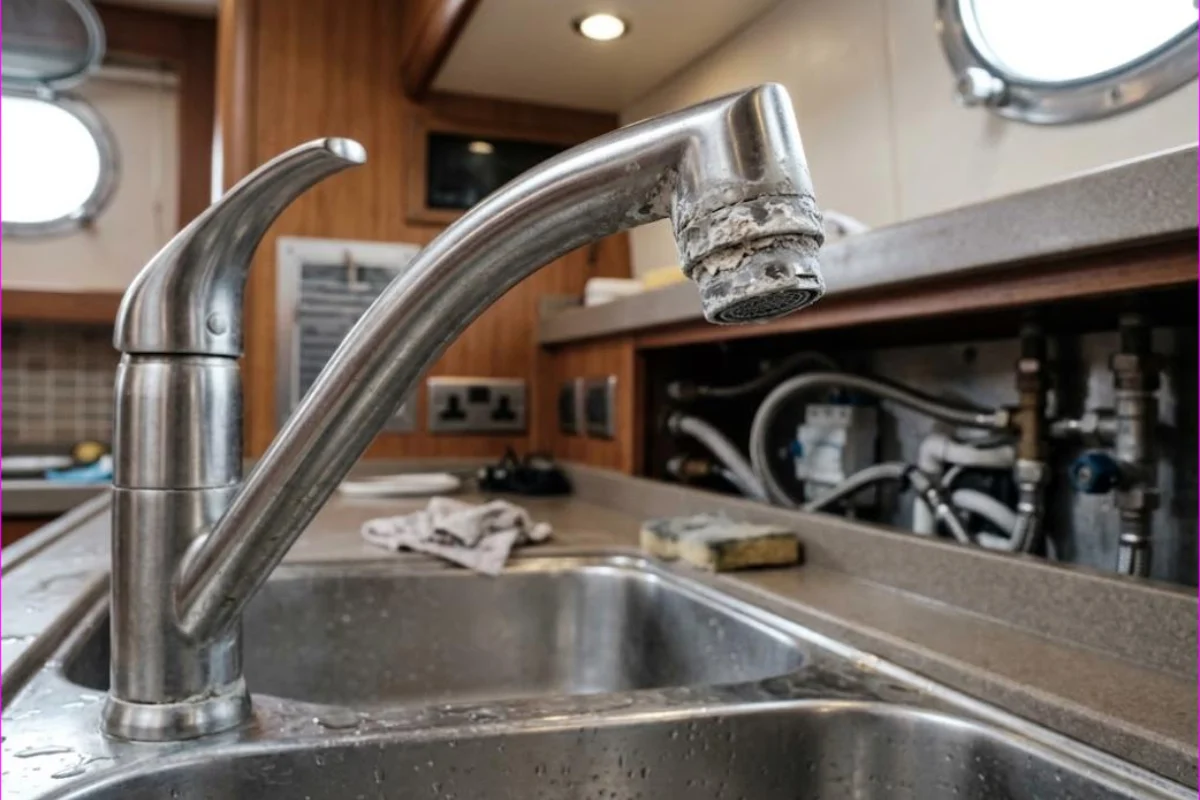

Sampling: bottles filled at defined points so the laboratory result means something. Water sampling
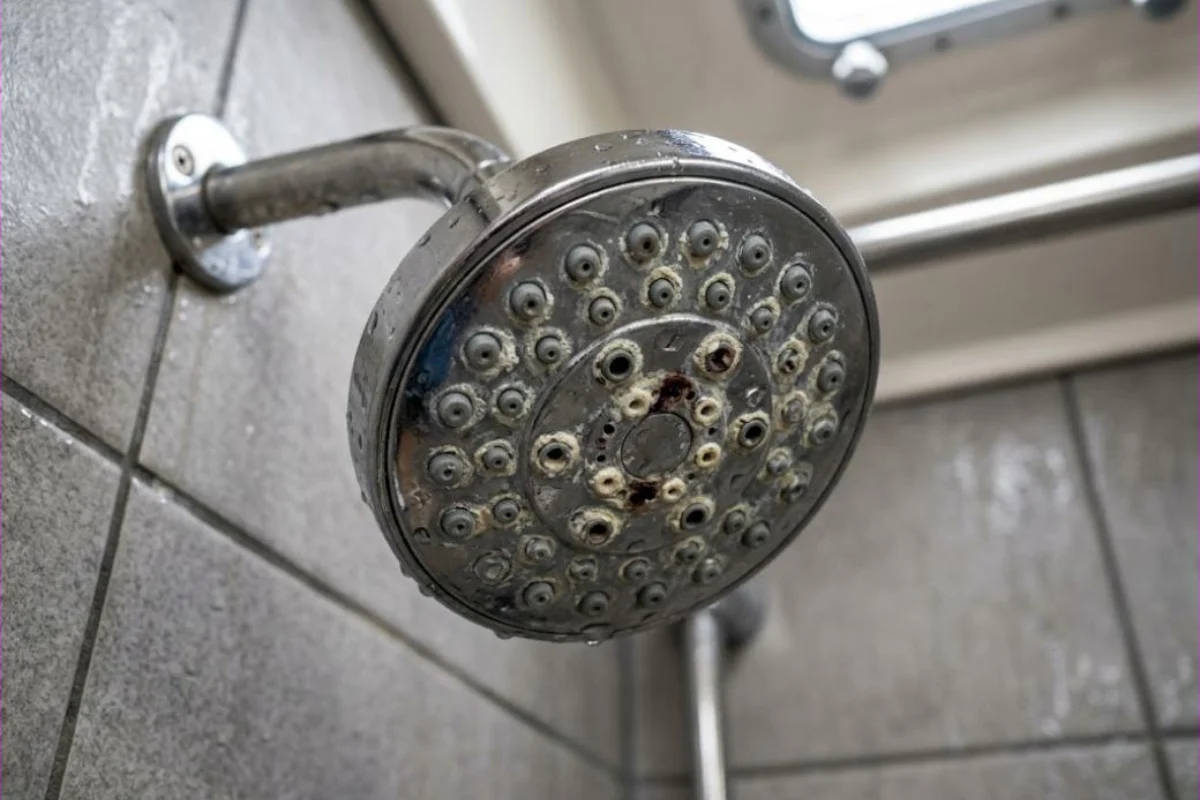

A Legionella test is a laboratory analysis of a water sample, not something read on board. The method is ISO 11731. Legionella testing
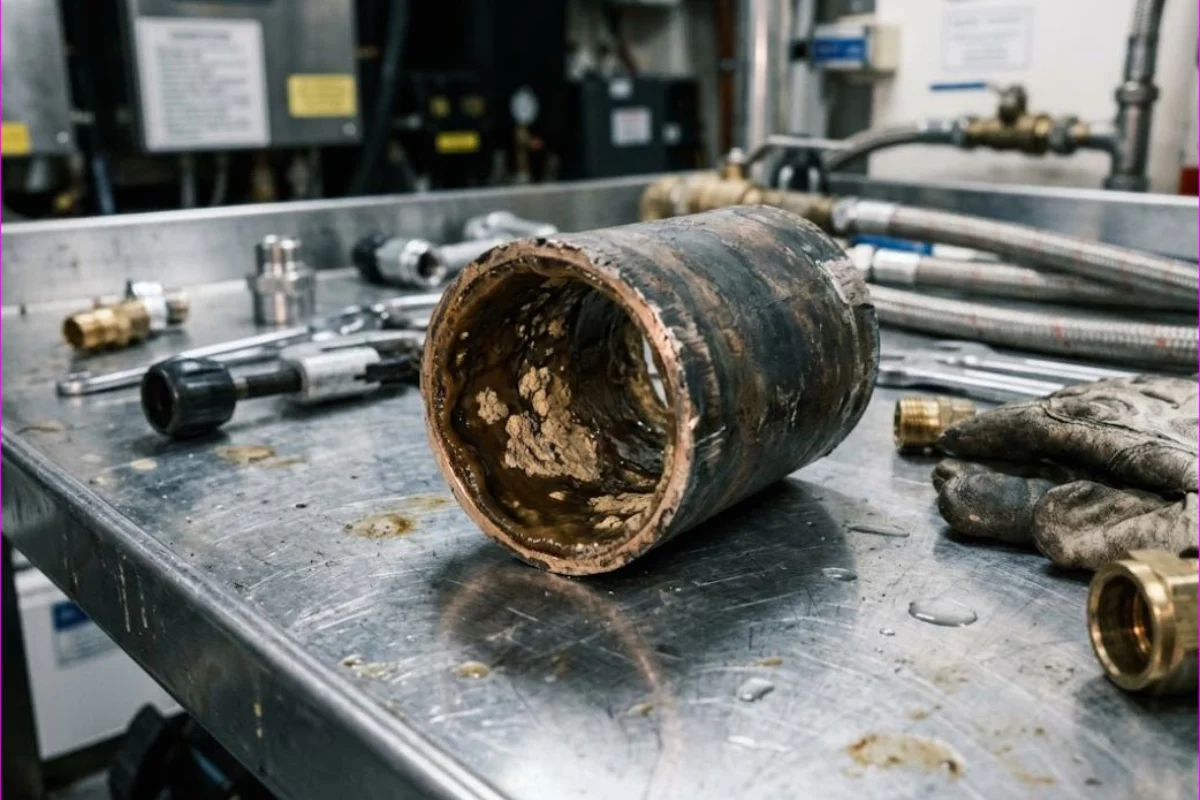

Remediation after a positive result: thermal and chemical treatment of the whole line, then a re-test. Legionella remediation
Pre-season, post-refit and charter turnaround
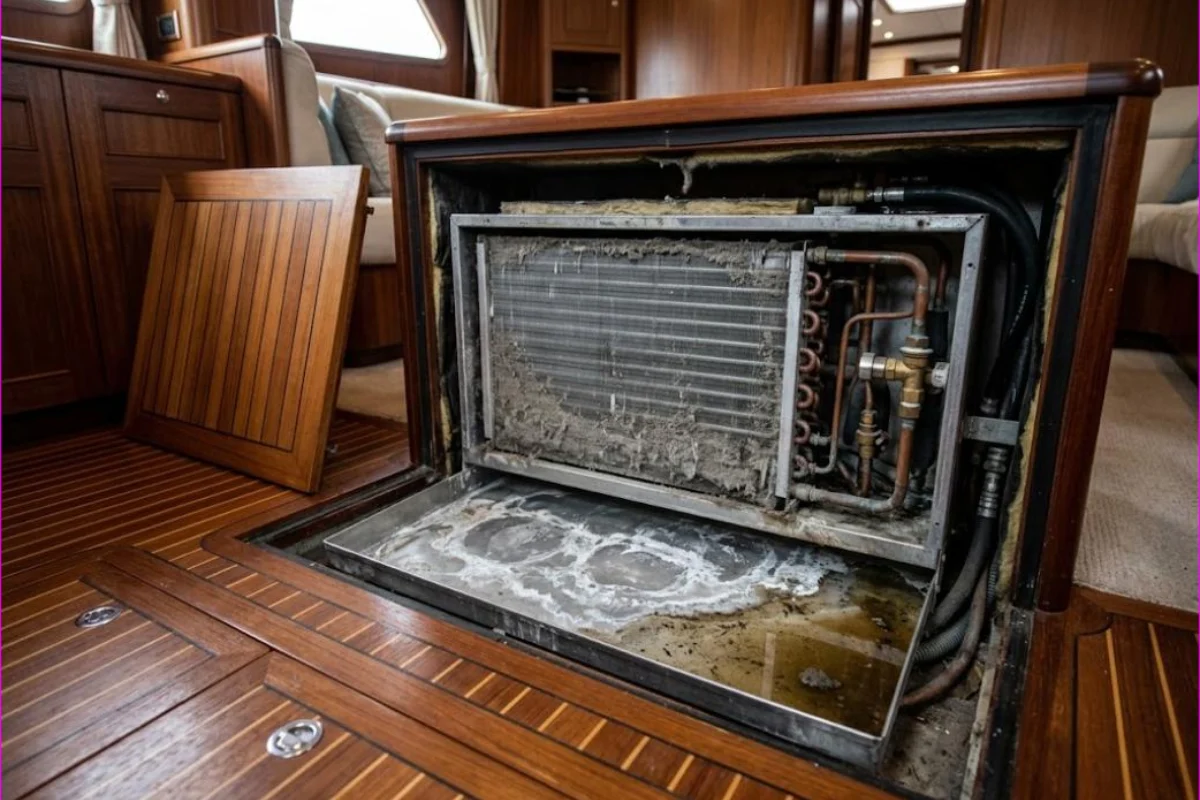

After a winter closed up: stagnant water in the lines and dust settled through the air system. The job before the first guests, not after. Pre-season sanitization
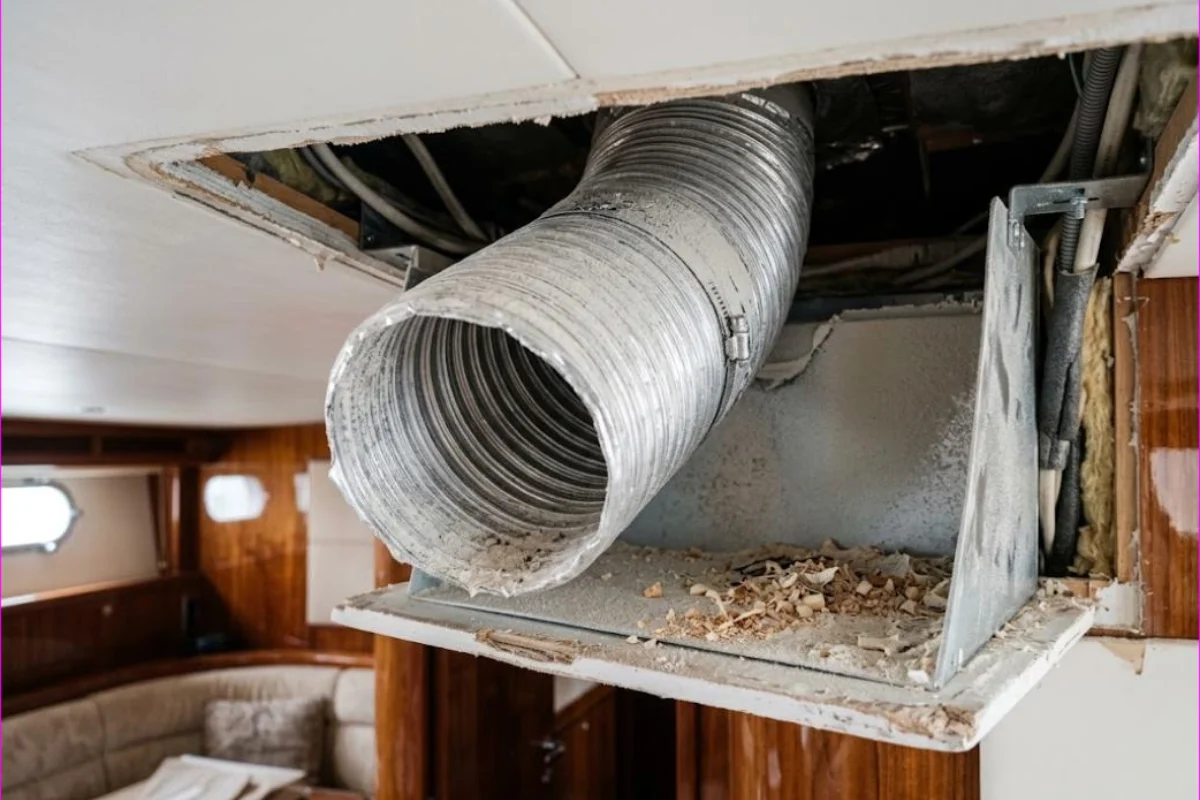
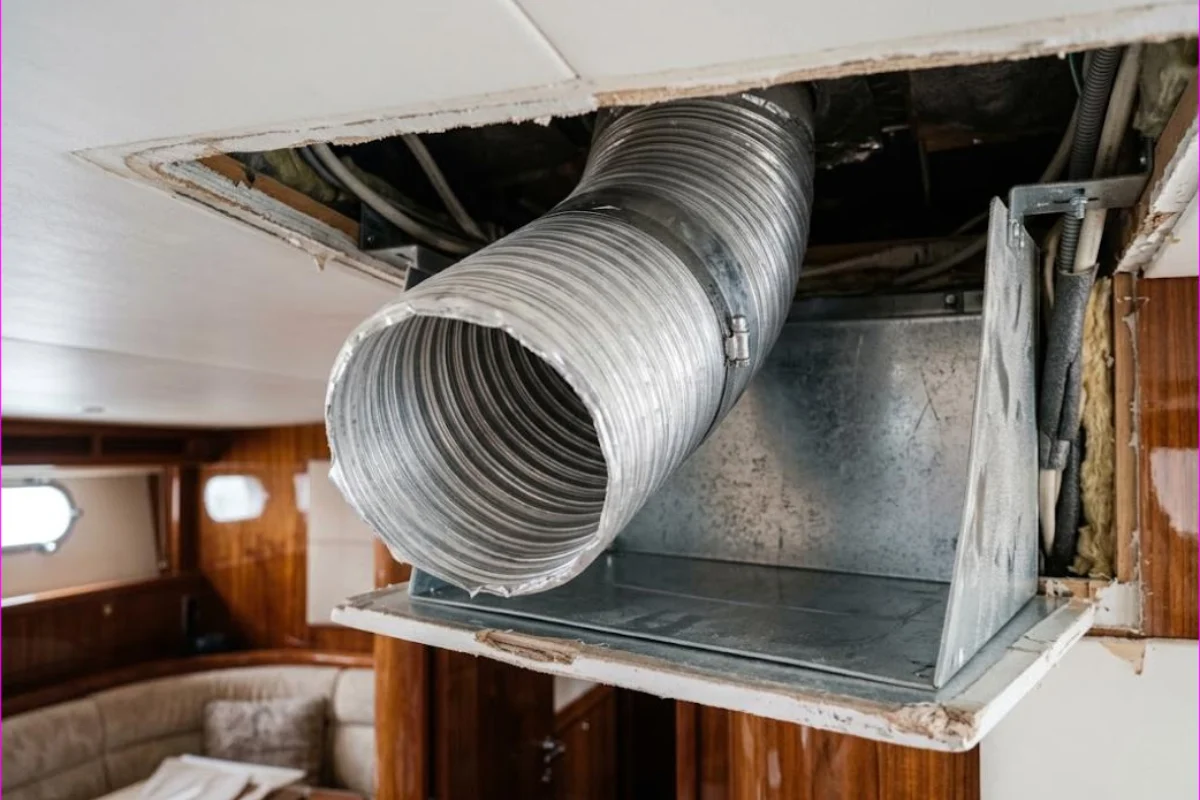
Construction dust after a refit. It travels into ducts and stays there, and it is the reason a newly finished interior can smell of workshop. Post-refit sanitization
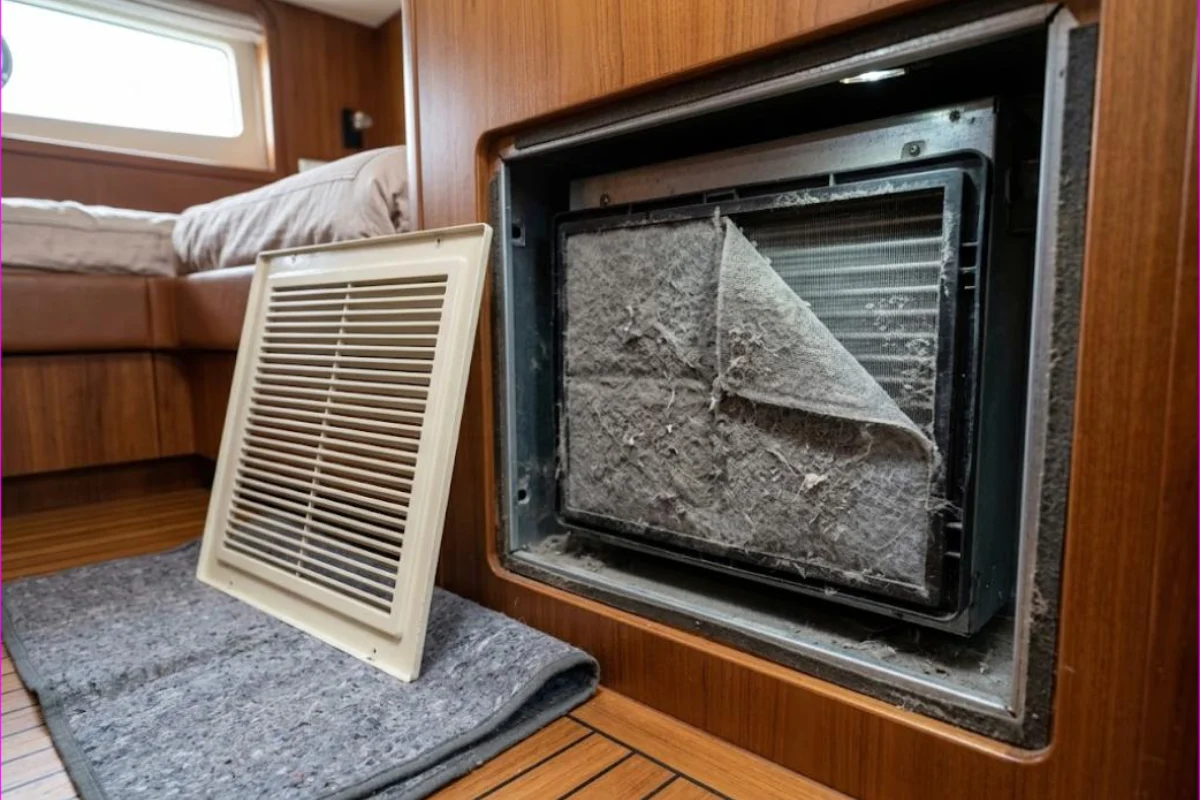
A changeover between charters, done in the window available — cabins and heads, air outlets, soft furnishings. Charter turnaround
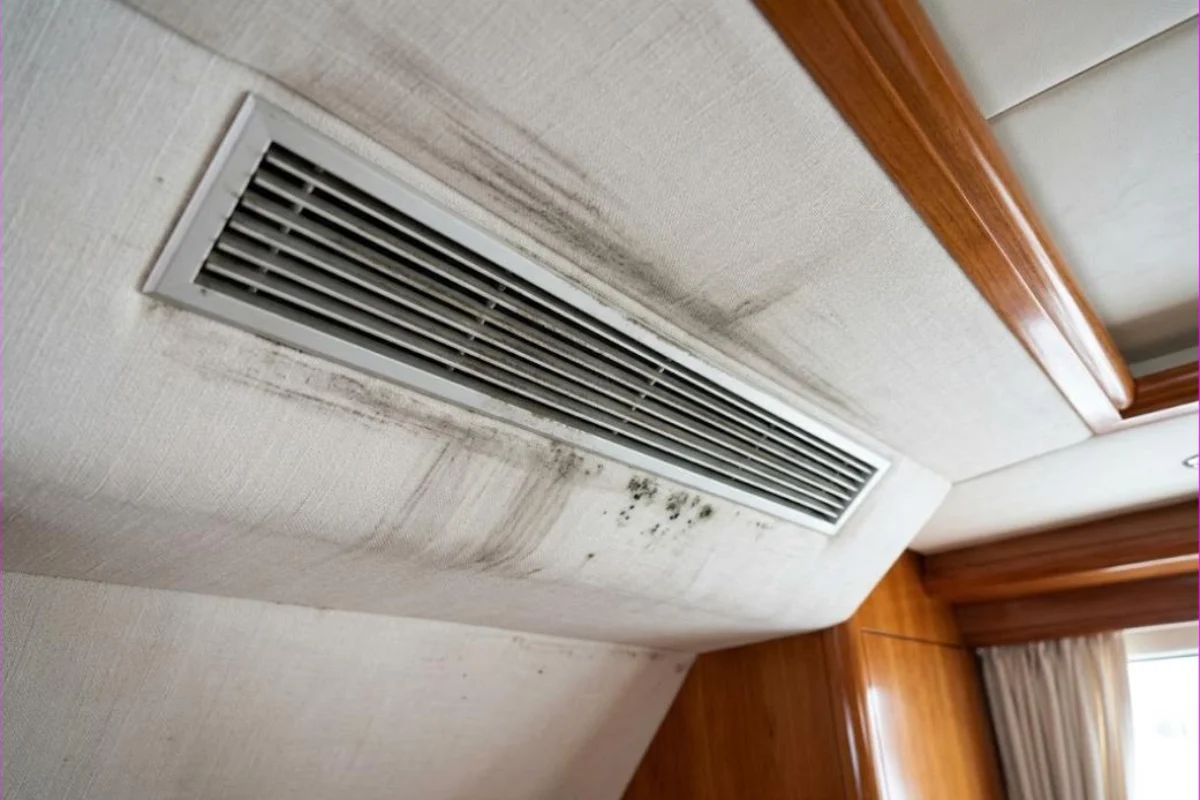
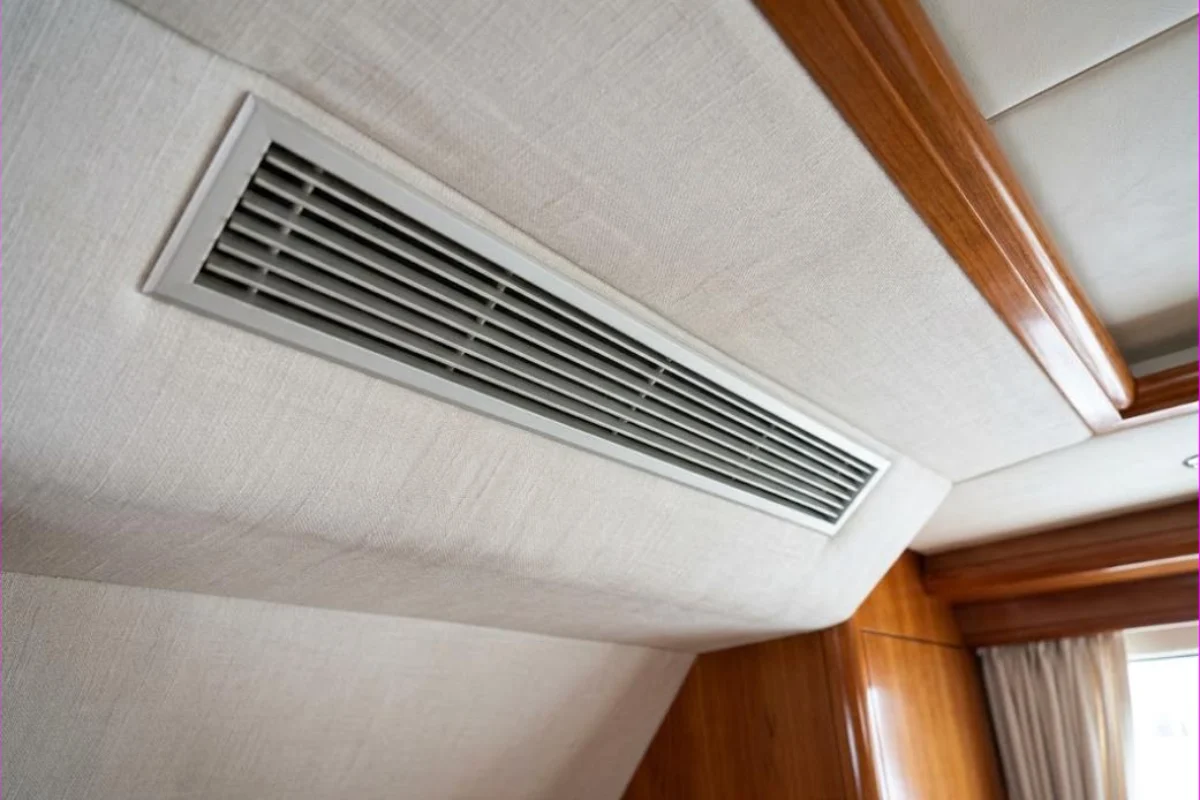
Interior surfaces, soft furnishings and air outlets treated together, so the air and what it touches are done at the same time. Interior sanitization
What these pictures are, and what they are not
These pairs are reference images of the conditions we treat, made so that a captain or an engineer can recognise the same thing on their own yacht. They are not photographs of named vessels and no yacht is identified anywhere on this site. Photographs taken during two specific interventions, with the vessel details deliberately left out, are published in the case studies.
Recognise something here?
If one of these looks like your yacht, tell us which system and what the crew has noticed. A technician calls you back within 24 hours.
Tell us about the yacht
Yacht length, marina, systems and what you have noticed on board. A technician reads the message and calls you back to plan the survey.
"*" indicates required fields
Where we work
Italian Riviera and Tuscany marinas and yards — Viareggio, La Spezia, Portofino, Genoa, Sanremo, Livorno, Argentario — and other Mediterranean ports on request.
Documented work
Every job ends with a technical report and photos for the yacht's records.