
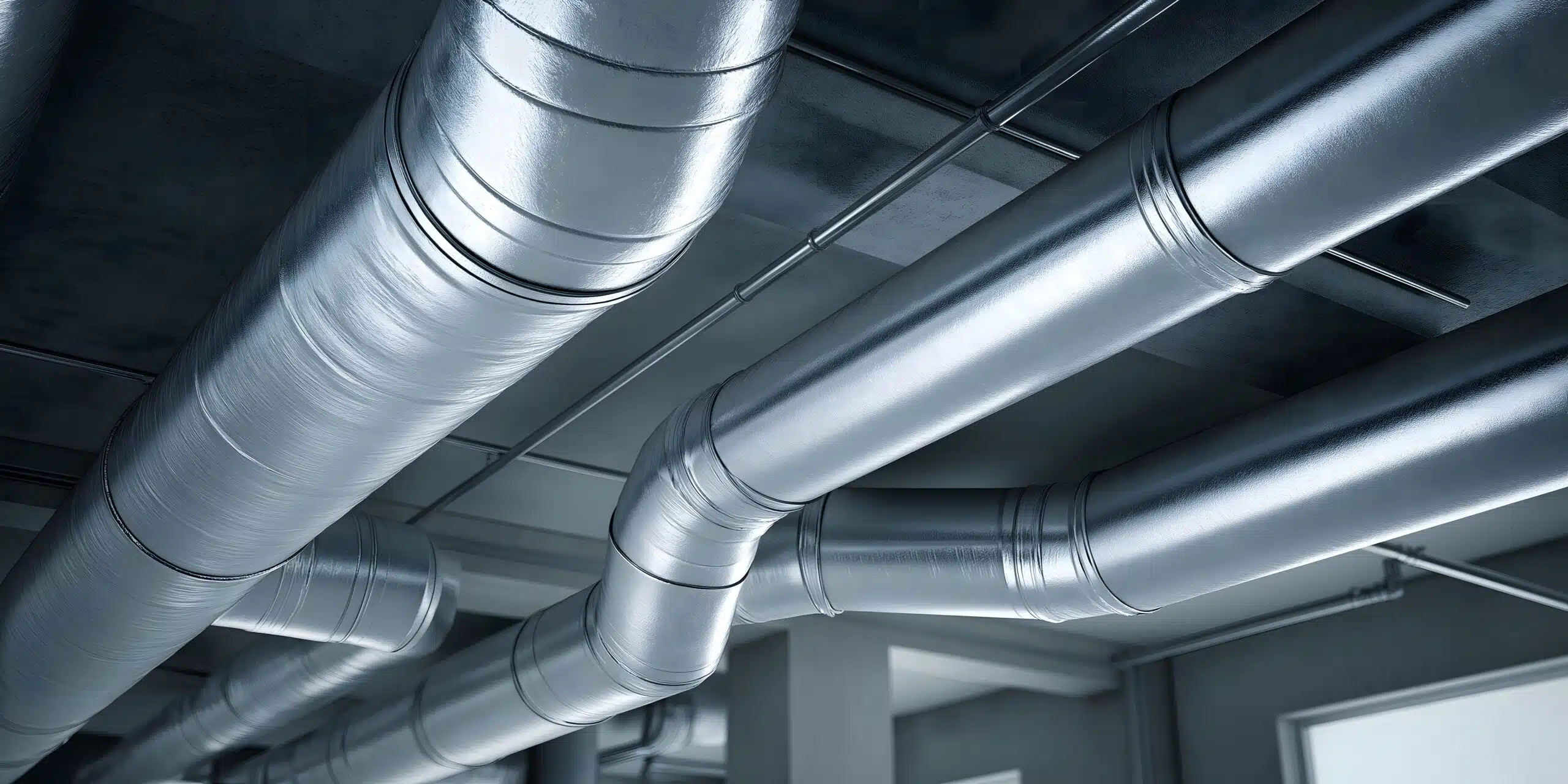
Yacht HVAC & Air Duct Cleaning
Cleaner airflow starts inside the system, not at the vent.
We inspect, mechanically clean and sanitize the air ducts, supply vents and return grilles that feed your yacht's cabins and saloons. The work is planned with the captain and chief engineer, carried out with interiors protected, and documented with photos in a technical report.
yacht experience
When the air in the cabins does not feel fresh
Most HVAC problems on board are noticed by guests and crew long before anyone opens a duct. These are the situations that usually lead to a call.
Why clean-looking vents do not mean a clean system
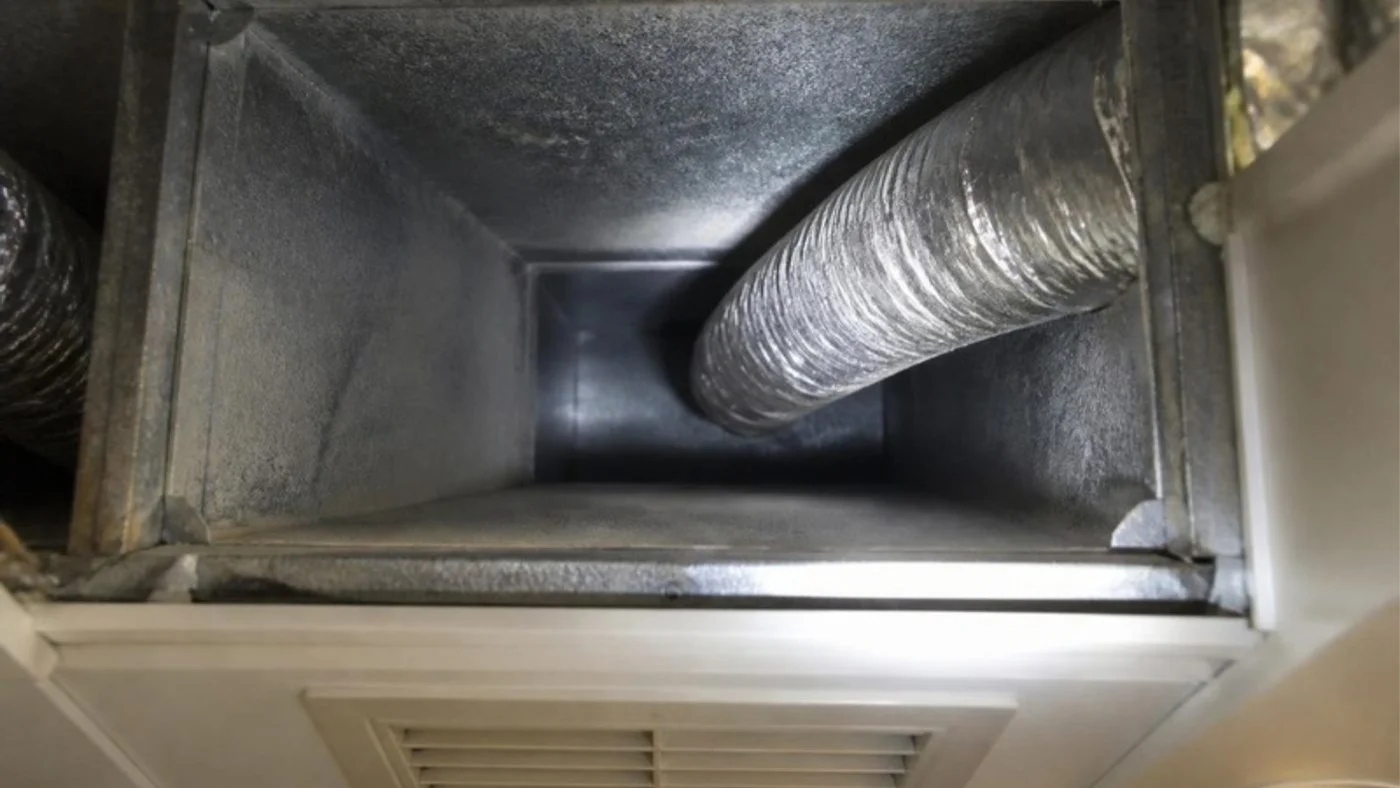
A supply vent can be wiped spotless in a minute, but the duct behind it may run for several metres behind panels and ceilings. Dust, fibres from soft furnishings and fine debris settle along those runs, especially at bends, joints and the first metre after each unit.
Where there is moisture — from condensate, high humidity or cold surfaces — that dust can hold water. It then becomes a place where microbial contamination (bacteria and mould growing on the dust layer) can develop. After a long lay-up, the system may start again with everything that settled while it was idle.
Most yacht systems also recirculate part of the cabin air through return grilles. Contaminants that reach the return side can be carried back into the same cabins again and again. This is why we treat the ductwork as a whole circuit, not as a set of separate vents.
Cabin air, dust and fibres are drawn back into the system.
Air passes the filter and coil, where moisture condenses.
Long runs behind panels where dust settles at bends and joints.
Supply vent where residue may show as grey marks.
Air reaches guests and crew, then returns to the grille.
What builds up inside an air distribution system
Ductwork collects dust, fibres and moisture. Over a season this becomes a layer that the airflow passes through every time the system runs, and that the crew and guests breathe in every cabin served by that circuit.
The video shows how the deposit forms and why surface cleaning at the grille does not reach it. The same applies to a yacht HVAC circuit, where runs are shorter but access is far more restricted.
Signs your yacht's ducts should be inspected
None of these signs proves contamination on its own. Together, or when they keep coming back, they are a good reason to look inside the system.
Dust lines on the headliner
Dark streaks around diffusers may indicate dust carried through the supply duct.
Musty or stale cabin air
A smell that appears when the fans start can be associated with contaminated ductwork.
Persistent dampness
High humidity in cabins may mean moisture is lingering in ducts or at the unit.
Condensate problems
Overflowing trays or wet insulation near units can feed growth inside the ducts.
Long lay-up or refit
Systems idle for months, or exposed to refit dust, should be checked before use.
Weak airflow at outlets
Reduced airflow may point to obstructions, dirty grilles or debris in the ducts.
Not sure what your systems actually need?
Tell us the yacht, what the crew has noticed and where she is now: a technician calls you back within 24 hours and plans the survey around your programme.
How we inspect the HVAC system before cleaning
We start with a walk-through of the system with the chief engineer, using the yacht's drawings where available. The aim is to understand which units feed which cabins, where the ducts are accessible and which areas matter most to the crew.
Where ducts can be reached through vents, grilles or access panels, we use an inspection camera to see the inside surfaces. The photos from this step show the condition of the ducts before any work and are included in the final report.
- Condition of supply vents, diffusers and return grilles
- Camera inspection inside ducts where access allows
- Dust and residue at bends, joints and near the units
- Signs of moisture, condensate or wet insulation
- Condition of filters and the unit side of each duct run
- Areas where cabin air recirculates through the return side
- Photos of each inspected point for the report
How we clean and sanitize yacht air ducts
Each job follows the same sequence, adapted to the yacht's layout and to what the crew needs to keep running while we work.
Planning and protection
We agree the areas and timing with the captain and chief engineer. Floors, furniture and finishes near the work points are covered and masked.
Access to the system
Vents, diffusers and return grilles are removed where possible, and agreed access panels are opened to reach the duct runs.
Mechanical cleaning
Ducts are brushed to loosen deposits, while vacuum extraction removes the loosened dust so it is not pushed into the cabins.
Vents and grilles
Removed vents and grilles are cleaned separately and refitted, so the visible parts match the condition of the ducts behind them.
Sanitization
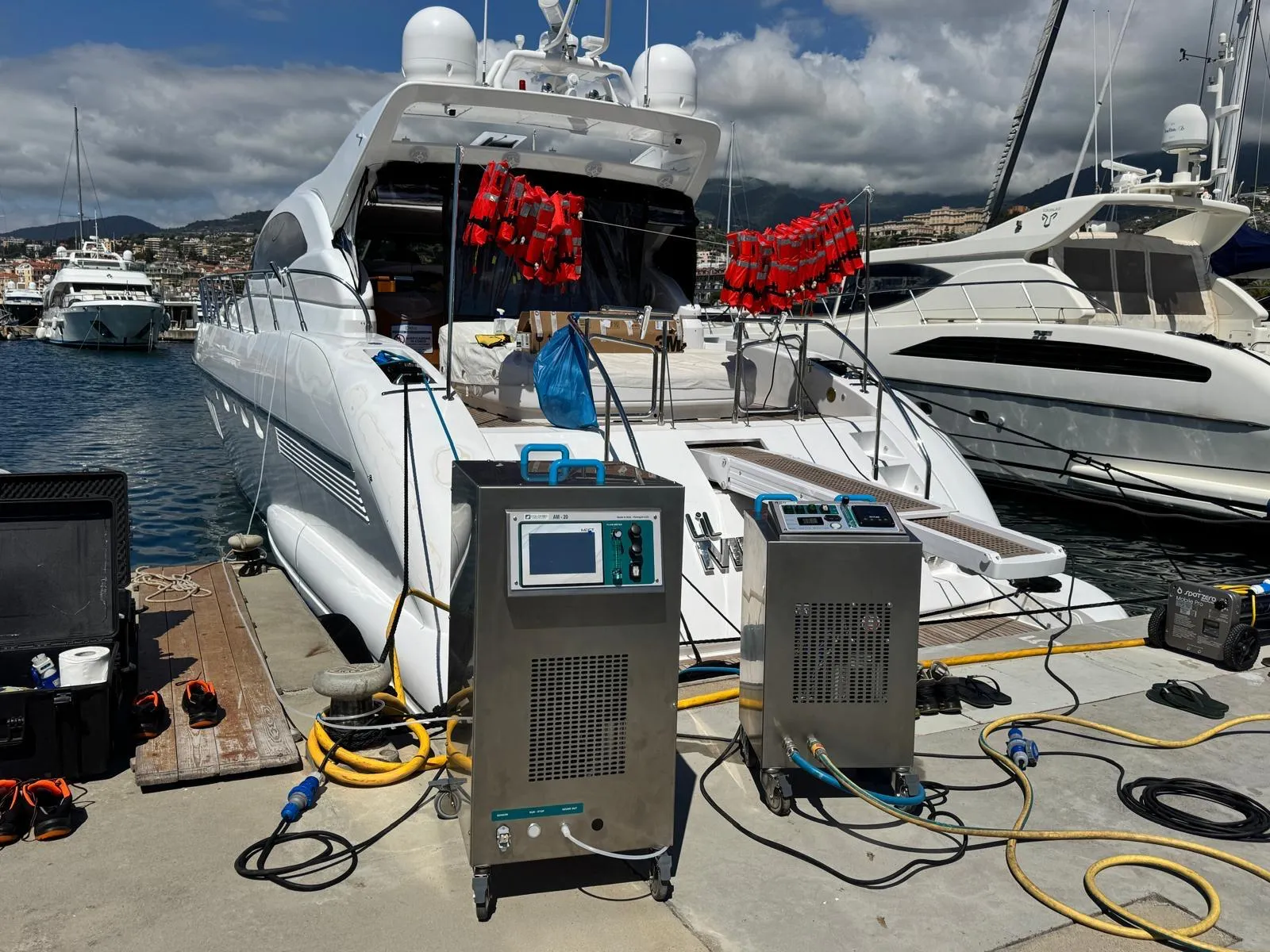
The cleaned system and the closed spaces it serves are sanitized, including ozone treatment with our AM-20 mobile generator where suitable, with spaces kept empty.
Checks and report
We re-inspect the treated points, photograph them and deliver a technical report with areas treated, methods used and recommendations.
What the inside of a supply duct can look like
These images are illustrations of typical conditions, not photos of a specific job. Real before and after photos from your yacht are part of our report.
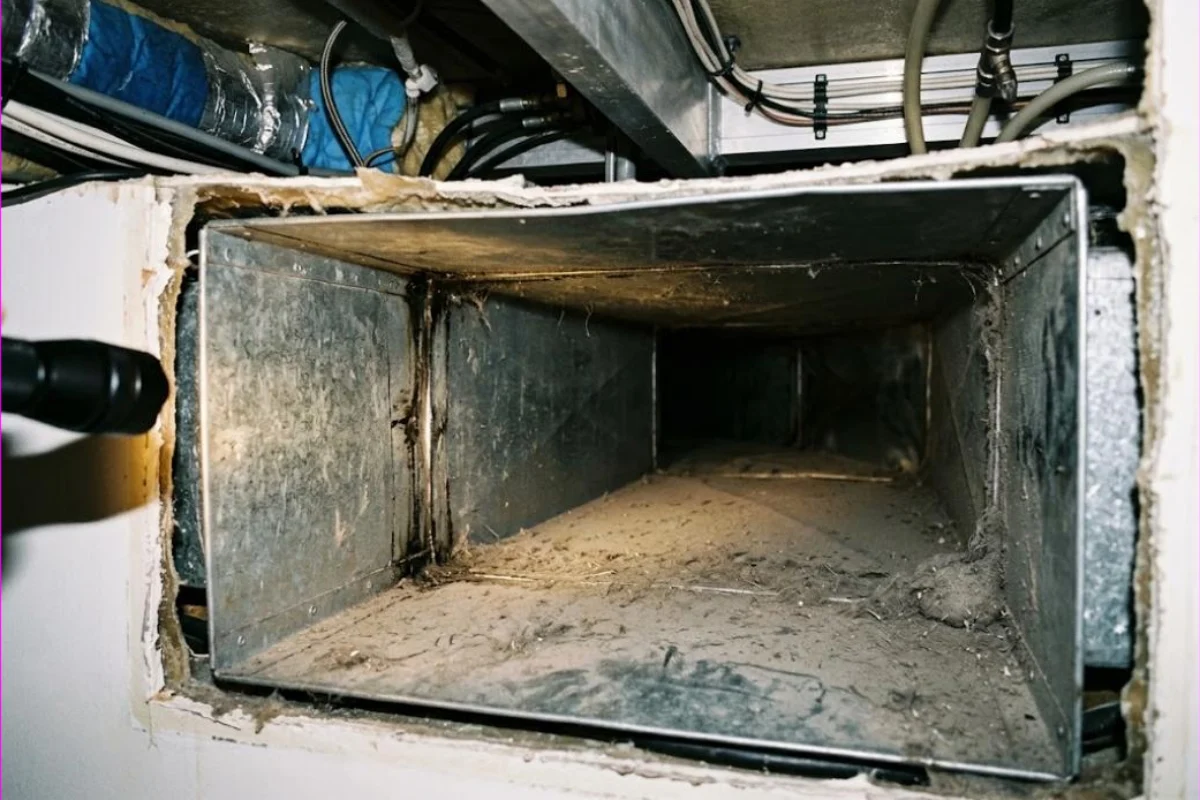
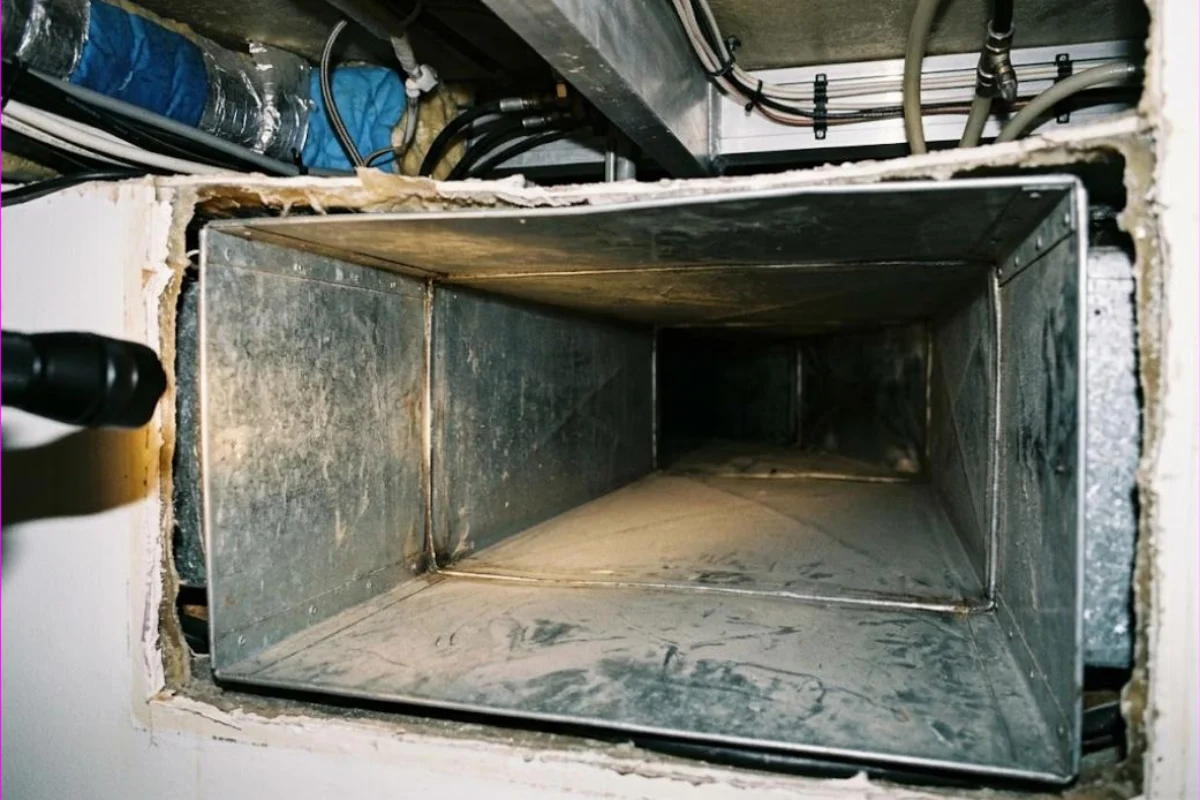
Illustrative visual showing the type of condition we find and the result we work towards. Photos of real AirBio Marine jobs are shown in the gallery below and in every client report.
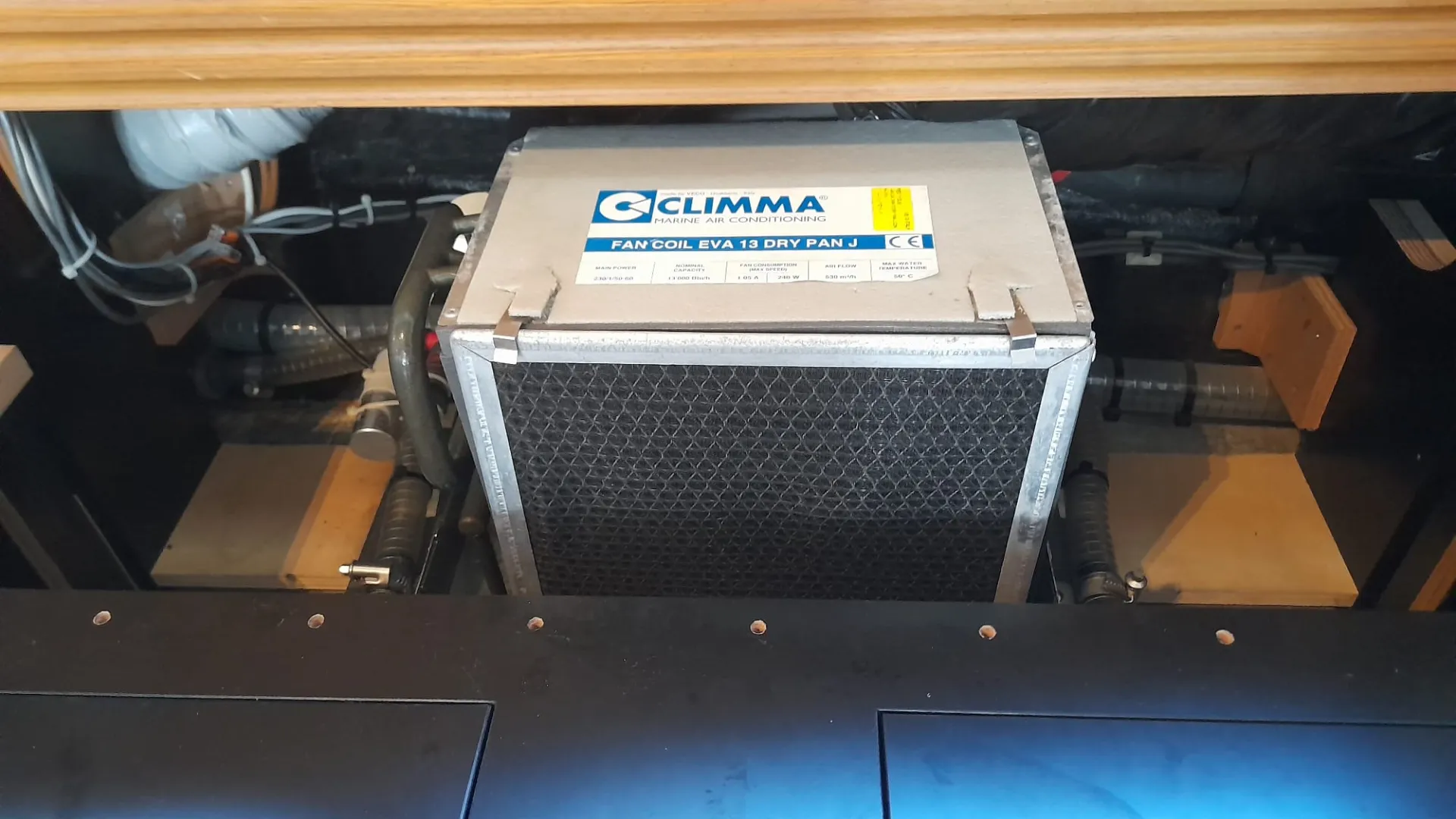
Our equipment and work on board
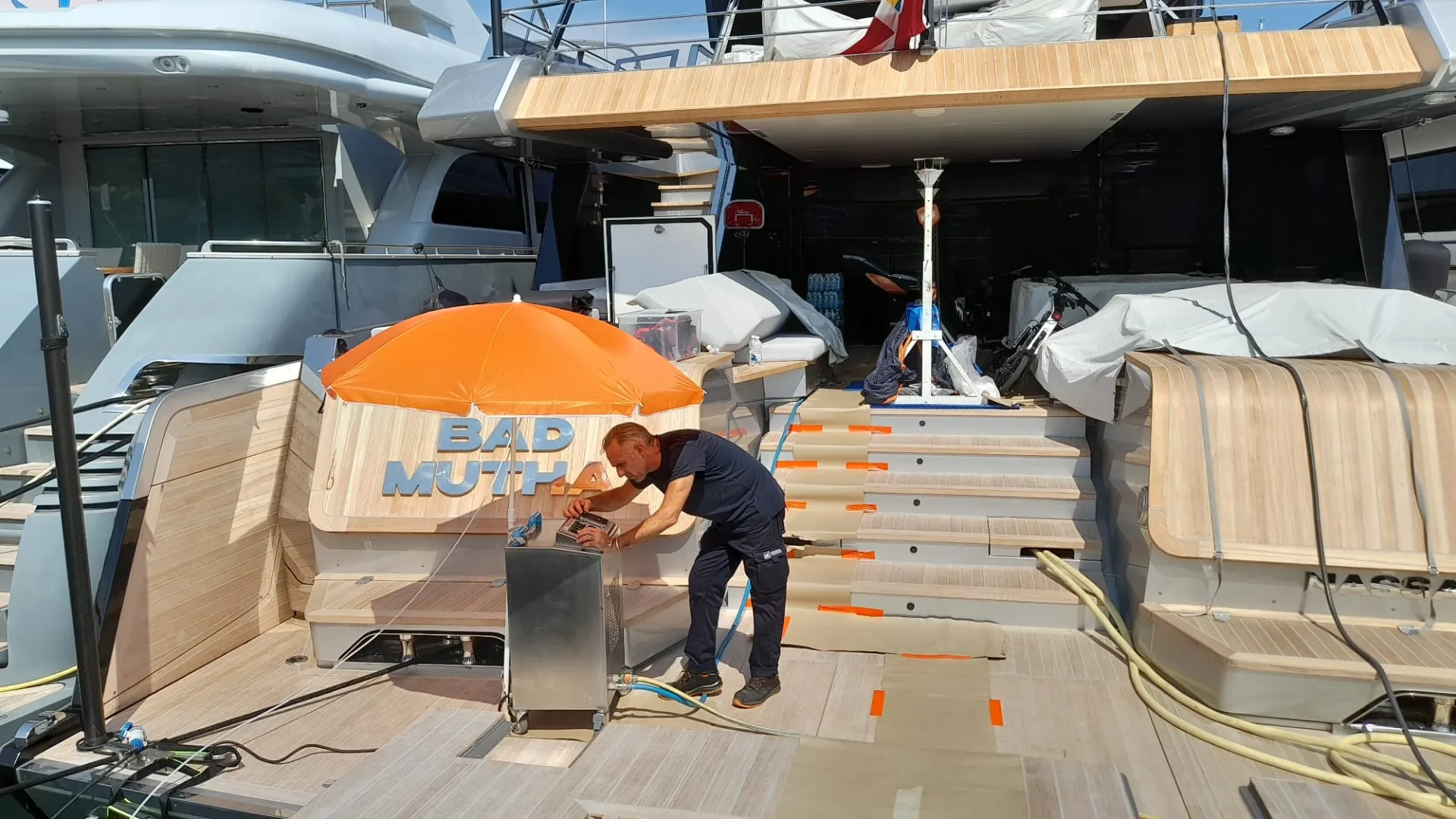
Photos from real AirBio Marine jobs: our units on the quay next to the yacht, the technician kit and the components we open and clean.

Verified reviews on Trustpilot
What you receive
Technical report
A written report listing the ducts, vents and grilles treated and the methods used.
Before and after photos
Photos from the inspection camera and of each treated point, so you can see the difference.
System map of treated areas
Which units and cabins were covered, useful for the next survey or refit.
Points needing attention
Issues found along the way, such as wet insulation or blocked access, flagged for the engineer.
Maintenance recommendations
Suggested intervals and a maintenance plan based on how the yacht is used.
One report for the yacht's technical history
Every job closes with a written report: what was inspected, what was found, what was treated, photos before and after, readings where taken and recommendations for the next check. Useful for the captain, the management company, the next survey and the next season.
Who this service is for
When guests or crew report stale air, or before the season, you get a clear picture of the ductwork and a documented clean without disrupting the programme.
You get camera evidence of the duct condition and a record of what was cleaned, which supports your planned maintenance and future access decisions.
A technical report with photos gives you documentation for the owner, the management company and applicable requirements.
You know the air in the cabins has been dealt with inside the system, not only at the vents you can see.
Where we clean yacht HVAC systems
We work in marinas and yards along the Italian Riviera and Tuscany, and in other Mediterranean ports on request.
Monaco
Spain
and beyond
Wherever you are in the Mediterranean, we can be there.
Book the survey before your next movement
We work in the main Mediterranean marinas and refit yards, with documented results and lab analysis where required.
Yacht HVAC and air duct cleaning: questions
Why clean the ducts if the vents already look clean?
Vents are the only part of the system you can see. Dust, fibres and moisture usually collect further in, at bends, joints and near the units, where they cannot be wiped. If those deposits stay, air passing over them can carry particles and smells into the cabins. Cleaning the inside of the ducts deals with the part of the circuit that the crew cannot reach during normal housekeeping.
Can you see inside the ducts before cleaning?
Yes, where access allows. We use an inspection camera through vents, grilles and access panels to see the inside surfaces of the ducts. Not every run on a yacht is reachable, and we say so clearly in the report. The camera images help decide where to focus cleaning and give you a before record to compare with the photos taken after the work.
What is the difference between cleaning and sanitizing ducts?
Cleaning is the mechanical removal of dust and deposits, by brushing and vacuum extraction. Sanitizing is a treatment that reduces microbial contamination on surfaces and in the air, which we carry out after cleaning, including ozone treatment of closed spaces where suitable. Sanitizing a dirty duct is less effective, because the dust layer protects what grows on it, so cleaning always comes first.
When is the best time to clean a yacht's HVAC system?
The most practical moments are during lay-up, at the yard, after a refit that produced dust, or before the season starts. Work can also be planned between charters when the programme allows. We agree the timing with the captain and chief engineer so that cabins can be closed off and protected while we work in each area.
Do you use ozone inside the cabins?
Ozone is used only as a sanitization step for closed spaces, after mechanical cleaning, and only where it suits the area. The space must be empty of people, pets and plants during treatment, and it is ventilated before anyone goes back in. We agree which spaces are treated with the crew and record it in the report.
Will the work damage the interior?
Floors, furniture and finishes near each work point are protected and masked before we start. Vents and grilles are removed carefully and refitted after cleaning. Access panels are opened only where agreed with the chief engineer. If an area cannot be reached without risk to the joinery, we note it in the report rather than force access.
Related services
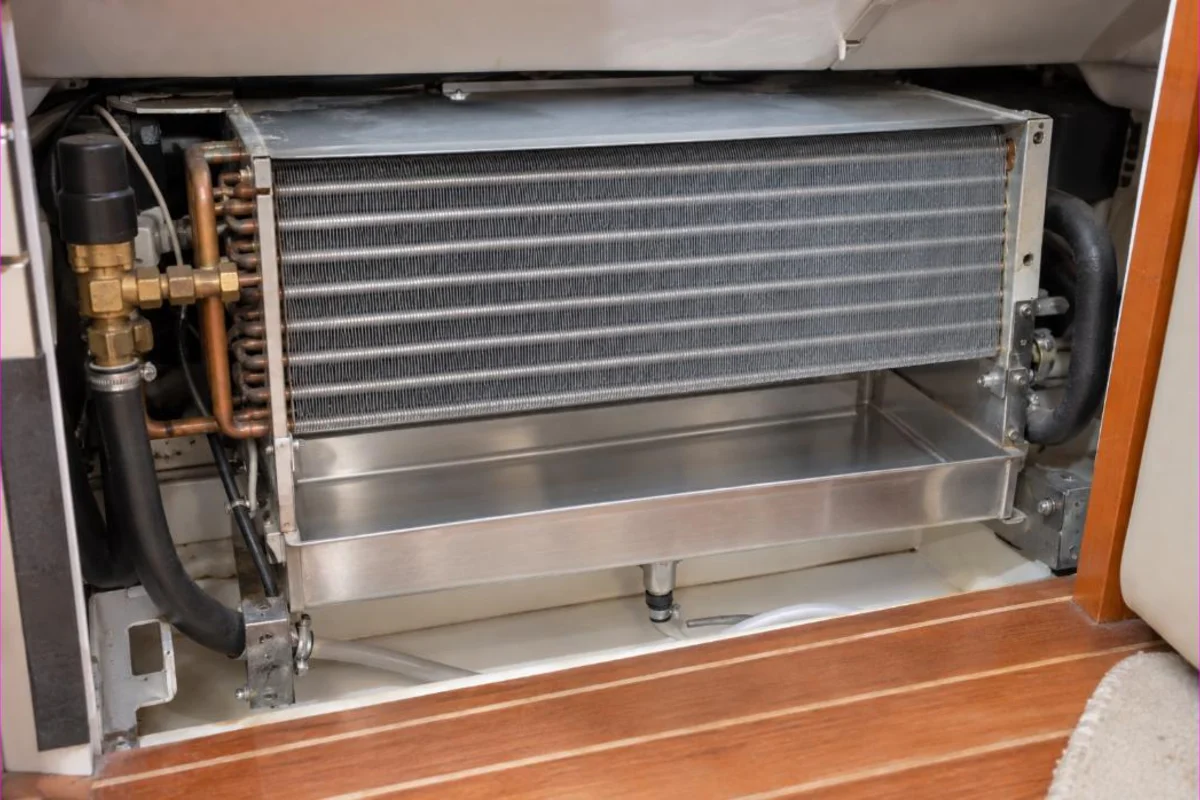
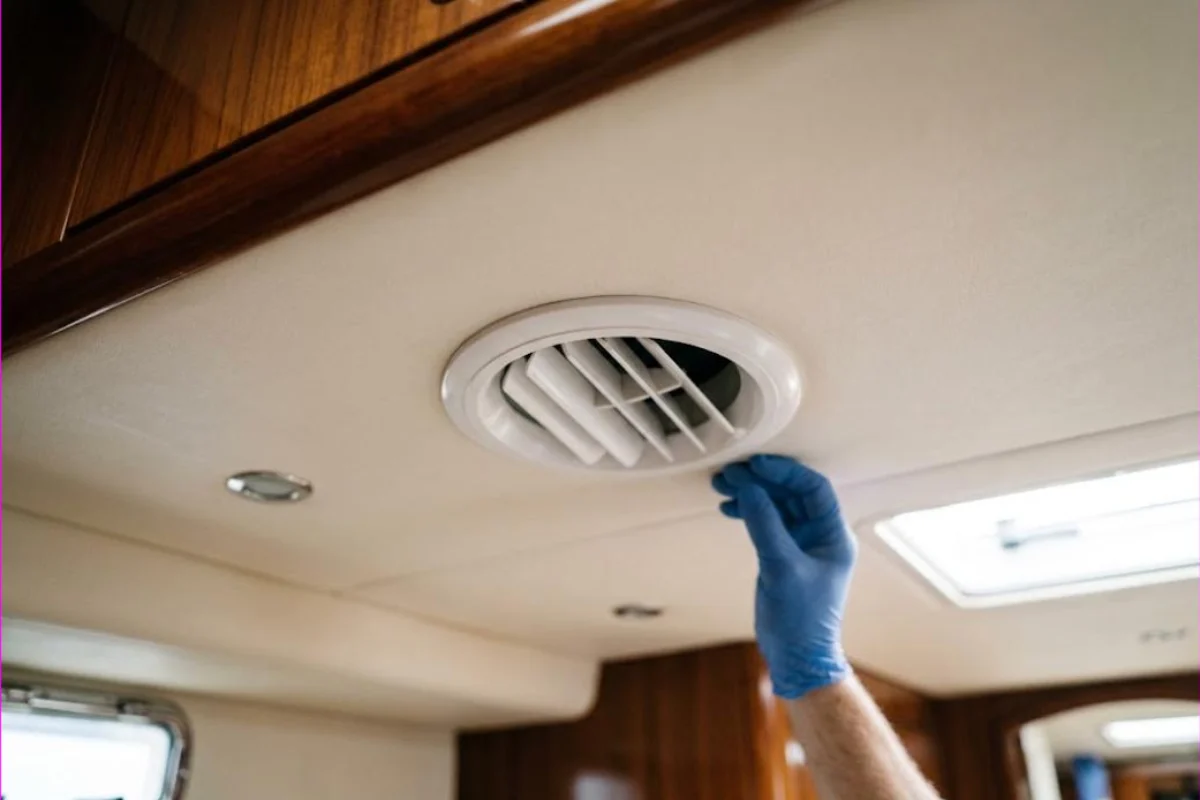
Yacht Fan Coil Deep Cleaning
A new filter does not clean the coil, tray and drain behind it.
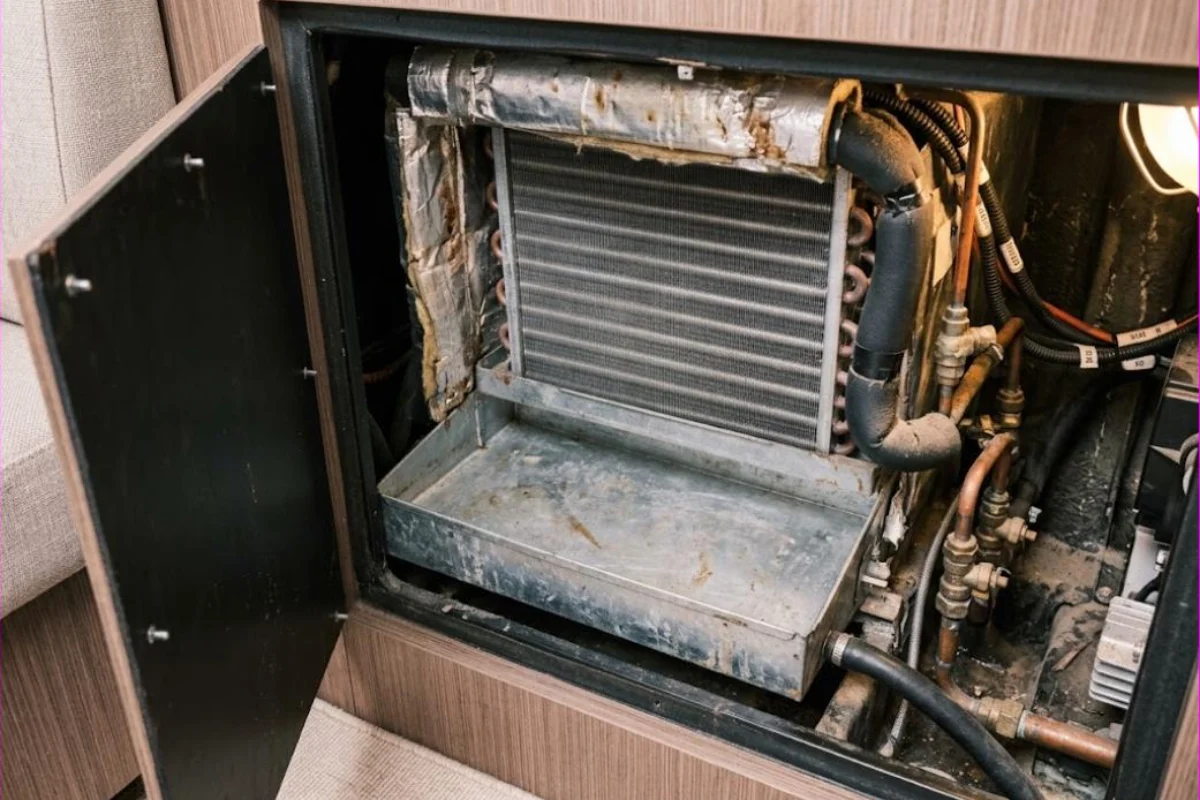
Yacht Mould & Condensation Remediation
Removing the visible mark is only one part of the job.
Yacht Odour Removal & Source Investigation
Bad Smells on a Yacht? Find the Source, Not a Cover-Up.

Pre-Season Yacht Sanitization
Prepare the yacht before the first guest arrives.
Tell us about the yacht
Yacht length, marina, systems and what you have noticed on board. A technician reads the message and calls you back to plan the survey.
"*" indicates required fields
Where we work
Italian Riviera and Tuscany marinas and yards — Viareggio, La Spezia, Portofino, Genoa, Sanremo, Livorno, Argentario — and other Mediterranean ports on request.
Documented work
Every job ends with a technical report and photos for the yacht's records.
Not sure where the problem starts?
Let the technical team assess it onboard.
In marina, at the yard or during lay-up. We tell you what needs treating — and what doesn’t.
+39 0584 433 198Expertise.
Peace of mind.