

Does Your Yacht AC Smell Musty?
The smell may start deeper inside the system.
We sanitize yacht air-conditioning units — fan coils, split and ducted units, and chilled-water air handlers — with a focus on finding where the odour starts. Each unit is inspected, cleaned, sanitized and documented, so the crew knows what was found and what was done.
yacht experience
When the air conditioning brings a smell with it
An AC odour is one of the most common complaints on board, and one of the easiest to misread. The smell reaches the cabin through the vent, but it rarely starts there.
A damp smell when the AC switches on
The first minutes of airflow smell musty or sour. This can be associated with moisture and residue sitting in the unit while it was off.
Guests mention it before the crew
Crew get used to a faint smell; guests arriving on board notice it at once. That alone is a reason to inspect.
Air fresheners are not holding
Scents cover the smell for a few hours, then it comes back. Masking may hide a source that keeps producing odour.
The smell came back after the season started
A system that was fine last year may smell after a long shutdown, when condensate, dust and humidity have had time to settle.
What your AC smell may point to
Why yacht AC units start to smell
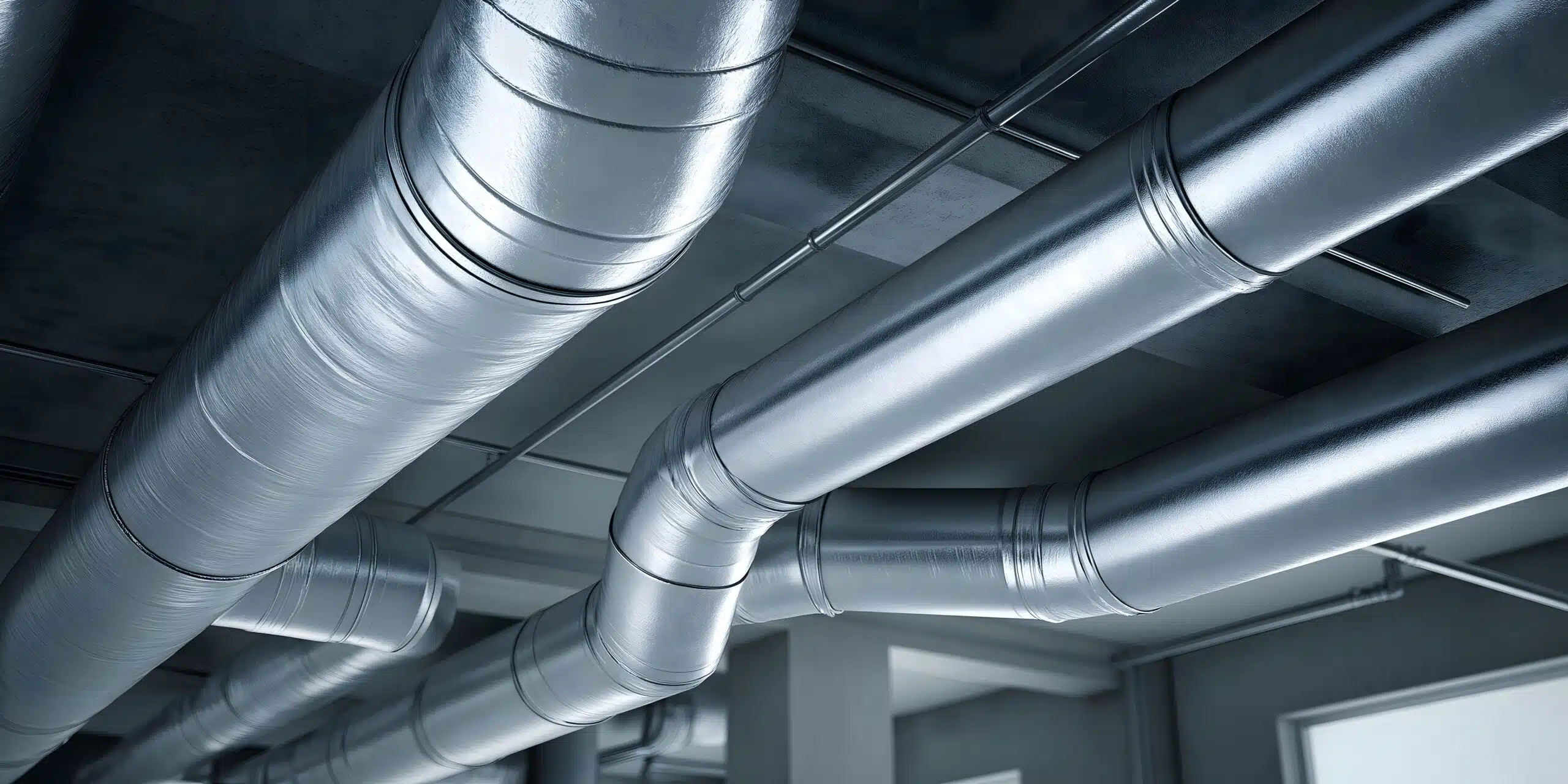
Every air-conditioning unit on board removes moisture from the air. That water collects on the cold coil, runs into a condensate pan and leaves through a drain. When any part of that path stays wet — a pan that does not fully empty, a drain partly blocked, a coil packed with dust — it becomes a place where biofilm can form. Biofilm is a slimy layer of bacteria that sticks to wet surfaces and can produce musty odours.
Humidity on board, closed cabins and long shutdowns make this worse. During lay-up the unit sits dark and damp, dust settles on the coil, and mould can develop on nearby surfaces. When the system restarts, the air passes over all of it on its way to the cabin.
On larger yachts, chilled-water air handlers and ducted units feed several spaces, so contamination at one point can reach more than one cabin. The inspection needs to follow the air from the unit to the outlet.
Warm, humid air is drawn into the unit.
Stops larger dust; fine particles can pass.
Cools and dries the air; stays wet while running.
Collects condensate; standing water may support biofilm.
Carries treated air, and any odour, into cabins.
Signs your AC units should be sanitized
Any one of these can have more than one cause. They are reasons to inspect, not a diagnosis.
Musty or sour smell
Especially at start-up, may point to a wet pan or coil.
Dripping or wet areas
Water near a unit can be associated with a blocked drain.
Mould near outlets
Dark spots around vents should be inspected together with the unit.
Cabins feel clammy
Poor dehumidification may indicate a dirty coil or airflow problem.
Long shutdown
Units idle for months should be checked before guests arrive.
Smell keeps returning
Recurring odour after housekeeping suggests a source inside the system.
How we trace an AC odour to its source
We start by asking the crew where and when the smell appears, then open the units that match those symptoms. Split units, fan coils and air handlers are each inspected at the points where water and dust meet.
We look beyond the unit when the evidence suggests it: the first metres of duct, the area around the outlets and any hidden surfaces where damp may be sitting. Every point is photographed before work begins.
- Filters and filter housings on each unit
- Coil fins for dust, residue and wet deposits
- Condensate pans for standing water and biofilm
- Drain lines for flow and blockages
- Fan and casing on split and ducted units
- Outlets and nearby surfaces for mould or damp
- First section of ducting where accessible
How we sanitize yacht air-conditioning units
Sanitizing without cleaning first only treats the surface of the dirt. Our sequence removes deposits, then sanitizes what is left.
Plan and protect
Units and cabins are agreed with the captain and chief engineer; interiors around each unit are covered and masked.
Open and document
Covers, grilles and filters are removed and each unit is photographed as found.
Mechanical cleaning
Coil, fan and housings are cleaned by brushing and vacuum extraction; filters are cleaned or replaced as agreed.
Condensate path
Pans are emptied and cleaned, drain lines are cleared and flushed so condensate leaves the unit.
Sanitization
Surfaces are sanitized, then the closed cabins served are treated with ozone from our AM-20 generator where suitable, empty and ventilated afterwards.
Checks and report
We check drainage and airflow, photograph each unit and deliver a technical report with recommendations.
A condensate pan before and after sanitization
These are illustrations of typical conditions, not photographs of a specific yacht. The report you receive includes real photos of your own units.
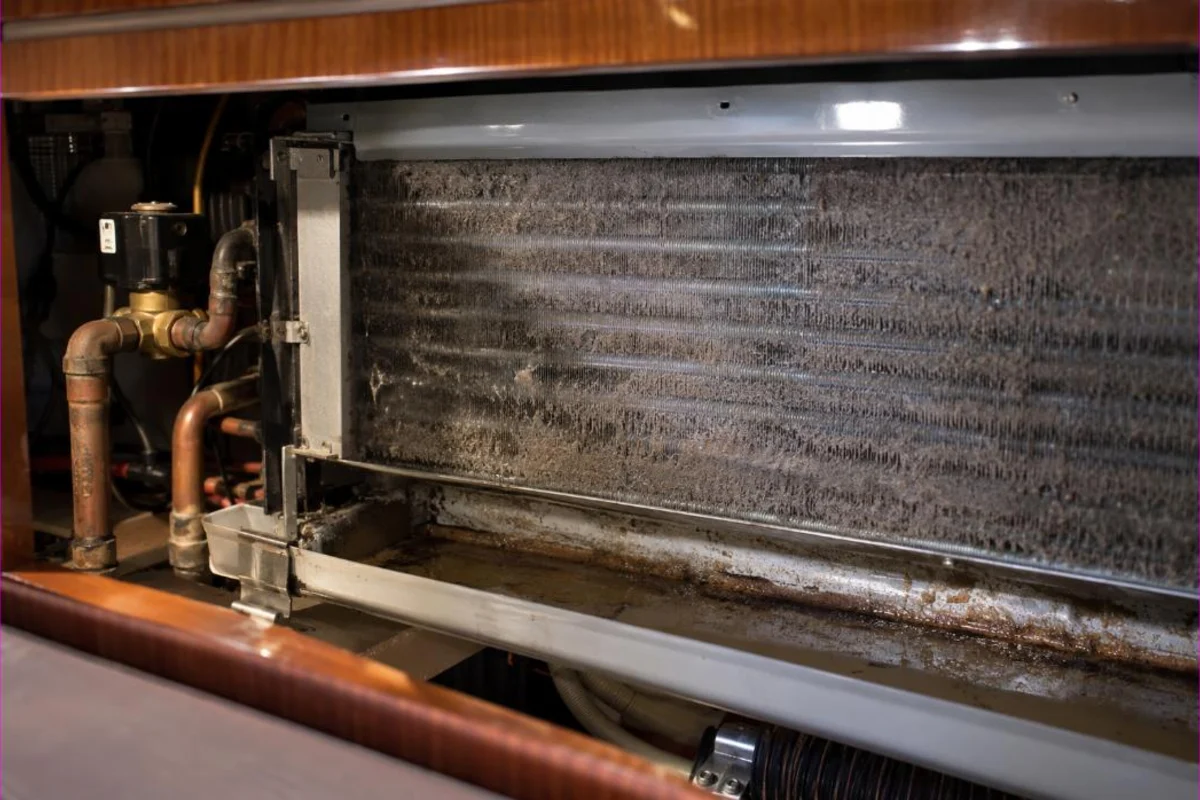

Illustrative visual showing the type of condition we find and the result we work towards. Photos of real AirBio Marine jobs are shown in the gallery below and in every client report.
AC units and equipment from our jobs
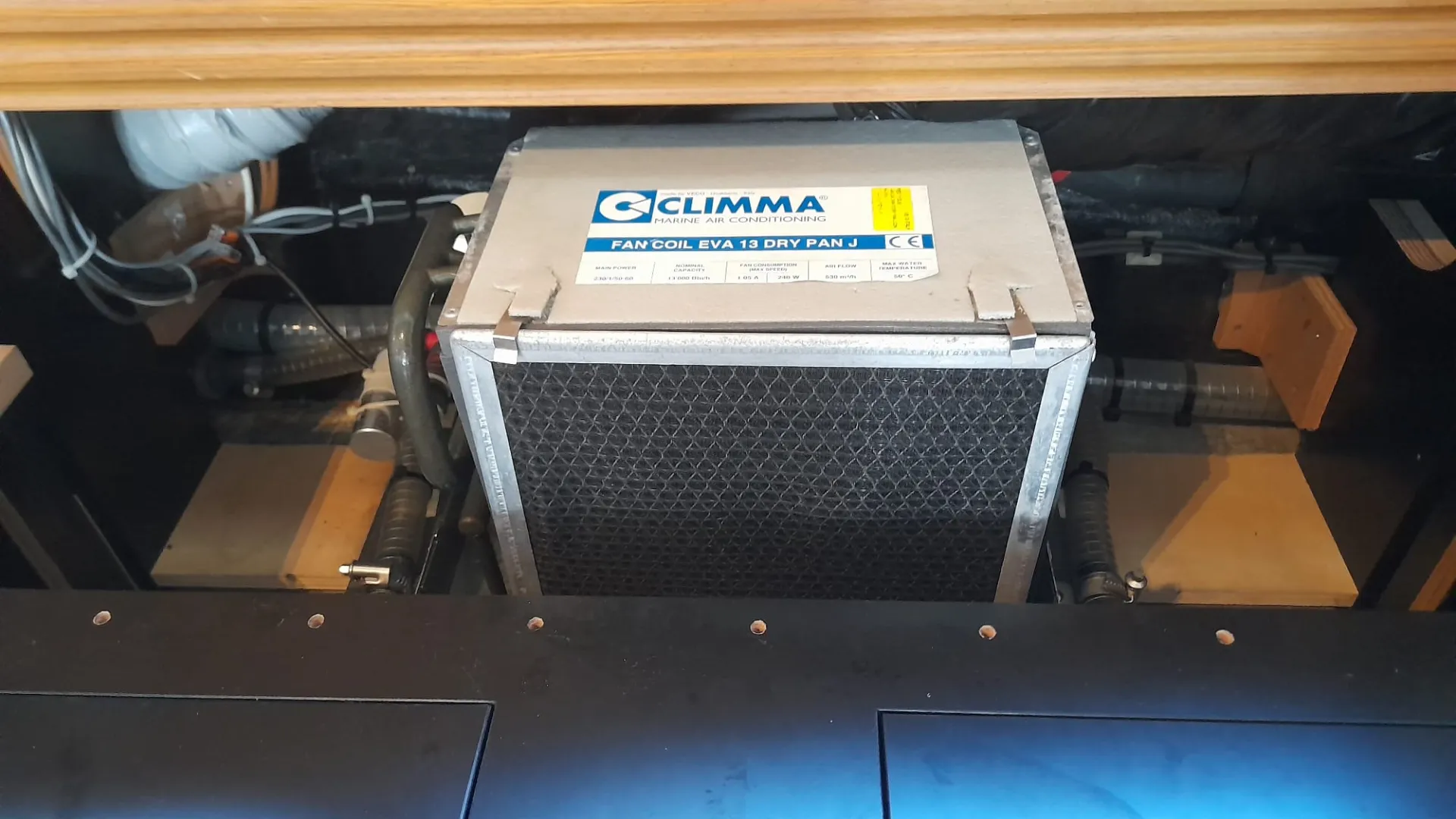
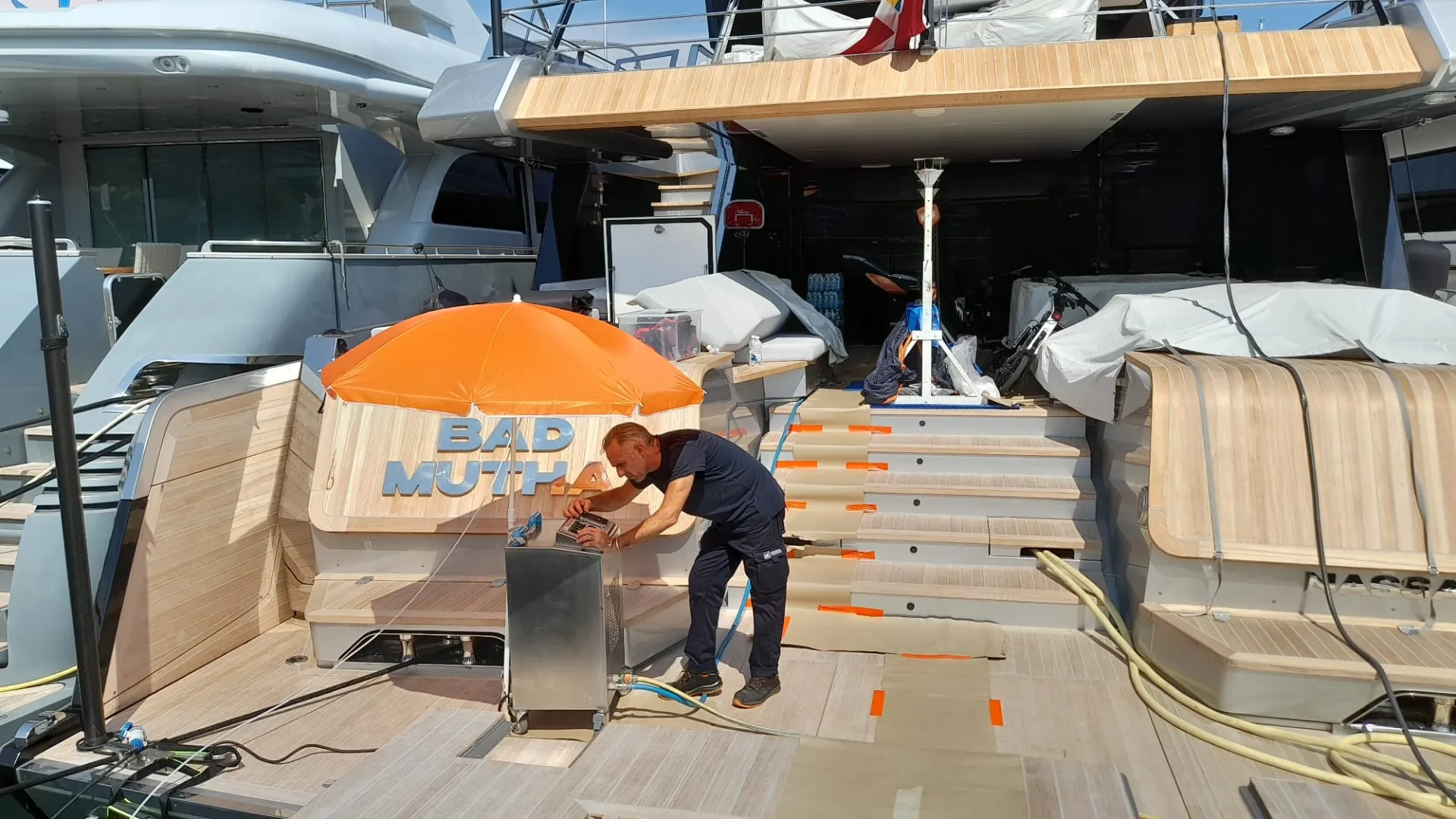
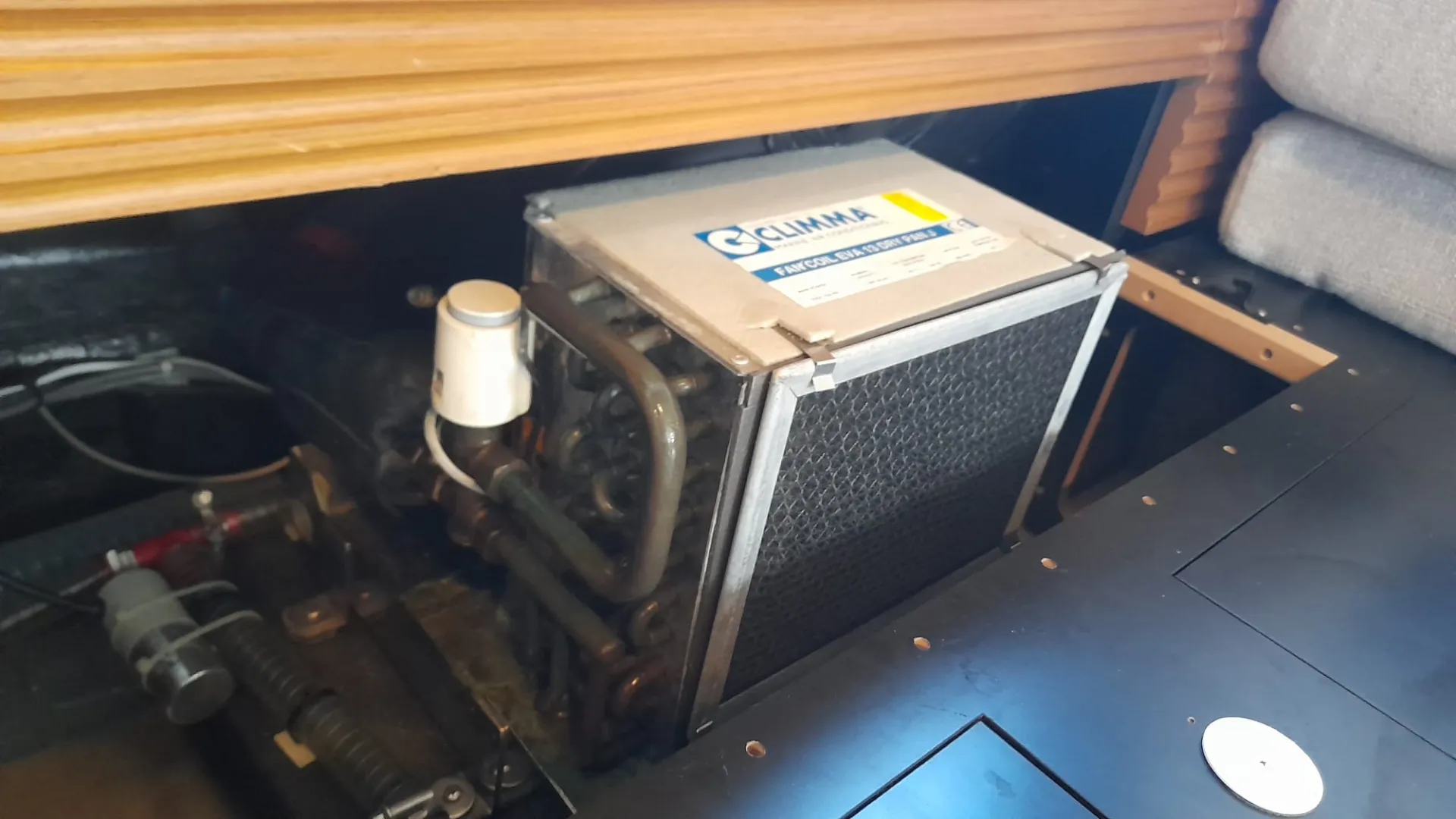
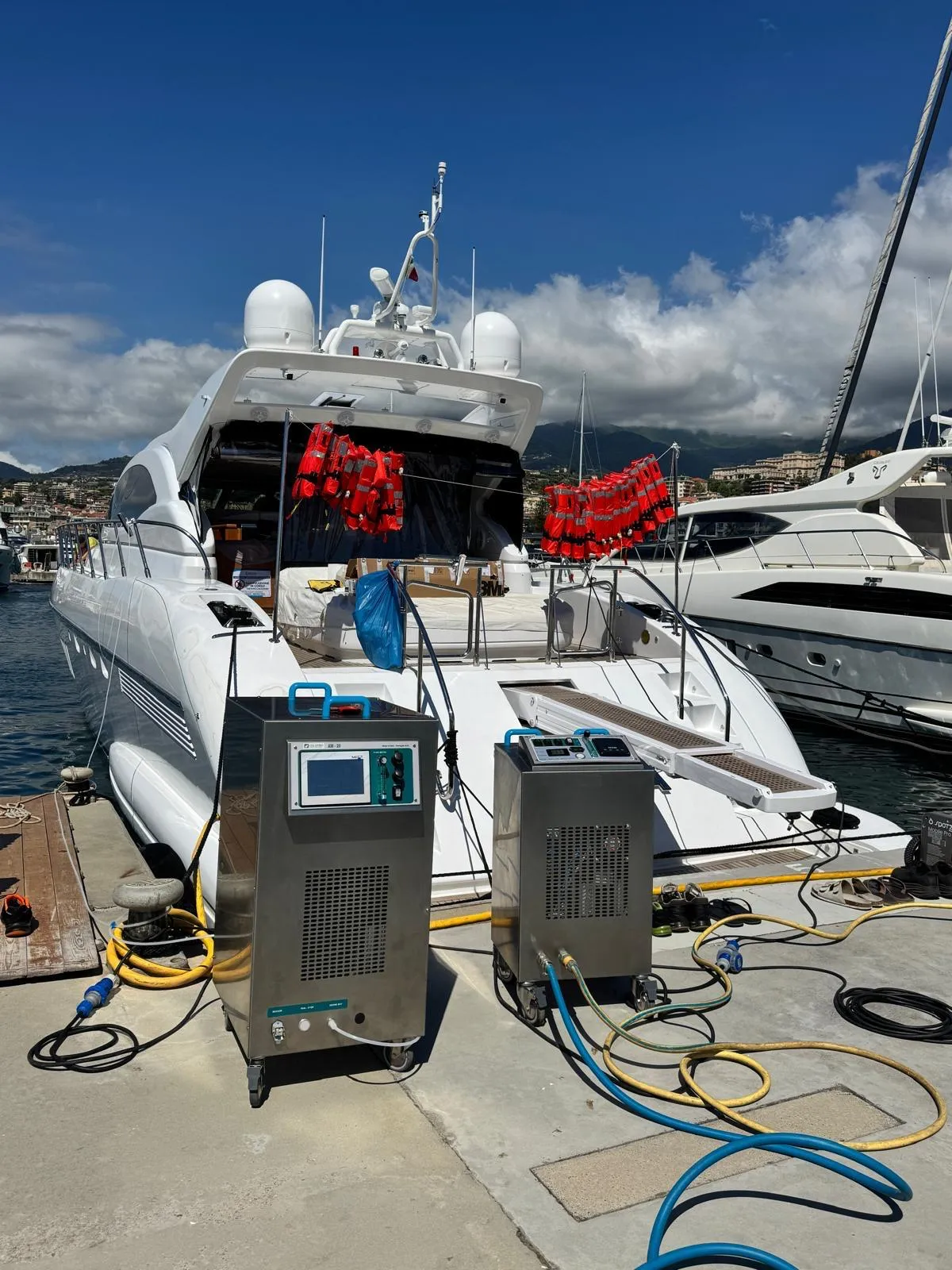
Real photos from AirBio Marine work: marine fan coil units opened for cleaning and our equipment on the quay.
What you receive
Findings per unit
What we found in each unit and which symptoms it may explain.
Before and after photos
Coil, pan, drain and outlet photographed before and after the work.
Technical report
Units treated, methods and products used, spaces treated with ozone.
Other possible sources
Areas outside the units, such as damp panels, flagged for further checks.
Maintenance recommendations
How to keep the condensate path clean, and when to plan the next service.
One report for the yacht's technical history
Every job closes with a written report: what was inspected, what was found, what was treated, photos before and after, readings where taken and recommendations for the next check. Useful for the captain, the management company, the next survey and the next season.
Who this service is for
When guests complain about the AC smell, you need a source found and dealt with before the next trip, not another air freshener.
You get each unit's condensate path checked and cleared, with photos showing what was in the pans and drains.
The smell that keeps coming back into your cabins is followed back into the units, instead of being managed with scents and airing.
Documented sanitization between charters helps keep guest complaints about cabin air to a minimum and shows what was done.
Where we sanitize yacht AC systems
We work on yachts in marinas and yards on the Italian Riviera and in Tuscany, and in other Mediterranean ports on request.
Monaco
Spain
and beyond
Wherever you are in the Mediterranean, we can be there.
Yacht AC smells and sanitization: questions
Why does my yacht AC smell musty when it starts?
A musty smell at start-up can be associated with water and residue sitting in the unit while it was off, typically in the condensate pan, on the coil or in the drain line. When the fan starts, air passes over these wet surfaces and carries the odour into the cabin. It may fade after a few minutes as airflow dilutes it, but the source usually remains until the unit is opened and cleaned.
Which AC units do you sanitize?
We work on the air-conditioning units commonly found on yachts: fan coils in cabins and saloons, split and ducted units, and chilled-water air handlers that feed several spaces. The approach is the same for each: inspect, clean mechanically, clear the condensate path, sanitize and document. Repairs to compressors, chillers or refrigerant circuits are outside our scope and are left to the yacht's engineers or HVAC contractor.
Is an antibacterial spray enough to stop the smell?
Sprays and scents can reduce the smell for a while, but they do not remove dust, sludge or biofilm from the coil, pan and drain. If those deposits remain, the odour usually comes back. Sanitization works best after mechanical cleaning, when the dirt that protects bacteria has been removed. That is why our method always cleans first and sanitizes afterwards.
Can you tell me the cause of the smell before coming on board?
We can suggest what should be inspected based on your description, for example whether the smell affects one cabin or several and when it appears. We cannot confirm the cause remotely. Odours on board can come from the AC, from mould, from water or drainage lines or from other sources, and only an onboard inspection shows which one applies.
Is ozone safe for the yacht's interior?
Ozone is used as a final sanitization step for closed spaces, after cleaning, and only where suitable for the area. The space must be empty of people, pets and plants during treatment and ventilated before anyone goes back in. We agree which cabins are treated with the crew, and sensitive items can be removed or protected beforehand.
What if the smell is not coming from the AC?
If the inspection shows the units are not the main source, we say so in the report and point to where the evidence leads, such as damp behind panels, mould or water and drainage lines. We can then plan mould remediation or a wider odour source investigation, or coordinate with the right contractor.
Related services
Yacht Fan Coil Deep Cleaning
A new filter does not clean the coil, tray and drain behind it.
Yacht HVAC & Air Duct Cleaning
Cleaner airflow starts inside the system, not at the vent.
Yacht Odour Removal & Source Investigation
Bad Smells on a Yacht? Find the Source, Not a Cover-Up.
Why Does My Yacht AC Smell?
The smell arrives with the airflow. So does its source.
Tell us about the yacht
Yacht length, marina, systems and what you have noticed on board. A technician reads the message and calls you back to plan the survey.
"*" indicates required fields
Where we work
Italian Riviera and Tuscany marinas and yards — Viareggio, La Spezia, Portofino, Genoa, Sanremo, Livorno, Argentario — and other Mediterranean ports on request.
Documented work
Every job ends with a technical report and photos for the yacht's records.

Not sure where the problem starts?
Let the technical team assess it onboard.
In marina, at the yard or during lay-up. We tell you what needs treating — and what doesn’t.
+39 0584 433 198Expertise.
Peace of mind.