
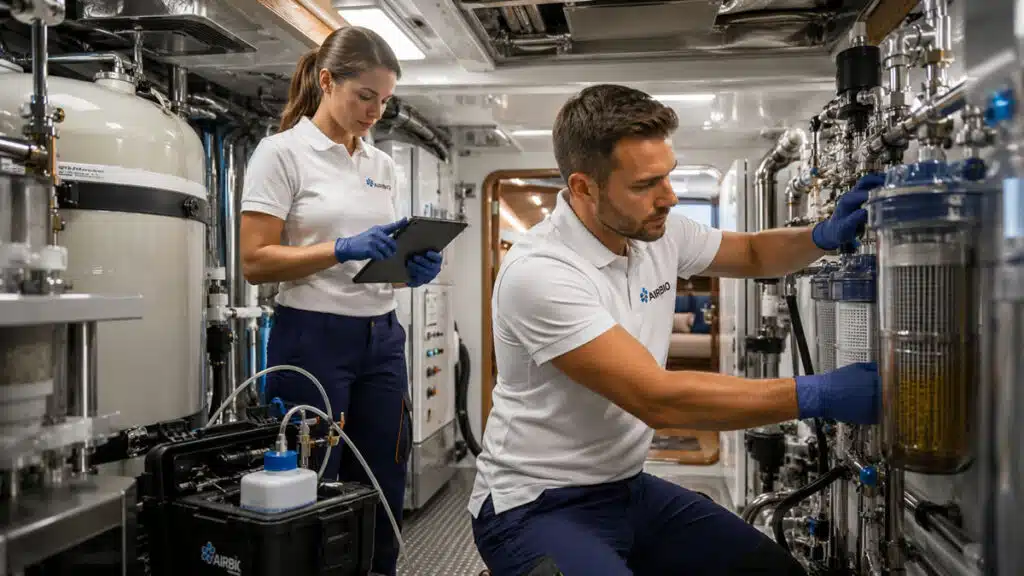
Yacht Fresh-Water Tank Cleaning & Sanitization
Clean, sanitized fresh-water tanks, with every step documented for your crew.
For captains, chief engineers and yacht managers who want to know what is really inside their fresh-water tanks. We drain, open and clean the tank, sanitize it with a method suited to its material, flush it and hand over a technical report with photos.
yacht experience
When a fresh-water tank needs attention
Most tank problems are noticed at the tap first. These are the situations that most often lead a crew to ask for a tank inspection.

Why a tank can look clean and still need work

A fresh-water tank is a dark, closed space where water can sit for days or weeks. Fine particles settle on the bottom as sediment, a thin layer of silt, rust or scale. On the walls, bacteria can form biofilm — a slimy layer of bacteria that sticks to surfaces and protects them from ordinary chlorine levels.
Looking through the inspection hatch rarely tells the whole story. A tank can look relatively clean while its internal surfaces, the sediment in corners and baffles, and the distribution lines connected to it still need to be assessed.
Stagnation is the main driver. When a yacht is laid up, between charters or after a refit, water stops moving, temperature rises in warm technical spaces and the conditions for microbial growth improve.
Water enters from shore supply or the watermaker.
Water rests in the tank, sometimes for weeks.
Particles settle on the tank bottom and in corners.
Bacteria attach to walls, baffles and fittings.
The pump draws water, and loose deposits, towards the lines.
Taste, smell or cloudiness appear at taps and showers.
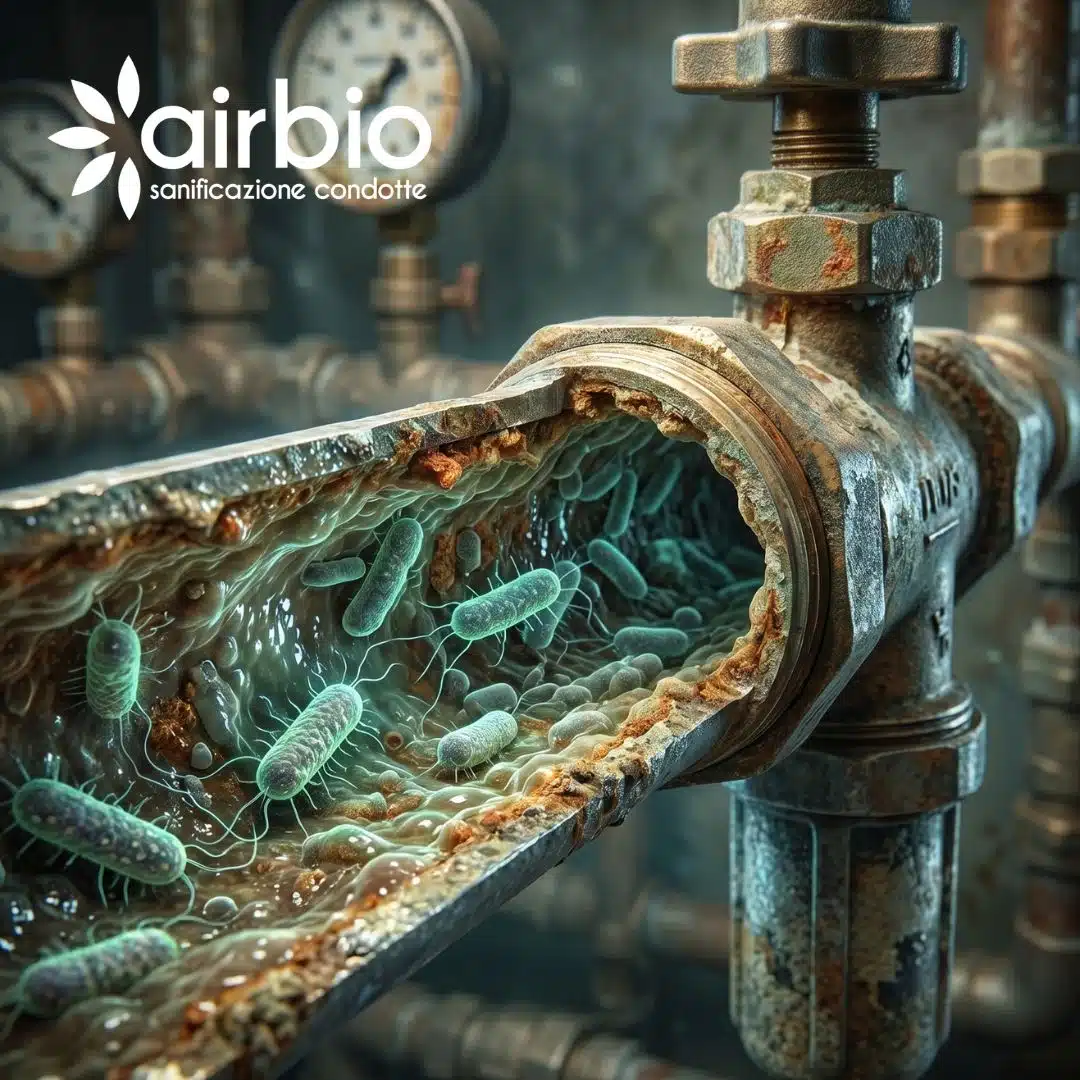
Signs that the tank should be inspected
None of these signs proves contamination on its own, but each one is a good reason to look inside the tank.
Bad smell
A rotten-egg, musty or swampy smell may indicate stagnant water or biofilm activity.
Unpleasant taste
Guests or crew notice a flat, earthy or metallic taste in drinking water.
Turbidity
Cloudy or slightly coloured water, especially after the tank has been refilled.
Visible sediment
Particles in glasses, in shower heads or collecting in filter housings.
Long inactivity
The tank has held water through lay-up, a long passage or a quiet period.
Recent works
Refit or maintenance on tanks, pumps or pipework in the past weeks.
Not sure what your tanks actually need?
Tell us the yacht, what the crew has noticed and where she is now: a technician calls you back within 24 hours and plans the survey around your programme.

What we check before cleaning the tank
Before any cleaning we agree the plan with the chief engineer: which tanks, how they are accessed, what they are made of and how the yacht will manage without them during the job.
Where an inspection hatch is available, we look at the internal surfaces directly and photograph what we find, so the report shows the starting condition.
- Tank material and coating, which decide the cleaning and sanitization method
- Access: inspection hatches, manholes and safe working space around the tank
- Amount and type of sediment on the bottom, in corners and behind baffles
- Biofilm, staining or deposits on walls and around fittings
- Condition of vents, level sensors, filling and suction connections
- Recent history: lay-up periods, refit work, taste or smell complaints
- Whether water sampling before or after treatment is useful
How we clean and sanitize a fresh-water tank
The sequence is adapted to each tank, its material and the yacht's schedule. These are the steps of a typical job.
Protection and draining
We protect floors and surrounding areas, isolate the tank from the system and drain it in agreement with the crew.
Access and sediment removal
We open the tank through the inspection hatch where available and remove sediment from the bottom, corners and baffles.
Mechanical cleaning
Walls, baffles and fittings are cleaned mechanically to loosen deposits and biofilm, taking care not to damage coatings.
Sanitization
We sanitize with high-concentration ozonated water produced by our AWM-20 or MWM-20 units, or with an approved disinfectant, depending on the tank material and the system.
Rinsing, flushing and refill
The tank is rinsed and flushed to remove residues, then refilled and brought back into service with the crew.
Checks, optional sampling and report
We take readings where relevant, can collect water samples for an accredited laboratory, and deliver a technical report with photos.
The tank is only the start: the connected distribution network
Water leaves the tank through a pump, an accumulator, often a calorifier (the hot-water boiler) and many metres of pipe before it reaches a tap. If biofilm has formed in those lines, a perfectly clean tank will be refilled with water that passes through contaminated pipes.
For this reason we always look at the tank as part of the system. When the inspection or the history of the yacht suggests it, we recommend extending the treatment to the pipes and outlets with our fresh-water system sanitization service.
Water sampling is the way to measure, not guess. Samples taken before and after cleaning, and analysed by an accredited laboratory, give the crew objective data. See our yacht water sampling service for how this works.
- Pump and accumulator, where water can stand still
- Calorifier and hot-water circuit
- Distribution lines to cabins, galley and crew areas
- Little-used taps and showers at the end of the lines
What a tank floor can look like before and after cleaning
These images are illustrative, not photographs of a specific job. They show the kind of sediment and staining that can collect on a tank bottom and how the same area looks after cleaning.
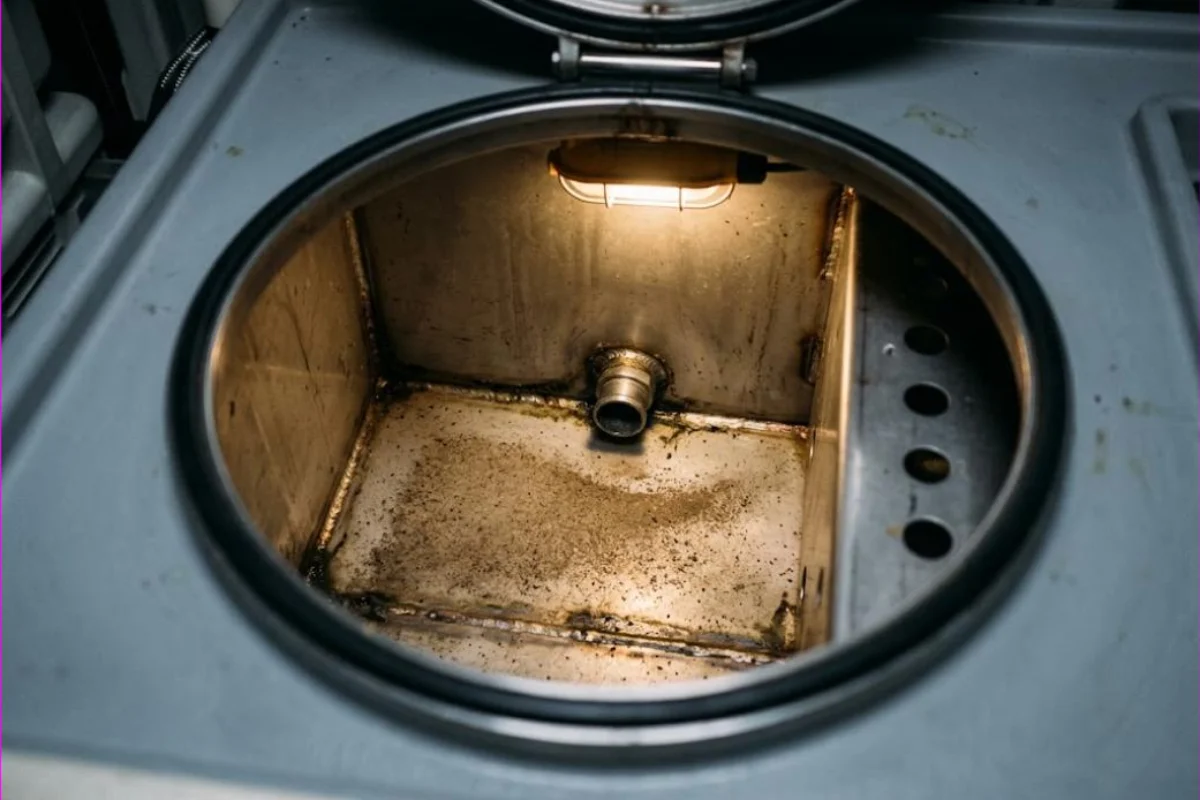

Illustrative visual showing the type of condition we find and the result we work towards. Photos of real AirBio Marine jobs are shown in the gallery below and in every client report.
Our water sanitization equipment on board
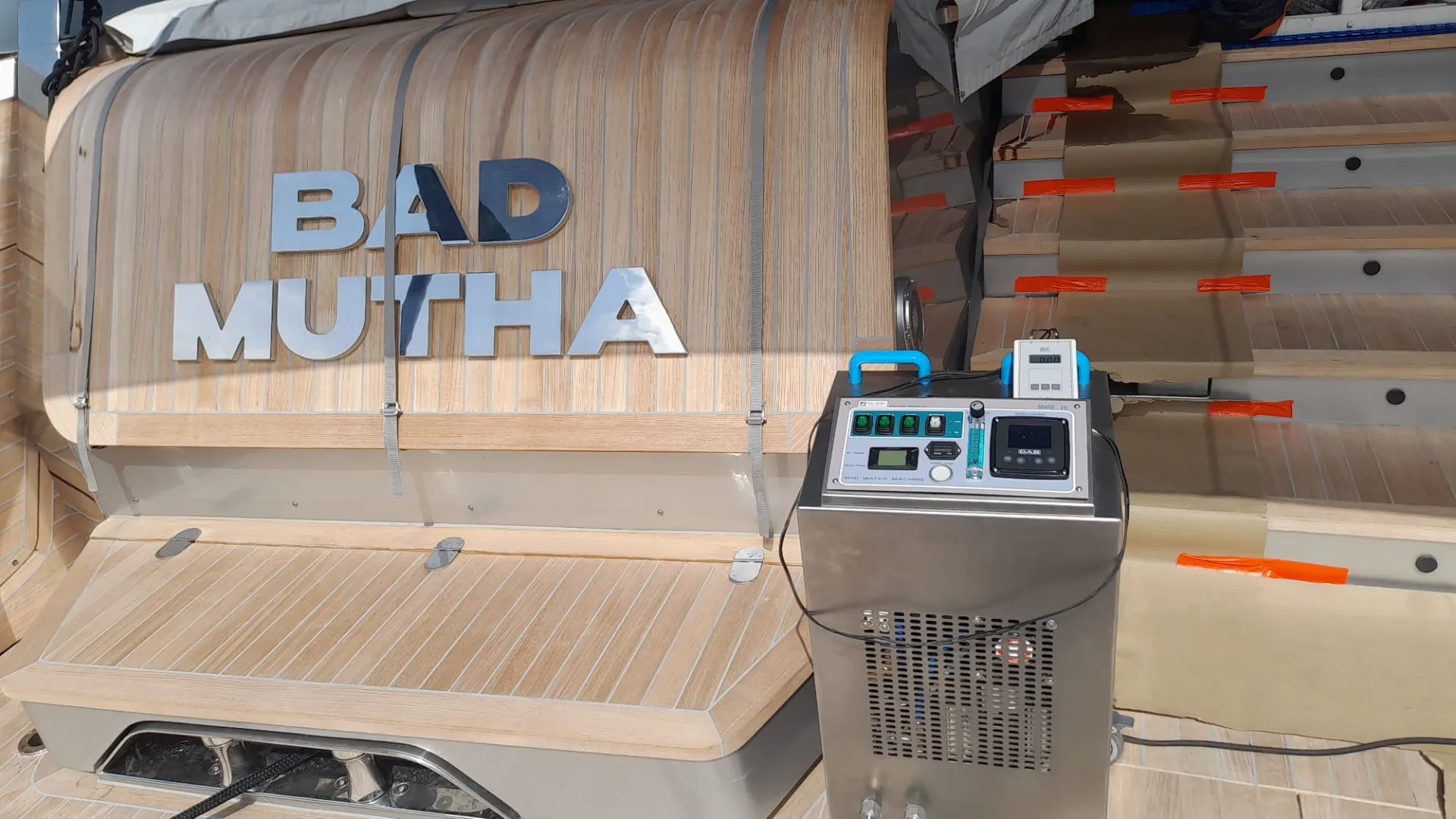
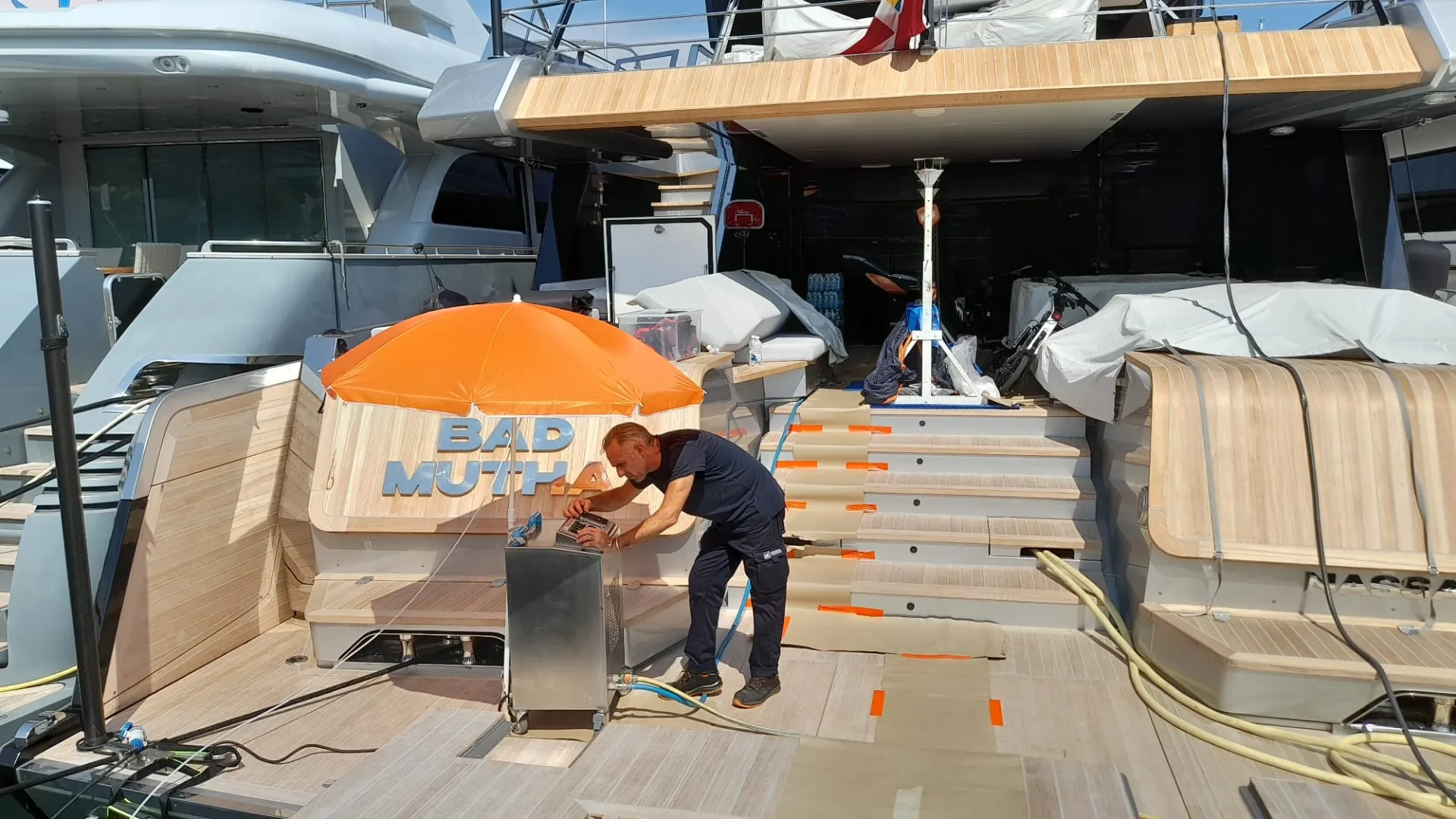
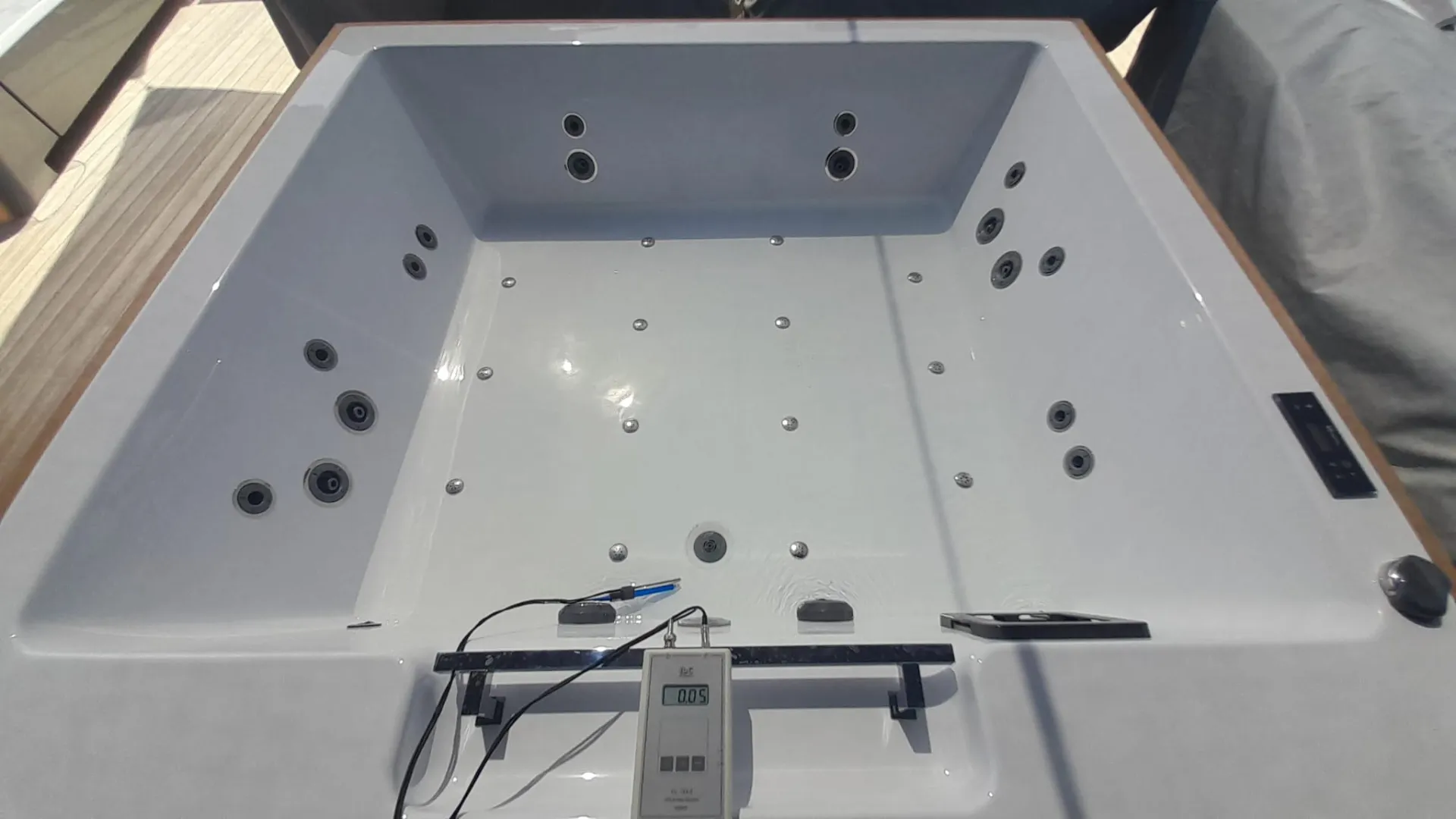
Photos from real AirBio Marine jobs: the water sanitization unit on deck, our technician at work on a protected aft deck, a residual reading taken after treatment and our units on the pontoon.

Verified reviews on Trustpilot
What you receive
Technical report
Tanks treated, method used, products or ozonated water applied and observations from the inspection.
Photos
Pictures of the tank condition before and after cleaning, where access allows.
Readings
Measurements taken after treatment, where relevant to the method used.
Laboratory certificates
Results from the accredited laboratory, when water sampling is included.
Recommendations
Advice on the distribution network, cleaning frequency and a possible maintenance plan.
One report for the yacht's technical history
Every job closes with a written report: what was inspected, what was found, what was treated, photos before and after, readings where taken and recommendations for the next check. Useful for the captain, the management company, the next survey and the next season.
Who this service is for
Wants the yacht's drinking and domestic water to be in good order before guests arrive, with a report to show the owner or management company.
Needs a contractor who respects tank coatings, isolates the system correctly and returns the tanks to service as planned.
Needs documented tank cleaning across the fleet, with photos and records that fit the management company's procedures.
Needs tanks cleaned after works that may have introduced dust, debris or contamination, before redelivery to the owner.
Where we clean fresh-water tanks
We work in Italian Riviera and Tuscany marinas and yards, and in other Mediterranean ports on request.
Monaco
Spain
and beyond
Wherever you are in the Mediterranean, we can be there.
Book the tank survey before the next charter
We work in the main Mediterranean marinas and refit yards, with documented results and lab analysis where required.
Fresh-water tank cleaning: frequently asked questions
How do I know if my yacht's fresh-water tank needs cleaning?
Common reasons are a bad smell or taste at the taps, cloudy water after refilling, visible sediment, a long lay-up or recent refit work near the tanks. None of these proves contamination, but each is a good reason to inspect. If there is no record of the last cleaning, an inspection through the hatch gives the crew a clear starting point.
Can a tank look clean and still need sanitizing?
Yes. A tank can look relatively clean through the hatch while biofilm, a slimy bacterial layer, sits on walls and fittings and sediment collects behind baffles. The distribution lines connected to the tank may also hold biofilm. That is why we assess internal surfaces and the connected network, not only what is visible from the opening.
Which method do you use to sanitize the tank?
After mechanical cleaning and sediment removal, we sanitize with high-concentration ozonated water produced by our AWM-20 or MWM-20 units, or with an approved disinfectant. The choice depends on the tank material, its coating and how the system is built. The tank is then rinsed, flushed and refilled, and the method used is recorded in the report.
Is cleaning the tank enough to solve a water problem?
Not always. Water passes through the pump, accumulator, calorifier and distribution lines before reaching the taps. If these hold biofilm, a clean tank can be recontaminated. When the inspection suggests it, we recommend extending the work with fresh-water system sanitization and, where useful, water sampling before and after treatment.
Can you test the water after cleaning the tank?
Yes, as an option. Our trained technicians can collect water samples in sterile containers and send them to an accredited laboratory. The parameters are agreed with you or the management company. The laboratory certificates are added to the documentation, and we explain the results in plain language.
When is the best time to clean the fresh-water tanks?
Common moments are before the season, at the end of a lay-up, after refit or maintenance work and when the crew notices smell, taste or cloudiness. The job can be carried out in marina, at the yard, during lay-up or between charters, and is planned with the chief engineer so the yacht can manage without the tank during the work.
Related services

Yacht Fresh-Water System Sanitization
From tank to shower head: the whole fresh-water network, treated as one system.

Yacht Water Sampling & Analysis
Objective data on your onboard water, collected properly and explained clearly.

Legionella Testing for Yachts
A structured sampling plan, accredited lab analysis and results explained clearly.

Is My Yacht's Water Tank Contaminated?
Tanks are out of sight, which is exactly why problems grow there.
Tell us about the yacht
Yacht length, marina, systems and what you have noticed on board. A technician reads the message and calls you back to plan the survey.
"*" indicates required fields
Where we work
Italian Riviera and Tuscany marinas and yards — Viareggio, La Spezia, Portofino, Genoa, Sanremo, Livorno, Argentario — and other Mediterranean ports on request.
Documented work
Every job ends with a technical report and photos for the yacht's records.
Not sure where the problem starts?
Let the technical team assess it onboard.
In marina, at the yard or during lay-up. We tell you what needs treating — and what doesn’t.
+39 0584 433 198Expertise.
Peace of mind.