
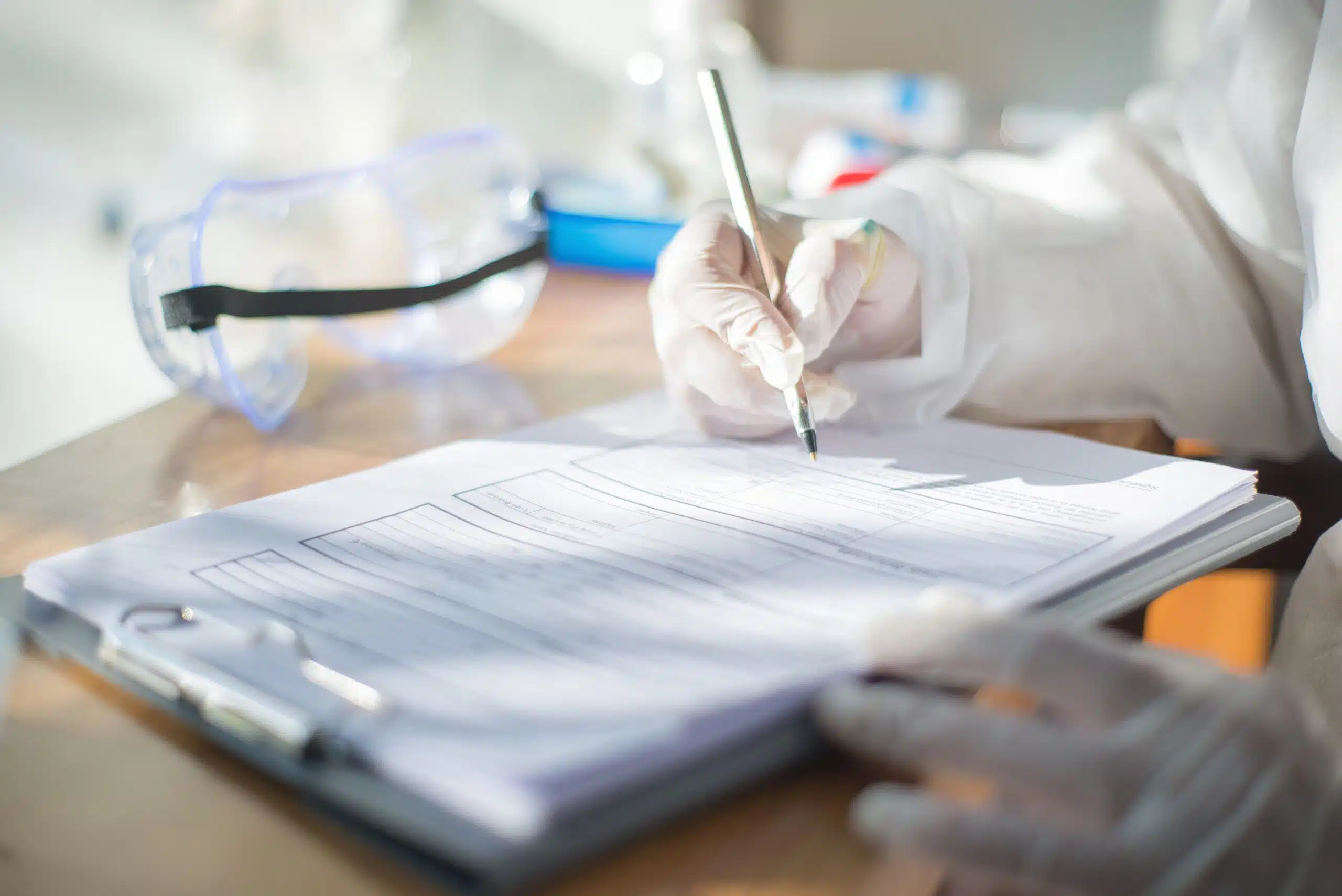
Yacht Water Sampling & Microbiological Analysis
Objective data on your onboard water, collected properly and explained clearly.
For captains, yacht managers and shipyards who want to know the microbiological quality of the water on board. Our trained technicians collect samples with sterile containers, an accredited laboratory analyses them, and we explain the results in plain language.
yacht experience
Questions that water sampling can answer
Taste, smell and appearance tell you something about water, but not what bacteria it contains. Sampling replaces impressions with laboratory data. These are the most common reasons crews ask for it.
Is the drinking water in good order?
Routine potable-water checks give the captain a documented picture of the water at the sampled points.
Did the treatment work?
Samples taken after tank or system sanitization show the condition of the water at that moment.
Why does the water taste or smell strange?
A laboratory analysis can help understand whether a complaint is associated with microbiological contamination.
Is the system ready after refit or lay-up?
Sampling before the yacht returns to service shows the condition after a period of works or inactivity.
What does the management company need?
Many management companies ask for periodic, documented results with laboratory certificates.
What a water analysis can and cannot tell you
A microbiological analysis looks for bacteria in the water. Typical potable-water parameters include total bacterial counts (a general indicator of how many bacteria are present), coliforms and E. coli (indicators of possible contamination), Pseudomonas aeruginosa (a bacterium that likes wet surfaces and biofilm) and Legionella. The exact parameters are agreed with you or your management company.
Each sample describes the water at one point, at one moment. How useful the results are depends on choosing the right points, collecting samples correctly and getting them to the laboratory in the right conditions.
Sampling measures; it does not treat. If a result calls for action, it points to the next step, such as tank cleaning or water system sanitization.
Points and parameters agreed with you or management.
Trained technicians fill sterile containers at each point.
Samples labelled, recorded and kept in controlled conditions.
An accredited laboratory analyses the agreed parameters.
Certificates issued and explained in plain language.
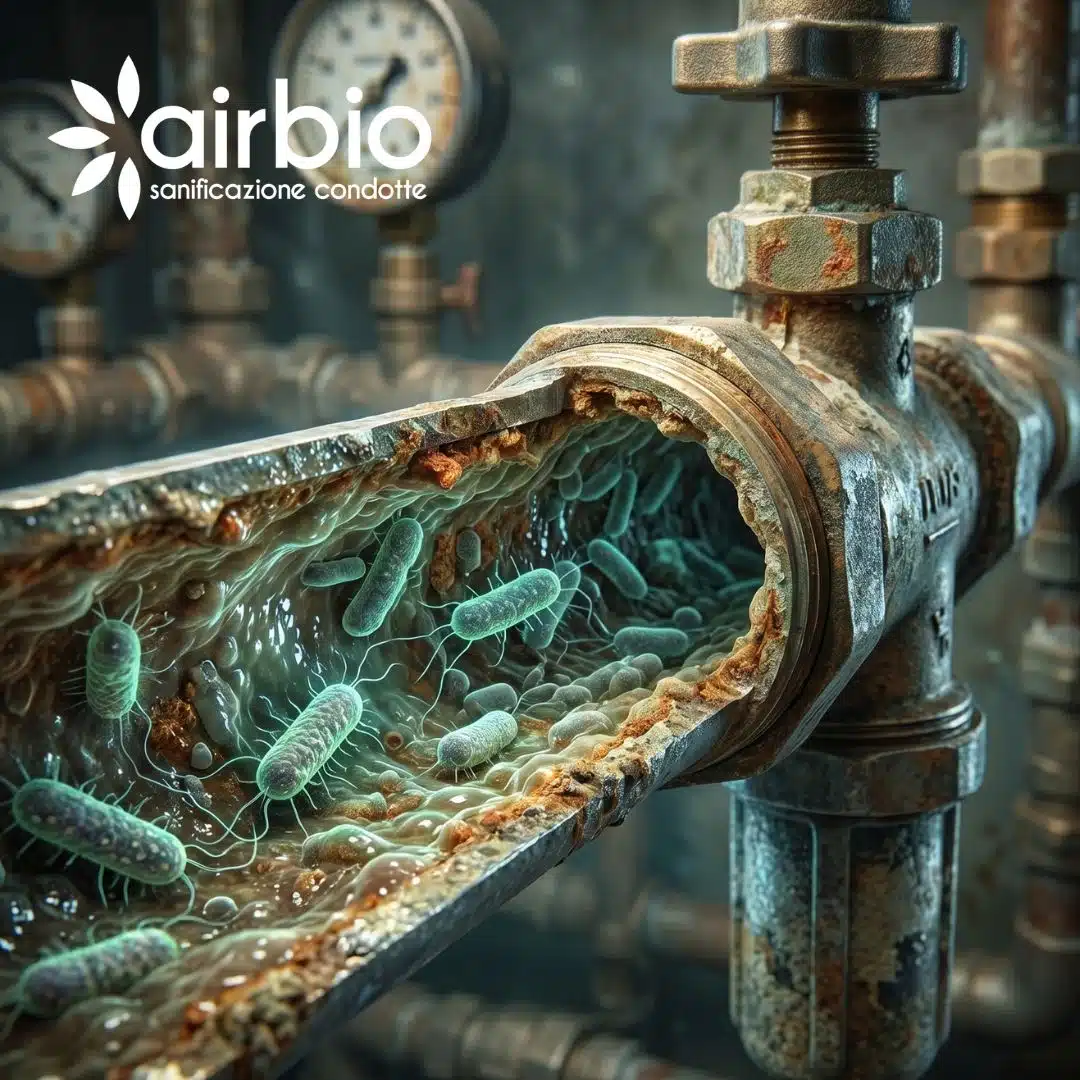
Where samples are usually taken on board
The points are chosen to represent the system, from where water is stored to where it is used.
Fresh-water tanks
To check stored water, especially after refilling or a period of inactivity.
Galley and drinking-water taps
Where water is used for drinking and food preparation.
Showers
Guest and crew showers, often included when Legionella is a parameter.
Guest cabins
Including cabins that remain empty for long periods.
Crew areas
Crew heads, mess and accommodation outlets in daily use.
Watermaker and filters
Points after production or filtration, where relevant to the question asked.
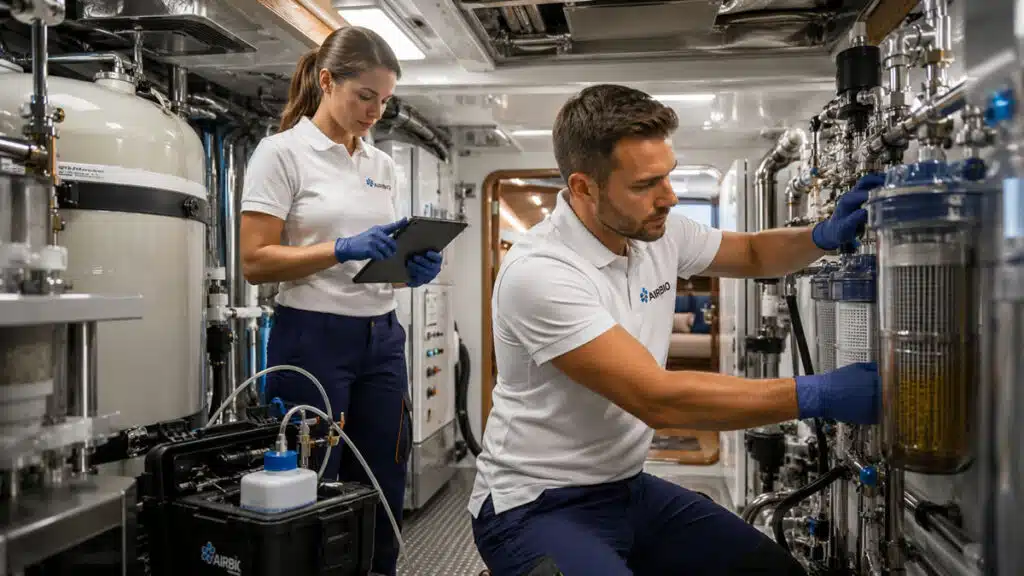
How samples are collected on board
Correct collection is as important as the analysis itself. A container touched on the inside, a sample left in a warm engine room or a missing label can make a result unreliable.
Our technicians follow a defined procedure at each point and record every step, so the laboratory result can be traced back to the exact outlet, date and conditions.
- Sampling plan agreed in advance: points, number of samples and parameters
- Sterile containers suited to each analysis requested
- Outlet preparation and collection according to the analysis type
- Each sample labelled with yacht, point, date and time
- Water temperature noted at the point where relevant
- Samples kept in controlled conditions for transport
- Chain-of-custody form from collection to laboratory
How a water sampling job works
From the first call to the explanation of the results, these are the steps of a typical sampling job.
Agree the parameters
We discuss the purpose of the sampling with you or the management company and agree which parameters the laboratory will analyse.
Plan the sampling points
With the chief engineer we choose points that represent the system: tanks, galley, cabins, crew areas and showers.
Collect the samples
Trained technicians collect water in sterile containers, label each sample and record the conditions at the point.
Chain of custody
Samples are transported in controlled conditions with a chain-of-custody record, so every step is traceable.
Accredited laboratory analysis
An accredited laboratory analyses the samples and issues official certificates for each point.
Interpretation in plain language
We go through the certificates with you, explain what each result means and recommend next steps where needed.
When to sample the water on your yacht
Sampling is most useful when it is linked to a clear question or a moment in the yacht's calendar. A single sample gives a snapshot of that day; regular sampling builds a record that shows how the system behaves over time.
We can build sampling into a maintenance plan, so that checks happen at the right moments without the crew having to remember them. For Legionella-specific plans, see our Legionella testing service.
- After a refit or works on tanks, pumps and pipes
- Before the season or before a charter period
- After tank cleaning or water system sanitization, to verify the result
- Periodically, as agreed with the management company
- After complaints about the taste, smell or appearance of the water
Why a proper collection procedure matters
These images are illustrative, not photographs of a specific job. They show a sampling tap before preparation, with scale and residue at the spout, and the same tap once cleaned and ready for correct sample collection.
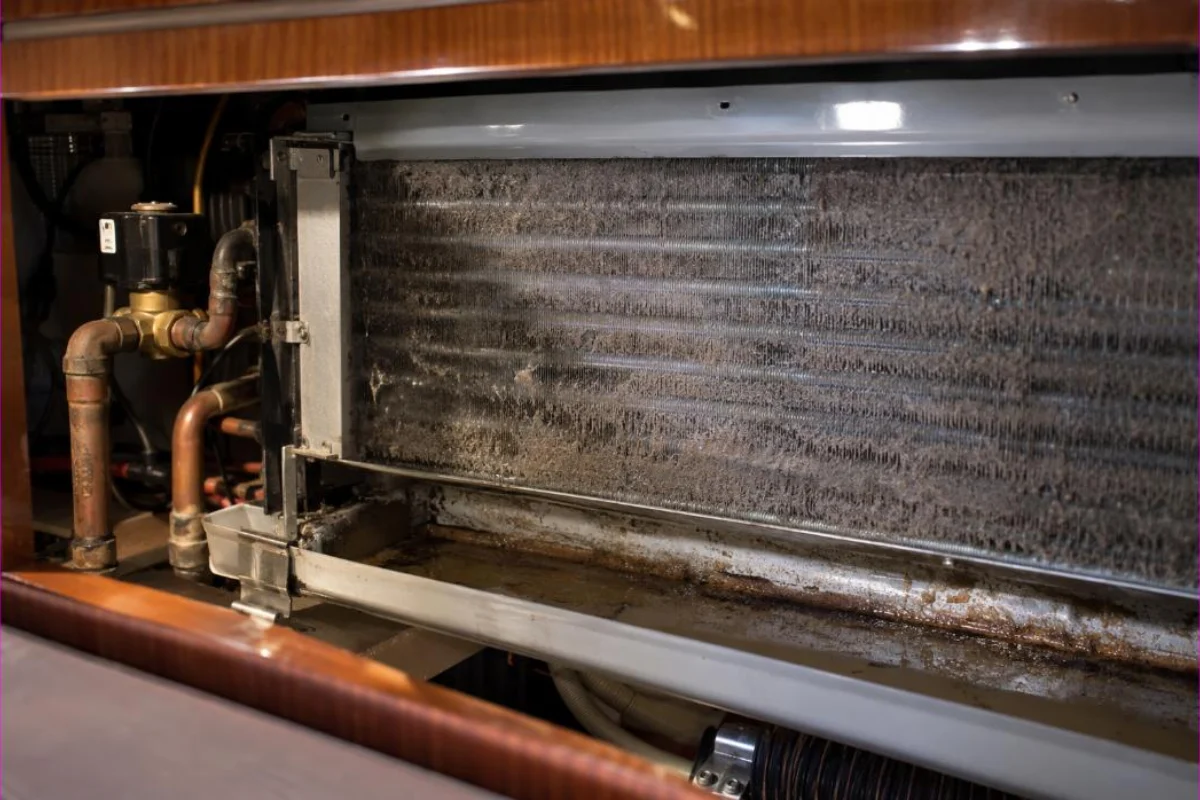

Illustrative visual showing the type of condition we find and the result we work towards. Photos of real AirBio Marine jobs are shown in the gallery below and in every client report.
AirBio Marine water work on board
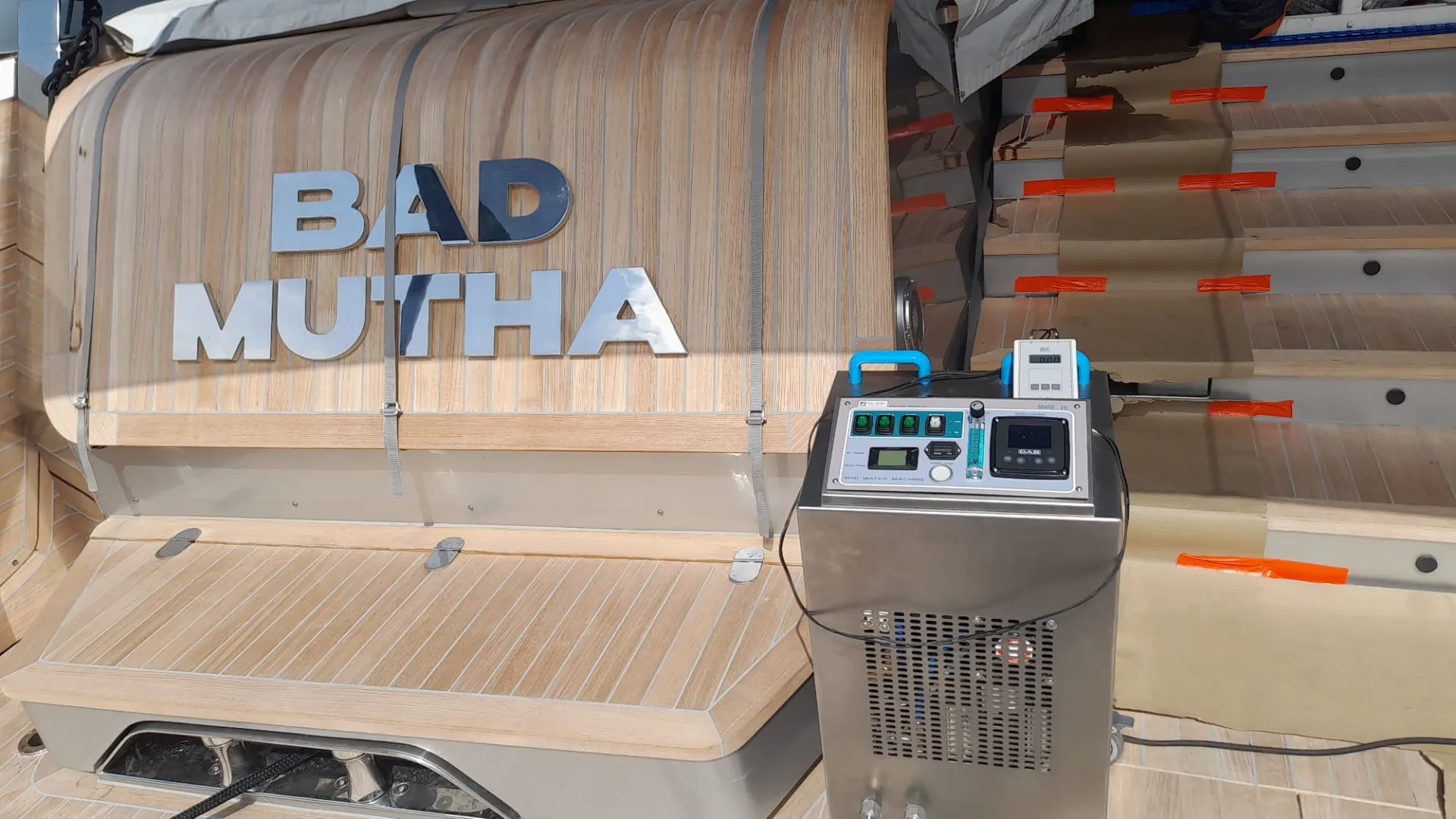
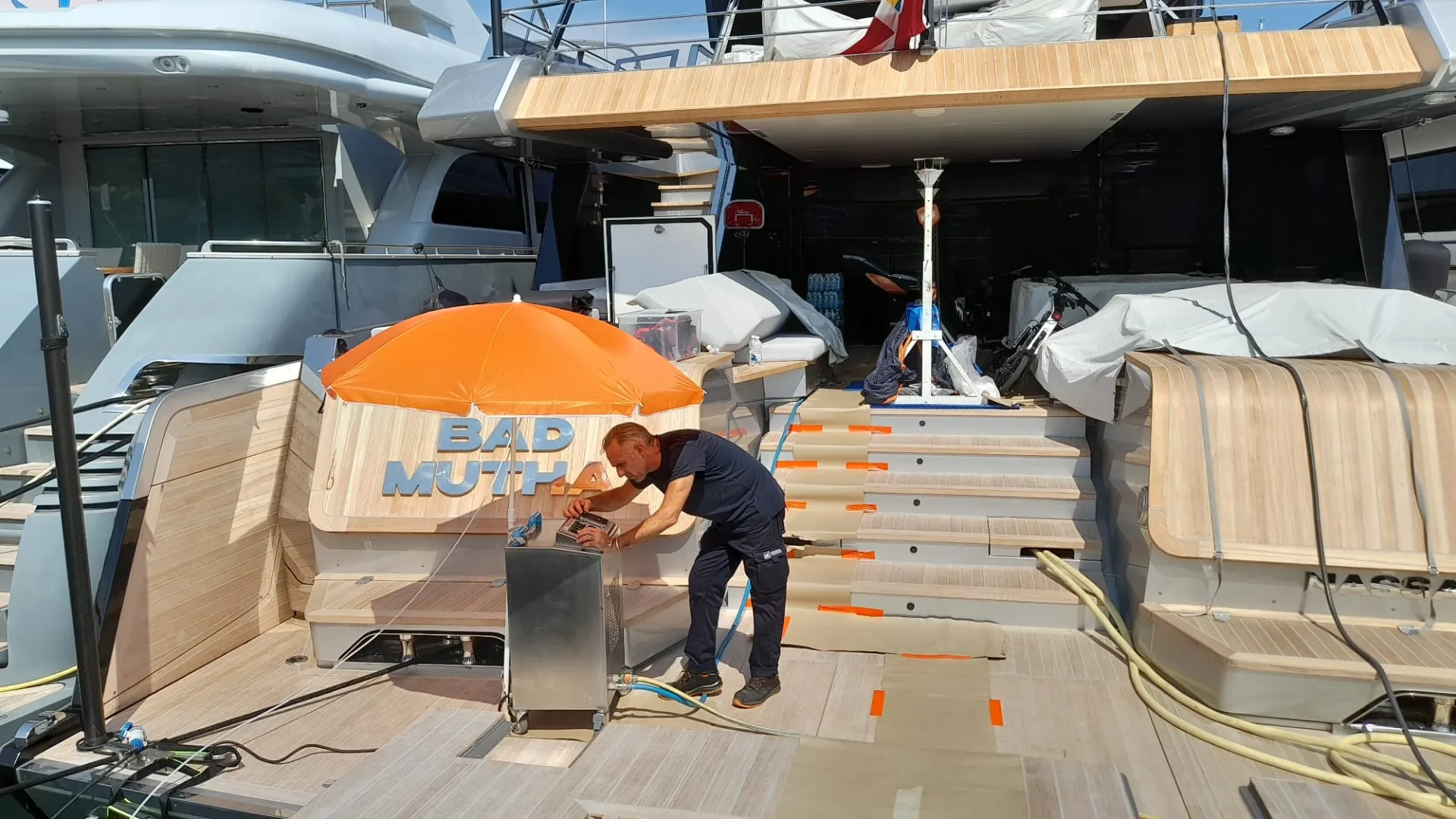
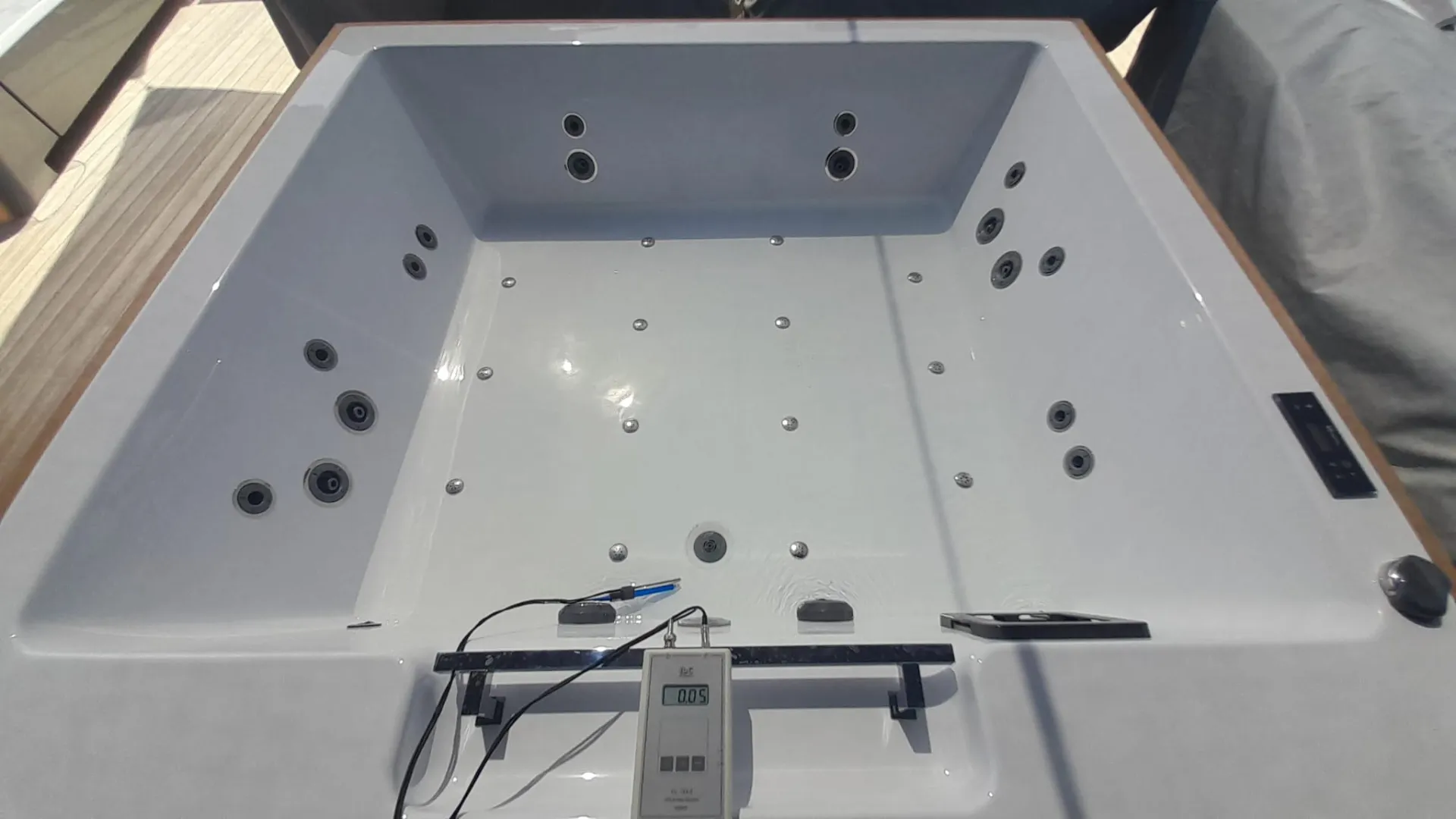
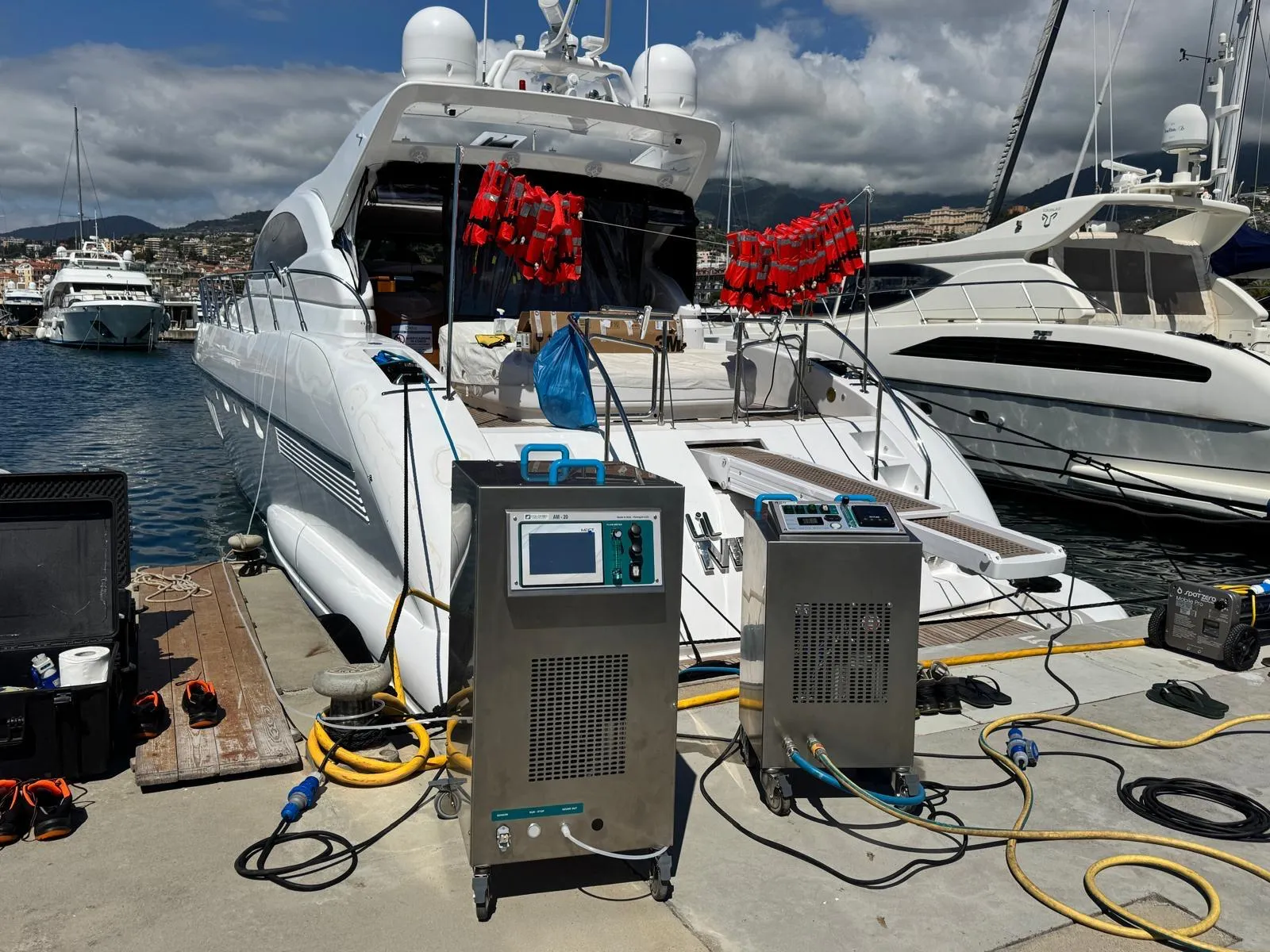
Real photos from AirBio Marine water jobs: our technician at work on a protected aft deck, a digital reading on a deck jacuzzi after treatment and our units and kit on the quay.
What you receive
Sampling plan
The points sampled, the reasons for each and the parameters requested.
Sampling record
Outlet, date, time, water temperature where taken and chain-of-custody details.
Laboratory certificates
Official results issued by the accredited laboratory for every sample.
Plain-language summary
What the results mean for your yacht, point by point, without technical jargon.
Recommendations
Next steps if action is needed, and a suggested schedule for future sampling.
One report for the yacht's technical history
Every job closes with a written report: what was inspected, what was found, what was treated, photos before and after, readings where taken and recommendations for the next check. Useful for the captain, the management company, the next survey and the next season.
Who this service is for
Wants documented results on the drinking and domestic water before guests board, and a clear answer if something needs attention.
Needs periodic sampling with agreed parameters and certificates that fit the management company's records across the fleet.
Receives guest comments on water taste or smell and needs to know whether they point to a real problem.
Needs laboratory evidence of water quality after works, before the yacht is redelivered to the owner.
Where we sample yacht water
We collect samples on board in Italian Riviera and Tuscany marinas and yards, and in other Mediterranean ports on request.
Monaco
Spain
and beyond
Wherever you are in the Mediterranean, we can be there.
Yacht water sampling: frequently asked questions
What parameters do you test in yacht water?
Parameters are agreed with you or your management company. Common potable-water checks include total bacterial counts, coliforms, E. coli, Pseudomonas aeruginosa and Legionella. The choice depends on why you are sampling: routine checks, verification after treatment, or a complaint about taste or smell. We help you choose parameters that answer your specific question.
Who collects and analyses the samples?
Samples are collected on board by trained AirBio Marine technicians using sterile containers. Each sample is labelled and recorded with chain-of-custody documentation, then delivered to an accredited laboratory, which carries out the analysis and issues official certificates for every sampling point.
What is chain of custody and why does it matter?
Chain of custody is the written record that follows each sample from collection to the laboratory: who collected it, where, when and how it was kept. It makes the result traceable to a specific outlet and moment, and shows that the sample was handled correctly, which is important when results are shared with a management company.
Is water sampling the same as Legionella testing?
Legionella testing is one type of water sampling. General water sampling is broader and can include indicators such as total bacterial counts, coliforms, E. coli and Pseudomonas aeruginosa, depending on the parameters agreed. If your main concern is Legionella, our Legionella testing service includes a specific risk assessment and sampling plan.
When should we sample the water on board?
Useful moments are after a refit, before the season, after tank or system sanitization to verify the result, periodically as agreed with the management company, and after complaints about taste, smell or appearance. A single sample is a snapshot of that day, so regular sampling gives a more reliable picture over time.
What happens if a result is not satisfactory?
We explain the result in plain language and recommend the next step. Depending on the parameter and the sampling point, this may be further inspection, tank cleaning, water system sanitization or Legionella remediation, followed by new samples to verify the effect. Sampling itself does not treat the water; it tells you where to act.
Related services
Legionella Testing for Yachts
A structured sampling plan, accredited lab analysis and results explained clearly.
Yacht Fresh-Water Tank Cleaning
Clean, sanitized fresh-water tanks, with every step documented for your crew.
Yacht Fresh-Water System Sanitization
From tank to shower head: the whole fresh-water network, treated as one system.
Why Is the Water on My Yacht Cloudy?
Sometimes it is only air. Sometimes it is worth a closer look.
Tell us about the yacht
Yacht length, marina, systems and what you have noticed on board. A technician reads the message and calls you back to plan the survey.
"*" indicates required fields
Where we work
Italian Riviera and Tuscany marinas and yards — Viareggio, La Spezia, Portofino, Genoa, Sanremo, Livorno, Argentario — and other Mediterranean ports on request.
Documented work
Every job ends with a technical report and photos for the yacht's records.
Not sure where the problem starts?
Let the technical team assess it onboard.
In marina, at the yard or during lay-up. We tell you what needs treating — and what doesn’t.
+39 0584 433 198Expertise.
Peace of mind.