

Yacht Galley Hood & Extraction Cleaning
Hood, plenum, grease filters and first duct section, degreased and documented.
For captains, chief engineers and chefs who need a galley extraction that works properly and can be shown to be clean. We degrease the hood, the plenum behind the filters, the grease filters, the first section of duct and, where it can be reached, the extraction fan. Every job ends with a technical report with photos.
yacht experience
Does your galley extraction show any of these?
Grease builds up in every working galley. These are the most common ways it starts to show before anyone opens the system.
Where grease builds up in a galley extraction system
When food is cooked, fat turns into a fine vapour that rises with the steam. The grease filters catch part of it, but not all. The rest travels on, cools, and turns back into a sticky film on the first metal surfaces it meets.
Those surfaces are mostly out of sight: the plenum (the enclosed chamber behind the filters where air gathers before entering the duct), the first metres of duct and the extraction fan. On a yacht, compact galleys, tight bends and short duct runs mean these areas collect grease quickly and are awkward to reach.
Grease on these surfaces narrows the airflow, holds cooking odours and adds fuel close to a heat source. Wiping the stainless canopy does not reach it. Deeper duct runs, bends and the discharge are covered by our extraction duct degreasing service.
Cooking releases steam, smoke and fine grease vapour.
Baffle or mesh filters catch part of the grease.
Chamber behind the filters where cooling grease settles.
Grease film builds on the walls and at the first bend.
Blades and housing collect grease, reducing extraction.
Air leaves the yacht through the external outlet.
What grease does inside a galley extraction system
Cooking grease condenses on the filters first, then travels into the canopy plenum and along the duct towards the fan. Once it hardens it holds odours, reduces extraction and becomes a fire load above the galley.
The video follows the deposit from the filter to the extract fan. On board, where the galley sits close to crew mess and guest areas, the odour path is short and noticeable.
Typical warning signs in the galley
None of these proves a problem on its own, but two or three together suggest the extraction should be inspected.
Sticky film on the hood
A tacky layer on the canopy and lights that returns soon after cleaning.
Darkened or clogged filters
Mesh or baffles blocked with hardened, amber-brown grease that washing no longer shifts.
Stale grease smell
A rancid smell even when nothing is cooking may point to deposits in the plenum or duct.
Poor capture of smoke
Smoke and steam escaping sideways into the galley instead of being drawn up.
Fan noise or vibration
Unbalanced or noisy fans can be associated with grease on the impeller.
Grease close to heat
Visible deposits near hot zones increase the fire load, meaning the material that could burn.
Not sure what your systems actually need?
Tell us the yacht, what the crew has noticed and where she is now: a technician calls you back within 24 hours and plans the survey around your programme.
What we check before cleaning
The survey is carried out with the chef or chief engineer, with the galley off and cooled down. We look at how far grease has travelled, how the system opens, and what can be reached safely without dismantling fixed joinery.
The starting condition is photographed. Any area we cannot reach is written in the report rather than left unmentioned, so you know exactly what was and was not cleaned.
- Grease filters: type, fit, damage and depth of deposits
- Hood canopy, seams, lights, grease gutters and drip trays
- Plenum behind the filters, checked with lights and camera where possible
- First section of duct and the first bend, through the hood or existing access panels
- Extraction fan and housing, where accessible
- Existing access points and whether more access would help future cleaning
- Photos of the starting condition for the report
How we clean the hood and first extraction section
The work is planned with the chef and the crew so galley service can restart once cleaning and final checks are complete.
Protection and isolation
The galley is shut down and cooled. Worktops, equipment and floors are covered and masked, and the hood and fan electrics are isolated together with the chief engineer.
Filter removal and degreasing
Grease filters are removed and degreased with suitable products; heavily loaded filters are soaked and cleaned mechanically. Damaged or deformed filters are flagged for replacement.
Hood and plenum
The canopy, seams, lights and the plenum behind the filters are degreased by hand with scrapers, brushes and degreasing products. Loosened grease is collected and removed.
First duct section and fan
The first section of duct is cleaned through the hood opening or access panels. Where the fan can be reached, its blades and housing are degreased.
Reassembly and checks
Surfaces are wiped down, filters refitted and the system restarted to check extraction and fan operation. After photos are taken from the same points as the before photos.
Technical report
You receive a report with photos, areas treated, products and methods used, parts not reachable and a recommended cleaning interval.
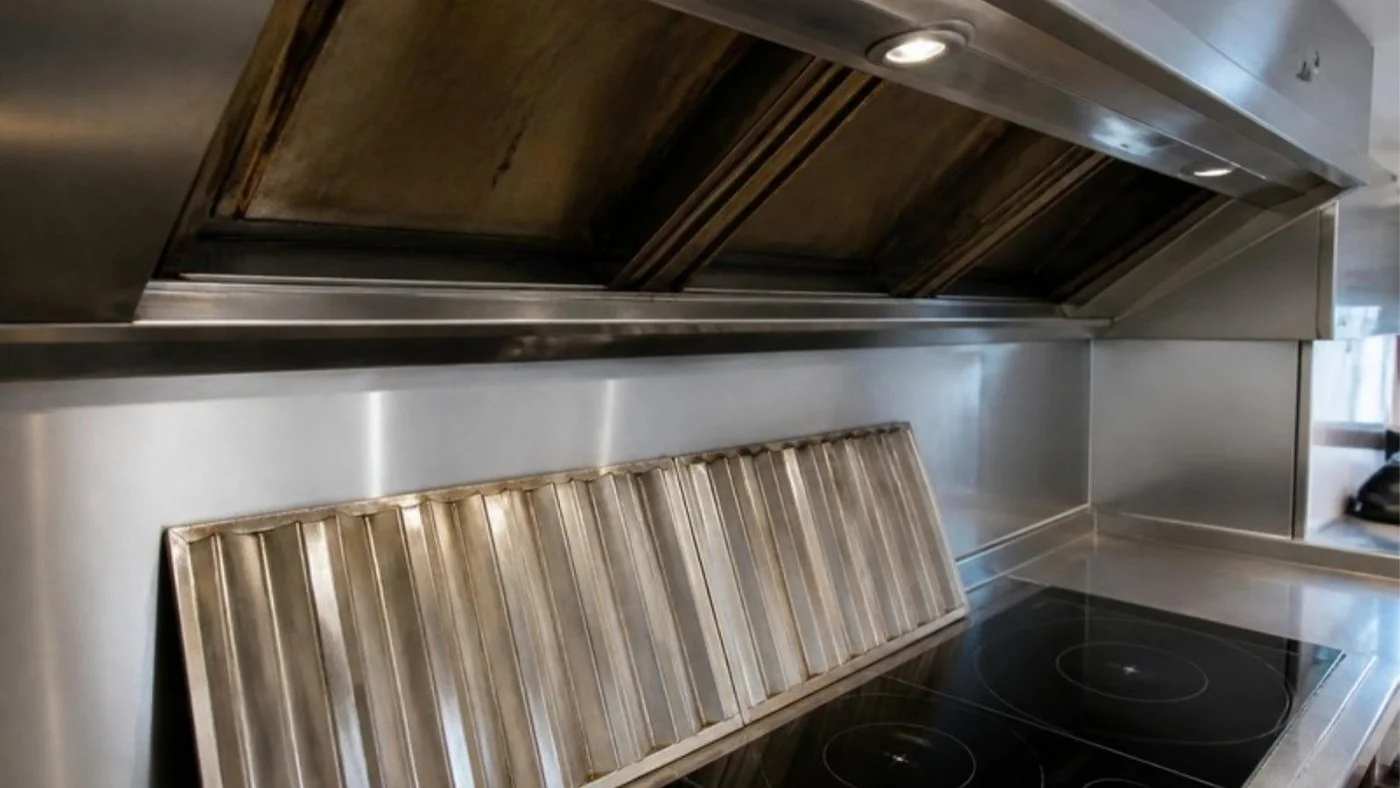
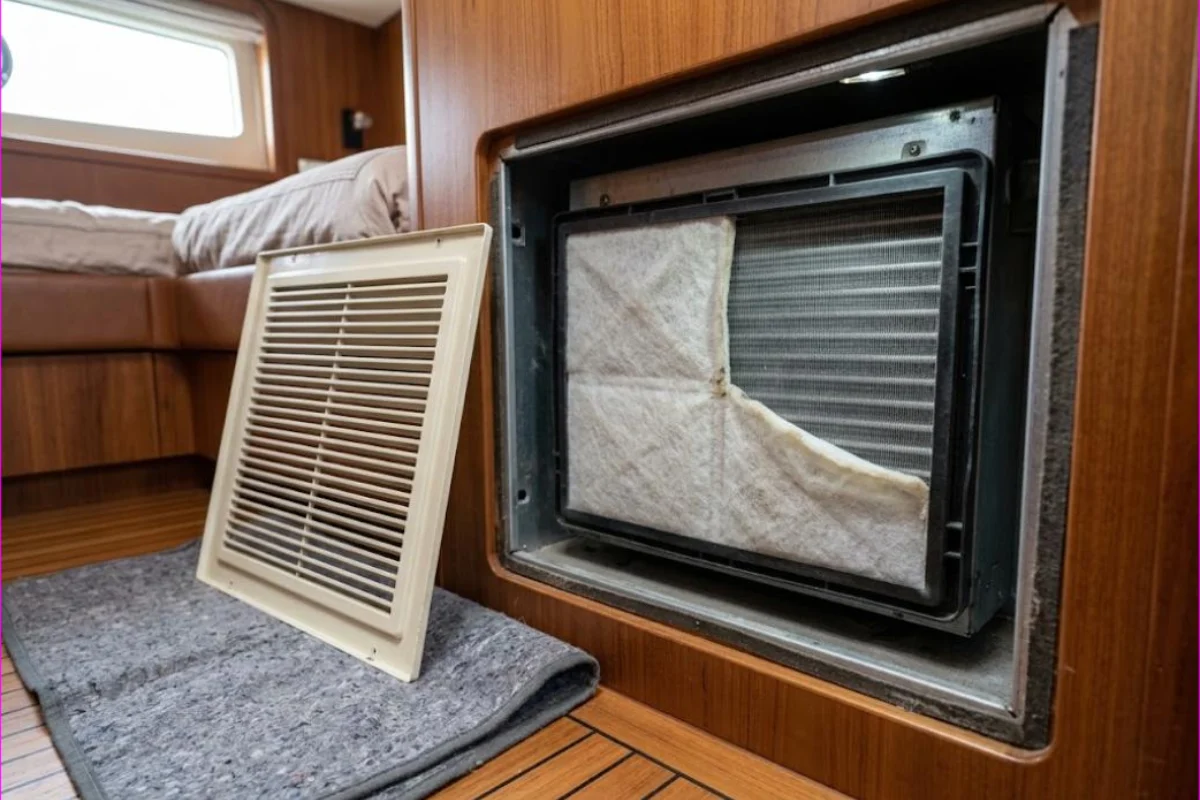
Grease filters and hood: before and after
Illustrative images of a typical working galley hood and the condition expected after degreasing. They are not photographs of a specific job.
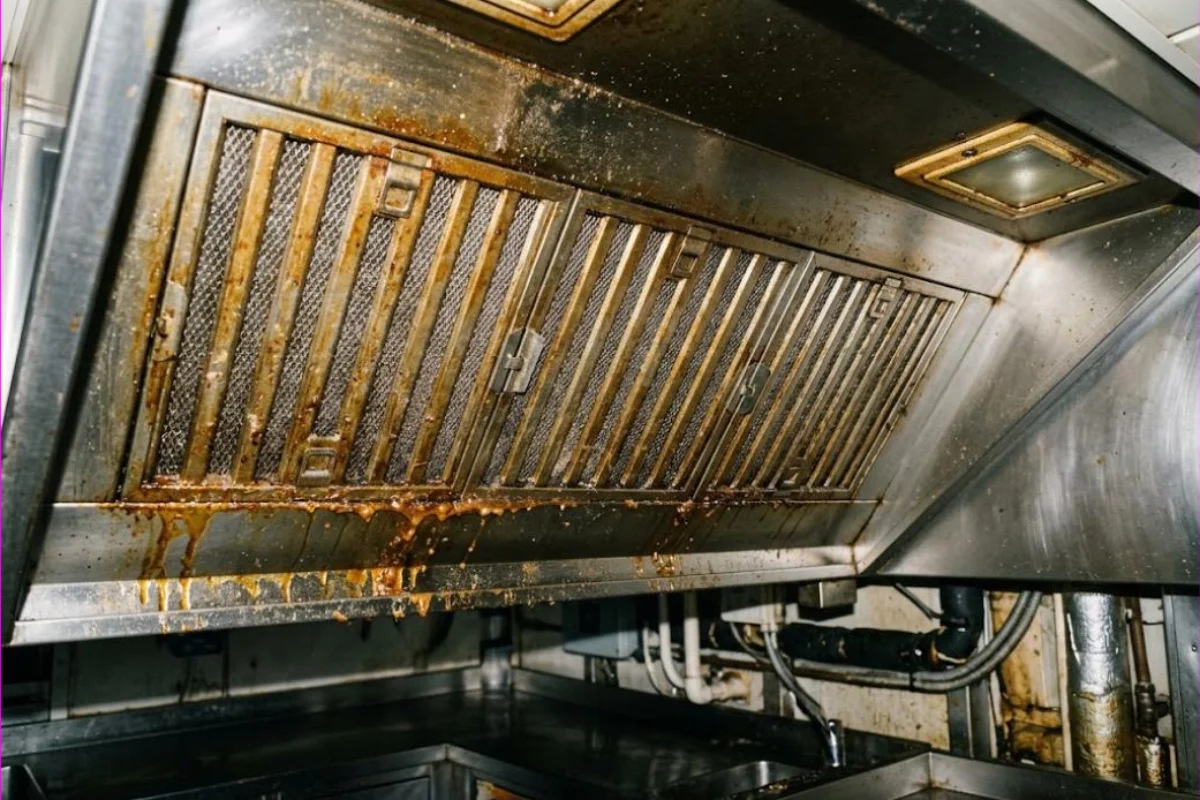

Illustrative visual showing the type of condition we find and the result we work towards. Photos of real AirBio Marine jobs are shown in the gallery below and in every client report.
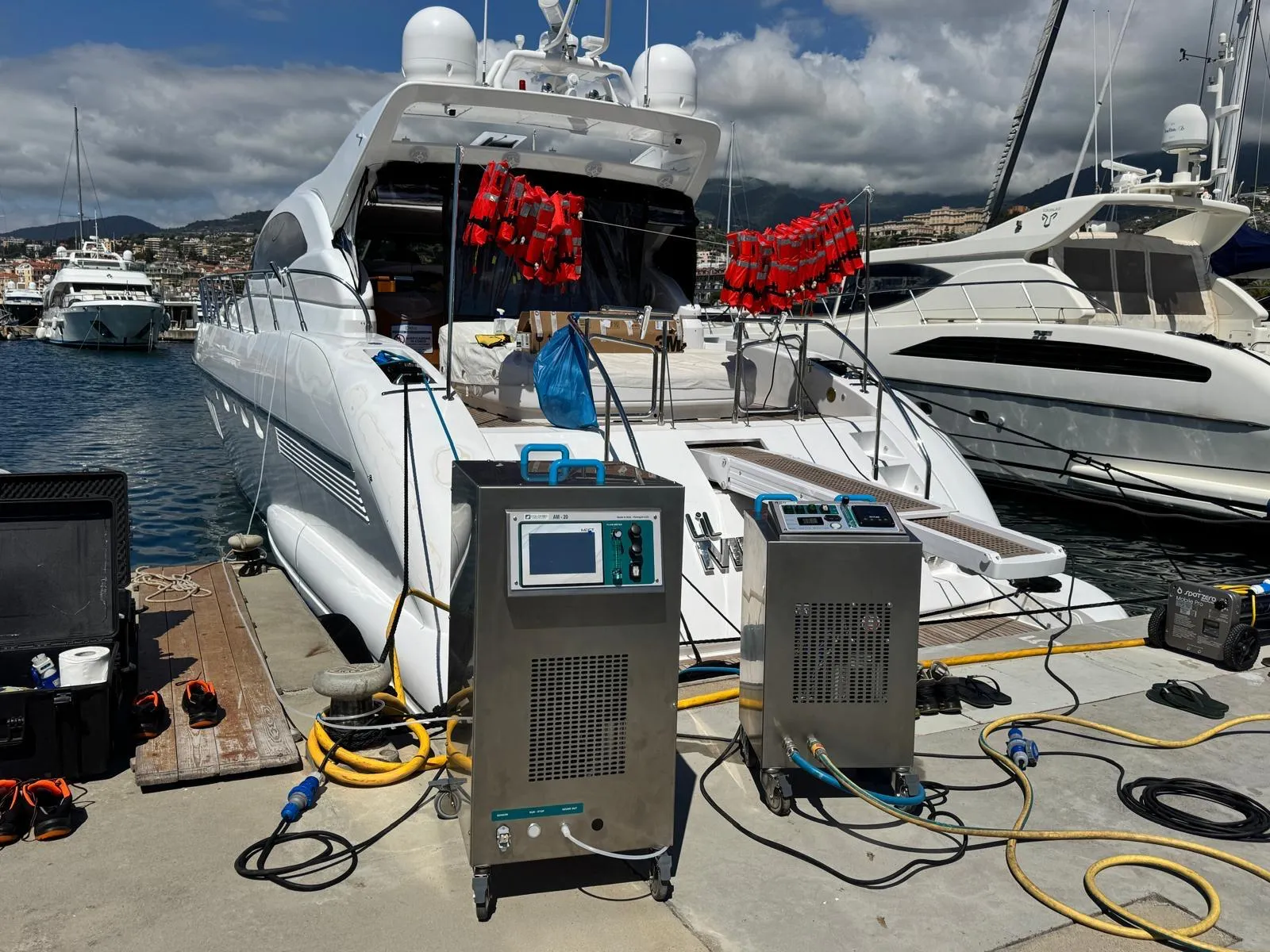
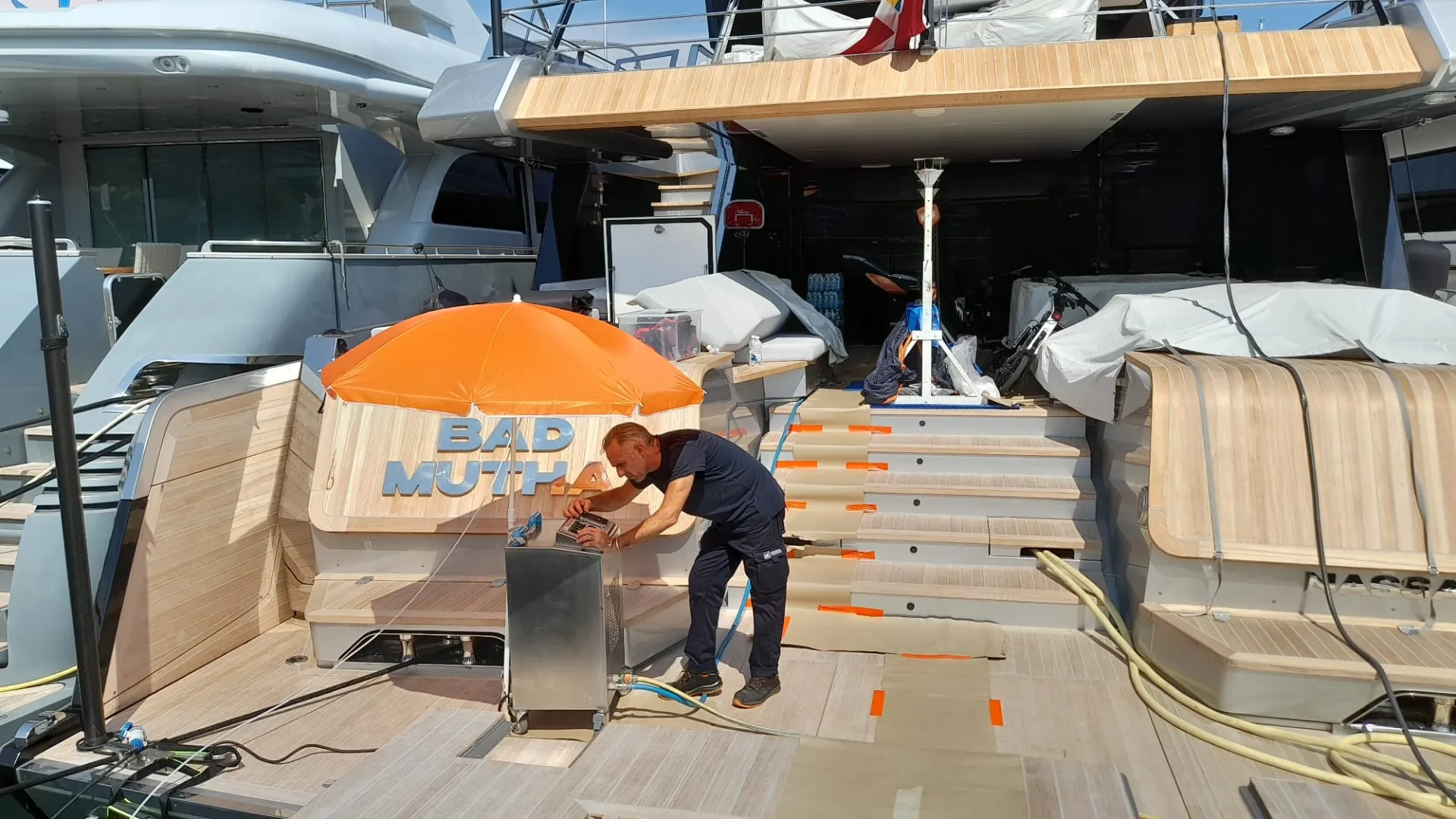
Our team and equipment in marina
Photos from real AirBio Marine jobs. Galley work is organised the same way: equipment staged on the quay, interiors protected, crew informed at each step. The last image is an illustration of a galley hood.

Verified reviews on Trustpilot
What you receive
Technical report
Areas treated, methods and products used, and any parts of the system that could not be reached.
Before and after photos
Taken from the same points on filters, hood, plenum and, where accessible, first duct section and fan.
A record for inspections
A document to file with your galley HACCP records and show during charter, management-company or flag-state checks.
Filter condition notes
Which filters are fit for use and which should be replaced.
Recommended interval
A cleaning frequency based on the deposits found and how intensively the galley is used.
Access recommendations
Where an access panel would make future cleaning of the duct and fan possible.
One report for the yacht's technical history
Every job closes with a written report: what was inspected, what was found, what was treated, photos before and after, readings where taken and recommendations for the next check. Useful for the captain, the management company, the next survey and the next season.
Who this service is for
Gets documented evidence that the galley extraction has been cleaned, useful before a charter season or an inspection.
Coordinates isolation of hood and fan electrics, and receives notes on fan condition, deposits in the duct and access points.
Works with a hood that captures smoke properly and filters that come back clean, which supports daily HACCP routines.
Receives a report for the yacht's technical file and a recommended cleaning interval for the maintenance plan.
Where we clean galley extraction systems
We work in marinas and yards along the Italian Riviera and Tuscany, and in other Mediterranean ports on request.
Monaco
Spain
and beyond
Wherever you are in the Mediterranean, we can be there.
Book the survey before your next movement
We work in the main Mediterranean marinas and refit yards, with documented results and lab analysis where required.
Galley hood cleaning: frequently asked questions
What does yacht galley hood cleaning include?
It covers degreasing of the hood canopy, seams and lights, the grease filters, the plenum behind the filters, the first section of the extraction duct and, where it can be reached, the extraction fan. The job ends with a check of extraction and fan operation and a technical report with before and after photos. Longer duct runs, bends and the discharge are handled by our extraction duct degreasing service.
Is washing the grease filters regularly not enough?
Regular filter washing by the crew is important and should continue. Filters, however, only catch part of the grease. The rest settles in the plenum, in the first duct section and on the fan, which the crew usually cannot open or reach safely. A periodic professional clean removes these hidden deposits and shows how far grease has travelled into the system.
Does cleaning the galley hood reduce fire risk?
Grease deposits are fuel sitting close to a heat source, so removing them reduces the fire load in the galley extraction. Cleaning is one part of galley fire safety, alongside the yacht's fire-suppression equipment, crew procedures and correct use of cooking appliances. We do not inspect or certify fire systems; we document the condition of the extraction before and after cleaning.
How does the report help with HACCP and inspections?
HACCP procedures in the galley expect food areas and equipment to be kept clean, and a greasy hood can drip onto surfaces below. Our report records what was cleaned, how and when, with photos. Captains and yacht managers can file it with the galley hygiene records and present it during charter, management-company or flag-state checks, according to the applicable requirements.
Does the galley need to be out of service during the work?
Yes. The hood and extraction must be switched off and cooled, and no cooking can take place while we work. We plan the intervention with the captain and chef so it fits the yacht's programme, in marina, at the yard, during lay-up or between charters. How long it takes depends on the size of the system and the deposits found at the survey.
How often should a yacht galley hood be professionally cleaned?
It depends on how much the galley cooks, the type of cooking and how often the filters are washed. A busy charter galley collects grease much faster than a galley used occasionally by the owner. After the first clean we recommend an interval based on what we found, and it can be included in a maintenance plan with other hygiene services.
Related services

Yacht Extraction Duct Degreasing
Grease and odour remediation along duct runs, bends, fan and discharge.
Galley Grease and Cooking Smells
When the extraction stops taking smells out and starts sending them back.
Charter Turnaround Sanitization
Planned, discreet work that fits between charters without cutting corners.

Pre-Season Yacht Sanitization
Prepare the yacht before the first guest arrives.
Tell us about the yacht
Yacht length, marina, systems and what you have noticed on board. A technician reads the message and calls you back to plan the survey.
"*" indicates required fields
Where we work
Italian Riviera and Tuscany marinas and yards — Viareggio, La Spezia, Portofino, Genoa, Sanremo, Livorno, Argentario — and other Mediterranean ports on request.
Documented work
Every job ends with a technical report and photos for the yacht's records.
Not sure where the problem starts?
Let the technical team assess it onboard.
In marina, at the yard or during lay-up. We tell you what needs treating — and what doesn’t.
+39 0584 433 198Expertise.
Peace of mind.