
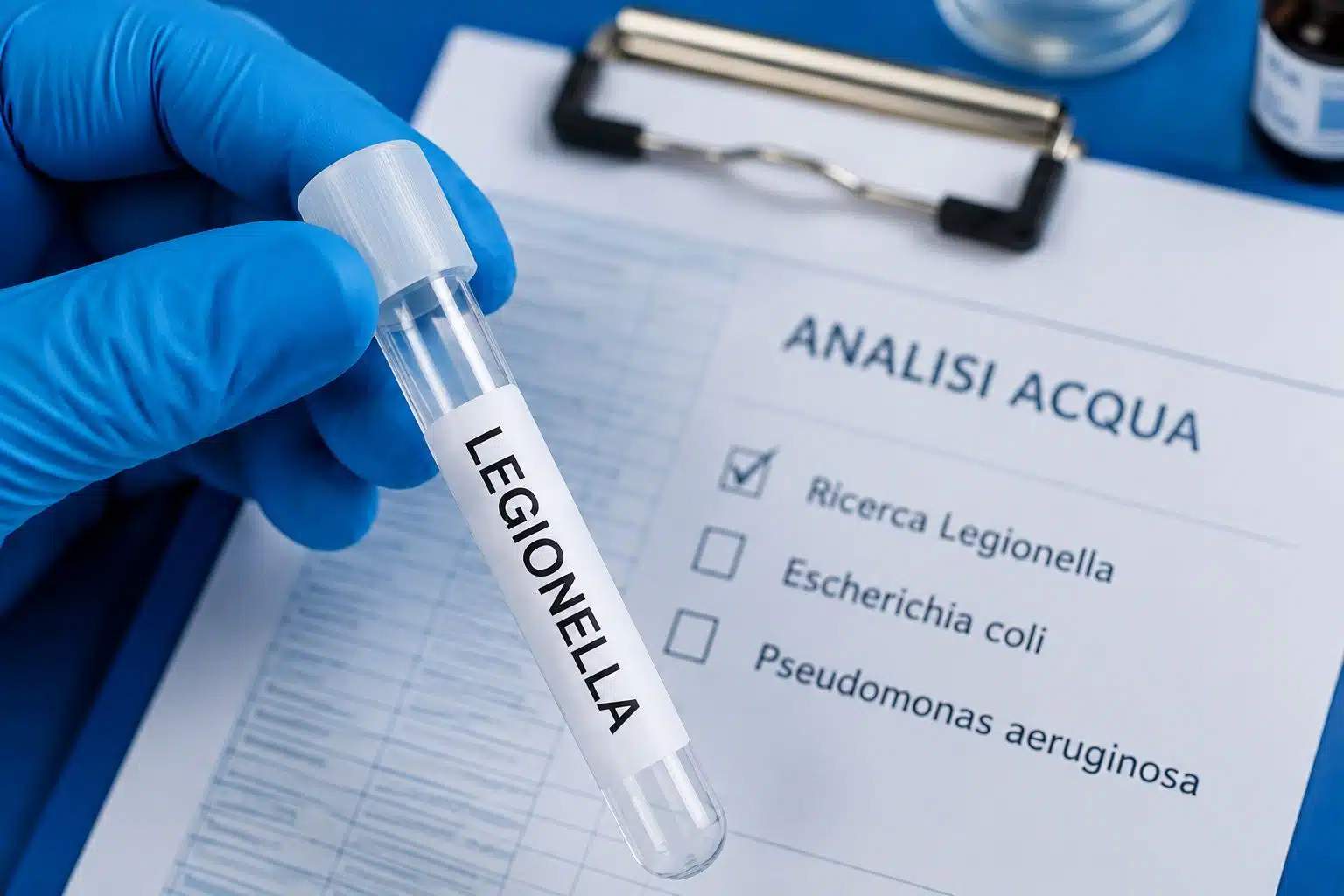
Legionella Testing for Yachts & Superyachts
A structured sampling plan, accredited lab analysis and results explained clearly.
For captains, yacht managers and charter companies who need to know the Legionella status of their water system. We assess the risk, plan where to sample, collect the water, send it to an accredited laboratory and explain the results in plain language.
yacht experience
When a Legionella test makes sense
Legionella are bacteria that live in water and can multiply in warm, stagnant parts of a system. They are a concern when contaminated water is breathed in as fine droplets, for example from a shower. These are the usual reasons to test.
Management company or charter requirements
Many management companies and charter contracts expect periodic, documented water checks on board.
Before the season or a charter
A test before guests arrive gives the captain a documented picture of the system at that moment.
After lay-up or refit
Long periods of stagnation, or works on pipes and tanks, can change the condition of the system.
After a sanitization treatment
Testing after treatment shows whether the work has had the expected effect on the sampled points.
Lukewarm hot water or warm cold water
Temperatures that drift into the middle range can favour Legionella growth and should be checked.
No recent test on record
If nobody can find the last laboratory report, testing gives the yacht a starting point.
Where Legionella can grow in a yacht's water system
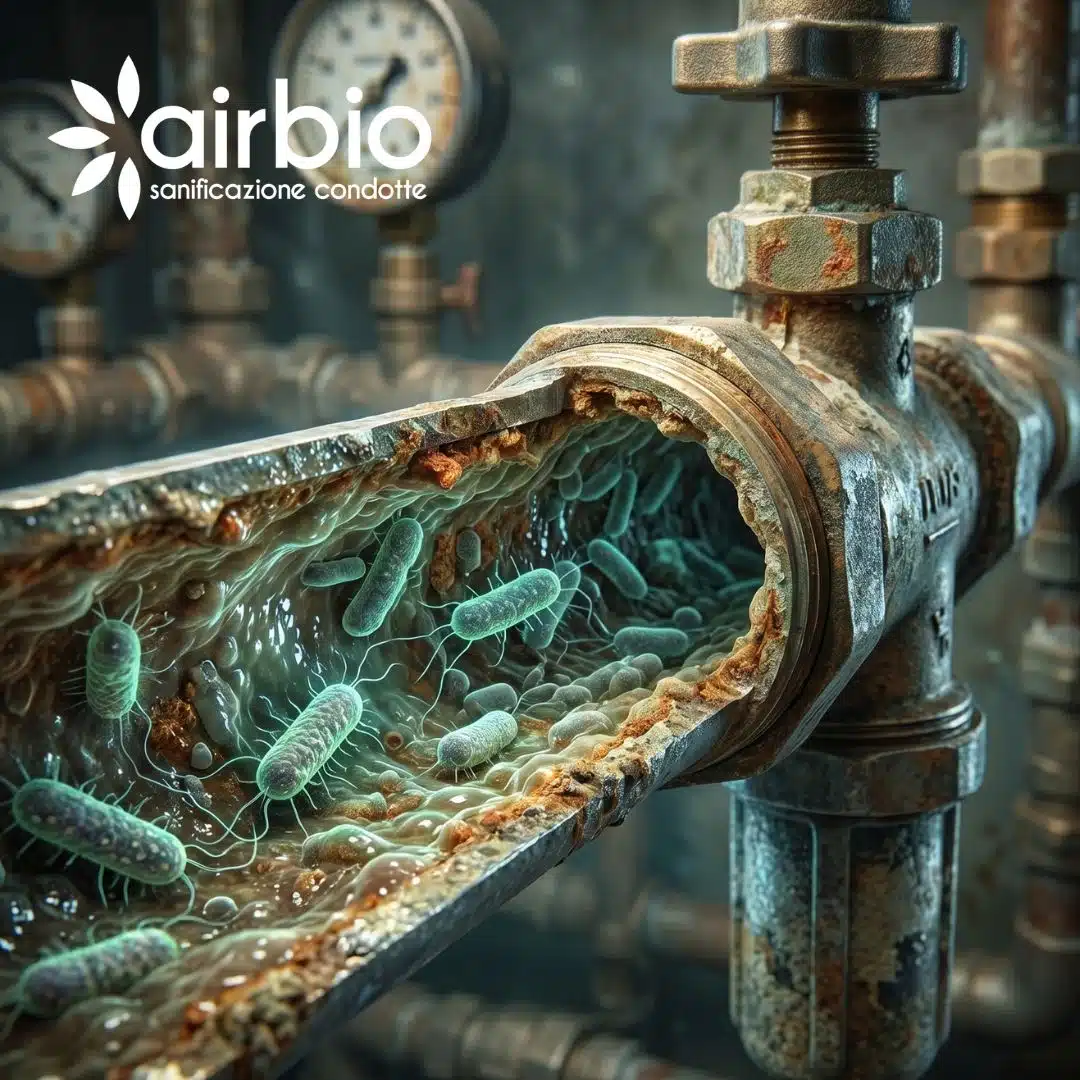
Legionella live naturally in water at low levels. The risk increases where water stands still, stays lukewarm and where biofilm — a slimy layer of bacteria on the inside of pipes and fittings — gives them shelter and nutrients.
On a yacht, these conditions can appear in tanks after lay-up, in the calorifier (the hot-water boiler), in long hot-water lines that cool down, in shower heads and hoses, and in outlets that are rarely opened. The general principle is simple: hot water should be kept hot, and cold water should be kept cold.
A test does not change any of this. It measures what is in the water at the sampled points on the day of sampling. That is why a sampling plan matters: the points chosen decide how useful the result is.
Stored water, possibly stagnant after inactivity.
Hot-water boiler where sediment and lukewarm zones can form.
Long runs where temperatures can drift.
Where water is sprayed into fine droplets.
Spare cabins and technical spaces with little flow.
Hot-water return, where relevant, shows loop condition.
Testing and sanitization are two different jobs
Testing tells you what is in the water at the sampled points on a given day. It does not clean anything. Sanitization treats the system to reduce biofilm and bacteria. It does not, on its own, tell you the result.
A negative result is a snapshot of that day, not a guarantee for the weeks that follow. Conditions change with use, temperature and inactivity, so testing works best as part of a regular plan, together with good maintenance.
If a result is positive, the next step is not to treat only the tap where Legionella was found, but to look at the whole system. We explain this on our Legionella remediation page. For a broader set of potable-water parameters, see yacht water sampling.
Where we usually take samples on board
The exact points are chosen in the sampling plan. These are the areas that are typically considered.
Fresh-water tanks
The starting point of the system, especially after lay-up or refilling.
Showers
Guest and crew showers, where water is released as fine spray.
Crew accommodation
Crew heads and showers, often in heavy daily use or on long runs.
Guest cabins
Including cabins that stay empty for long periods.
Galley
Taps used for food preparation and drinking water.
Technical spaces and hot-water return
Calorifier outlet, technical outlets and the hot-water return where relevant.
What we look at before choosing sampling points
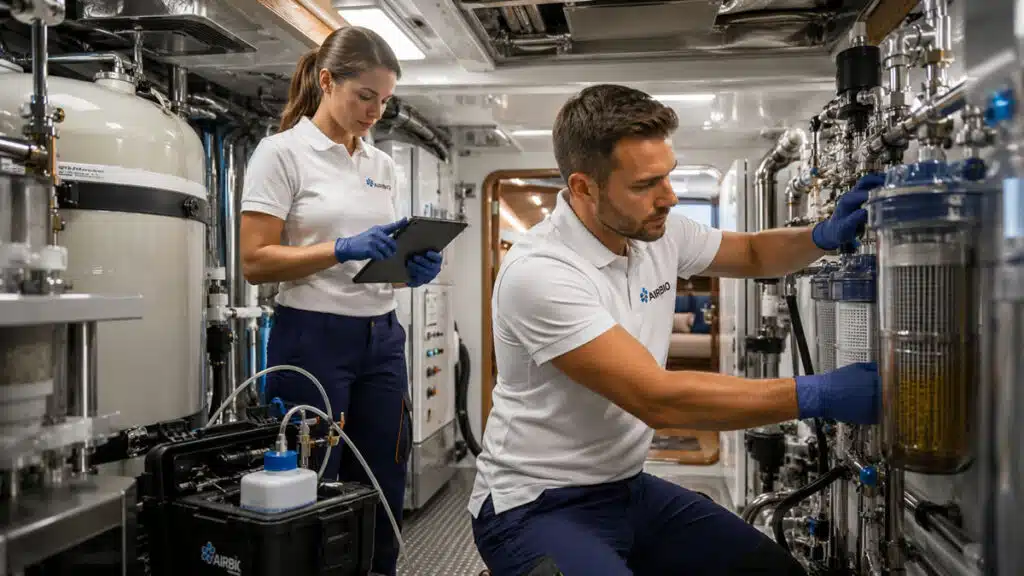
A useful test starts with understanding the system. Before sampling, we review the layout with the chief engineer and look at how each part of the network is actually used.
This short assessment decides how many samples are needed and where, so the laboratory results reflect the areas of real concern.
- Layout of tanks, calorifier, hot and cold circuits and return
- Outlets closest to and furthest from the calorifier
- Cabins and crew areas that are little used or closed
- General hot and cold water temperatures at representative outlets
- Recent lay-up, refit, treatment or repair history
- Previous laboratory reports and management-company requirements
How a Legionella test is carried out
Testing follows a clear sequence, from understanding the system to deciding what to do with the results.
Risk assessment
We review the water system, its use and its history to identify the areas where Legionella could be more likely to grow.
Sampling plan
We agree with you or the management company which points to sample, how many samples to take and which analyses to request.
Water collection
Trained technicians collect samples in sterile containers following the plan, labelling each one and recording the sampling conditions.
Laboratory analysis
Samples are delivered to an accredited laboratory with chain-of-custody records, and analysed for Legionella.
Interpretation
We read the laboratory certificates with you and explain in plain language what the results mean for each sampled point.
Corrective plan if required
If results call for action, we propose a corrective plan covering the whole system, not only the outlet where Legionella was detected.
What we may find at a sampling point
These images are illustrative, not photographs of a specific job. Inspecting outlets before sampling can reveal scale and biofilm in shower heads, which are among the places a sampling plan considers. The after image shows the same outlet once cleaned as part of a corrective plan.
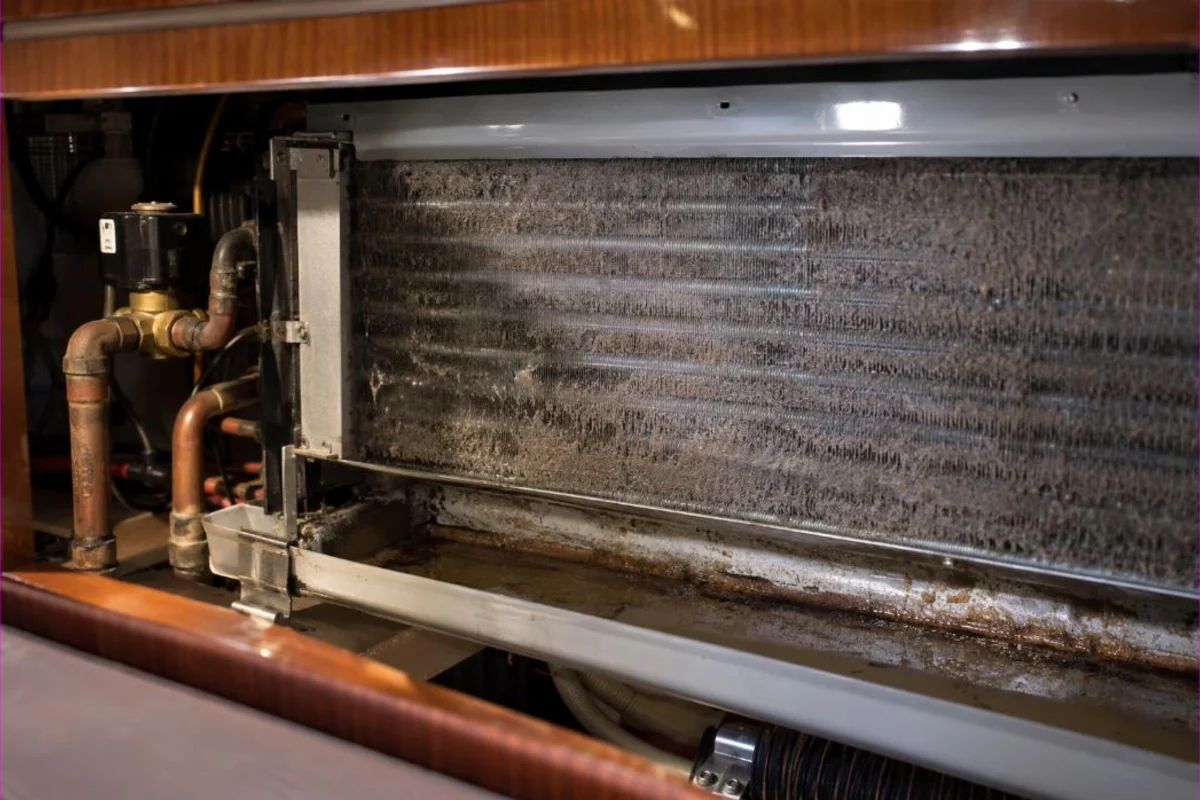
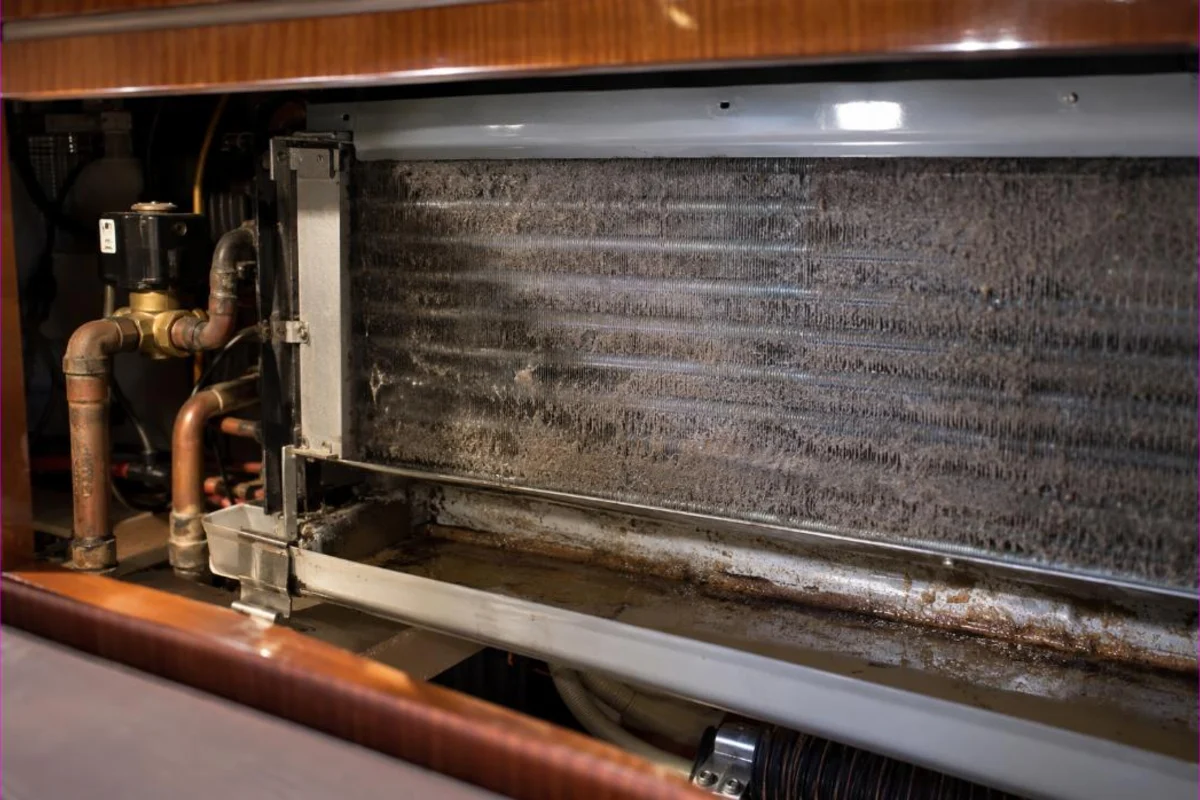
Illustrative visual showing the type of condition we find and the result we work towards. Photos of real AirBio Marine jobs are shown in the gallery below and in every client report.
Sampling and water work on board
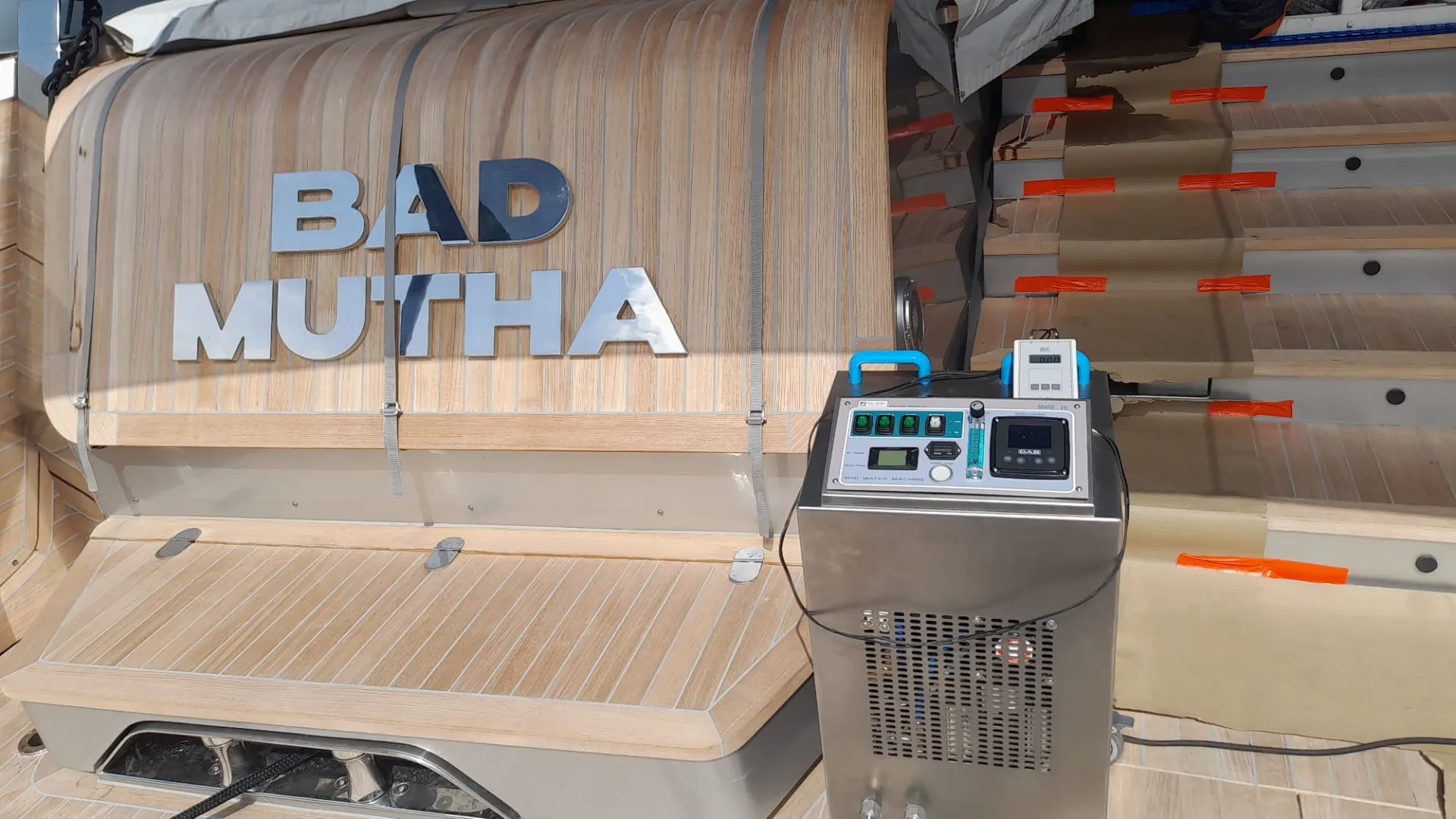
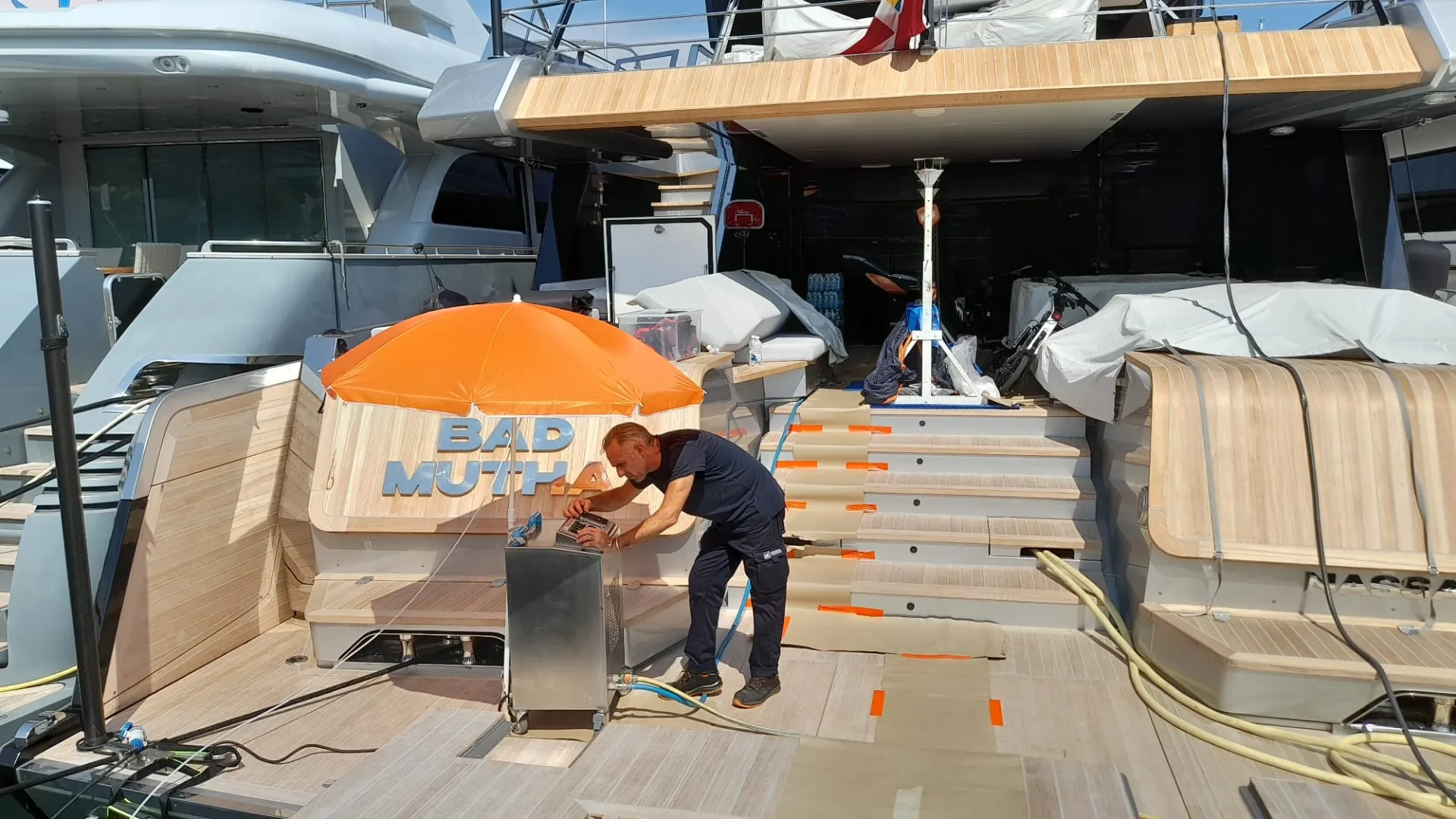
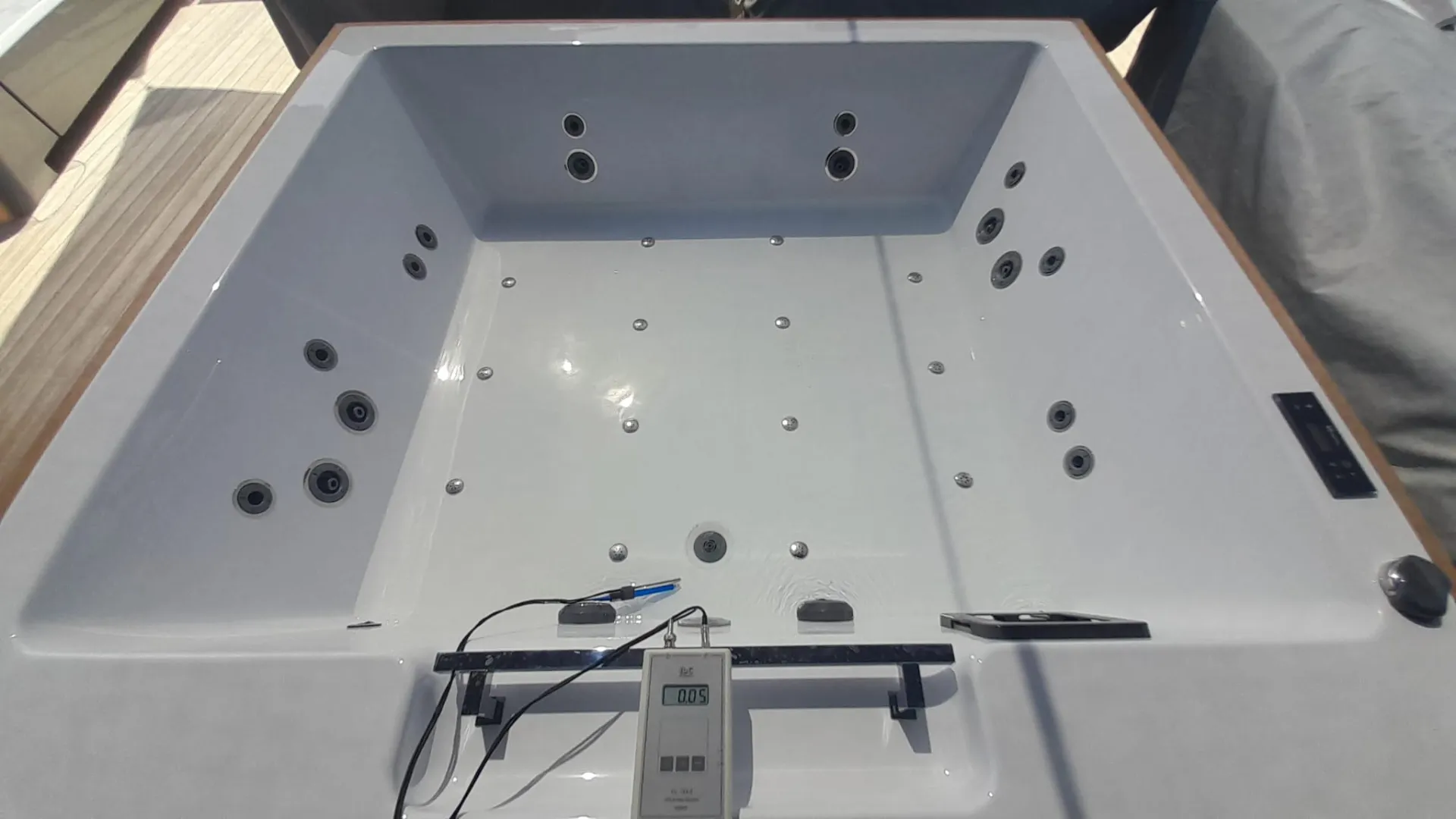
Sampling documentation and real photos from AirBio Marine water jobs: our technician at work on a protected aft deck and a residual reading on a deck jacuzzi after treatment.

What you receive
Sampling plan
The points sampled, why they were chosen and the analyses requested.
Sampling record
Date, time, outlet, conditions at sampling and chain-of-custody details.
Laboratory certificates
Official results issued by the accredited laboratory for each sample.
Plain-language interpretation
A clear explanation of what the results mean for your yacht.
Next steps
Recommendations on retesting frequency, maintenance and, if needed, a corrective plan.
One report for the yacht's technical history
Every job closes with a written report: what was inspected, what was found, what was treated, photos before and after, readings where taken and recommendations for the next check. Useful for the captain, the management company, the next survey and the next season.
Who this service is for
Needs documented Legionella results before the season or a charter, and a clear explanation to share with the owner.
Needs periodic testing with a consistent sampling plan across yachts, and certificates that fit the management company's records.
Wants evidence that water checks were carried out before guests board, and advice if anything needs attention.
Wants sampling points chosen on the real layout of the system, and results that help decide where maintenance is needed.
Where we carry out Legionella testing
We sample on board in Italian Riviera and Tuscany marinas and yards, and in other Mediterranean ports on request.
Monaco
Spain
and beyond
Wherever you are in the Mediterranean, we can be there.
Legionella testing: frequently asked questions
Is Legionella testing the same as sanitizing the water system?
No. Testing measures what is in the water at the sampled points on the day of sampling. Sanitization treats the system to reduce biofilm and bacteria. A test does not clean anything, and a treatment does not, by itself, show its result. The two are often combined: testing to understand the situation, treatment where needed, and retesting to verify.
Does a negative result mean my yacht is free of Legionella?
A negative result means Legionella was not detected in the samples taken, at those points, on that day. It is a snapshot, not a guarantee. Conditions change with use, temperature and periods of inactivity, which is why testing works best as part of a regular plan together with good maintenance of the water system.
Where do you take samples on a yacht?
Typical areas are the fresh-water tanks, guest and crew showers, crew accommodation, guest cabins, the galley, technical spaces and the hot-water return where relevant. The exact points are chosen in a sampling plan agreed with you or the management company, based on the layout of the system and how each area is used.
Who analyses the samples?
Samples are collected by trained technicians in sterile containers, labelled, recorded with chain-of-custody documentation and delivered to an accredited laboratory for analysis. The laboratory issues official certificates, which we include in the documentation and explain to you in plain language.
What happens if Legionella is found?
We read the results with you and, if action is required, propose a corrective plan. This looks at the whole water system, not only the tap where Legionella was detected, because the cause may be elsewhere in the network. The plan usually includes inspection, treatment, flushing and verification testing afterwards.
How often should a yacht be tested for Legionella?
There is no single answer for every yacht. Frequency depends on management-company and charter requirements, how the yacht is used, lay-up periods and previous results. Common moments are before the season, after refit or lay-up and after any treatment. We can suggest a testing schedule as part of a maintenance plan.
Related services
Legionella Remediation for Yachts
A positive result is not a reason to treat only the tap where it was detected.
Yacht Water Sampling & Analysis
Objective data on your onboard water, collected properly and explained clearly.
Yacht Fresh-Water System Sanitization
From tank to shower head: the whole fresh-water network, treated as one system.
Positive Legionella Result on a Yacht
A calm, practical guide for captains, engineers and managers after a positive sample.
Tell us about the yacht
Yacht length, marina, systems and what you have noticed on board. A technician reads the message and calls you back to plan the survey.
"*" indicates required fields
Where we work
Italian Riviera and Tuscany marinas and yards — Viareggio, La Spezia, Portofino, Genoa, Sanremo, Livorno, Argentario — and other Mediterranean ports on request.
Documented work
Every job ends with a technical report and photos for the yacht's records.
Not sure where the problem starts?
Let the technical team assess it onboard.
In marina, at the yard or during lay-up. We tell you what needs treating — and what doesn’t.
+39 0584 433 198Expertise.
Peace of mind.