

Yacht Odour Removal & Source Investigation
Bad Smells on a Yacht? Find the Source, Not a Cover-Up.
We investigate where a smell on board is coming from, treat the sources within our scope and coordinate with the right contractors for the rest. For owners, captains, chief stewardesses and yacht managers who need the problem solved, not perfumed.
yacht experience
When a smell on board will not go away
Don't mask the odour. Trace the source. Most onboard smells have a physical cause, and until it is found the crew is left airing, spraying and hoping.
Guests comment on a smell
A comment from a guest or charter client is often the first time the problem is taken seriously. It deserves an answer, not a new scent.
The smell moves around
Sometimes it is in a cabin, sometimes in a corridor. Odours that travel can be associated with shared air or drainage paths.
Housekeeping is not enough
Linen changed, surfaces cleaned, room aired, and the smell returns. The source may be behind a panel, in a unit or in a line.
It started after a lay-up or refit
Closed interiors, idle systems and refit work can all leave odours that need to be traced before the season.
What does the smell tell you?
Where odours on a yacht usually start
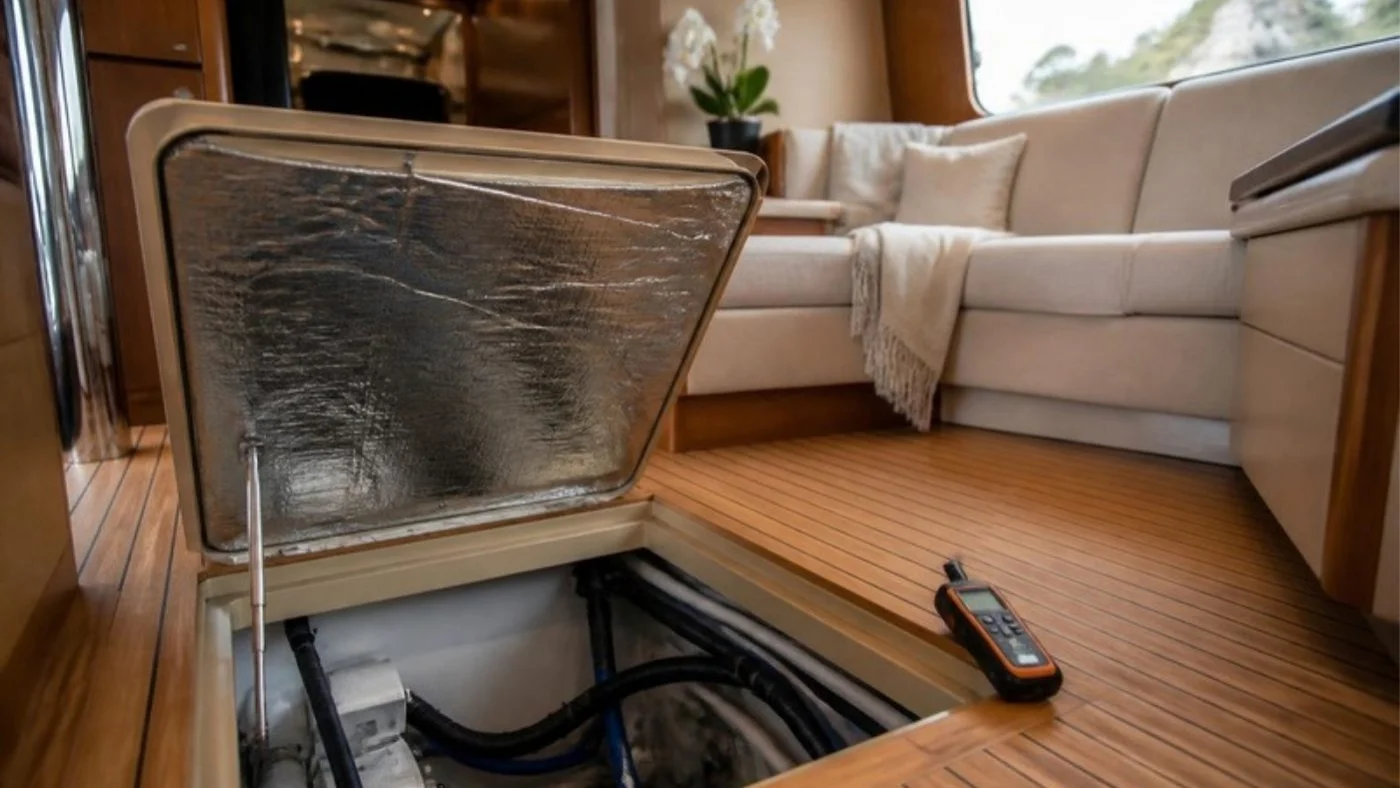
A yacht is a compact building with air, water and drainage systems running side by side behind the panels. A smell noticed in a cabin may start in the fan coil above the ceiling, in the condensate pan of that unit, in mould behind a locker, in the fresh-water line to the shower, or in a drain that shares a path with the space.
Some sources sit outside what can be cleaned from the interior. Drainage, grey water and sanitary lines (the pipes carrying used water from sinks, showers and toilets) can produce odours when traps dry out or lines are faulty. In those cases we identify the likely source and coordinate with the engineers or plumbing contractor; we do not carry out plumbing repairs.
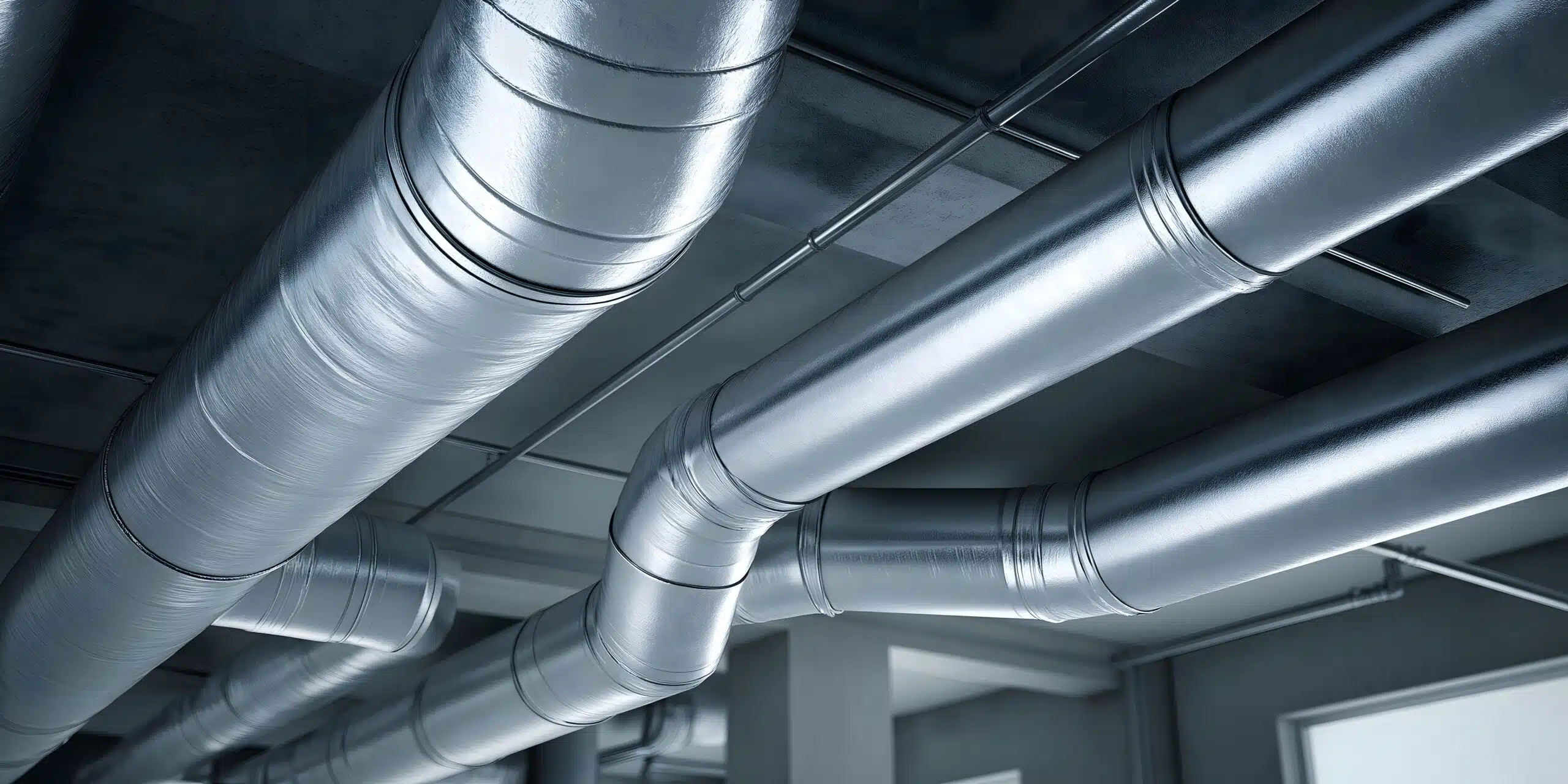
The galley is another common origin: grease in the hood, filters and extraction duct can release cooking smells well after service ends. And interiors closed for long periods simply hold everything in, so small sources become noticeable.
Where and when it is noticed, described by the crew.
Air, water, drainage and galley extraction serving that area.
The unit, surface or line producing the odour.
Cleaning and sanitization in our scope; coordination for the rest.
Ozone for closed spaces, only once sources are dealt with.
Signs an odour needs a proper investigation
Any of these may have a simple explanation. When they persist, they are worth investigating at the source.
Keeps coming back
Returns within days of cleaning, airing or fragrance treatment.
Stronger when AC runs
May indicate a source in the units or ducts.
Noticeable at taps or showers
Can be associated with the fresh-water system or drains.
Cooking smells linger
May point to grease build-up in galley extraction.
Visible damp or spots
Suggests mould or condensation close to the smell.
Guests or crew complain
Repeated comments are a reason to inspect, not to mask.
Not sure what your systems actually need?
Tell us the yacht, what the crew has noticed and where she is now: a technician calls you back within 24 hours and plans the survey around your programme.
How we trace an odour on board
We start with the people who live with the smell: when it appears, where it is strongest, whether it changes with the AC, the water or the galley. That narrows down which systems to open first.
We then inspect those systems in the affected area and photograph what we find. Where a source falls outside our work, such as a faulty sanitary line, we document it and pass it to the chief engineer or the relevant contractor.
- Crew interview: when, where and how the smell appears
- HVAC: fan coils, condensate pans, drains and ducts
- Mould and damp on visible and hidden surfaces
- Fresh-water outlets, showers and signs of tank or line issues
- Drainage, grey water and sanitary areas for likely odour points
- Galley hood, filters and extraction duct
- Soft furnishings and long-closed spaces
How we remove odours at the source
The order matters: find, clean, sanitize, and only then treat the air in closed spaces.
Investigation
Crew interview and inspection of the systems serving the affected areas, with photos of each finding.
Protection
Interiors around the work points are covered and masked before anything is opened.
Source cleaning
Sources in our scope, such as fan coils, ducts, mould-affected surfaces or galley extraction, are mechanically cleaned.
Sanitization
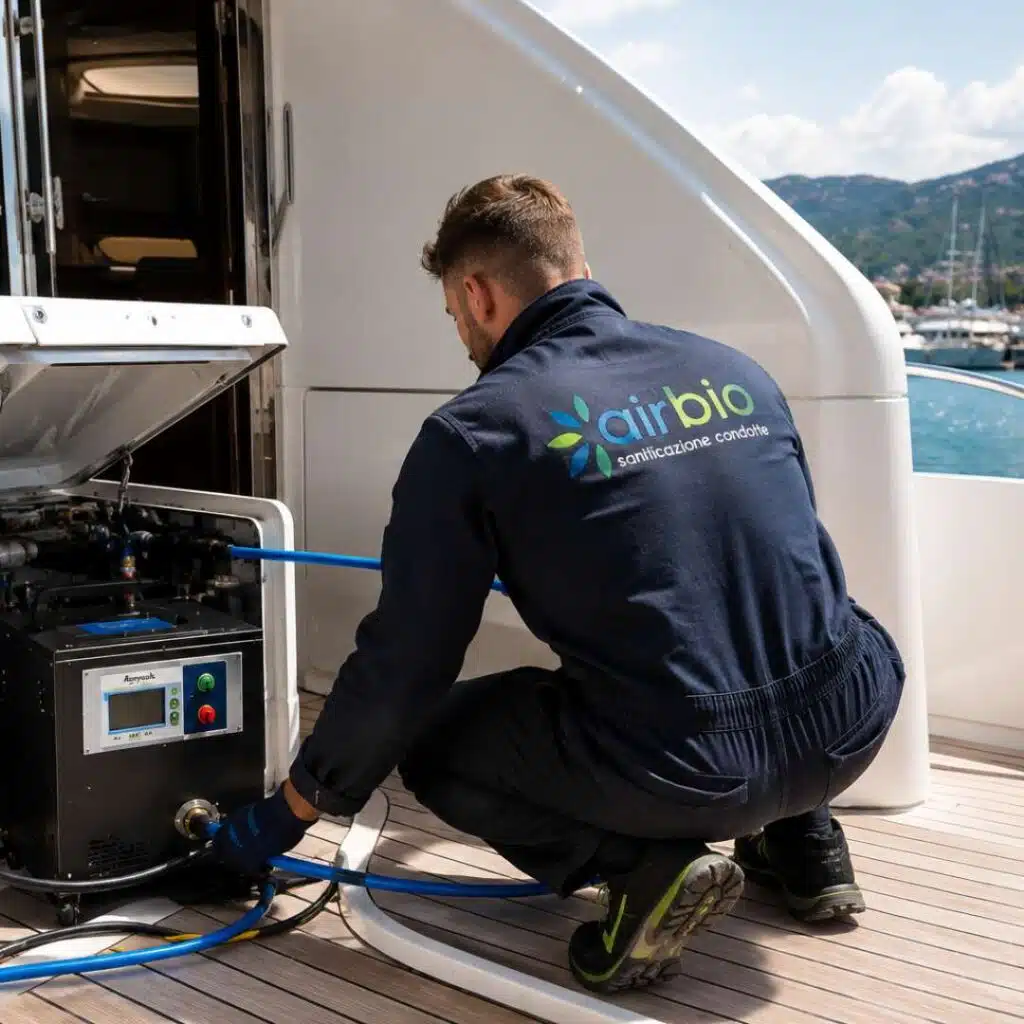
Cleaned areas are sanitized; water-system sources are treated with ozonated water from our AWM-20 / MWM-20 units where needed.
Ozone for closed spaces
As a final step only, closed spaces are treated with our AM-20 ozone generator. They must be empty during treatment and ventilated afterwards.
Report and coordination
We document what was found and treated, and list sources that need other contractors, such as sanitary line repairs.
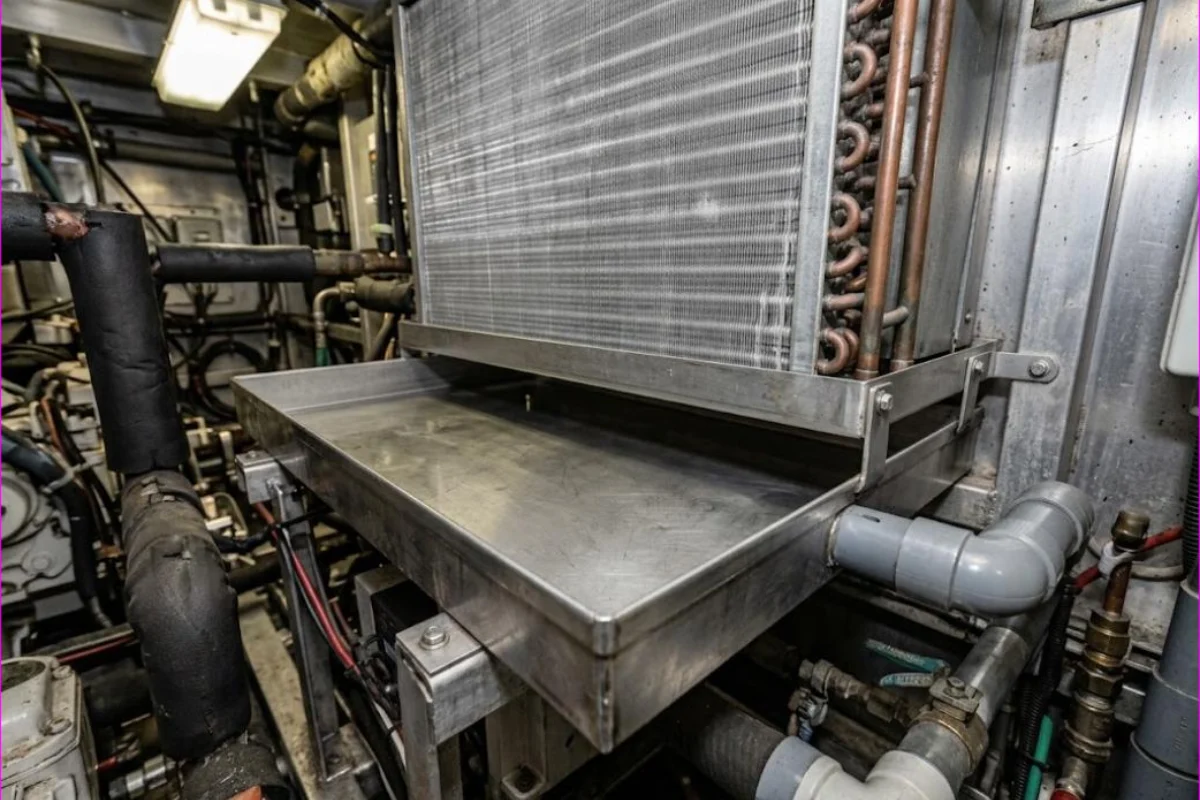
A common hidden source: the fan coil condensate pan
Illustrations of a typical source found behind a cabin odour, not photos from a specific yacht. Your report shows the real findings.
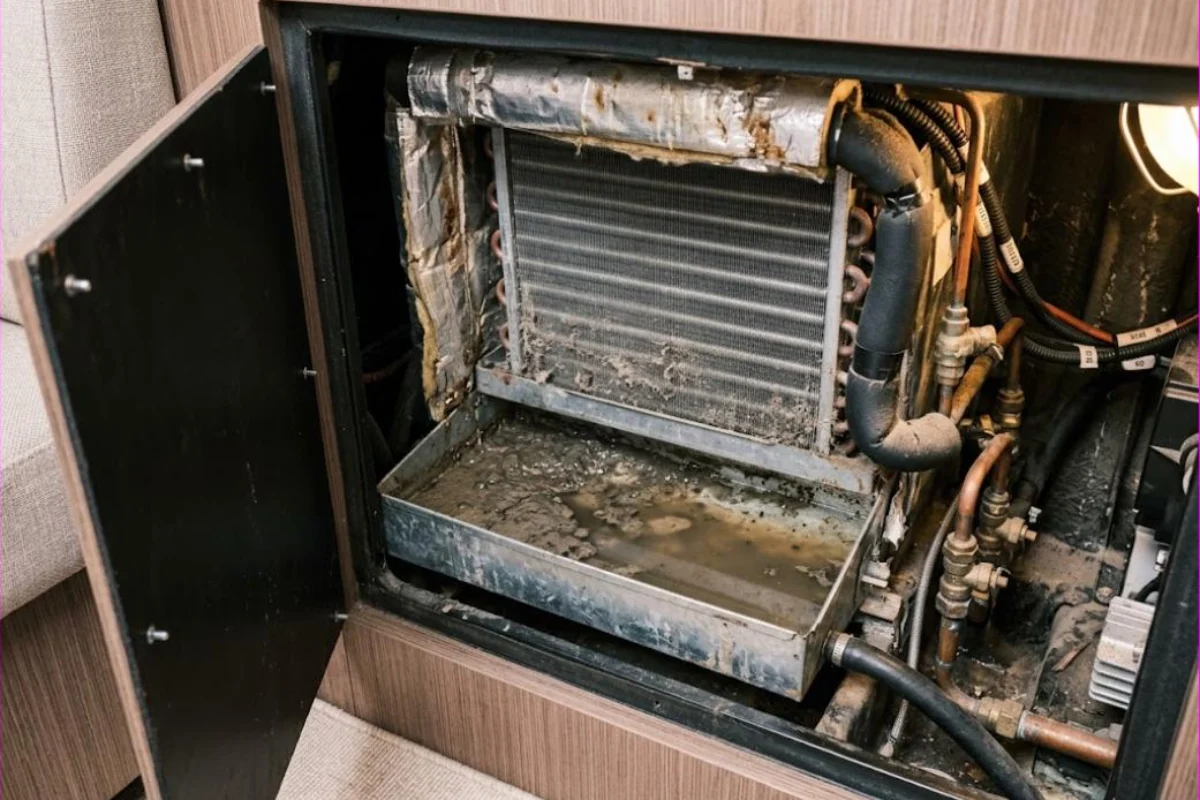
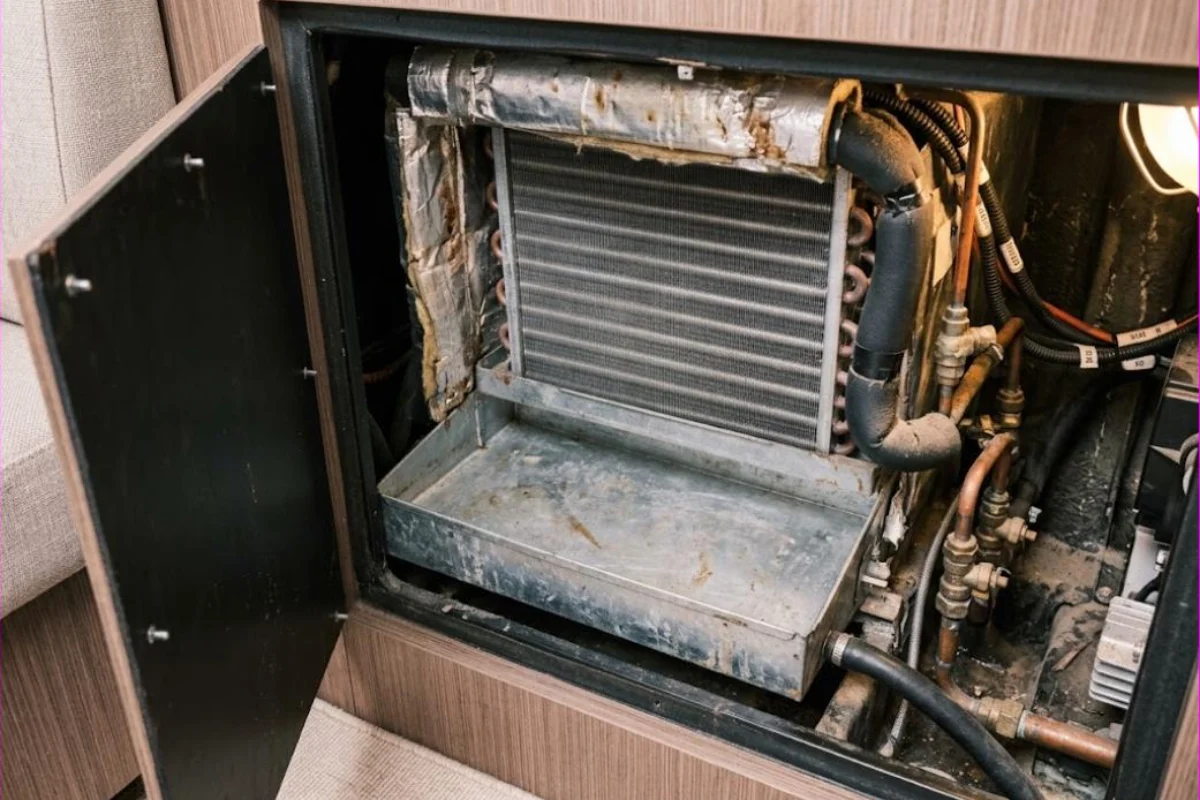
Illustrative visual showing the type of condition we find and the result we work towards. Photos of real AirBio Marine jobs are shown in the gallery below and in every client report.
Air and water work behind odour investigations
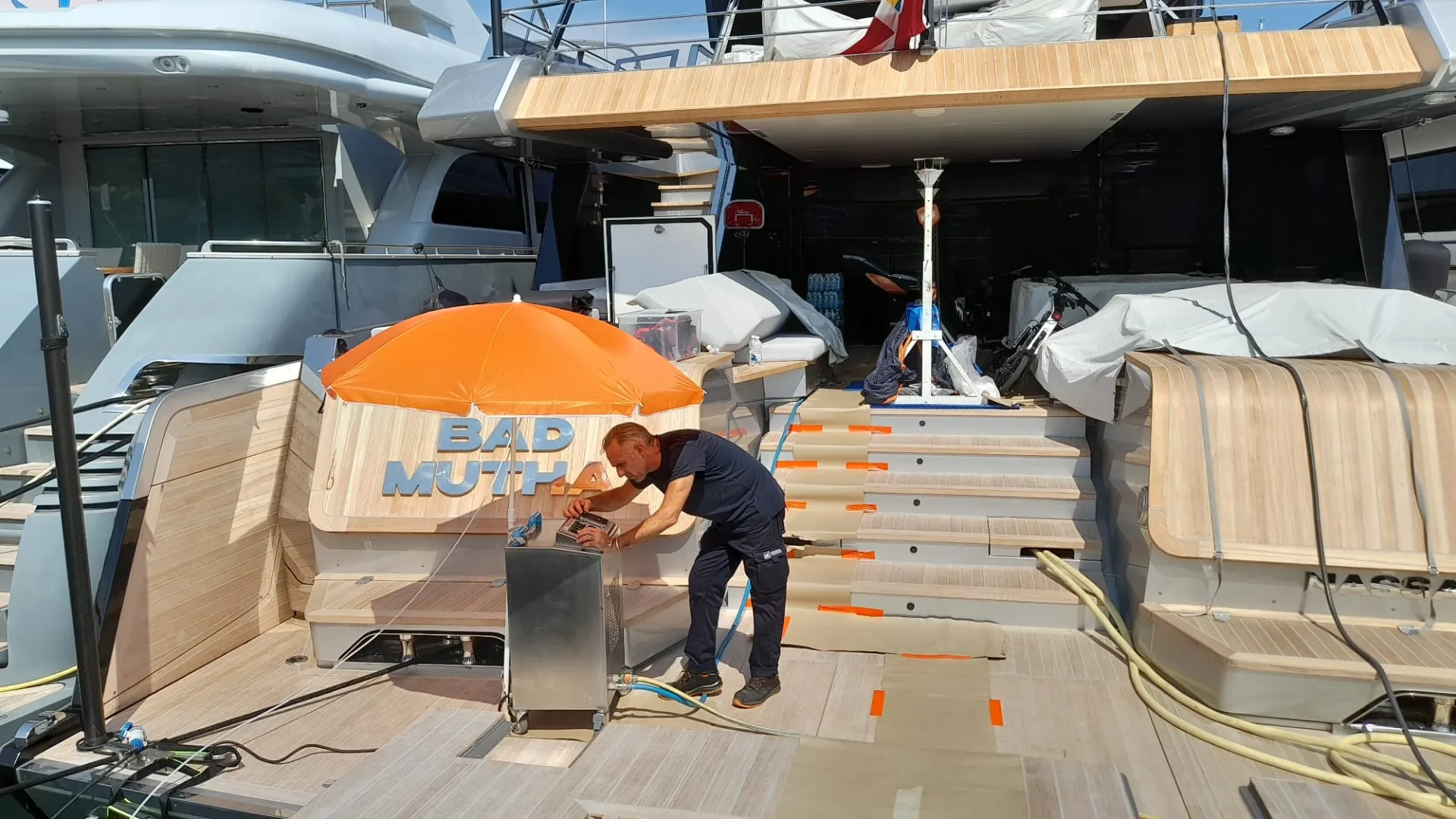
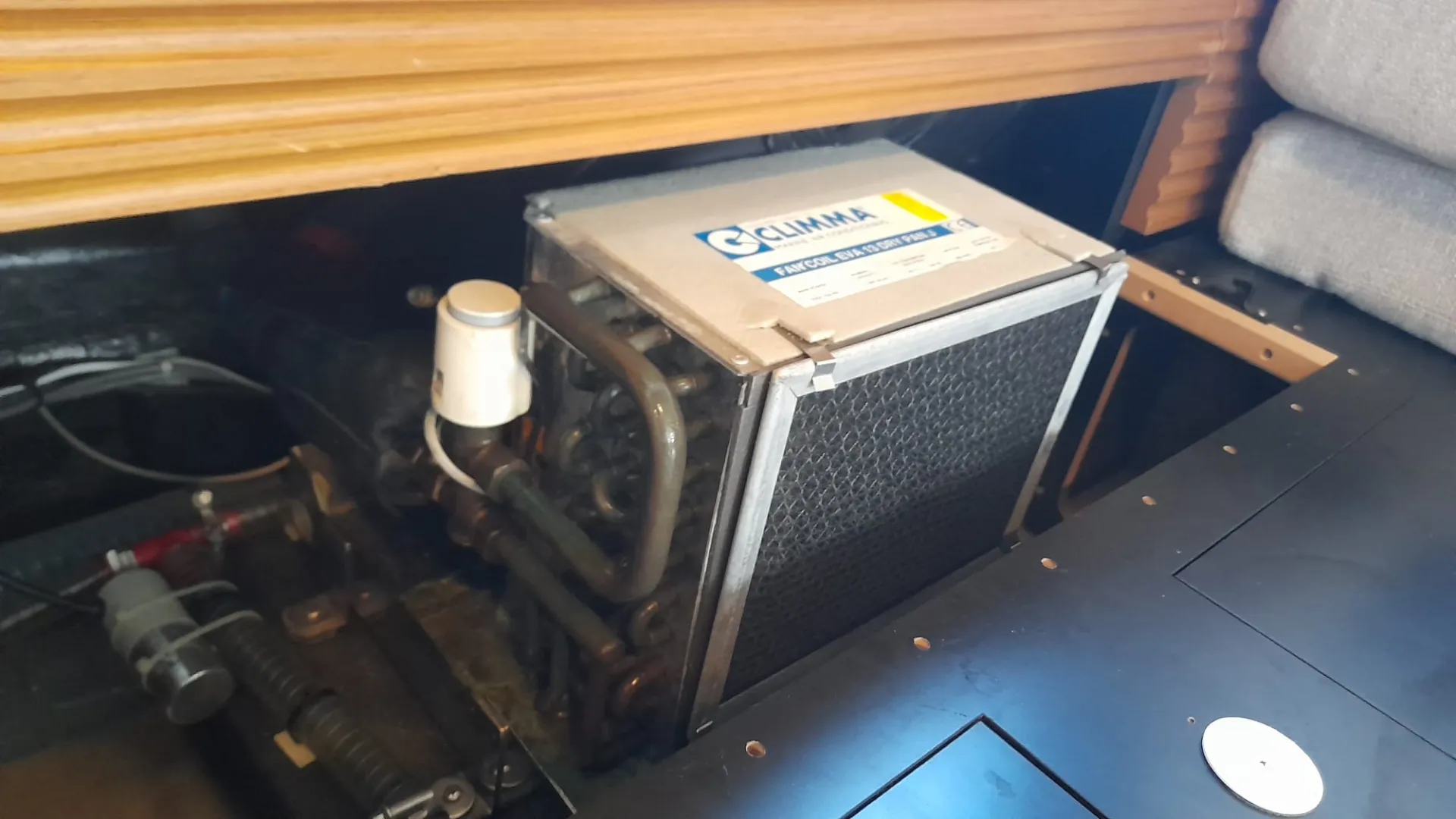
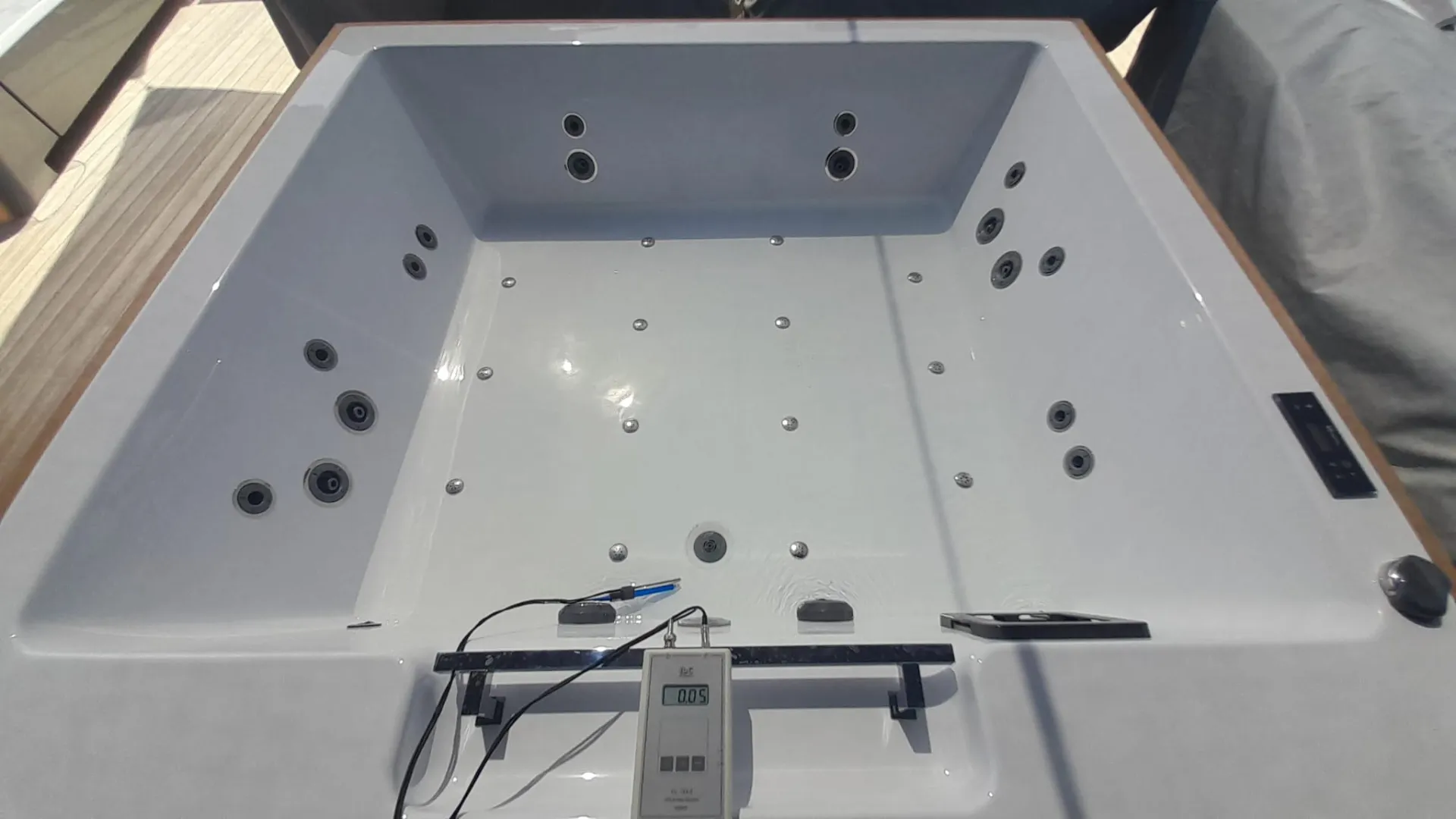
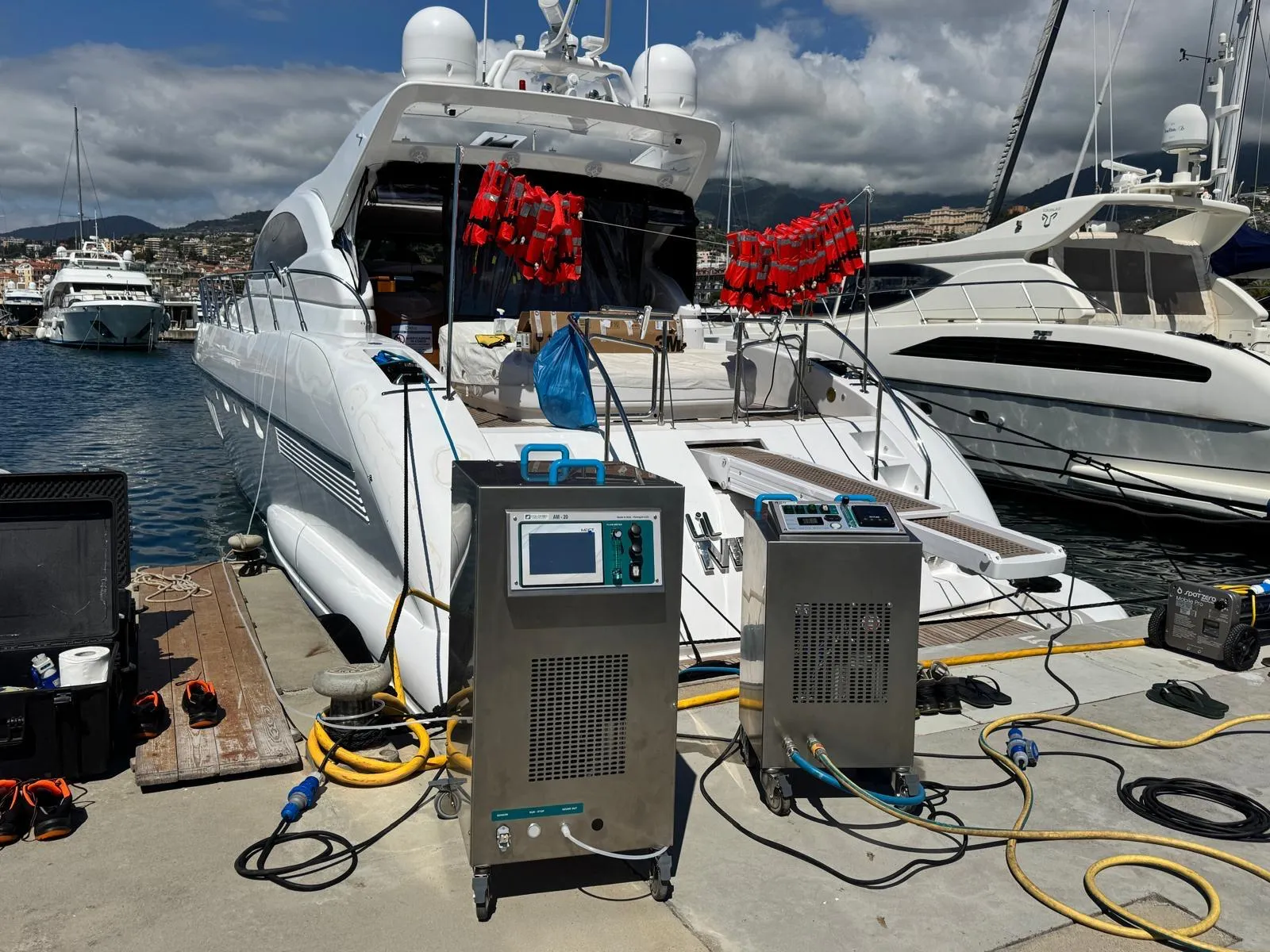
Real photos from AirBio Marine jobs: fan coils opened in a cabin, our units on the quay, and water measured after a deck jacuzzi treatment.

Verified reviews on Trustpilot
What you receive
Source findings
The likely sources identified, with the evidence found on board for each.
Photos
Photos of each source before and after treatment, where treatment was in our scope.
Technical report
Areas treated, methods and products used, spaces treated with ozone.
Coordination notes
Sources that need other contractors, such as sanitary lines, clearly listed for the crew.
Recommendations
Maintenance and ventilation points to help keep the odour from returning.
One report for the yacht's technical history
Every job closes with a written report: what was inspected, what was found, what was treated, photos before and after, readings where taken and recommendations for the next check. Useful for the captain, the management company, the next survey and the next season.
Who this service is for
You want your yacht to smell clean because it is clean, and to know what caused the problem.
You get a structured investigation instead of trial and error, with sources in our scope treated and the rest assigned.
Your team stops covering the same smell every day, and knows which cabins or systems were the cause.
Findings, photos and coordination notes help you decide on repairs and justify the work to the owner.
Where we investigate onboard odours
We work in marinas and yards on the Italian Riviera and in Tuscany, and in other Mediterranean ports on request.
Monaco
Spain
and beyond
Wherever you are in the Mediterranean, we can be there.
Book the survey before your next movement
We work in the main Mediterranean marinas and refit yards, with documented results and lab analysis where required.
Yacht odours: questions
Why does my yacht smell even after cleaning?
Housekeeping cleans the surfaces people touch and see. Many onboard odours start further in: in fan coil condensate pans, in ducts, in mould behind panels, in the fresh-water system or in drainage lines. If the source is not reached, the smell usually returns. An investigation looks at the systems serving the affected area to find what is actually producing the odour.
Can you tell what the smell is from a description?
A description helps us decide where to look first. A musty smell may point towards damp or mould, a stale smell when the AC runs towards the units, a smell at the taps towards the water system. But these are indications, not a diagnosis. Several sources can overlap, and only an onboard inspection can confirm where the odour comes from.
Do you repair drainage or sanitary lines?
No. When the investigation points to drainage, grey water or sanitary lines, we document the likely source with photos and notes and coordinate with the chief engineer or the yacht's plumbing contractor. Our work covers the cleaning and sanitization of air systems, interiors, galley extraction and water systems, and the final treatment of closed spaces.
When do you use ozone to remove odours?
Ozone is a final step for closed spaces, used only after the sources have been found and dealt with. It can help with residual odours in the air and on surfaces, but it does not remove sludge in a condensate pan or grease in a duct. During treatment the space must be empty of people, pets and plants, and it is ventilated before anyone goes back in.
Is an odour on board a health risk?
A smell is a sign that something may need attention, not a diagnosis in itself. Some sources, such as mould or contaminated water systems, are worth dealing with as a matter of general hygiene. We do not make medical claims. Our role is to find the source, clean and sanitize what is in our scope and document it so the crew can make informed decisions.
What if the smell only appears after winter lay-up?
After months closed, cabins, air-conditioning units and water systems may all contribute to odours at the same time. It is usually more efficient to check them together before the season. Our pre-season sanitization covers the air and water systems and closed interiors, with odour sources investigated as part of the work.
Related services
Yacht AC / Split Cleaning
The smell may start deeper inside the system.
Yacht Mould & Condensation Remediation
Removing the visible mark is only one part of the job.

Yacht Fresh-Water System Sanitization
From tank to shower head: the whole fresh-water network, treated as one system.
Why Does My Yacht Smell Bad?
Every onboard smell has a source. Find it before you cover it.
Tell us about the yacht
Yacht length, marina, systems and what you have noticed on board. A technician reads the message and calls you back to plan the survey.
"*" indicates required fields
Where we work
Italian Riviera and Tuscany marinas and yards — Viareggio, La Spezia, Portofino, Genoa, Sanremo, Livorno, Argentario — and other Mediterranean ports on request.
Documented work
Every job ends with a technical report and photos for the yacht's records.
Not sure where the problem starts?
Let the technical team assess it onboard.
In marina, at the yard or during lay-up. We tell you what needs treating — and what doesn’t.
+39 0584 433 198Expertise.
Peace of mind.