
Post-Refit Yacht Cleaning & System Sanitization
The technical hygiene phase between the yard and the return to service.
A refit leaves more behind than visible dust. Fine particulate settles inside ducts and fan coils, water systems stay closed for weeks, and solvent and varnish odours linger. We clean and sanitize the air and water systems before the yacht returns to service, coordinating with the yard and the project manager.
yacht experience
What crews notice after a yard period
The yacht looks finished, but the first days of living on board often reveal what the yard work left inside the systems.
Dust from the grilles
Fine white or grey dust blowing from the air outlets when the AC restarts often comes from sanding and cutting during the works.
Chemical smell in cabins
Odours of solvent, adhesive or varnish may persist in closed cabins and can be held in soft furnishings and duct surfaces.
Water tastes or smells different
Pipes and tanks closed or drained during the works may produce odours, discolouration or cloudiness when reopened.
Dust returning after cleaning
Surfaces cleaned by the interior team gather dust again within days, which may indicate the AC is still redistributing it.
Weak airflow in some cabins
Filters and coils loaded with construction dust can restrict air and should be inspected.
How refit dust and idle water affect onboard systems
Sanding, cutting, drilling and grinding produce fine particulate: dust fine enough to stay in the air and travel with it. If the AC runs during the works, or ducts are left open, that dust enters the ducts, settles on fan coil filters and coils, and collects in condensate pans where it mixes with moisture.
At the same time, water systems are often isolated, drained or left standing while plumbing or joinery work goes on. Closed pipes and dead legs (sections of pipe where water no longer flows) are where biofilm, a slimy layer of bacteria on the inside of pipes, can develop.
Paints, adhesives, varnishes and sealants also release odours as they cure. Some of these can be absorbed by fabrics and duct surfaces. Post-refit sanitization removes what the works deposited in the systems, so the yacht does not start its season breathing and drinking the remains of the yard.
Sanding, cutting and finishing produce fine dust and solvent vapours.
Dust enters open ducts and settles on filters, coils and pans.
Pipes and tanks stand isolated or partly drained for weeks.
Systems restart and push dust and stagnant water to cabins and outlets.
Cleaning and sanitization before the yacht returns to service.

Typical warning signs after a refit
These signs are common after yard work. They indicate which systems should be inspected before owners, guests or charter clients come aboard.
Construction dust in the air
Visible dust in beams of light or on surfaces soon after cleaning.
Clogged fan coil filters
Filters grey or white with fine dust after a short period of running.
Solvent or varnish odour
Chemical smells that do not fade with normal ventilation.
Reopened water lines
Pipes cut, modified or isolated during the works and now back in use.
Changes in the water
Cloudy, discoloured or odorous water at taps and showers after refilling.
Damp after the works
Condensation or humidity in areas where insulation or panels were replaced.
What we check after the yard period
We survey the yacht with the chief engineer and, where possible, the yard's project manager. Knowing which areas were worked on, whether the AC was running during the works and which water lines were modified tells us where to look first.
Findings are photographed and used to agree the scope of work and the right moment for it, usually once dusty works are finished and before the interiors receive their final clean.
- Areas and systems affected by the works, from the yard's work list
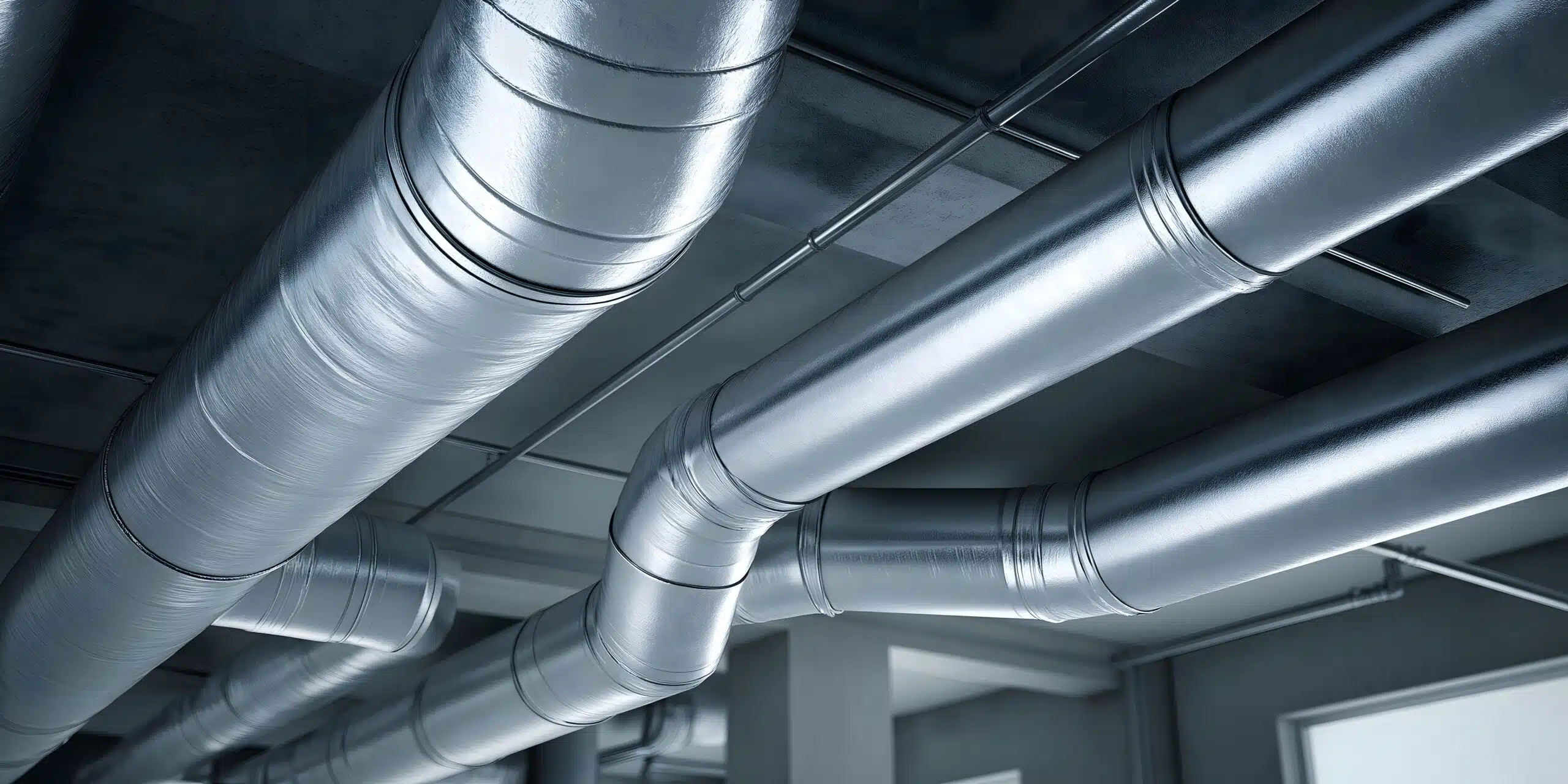
- Supply grilles, accessible ducts and air handling units for fine dust
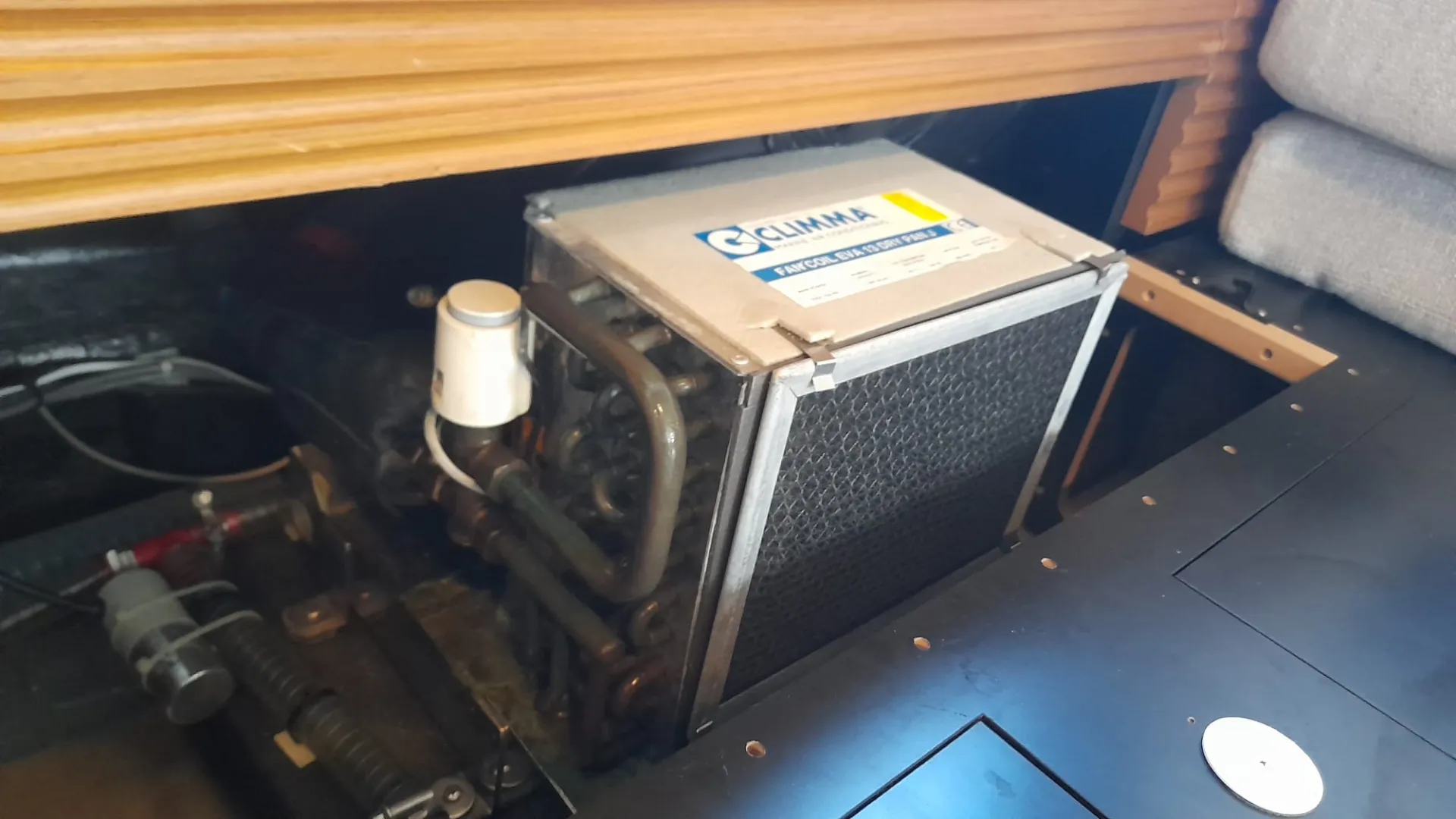
- Fan coil filters, coils and condensate pans in worked-on areas
- Water tanks and distribution lines that were isolated, drained or modified
- Galley extraction, if the galley was part of the works
- Residual odours from paints, adhesives and varnishes
- Humidity or condensation in newly closed spaces
How post-refit sanitization is carried out
The goal is to clear the systems of what the works left behind, in an order that does not undo the final interior clean.
Coordination with the yard
We agree timing with the project manager so our work starts after dusty trades are finished and before final interior cleaning and handover.
Protection
New finishes, floors and furniture are covered and masked wherever we open ducts, fan coils or water equipment.
Air systems
Ducts and fan coils are cleaned mechanically with brushing and vacuum extraction to remove fine particulate, then sanitized. Filters loaded with dust are flagged for replacement.
Water systems
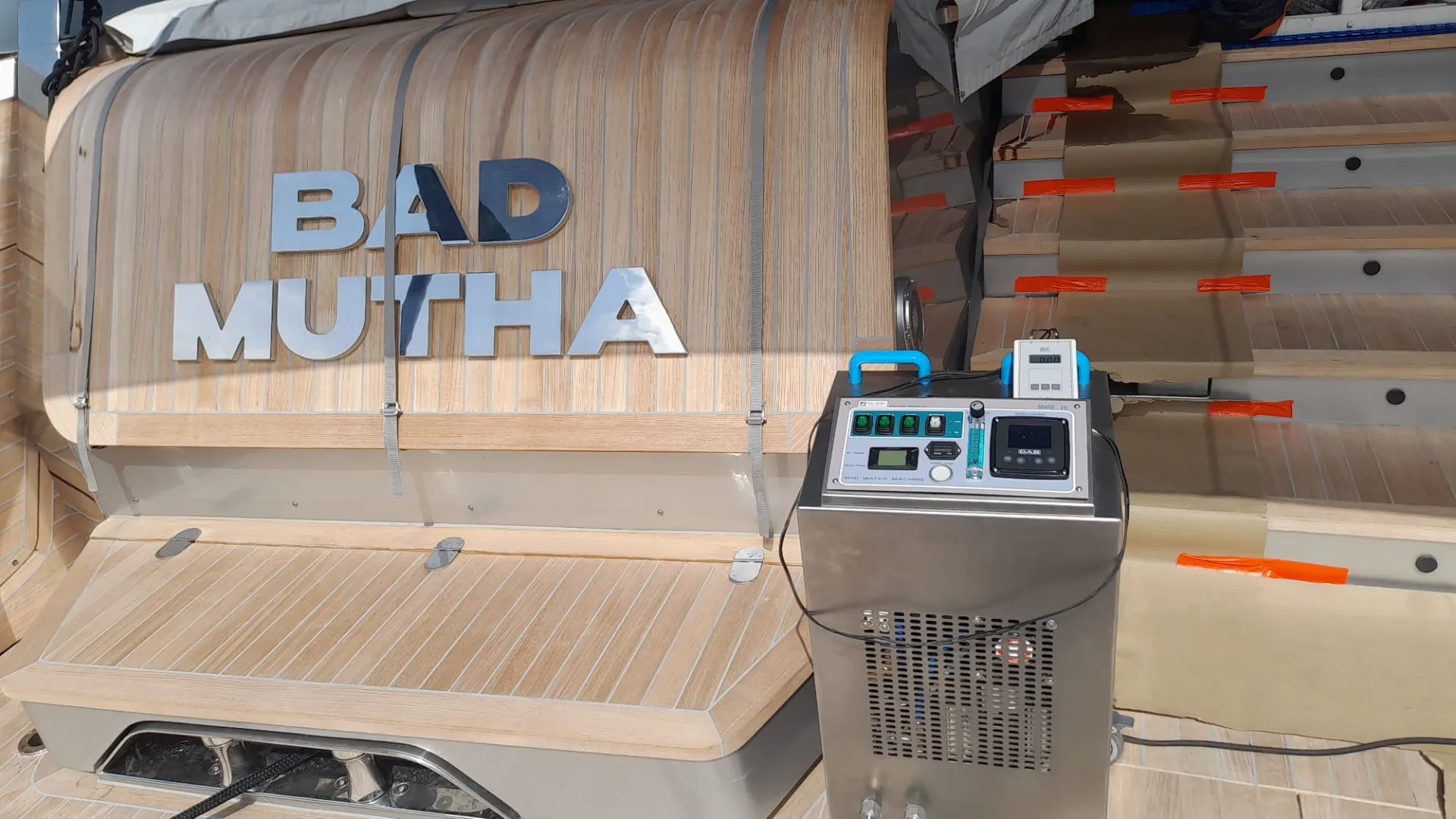
Tanks and distribution lines are treated with high-concentration ozonated water from our AWM-20 or MWM-20 units to break down biofilm, then flushed. Residual levels are measured afterwards.
Odour treatment
Where solvent or varnish odours persist, closed spaces can be treated with ozone using the AM-20 generator while empty, then ventilated before reoccupation.
Checks and report
Systems are restarted and checked. Water sampling can be carried out where appropriate. You receive a report with photos to file with the refit documentation.

A supply duct after refit: before and after
Illustrative images of a cabin supply duct and grille after yard work, and after cleaning. They are not photographs of a specific job.
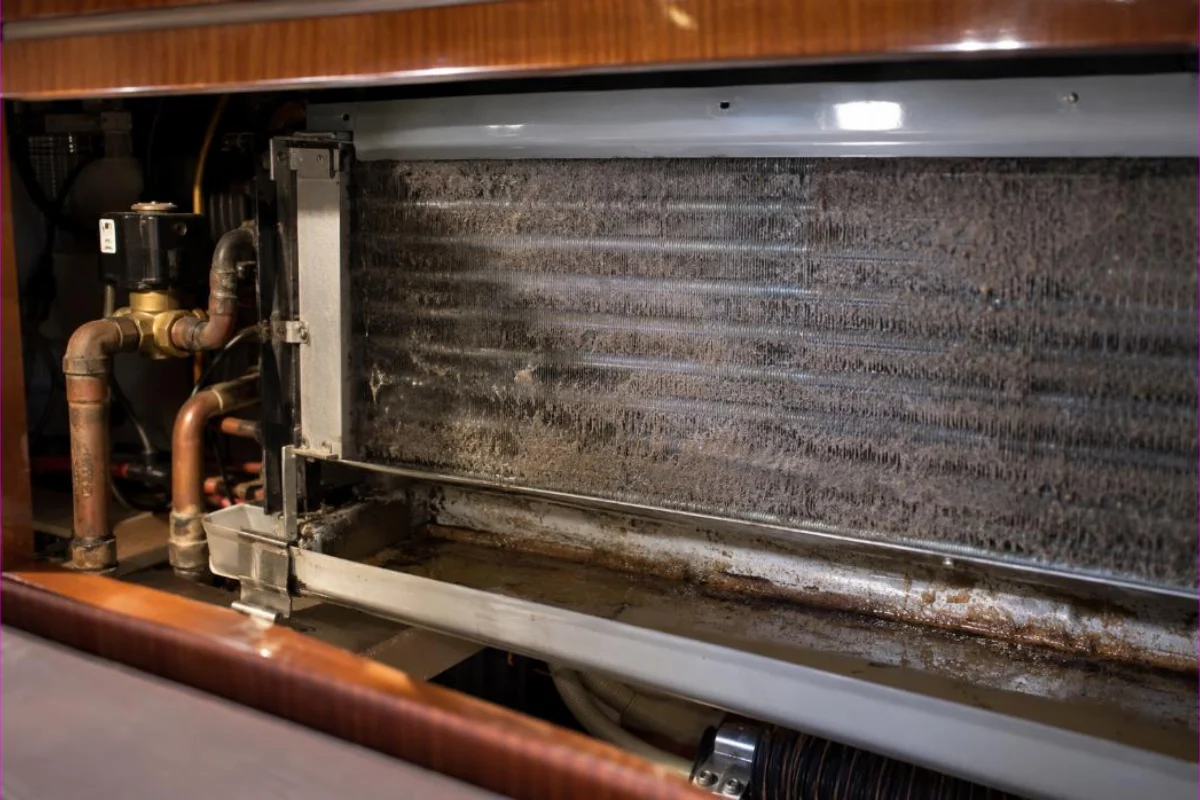
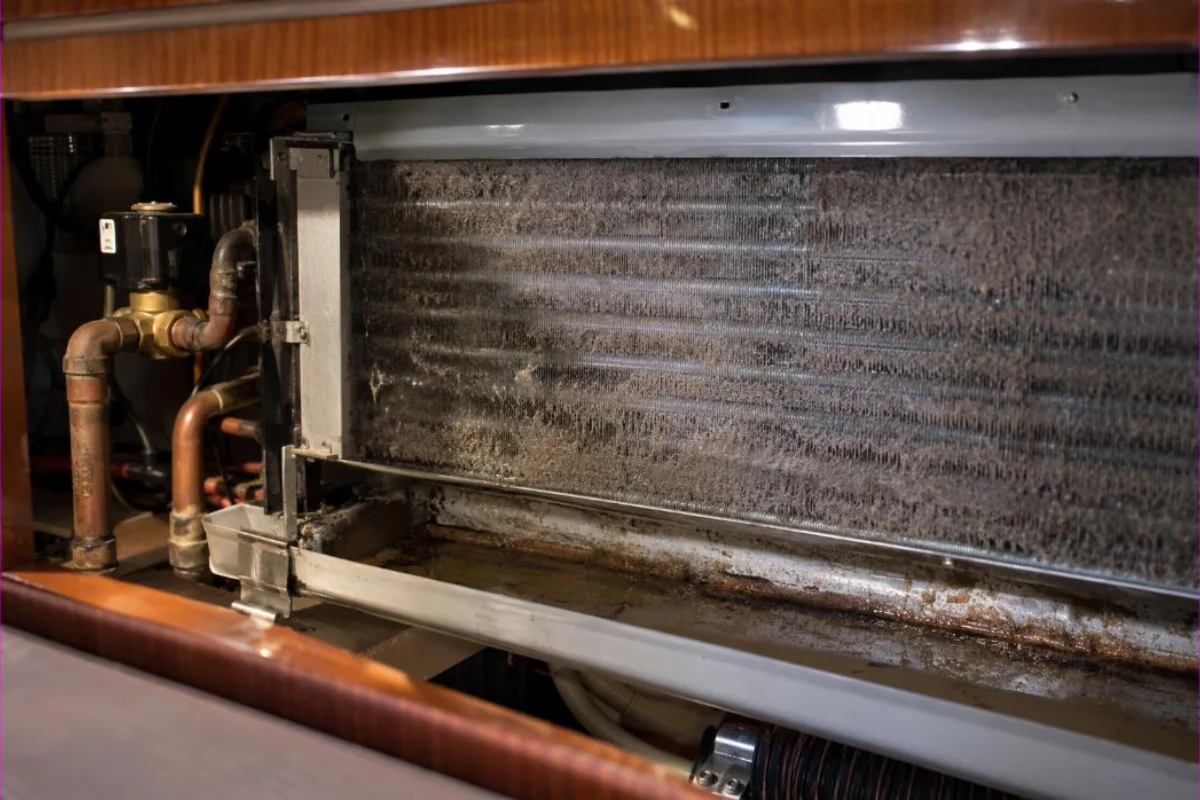
Illustrative visual showing the type of condition we find and the result we work towards. Photos of real AirBio Marine jobs are shown in the gallery below and in every client report.
From the quay to the systems on board
Photos from real AirBio Marine jobs: units staged on the quay, the water sanitization unit on a protected deck and a fan coil opened for cleaning.

What you receive
Technical report for handover
Systems treated, methods and products used and areas not reached, to file with the refit documentation.
Before and after photos
Ducts, fan coils, tanks and outlets photographed from the same points.
Readings where taken
Residual measurements after water treatment, recorded with digital meters.
Laboratory results
Where water samples are taken, certificates from an accredited laboratory.
Filter and component notes
Filters to replace and components that the chief engineer should follow up.
Recommendations
What to monitor in the first weeks back in service and what to plan next.
One report for the yacht's technical history
Every job closes with a written report: what was inspected, what was found, what was treated, photos before and after, readings where taken and recommendations for the next check. Useful for the captain, the management company, the next survey and the next season.
Who this service is for
Adds a documented hygiene phase to the end of the works, scheduled to fit between the last dusty trades and final handover.
Gets reopened water lines and dust-loaded HVAC components cleaned and sanitized before systems return to normal duty.
Takes the yacht back from the yard knowing air and water systems have been cleaned, with a report to prove it.
Closes the refit file with a record of the hygiene condition of the systems at handover.
Where we work after refits
We work in refit yards and marinas along the Italian Riviera and Tuscany, and in other Mediterranean ports on request.
Monaco
Spain
and beyond
Wherever you are in the Mediterranean, we can be there.
Post-refit sanitization: frequently asked questions
When is the right time for post-refit sanitization?
After the dusty trades such as sanding, cutting and grinding are finished, and before the final interior clean and handover. If we work too early, new dust can enter the systems again. If we work after the interior clean, dust we release from ducts could settle on finished surfaces. We agree the exact moment with the project manager.
Is the yard's final clean not enough?
A yard's final clean usually covers visible surfaces: floors, furniture, bathrooms and panels. It rarely includes the inside of ducts, fan coil coils and condensate pans, or the sanitization of water tanks and pipes. Those are the places where construction dust and stagnant water stay hidden, and where our work concentrates.
Can you remove solvent and varnish smells?
We can reduce residual odours with ozone treatment of closed spaces, which must be empty during treatment and ventilated afterwards. Some odours come from materials that are still curing and will fade with time and ventilation. Cleaning dust from the ducts also helps, because dust can hold odours and release them when the AC runs.
Why sanitize water systems after a refit?
During a refit, water lines may be cut, modified, isolated or left standing for weeks. Stagnant water can allow biofilm to form inside pipes and tanks. When the system is refilled and reopened, it is a good moment to sanitize tanks and distribution with ozonated water and, where appropriate, take samples for laboratory analysis.
Do you work alongside the yard's contractors?
Yes. We coordinate with the project manager and the chief engineer so our work fits the yard programme and does not interfere with other trades. Areas we work in are protected and masked, and we tell the team which systems will be isolated and when.
Does post-refit work include the galley extraction?
It can, especially if the galley was part of the works or has not been cleaned for some time. Galley extraction cleaning covers the hood, filters, plenum and ductwork, and can be combined with the air and water work in the same intervention window before the yacht returns to service.
Related services
Yacht HVAC & Air Duct Cleaning
Cleaner airflow starts inside the system, not at the vent.
Yacht Fresh-Water System Sanitization
From tank to shower head: the whole fresh-water network, treated as one system.
Yacht Odour Removal & Source Investigation
Bad Smells on a Yacht? Find the Source, Not a Cover-Up.
Pre-Season Yacht Sanitization
Prepare the yacht before the first guest arrives.
Tell us about the yacht
Yacht length, marina, systems and what you have noticed on board. A technician reads the message and calls you back to plan the survey.
"*" indicates required fields
Where we work
Italian Riviera and Tuscany marinas and yards — Viareggio, La Spezia, Portofino, Genoa, Sanremo, Livorno, Argentario — and other Mediterranean ports on request.
Documented work
Every job ends with a technical report and photos for the yacht's records.
Not sure where the problem starts?
Let the technical team assess it onboard.
In marina, at the yard or during lay-up. We tell you what needs treating — and what doesn’t.
+39 0584 433 198Expertise.
Peace of mind.