
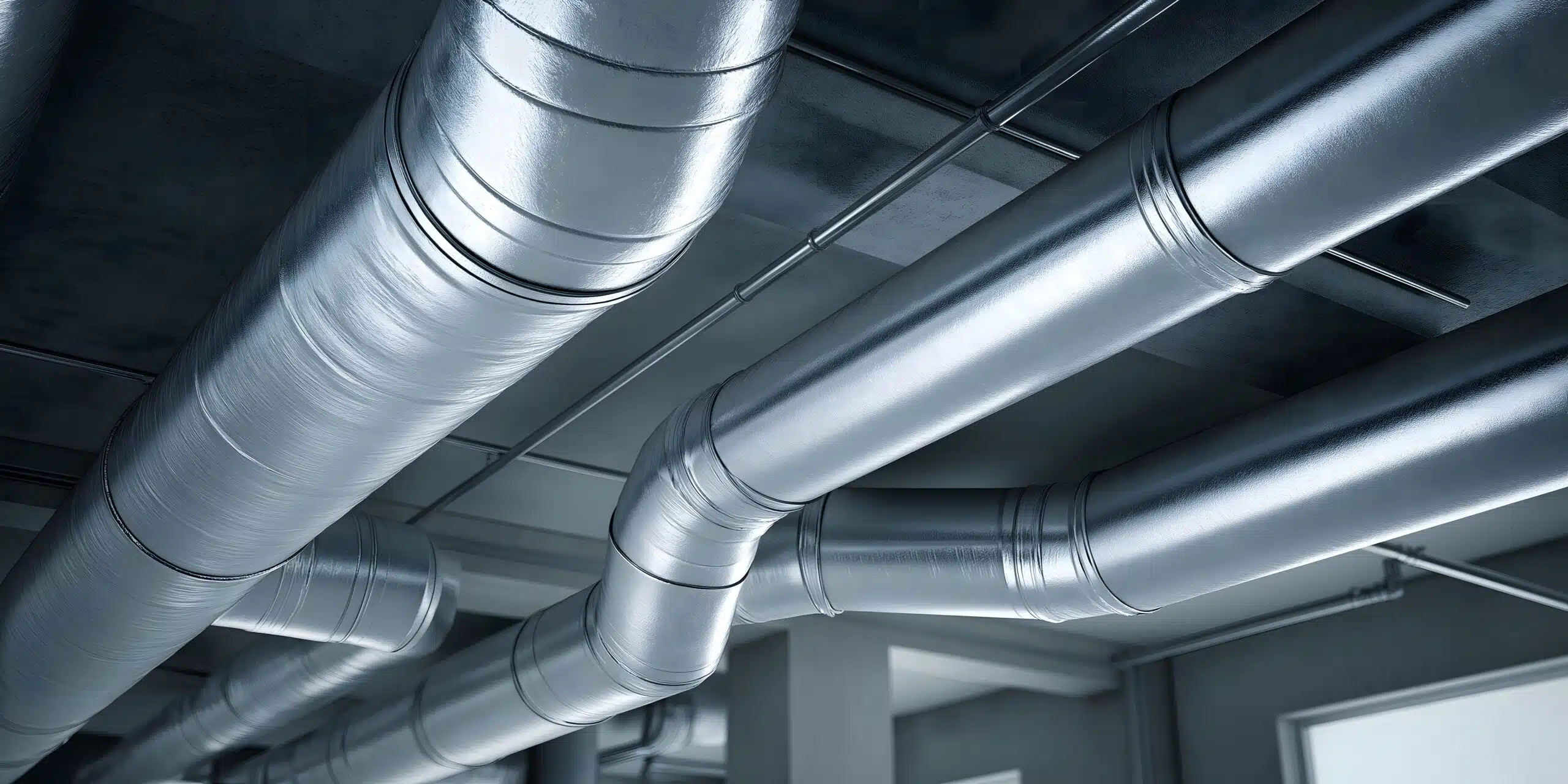
Is the HVAC on My Yacht Dirty Inside?
Reading the clues on ceilings, vents and airflow before opening anything.
Most of a yacht's air-conditioning network is hidden above ceilings and behind panels, so dirt inside it only shows through small clues. This guide explains what those clues can mean, what the crew can check safely, and when an inspection of the ducts is the sensible next step.
yacht experience
Clues that the air system may need a look inside
None of these proves the ducts are dirty on its own. Together, and in several cabins, they are worth taking seriously.
Dust settling around the vents
Fine grey dust on surfaces below or near the air outlets, coming back soon after the interior team has cleaned.
Dark marks on the ceiling around diffusers
Grey or black shadows fanning out from the air diffusers on light headlinings. They may indicate dust carried in the airflow.
Weak or uneven airflow
Some outlets blow well, others barely move air, even with the same setting. Restrictions in the network may be involved.
Guests say the air feels "heavy"
Complaints of stuffy air, dry throats or sneezing in certain cabins. We don't make health claims, but it is a reason to look at air quality.
How dirt gets into the ducts and stays there
On many yachts, treated air travels from air handlers or fan coils through a network of ducts — metal or flexible tubes hidden above the ceilings — to the diffusers, the grilles you see in the headlining. Return air comes back through separate grilles, often carrying lint, dust and cooking or cosmetic particles with it.
Filters stop the larger particles, but fine dust passes through and settles inside the ducts, especially at bends, junctions and flexible sections. After a refit, construction dust may also be left inside. The deposits are invisible from the cabin until airflow is disturbed or the dust starts to come out at the diffusers.
Ceiling marks around diffusers are a common example. They are often caused by fine particles in the air stream sticking to the headlining where the air leaves the grille. They are not always mould, but they tell you the air carries more dust than it should.

Where the dirt may be coming from
These are the most frequent sources behind the clues above.
Dust built up inside the ducts
Years of fine particles settling in the network can reduce airflow and be blown out at the diffusers.
Yacht HVAC & Air Duct CleaningClogged fan coils or air handlers
A dirty coil or fan at the start of the network restricts air and can release deposits downstream.
Yacht Fan Coil Deep CleaningRefit or yard dust left in the system
Sanding and construction dust often enters open ducts during works and remains after the yacht returns to service.
Post-Refit Yacht SanitizationMould at diffusers or in damp sections
Where cold air meets warm humid air, moisture can form and may be associated with mould spots at grilles or in the duct ends.
Yacht Mould & Condensation RemediationOdours carried through the network
Ducts can spread smells from one area to other cabins, so the smell you notice may not start where you notice it.
Yacht Odour Removal & Source InvestigationNot sure what your systems actually need?
Tell us the yacht, what the crew has noticed and where she is now: a technician calls you back within 24 hours and plans the survey around your programme.
What the crew can check without opening the system
A quick walk-round with a torch and a notebook gives useful information for any later inspection.

- Wipe a supply diffuser with a clean white cloth and look at the colour of the residue.
- Photograph ceiling marks around diffusers and note which cabins show them.
- Compare airflow at each outlet with the same fan setting and note the weak ones.
- Check the return grilles for thick dust or lint build-up.
- Look at the filter change record and the date of the last duct cleaning, if any.
- Note whether the yacht has had refit or yard work since the ducts were last cleaned.
- Record which cabins receive complaints from guests or crew about stuffiness or dust.
Follow the air from the cabin and back again
Air keeps circulating through the same six components. A problem you notice at the grille almost always starts further upstream.
- 1
Return grille
Cabin air is drawn back in here, carrying dust, fibres and skin cells.
- 2
Filter
Catches part of it. Once loaded it restricts airflow and stops holding anything.
Common source - 3
Fan coil
The coil is wet whenever the system runs; dust that reaches it stays there.
Common source - 4
Condensate tray and drain
Water collects here all season. A slow drain keeps it standing under the bunk.
Common source - 5
Supply ductwork
Short runs, restricted access, and a deposit the airflow passes through every cycle.
Common source - 6
Supply grille
The cabin end: where the smell is noticed and where cleaning usually stops.
Marked in amber: the points where the cause is most often found. Wiping the grille treats the last step of a six-step circuit.
What builds up inside an air distribution system
Ductwork collects dust, fibres and moisture. Over a season this becomes a layer that the airflow passes through every time the system runs, and that the crew and guests breathe in every cabin served by that circuit.
The video shows how the deposit forms and why surface cleaning at the grille does not reach it. The same applies to a yacht HVAC circuit, where runs are shorter but access is far more restricted.
When it is time to look inside the ducts
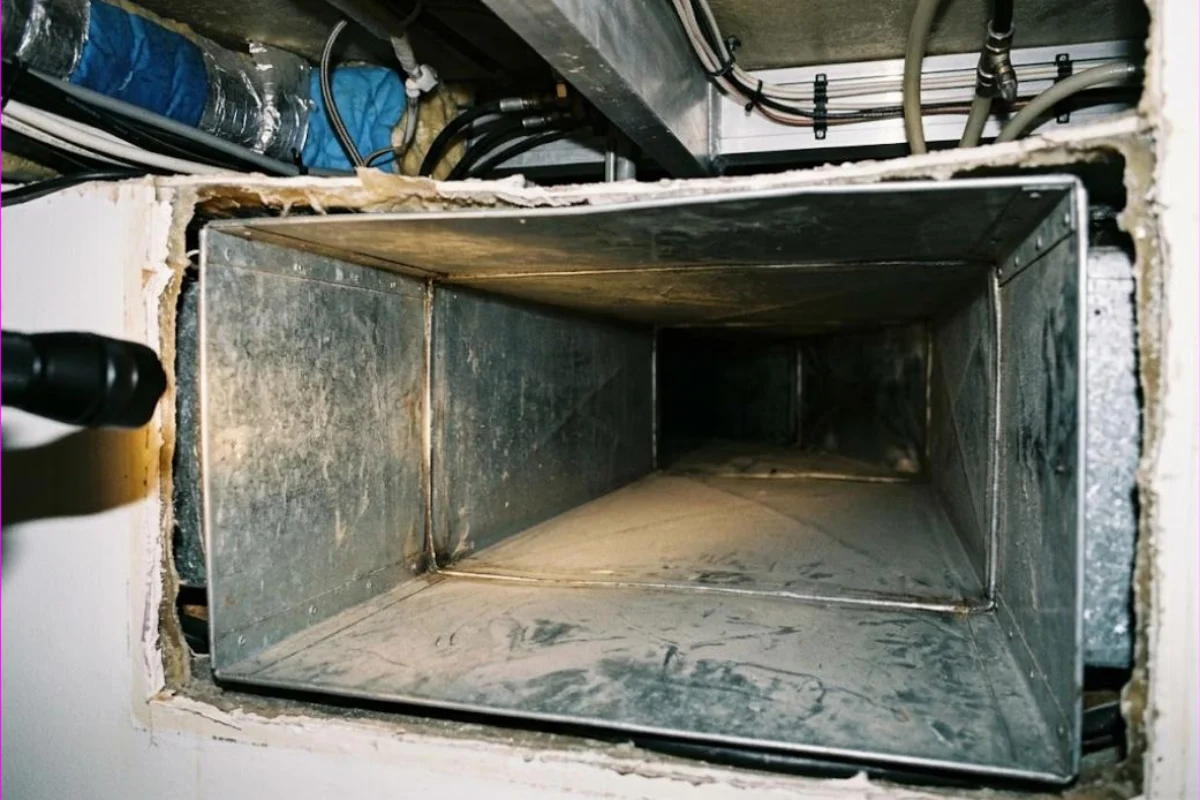
The only way to know what is inside a duct is to look. A professional inspection uses access points and cameras to see the inner surfaces, and photographs sections at the air handlers, main runs and diffusers. That way you decide on cleaning based on evidence, not guesswork.
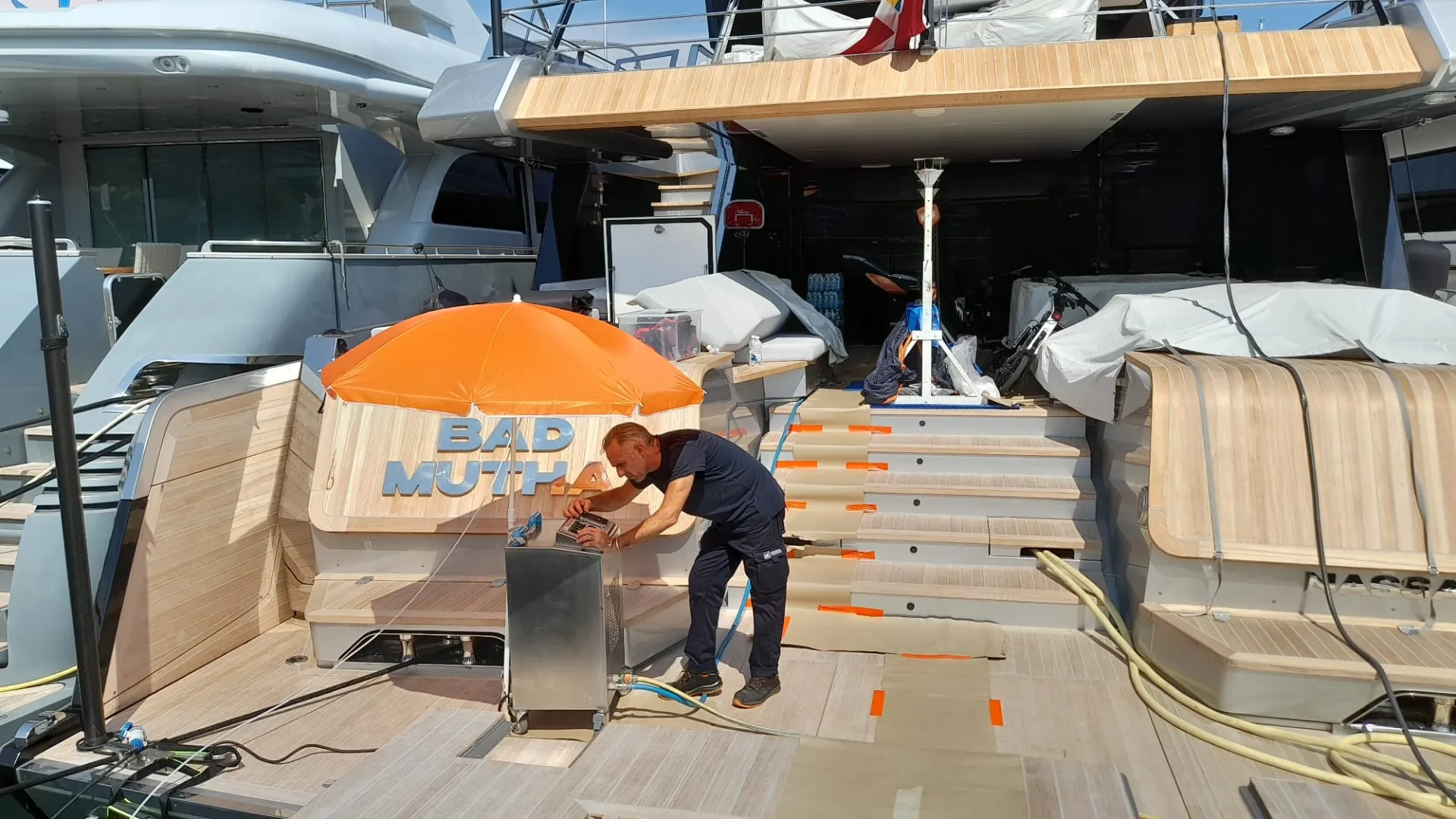
AirBio Marine plans the inspection with the chief engineer and chief stewardess, protects the interior, and gives you a report with photos that shows which parts of the network need work and which do not.
- Ceiling marks return after the headlining has been cleaned.
- Dust around vents reappears within days of housekeeping.
- Airflow is noticeably weaker in several cabins.
- The yacht has had refit or yard work without a duct cleaning afterwards.
- You are preparing for a sale survey, a new owner or a charter season.
What the inside of a dusty duct can look like
Illustrative images to show the kind of deposit an inspection camera may reveal, not proof of a specific job.

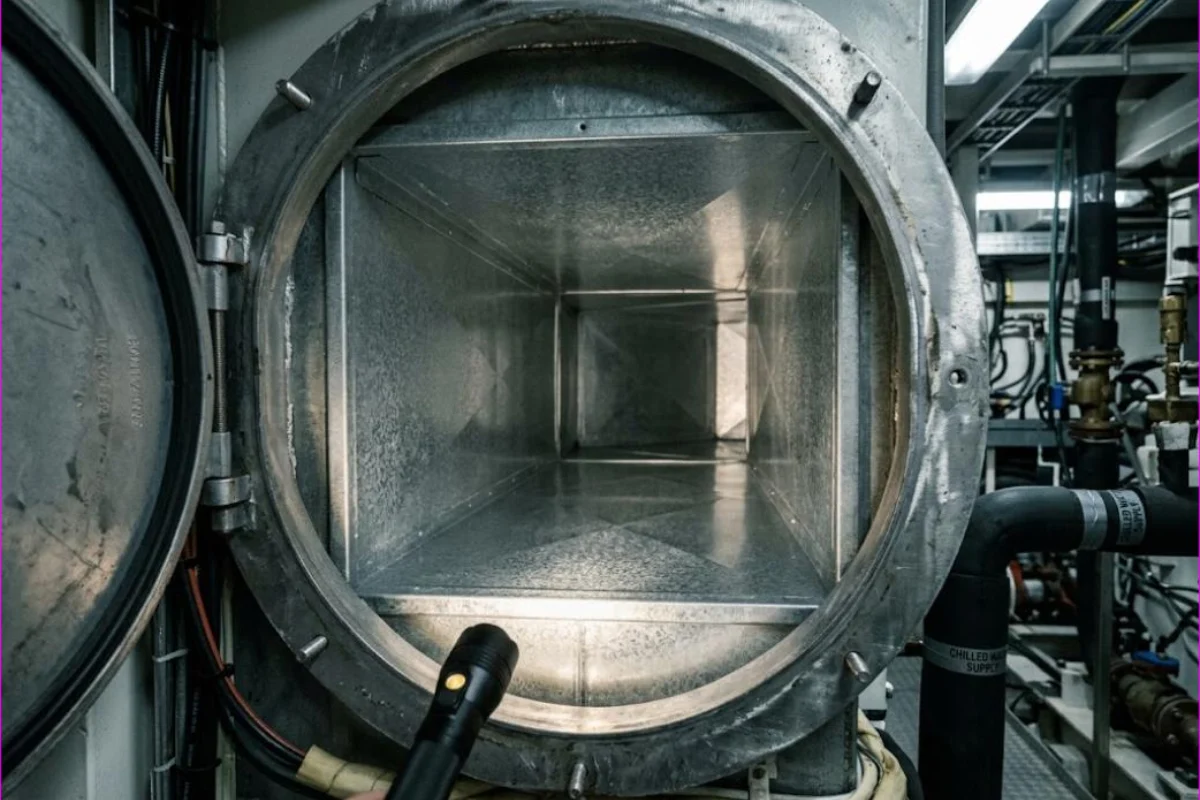
Illustrative visual showing the type of condition we find and the result we work towards. Photos of real AirBio Marine jobs are shown in the gallery below and in every client report.
Dirty yacht HVAC: common questions
Are black marks around ceiling vents on a yacht mould?
Not necessarily. Dark shadows around diffusers are often caused by fine dust in the airflow sticking to the headlining as air leaves the grille. In damp areas, though, mould can also appear at vents. The two look similar from a distance, so it is worth inspecting the diffuser and the duct end before deciding on cleaning or mould treatment.
How can I tell if the ducts on my yacht are dirty without opening them?
Clues include dust reappearing near outlets soon after cleaning, dark residue when you wipe a diffuser, ceiling marks around grilles and weaker airflow in some cabins. These suggest the issue may be inside the network, but they do not show how far it goes. A camera inspection through access points is the reliable way to confirm it.
Can dirty HVAC affect how comfortable guests feel on board?
Dusty air, uneven cooling and stale smells can all make a cabin feel less comfortable, and guests do notice them. We do not make medical claims, but keeping the air system clean is part of general onboard hygiene and reduces the dust and odours that circulate. An inspection shows whether the air system is part of the problem.
Is changing the filters enough to keep the ducts clean?
Filters reduce what enters the ducts but do not stop all fine particles, and they do nothing about dust already inside. Ducts also collect deposits from refit work and from return air. Regular filter changes plus periodic inspection and cleaning of the network, when photos show it is needed, is a more complete approach.
Does duct cleaning damage the interior of the yacht?
It should not, if it is planned properly. AirBio Marine protects floors and furniture, masks delicate surfaces around grilles, and uses mechanical brushing with vacuum extraction so dust is captured rather than released into the cabin. Access is agreed with the chief engineer and chief stewardess before work starts.
Verified reviews on Trustpilot
Related services
Yacht HVAC & Air Duct Cleaning
Cleaner airflow starts inside the system, not at the vent.
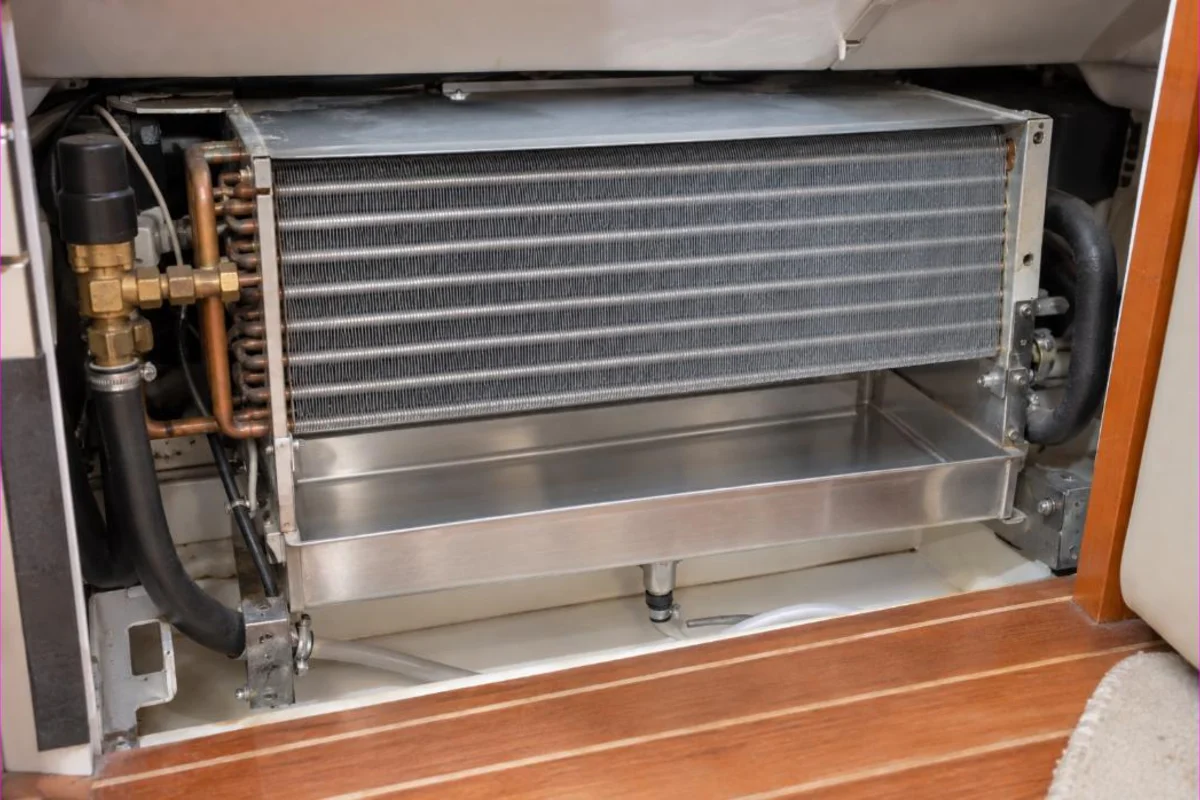
Yacht Fan Coil Deep Cleaning
A new filter does not clean the coil, tray and drain behind it.
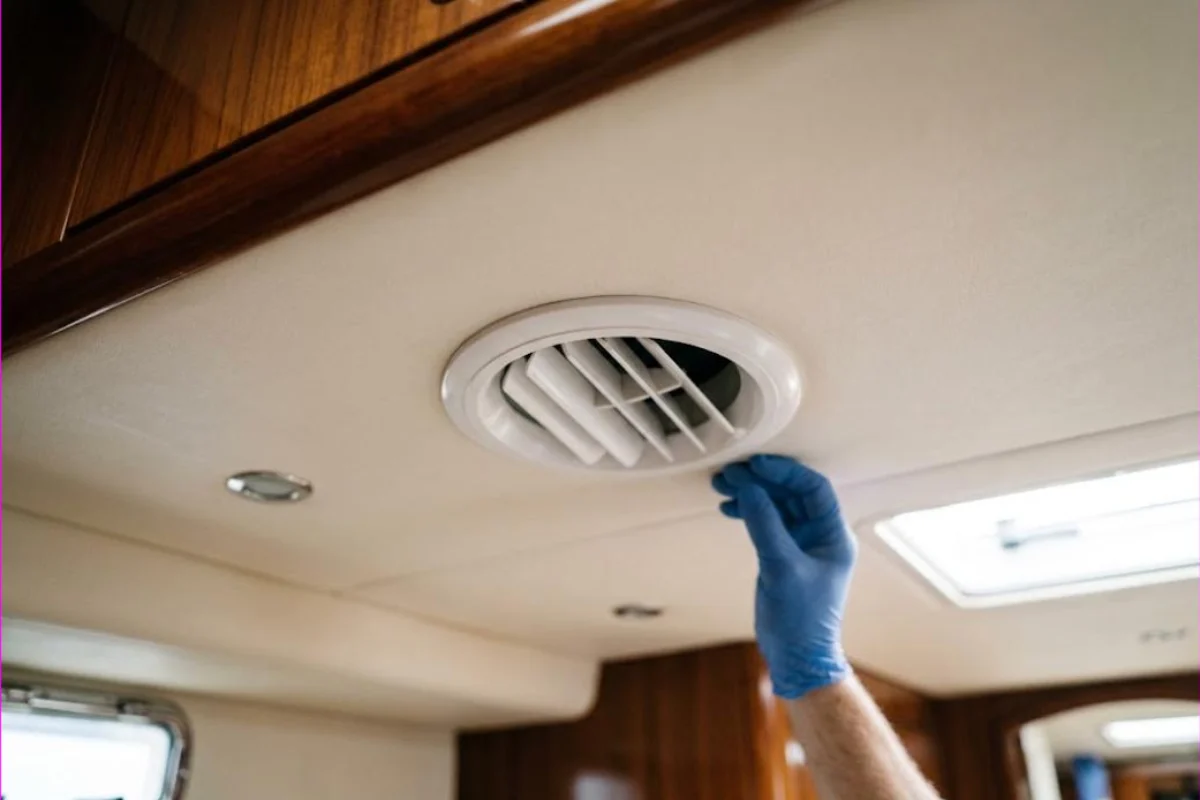
Yacht Mould & Condensation Remediation
Removing the visible mark is only one part of the job.
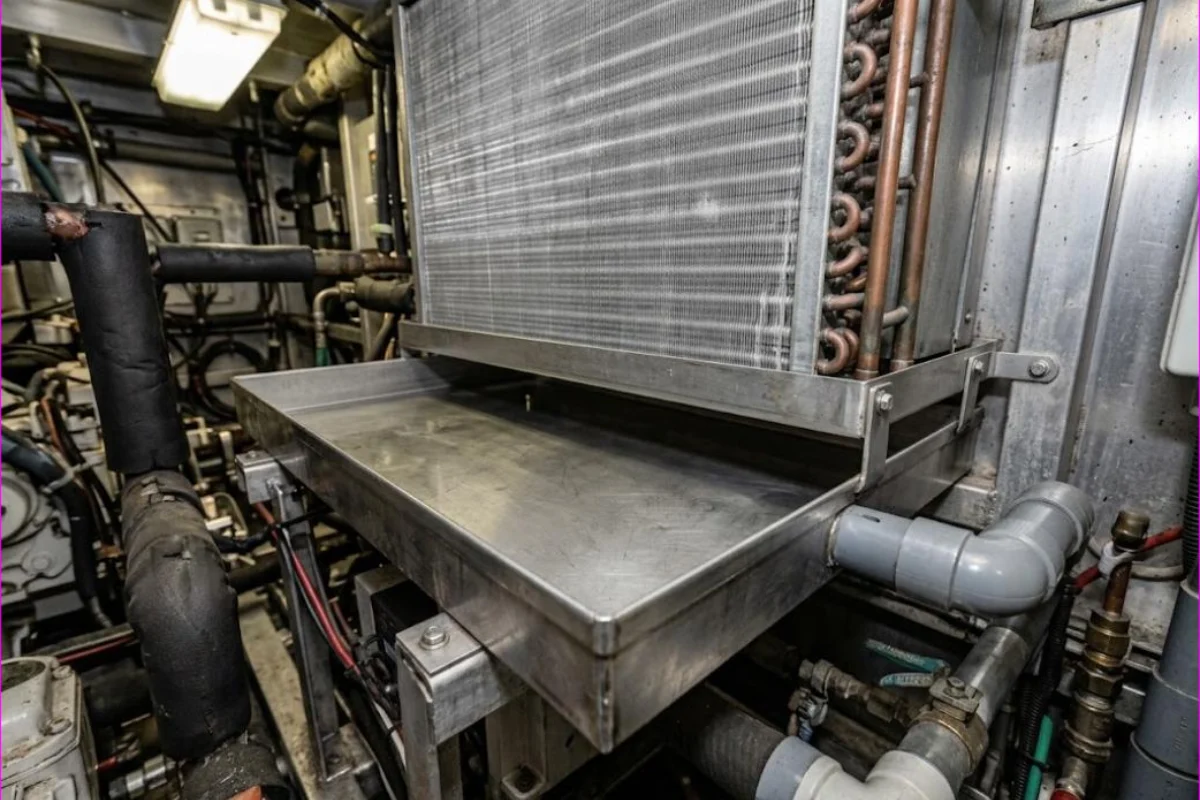
Yacht AC / Split Cleaning
The smell may start deeper inside the system.
Book the survey before your next movement
We work in the main Mediterranean marinas and refit yards, with documented results and lab analysis where required.
Tell us about the yacht
Yacht length, marina, systems and what you have noticed on board. A technician reads the message and calls you back to plan the survey.
"*" indicates required fields
Where we work
Italian Riviera and Tuscany marinas and yards — Viareggio, La Spezia, Portofino, Genoa, Sanremo, Livorno, Argentario — and other Mediterranean ports on request.
Documented work
Every job ends with a technical report and photos for the yacht's records.

Not sure where the problem starts?
Let the technical team assess it onboard.
In marina, at the yard or during lay-up. We tell you what needs treating — and what doesn’t.
+39 0584 433 198Expertise.
Peace of mind.