
Dirty Fan Coils on a Yacht: Signs and Risks
How to recognise a fan coil that needs attention before guests notice.
The fan coil is the small air-conditioning unit hidden behind a panel in each cabin. It is also where dust, moisture and odours tend to collect first. This guide helps the crew read the signs, check what is safe to check and decide when to bring in a specialist.
yacht experience
What a dirty fan coil looks like from the cabin
Guests rarely say "the fan coil is dirty". They say the cabin feels stuffy or smells odd. These are the complaints that usually lead back to the unit.
"The cabin never really cools down"
The fan runs, but the air feels weak or only slightly cool. A clogged coil or filter may be restricting the airflow.
"It smells damp when the AC comes on"
A musty smell in the first minutes of running can be associated with moisture and deposits inside the unit.
"The unit is noisier than before"
Rattling, whistling or a fan that sounds laboured may indicate dirt on the fan wheel or an obstructed air path.
"There is water under the panel"
Drips or a wet floor near the unit can point to a blocked condensate tray or drain.

Why fan coils get dirty faster than you think
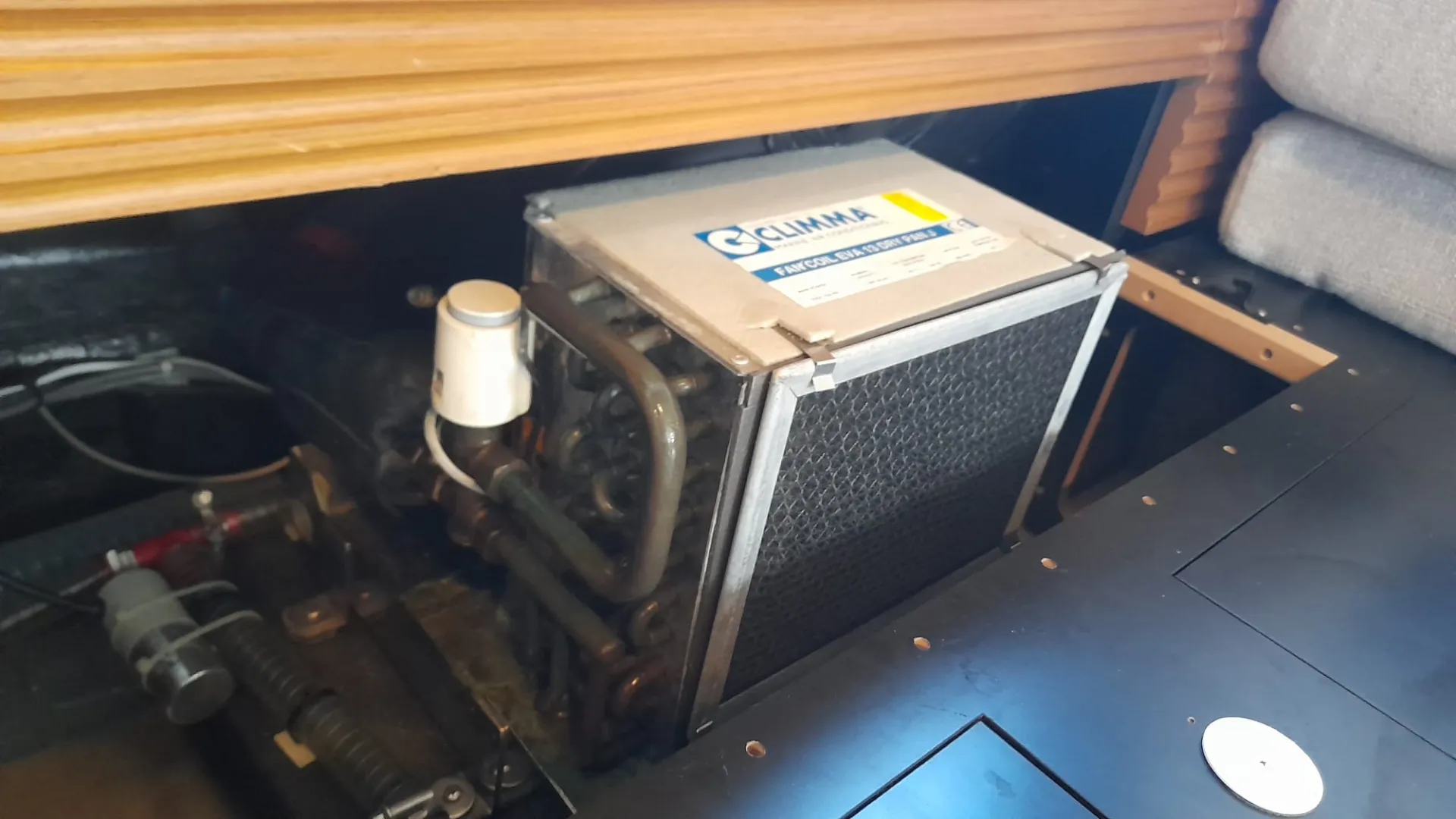
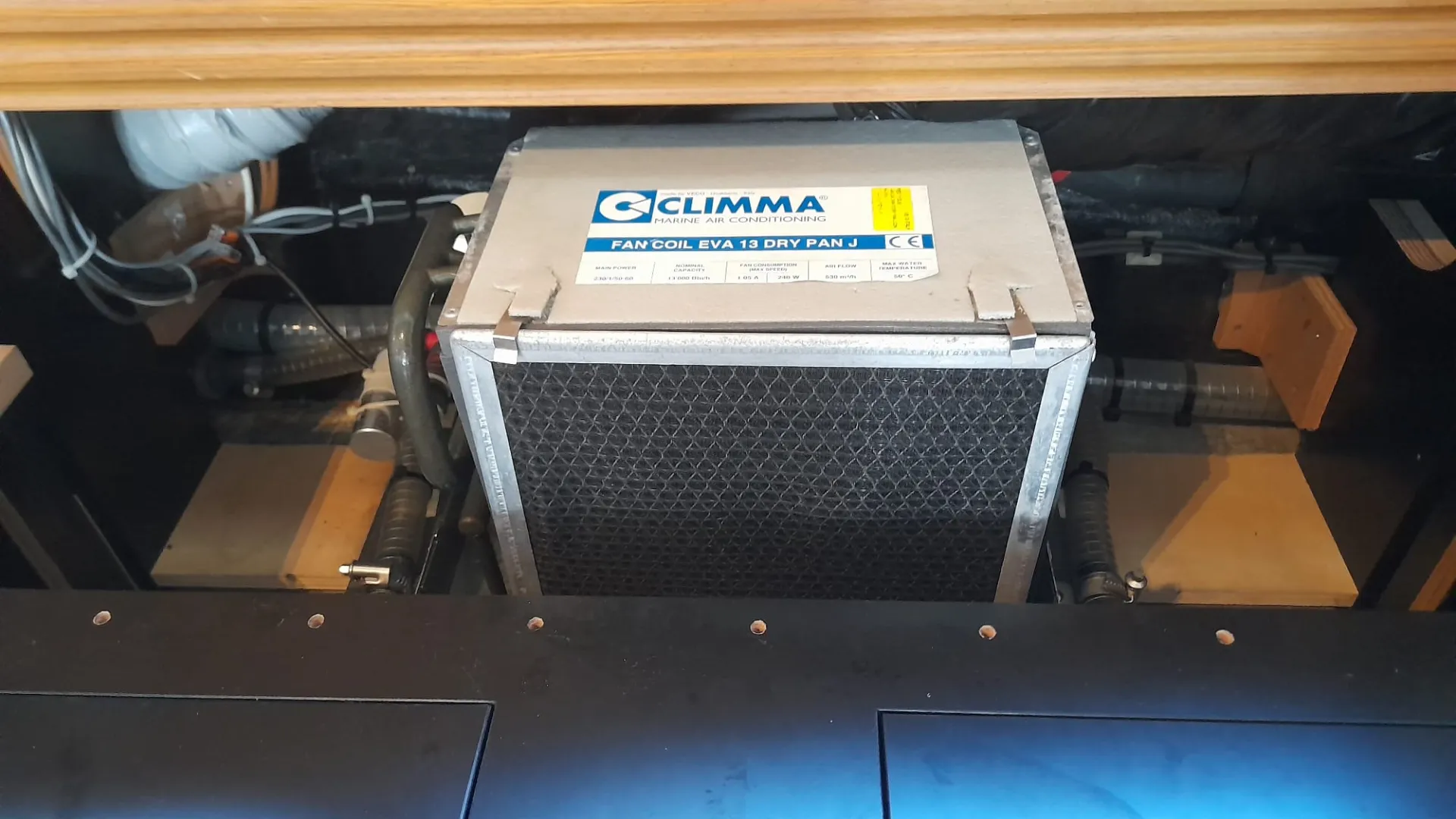
A fan coil pulls cabin air in, passes it through a filter, then over a coil — a block of thin metal fins with chilled or warm water running through it — and blows it back into the cabin. When the coil cools the air, moisture condenses on the fins and drips into a condensate tray, a small pan under the coil that drains overboard or into a grey-water line.
Every cabin has lint from bedding and towels, cosmetics, sea salt and dust. Whatever the filter does not catch lands on the damp fins. Over a season, this builds into a grey felt that blocks airflow and stays moist. The tray can collect sludge, and a thin layer of slime (biofilm — bacteria that stick together on wet surfaces) can form where water sits.
Because fan coils sit in tight spaces behind furniture, they are often the last thing to be opened. The filter may be changed, while the coil, fan and tray behind it are not reached for years.
What may be behind the symptoms
One or more of these is usually involved. Each one points to a different kind of work.
Dust and lint packed into the coil fins
A clogged coil can reduce cooling and airflow, and hold moisture that may lead to smells. It needs mechanical cleaning, not just a new filter.
Yacht Fan Coil Deep CleaningStanding water in the condensate tray
A tray that does not drain fully can grow slime and may be linked to damp smells and drips onto the floor.
Yacht Fan Coil Deep CleaningOdour-causing deposits in the air path
Even after the unit is cleaned, the cabin and ducts may still hold smells. A sanitization of the air side can help reduce them.
Yacht AC / Split CleaningDirt spread into the ducts beyond the unit
On yachts with ducted distribution, dust can travel past the fan coil into the ducts and diffusers.
Yacht HVAC & Air Duct CleaningMould spots near the unit or grille
Persistent humidity around the fan coil may be associated with mould on panels, grilles or nearby furnishings.
Yacht Mould & Condensation RemediationWhat the crew can look at before calling anyone
These checks need no tools beyond a torch and should be noted per cabin, so patterns become visible.
- Open the access panel or return grille and look at the filter: is it grey, felted or damp?
- With a torch, look at the visible part of the coil fins for a grey or dark layer.
- Check the condensate tray, if visible, for standing water, sludge or a slimy film.
- Put a hand in front of the supply grille and compare the airflow with a cabin that feels fine.
- Note when a smell appears: only at start-up, all the time, or only in humid weather.
- Check the date of the last fan coil service in the engineering log.
When a professional inspection is worth it
Changing filters is routine crew work. Cleaning the coil, fan wheel and tray properly usually means partly dismantling the unit, working in a tight space and protecting the cabin around it. That is where a specialist team saves time and avoids damage to fins, joinery and upholstery.
During an inspection AirBio Marine opens representative units, photographs what is inside and explains whether the issue stays in the fan coils or also involves the ducts and cabins. You receive a report you can share with the owner or the management company.
- Several cabins show the same symptoms, not just one.
- The smell comes back within days of changing the filter.
- The coil fins are visibly coated or the tray holds water.
- The fan coils have not been opened beyond the filter for more than a season.
- A charter season, owner visit or survey is coming up.
What a neglected fan coil can look like
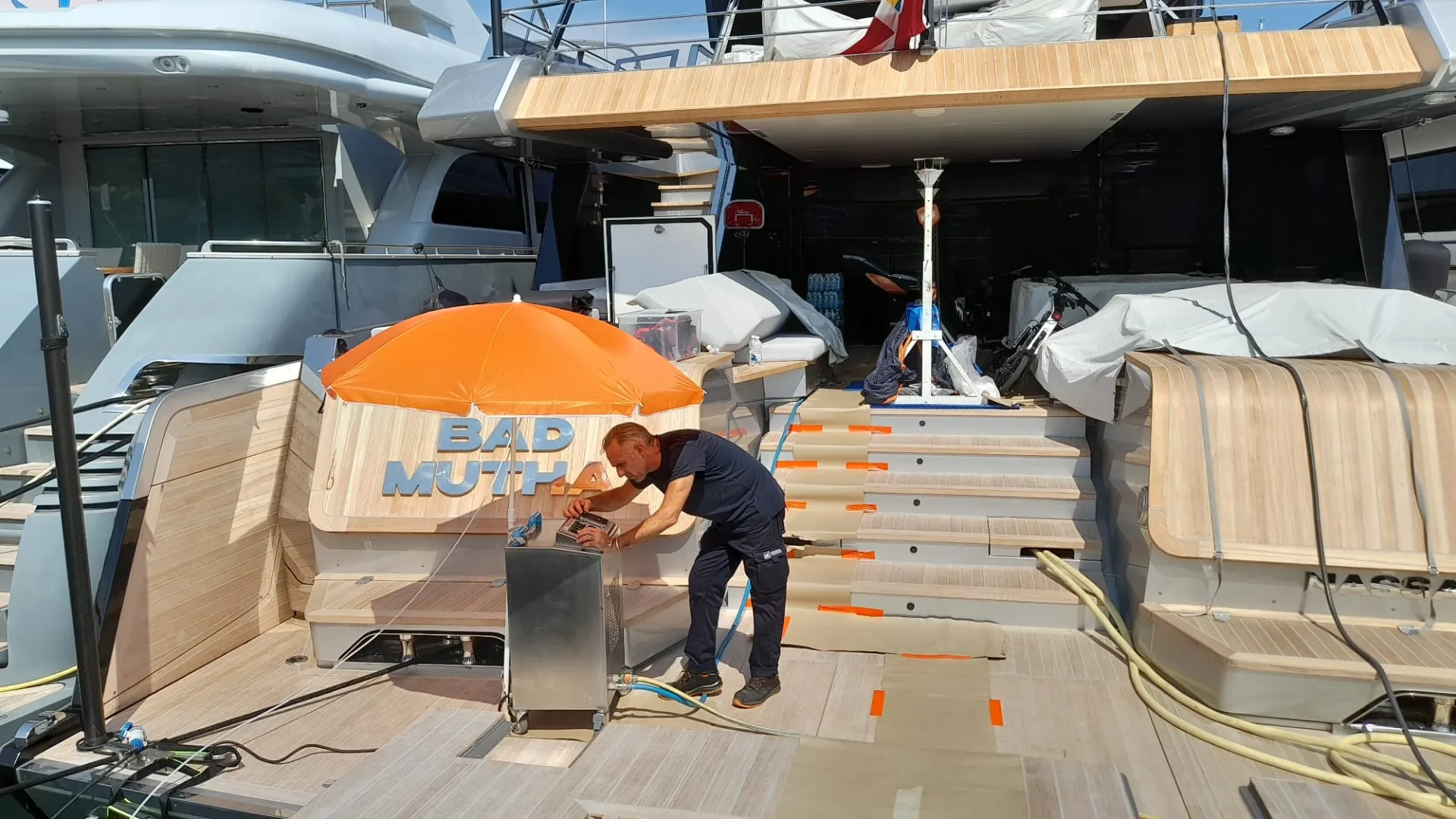
Illustrative images to help you recognise the issue, not documentary proof of a specific job.
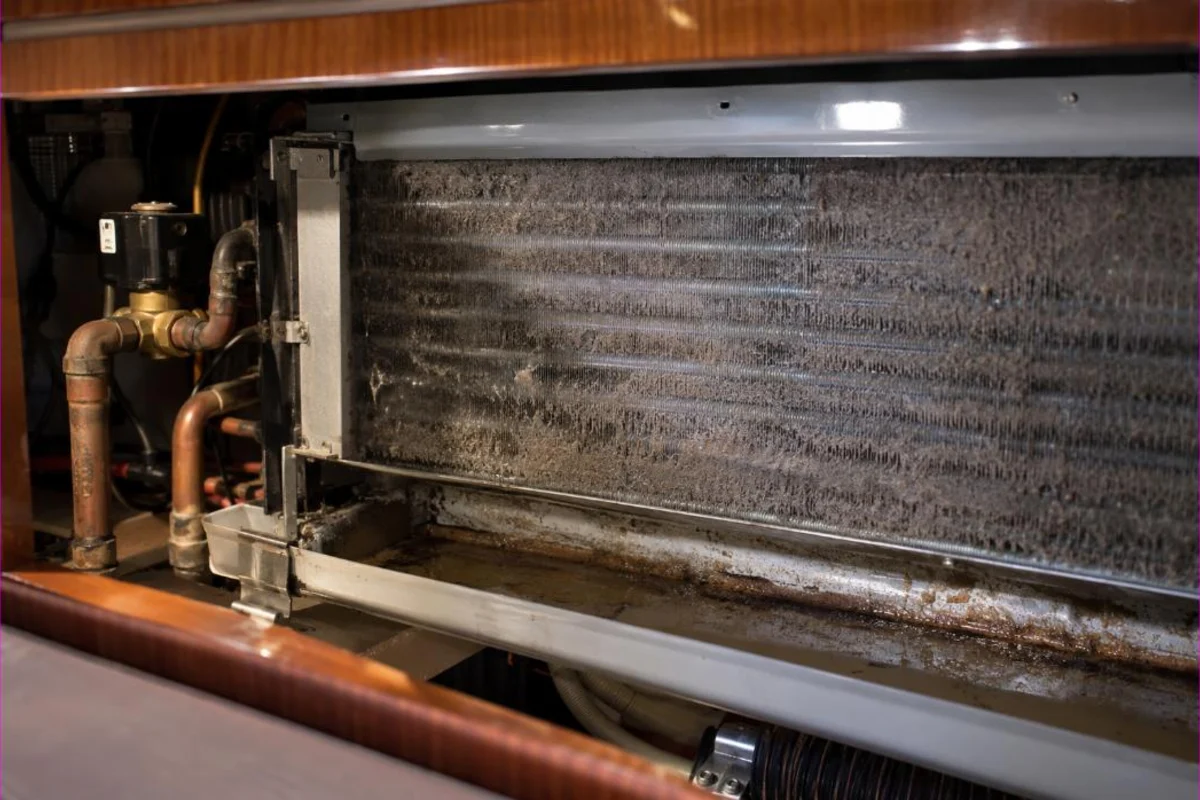
Illustrative visual showing the type of condition we find and the result we work towards. Photos of real AirBio Marine jobs are shown in the gallery below and in every client report.
Dirty fan coils: common questions
Is changing the filter enough to keep a fan coil clean?
Changing filters regularly helps, but it does not clean what is behind them. Fine dust and moisture still reach the coil, the fan wheel and the condensate tray. Over time these parts collect deposits that a new filter cannot remove. A periodic deep clean of the whole unit, planned around the yacht's schedule, is what keeps airflow and smell under control.
Can a dirty fan coil cause a bad smell in the cabin?
It can. Moisture, dust and slime inside the unit may produce a musty or sour smell, often most noticeable when the air conditioning starts. Not every cabin smell comes from the fan coil, though: drains, bilges and furnishings can also be involved. An inspection helps identify where the smell actually starts before any treatment is chosen.
Why does water drip from the fan coil?
Fan coils produce condensation as they cool the air. That water should collect in the tray and drain away. If the tray or drain is partly blocked with sludge, or the unit is not level, water can overflow onto the floor or into the joinery. It should be checked promptly, because persistent damp can damage interiors and may encourage mould.
How often should yacht fan coils be deep cleaned?
There is no single interval for every yacht. It depends on how many hours the air conditioning runs, the climate, the number of guests and how well filters are maintained. Many crews plan a deep clean before the season or after heavy use, and adjust based on what the inspection photos show. A maintenance plan can set a rhythm that suits the yacht.
Can fan coils be cleaned without damaging the cabin?
Yes, when the work is planned. AirBio Marine protects floors and furniture around each unit, masks nearby surfaces and uses mechanical cleaning with vacuum extraction so dirt is collected rather than spread. The work is scheduled with the chief stewardess and chief engineer so that cabins can be returned to service in order.
Related services
Yacht Fan Coil Deep Cleaning
A new filter does not clean the coil, tray and drain behind it.
Yacht AC / Split Cleaning
The smell may start deeper inside the system.
Yacht HVAC & Air Duct Cleaning
Cleaner airflow starts inside the system, not at the vent.
Yacht Mould & Condensation Remediation
Removing the visible mark is only one part of the job.
Tell us about the yacht
Yacht length, marina, systems and what you have noticed on board. A technician reads the message and calls you back to plan the survey.
"*" indicates required fields
Where we work
Italian Riviera and Tuscany marinas and yards — Viareggio, La Spezia, Portofino, Genoa, Sanremo, Livorno, Argentario — and other Mediterranean ports on request.
Documented work
Every job ends with a technical report and photos for the yacht's records.

Not sure where the problem starts?
Let the technical team assess it onboard.
In marina, at the yard or during lay-up. We tell you what needs treating — and what doesn’t.
+39 0584 433 198Expertise.
Peace of mind.