

Mould on a Yacht: Where It Comes From and What to Do
Wiping the spots away is easy. Stopping them coming back is not.
Mould on board is almost always the visible end of a moisture problem. This guide explains where mould usually starts on a yacht, what the crew can check and when it is worth having the affected areas and the air system inspected.
yacht experience
“We keep finding black spots in the same places”
Mould rarely appears at random. These are the situations crews describe most often.
Spots on headlinings and ceiling panels
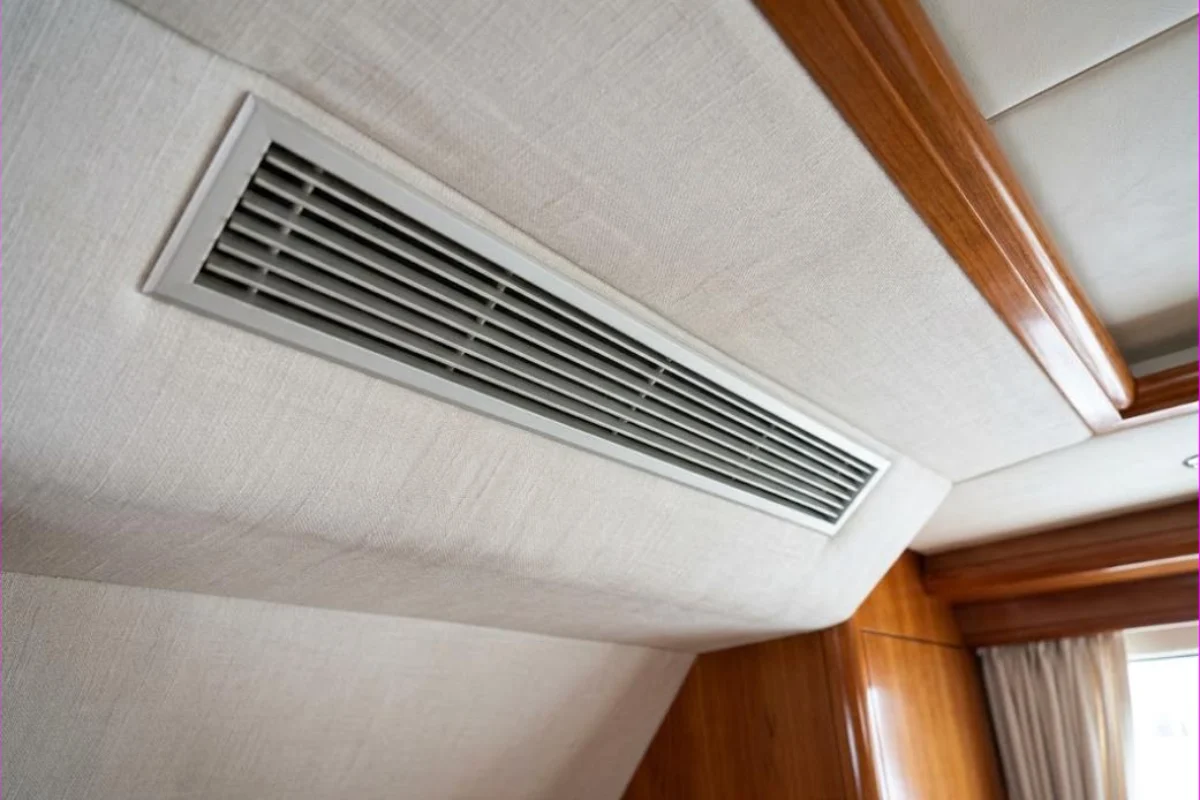
Grey or black dots on overhead panels, often near air grilles or above portholes, may indicate cold surfaces where moist air condenses.
Mould inside wardrobes and lockers
Closed storage with little air movement, especially against the hull, can stay damp and develop mould on the back panels and on stored items.
Around showers and bathroom seals
Silicone joints, grout and the area behind the shower panel stay wet for long periods and are a common starting point.
A musty smell before anything is visible
An earthy smell in a cabin with no visible spots can be associated with mould behind linings, under mattresses or in the air conditioning.
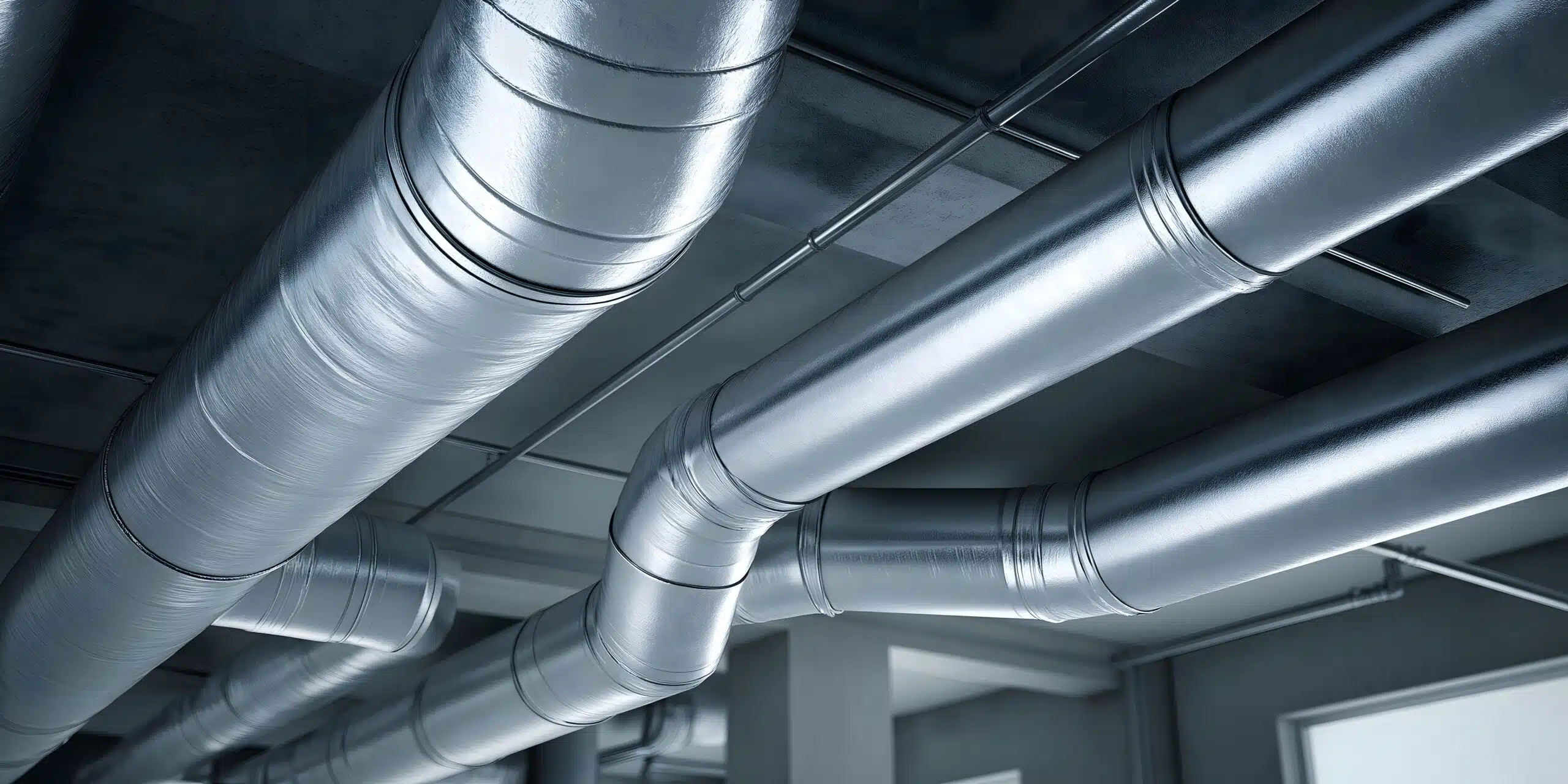
Mould needs moisture, and yachts have plenty of it
Mould spores are present almost everywhere in the air. They only grow where a surface stays damp for long enough. On a yacht, that happens where warm, humid air meets a cold surface — the hull side of a locker, a window frame, a chilled water pipe or a duct — and the moisture condenses into droplets.
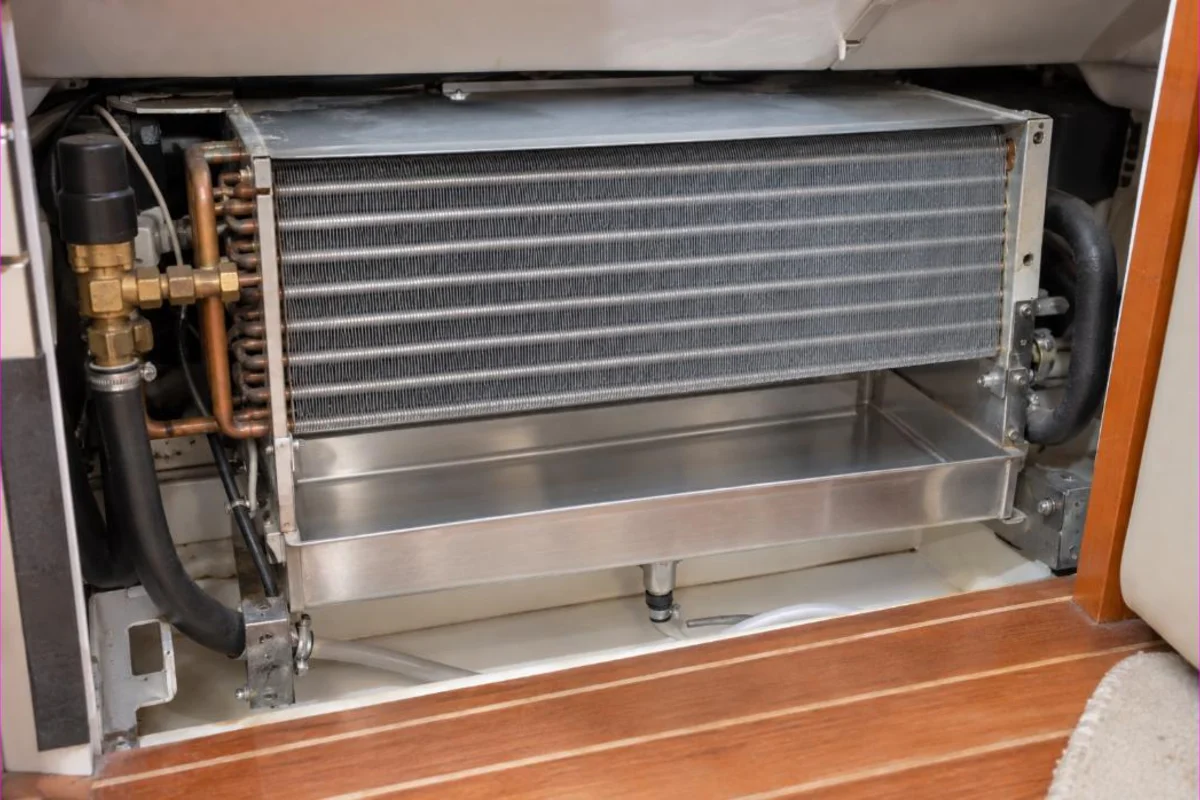
Closing a yacht for weeks, drying laundry inside, running showers without extraction or switching off the air conditioning between trips all raise humidity. The air conditioning can also contribute: a fan coil with a wet drain pan or damp insulation can host mould and spread spores around the cabin.
This is why cleaning visible spots is only half the job. If the moisture source is not found, the same areas tend to be affected again within weeks.

Where mould on a yacht usually comes from
In practice, several of these factors often work together. Each is linked to the service that deals with it.
Condensation on cold surfaces
Uninsulated hull areas, window frames and cold pipes collect moisture every night, especially in spring and autumn.
Yacht Mould & Condensation RemediationAir conditioning units holding water
Fan coils with standing condensate, damp filters or wet insulation can become a source of mould and spread spores through the cabin air.
Yacht Fan Coil Deep CleaningPoor air circulation in closed spaces
Lockers, wardrobes, bilges and spaces behind furniture receive little air, so moisture stays trapped.
Yacht HVAC & Air Duct CleaningLong periods closed up
During lay-up or between trips, humidity builds up with nobody noticing until the yacht is reopened.
Pre-Season Yacht SanitizationLeaks and wet materials
A small leak from a deck fitting, window or water line can soak insulation and wood behind panels for months.
Yacht Interior SanitizationNot sure what your systems actually need?
Tell us the yacht, what the crew has noticed and where she is now: a technician calls you back within 24 hours and plans the survey around your programme.
What to look at before deciding what to do
A careful walk-through with a torch gives a much clearer picture than cleaning spot by spot.

- Map every affected area on a simple deck plan and note whether it is on the hull side, near a grille or near a pipe.
- Check window frames, portholes and hatches in the early morning for condensation droplets.
- Empty one affected wardrobe or locker and look at the back panel and the corners.
- Look at the fan coil filters and grilles in affected cabins for dark spots or dampness.
- Feel the underside of mattresses and cushions stored against the hull for a cool, damp feel.
- If a hygrometer is on board, note the relative humidity in affected cabins morning and evening.
Follow the air from the cabin and back again
Air keeps circulating through the same six components. A problem you notice at the grille almost always starts further upstream.
- 1
Return grille
Cabin air is drawn back in here, carrying dust, fibres and skin cells.
- 2
Filter
Catches part of it. Once loaded it restricts airflow and stops holding anything.
Common source - 3
Fan coil
The coil is wet whenever the system runs; dust that reaches it stays there.
Common source - 4
Condensate tray and drain
Water collects here all season. A slow drain keeps it standing under the bunk.
Common source - 5
Supply ductwork
Short runs, restricted access, and a deposit the airflow passes through every cycle.
Common source - 6
Supply grille
The cabin end: where the smell is noticed and where cleaning usually stops.
Marked in amber: the points where the cause is most often found. Wiping the grille treats the last step of a six-step circuit.
What collects inside an air distribution system
Ductwork gathers dust, fibres and moisture. Over a season this becomes a layer that the airflow passes through every time the system runs, and that everyone in the cabins served by that circuit breathes.
The video shows how the deposit forms and why cleaning at the grille does not reach it. On a yacht the runs are shorter but access is far more restricted.
When mould needs more than a wipe
Small, isolated spots on a hard surface can usually be dealt with in routine housekeeping. It is different when mould returns, covers larger areas, affects soft materials or seems linked to the air conditioning.
An onboard inspection looks at the affected surfaces and at the moisture behind them: fan coils, ducts, insulation and closed spaces. The aim is to treat the mould and address what allows it to grow, with a report and photos of the areas treated.
- Mould comes back in the same places after cleaning.
- More than one cabin is affected, or spots appear near air grilles.
- Headlinings, upholstery, carpets or mattresses are affected.
- There is a persistent musty smell but you cannot find the source.
- The yacht is reopening after lay-up or is due for a charter or owner trip.
Mould in a hull-side locker, before and after treatment
Illustrative images, not photos of a specific job: they show typical mould growth in a closed locker and the same area after remediation.
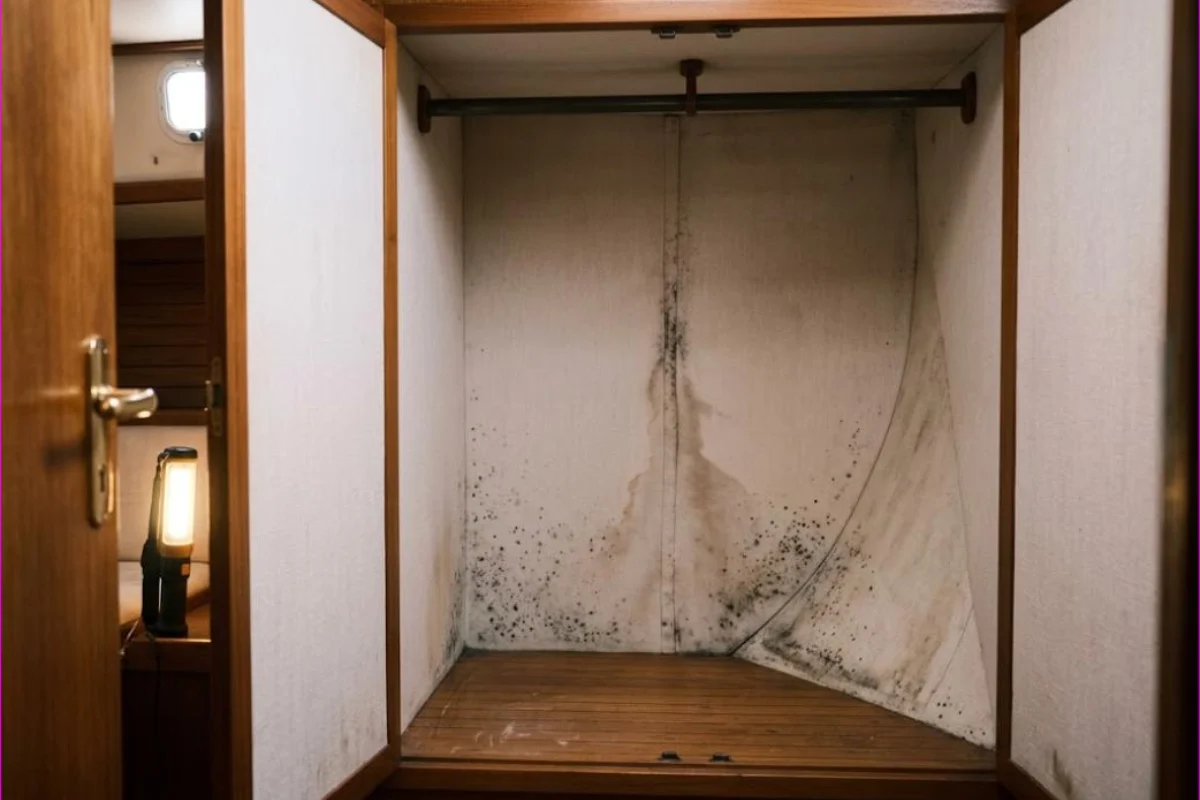

Illustrative visual showing the type of condition we find and the result we work towards. Photos of real AirBio Marine jobs are shown in the gallery below and in every client report.
Questions about mould on yachts
Why does mould keep coming back on my yacht?
Because the conditions that allow it to grow are still there. If a surface is cold and humid air keeps condensing on it, or if an air conditioning unit holds water, cleaning the visible spots does not stop new growth. Lasting results come from treating the mould and reducing the moisture, for example by improving air circulation and cleaning the fan coils serving the affected cabins.
Can the air conditioning spread mould around the yacht?
It can. A fan coil with a wet drain pan, damp filters or mouldy insulation may release spores into the air it supplies, and dirty ducts can carry them further. If mould appears near air grilles or in several cabins served by the same system, the air conditioning should be inspected as part of the investigation, not only the visible surfaces.
Is it safe to clean mould ourselves?
Small spots on hard, non-porous surfaces can usually be handled by the crew with suitable products, gloves and ventilation. Avoid dry brushing and sanding, which can spread spores. Larger areas, soft furnishings, hidden spaces and anything linked to the air system are better inspected by professionals, particularly if people on board have asthma or allergies.
How do we stop mould during lay-up?
Moisture control is the key: keeping air moving, managing humidity, leaving lockers and wardrobes slightly open and checking the yacht periodically. Cleaning the air conditioning before closing the yacht removes one important source. A pre-season check when the yacht is reopened helps catch any growth before owners or guests come on board.
Which areas does an AirBio Marine mould inspection cover?
It covers the areas where mould is visible and the places where moisture may be feeding it: fan coils, drain pans, filters, duct sections, closed storage and surfaces near cold pipes or hull sides. The findings are documented with photos in a technical report, together with the recommended treatment and suggestions to reduce the risk of recurrence.
Verified reviews on Trustpilot
Services for mould and humidity
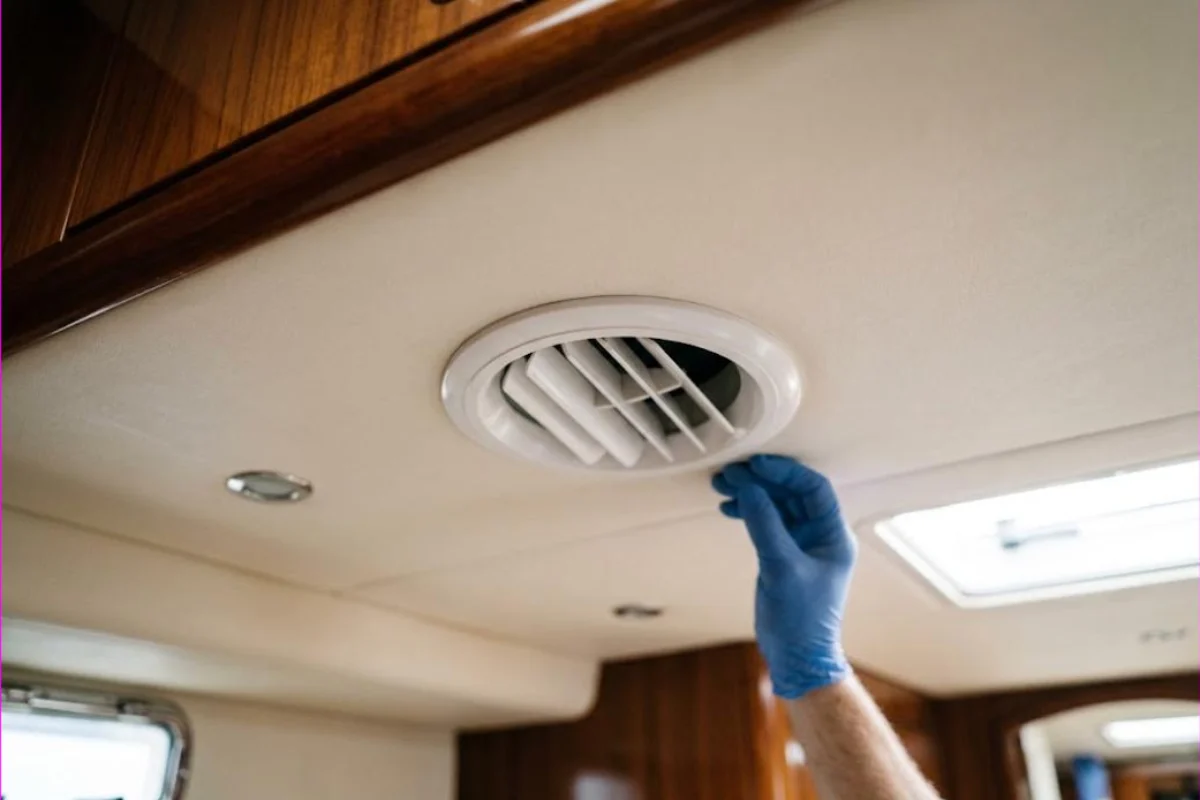
Yacht Mould & Condensation Remediation
Removing the visible mark is only one part of the job.

Condensation on a Yacht
Water where it shouldn't be: how to trace it before it becomes mould.
Yacht Fan Coil Deep Cleaning
A new filter does not clean the coil, tray and drain behind it.
Yacht Interior Sanitization
Cabins, saloons and crew areas sanitized with care for delicate finishes.
Book the survey before your next movement
We work in the main Mediterranean marinas and refit yards, with documented results and lab analysis where required.
Tell us about the yacht
Yacht length, marina, systems and what you have noticed on board. A technician reads the message and calls you back to plan the survey.
"*" indicates required fields
Where we work
Italian Riviera and Tuscany marinas and yards — Viareggio, La Spezia, Portofino, Genoa, Sanremo, Livorno, Argentario — and other Mediterranean ports on request.
Documented work
Every job ends with a technical report and photos for the yacht's records.

Not sure where the problem starts?
Let the technical team assess it onboard.
In marina, at the yard or during lay-up. We tell you what needs treating — and what doesn’t.
+39 0584 433 198Expertise.
Peace of mind.