

Yacht Interior Sanitization
Cabins, saloons and crew areas sanitized with care for delicate finishes.
For captains, chief stewardesses and yacht managers who need interiors sanitized without risking teak, lacquer, leather or fabrics. We treat cabins, saloons, crew mess, soft furnishings and high-touch surfaces, use ozone for closed spaces when appropriate, and usually combine the work with the air systems that feed those spaces.
yacht experience
When interiors need more than routine housekeeping
Daily cleaning by the interior team keeps a yacht looking right. These are the situations where a deeper sanitization may be needed.
A smell that housekeeping cannot remove
A stale or musty smell that returns after cleaning can be associated with soft furnishings, closed lockers or the air system.
After a guest or crew illness
After a guest or crew illness on board, on request, affected cabins, bathrooms and shared areas can be sanitized.
Mould spots in cabins
Small dark spots on headlinings, seals or behind furniture may indicate humidity and should be assessed before cleaning.
Closed for a long time
Cabins or crew areas unused for weeks may smell closed and collect dust in fabrics and on surfaces.
Busy shared spaces
Crew mess, saloons and heads with heavy use have many high-touch surfaces that deserve periodic sanitization.
Where dirt, microbes and odours stay in a yacht interior
Hard surfaces such as handles, switches, remote controls, taps and table edges are touched many times a day. They are easy to wipe, but they also collect whatever is on people's hands. Soft furnishings such as upholstery, curtains, mattresses and carpets absorb moisture, dust and odours and release them slowly.
Closed spaces add another layer. In a cabin with little ventilation, humidity rises, air barely moves and smells build up. Lockers, wardrobes and the gaps behind panels can hide mould long before it is visible in the room.
Then there is the air system. Fan coils and ducts recirculate the air of each space, including the dust and microbes inside them. That is why interior sanitization is usually combined with fan coil cleaning or HVAC duct cleaning: cleaning the room alone, while the system blows old dust back in, gives a short-lived result.
Hands, bodies and activities bring dirt and microbes.
High-touch points and soft furnishings collect and hold them.
Low ventilation lets humidity and odours build up.
Fan coils and ducts recirculate what is inside them.
Dust and odours return unless system and room are treated.

Typical signs that a space should be sanitized
These signs do not prove contamination, but they suggest a space deserves more than routine cleaning.
Persistent odour
A smell in a cabin or saloon that returns within a day of cleaning.
Visible mould
Spots on headlinings, silicone seals, lockers or behind furniture.
Damp feel or condensation
Fabrics that feel damp, or condensation on windows and cold surfaces.
Dust returning quickly
Surfaces that gather dust soon after cleaning, often linked to the air system.
Heavily used shared areas
Crew mess, heads and saloons used intensively over a long season.
Illness on board
A guest or crew illness after which affected areas should be sanitized, on request.
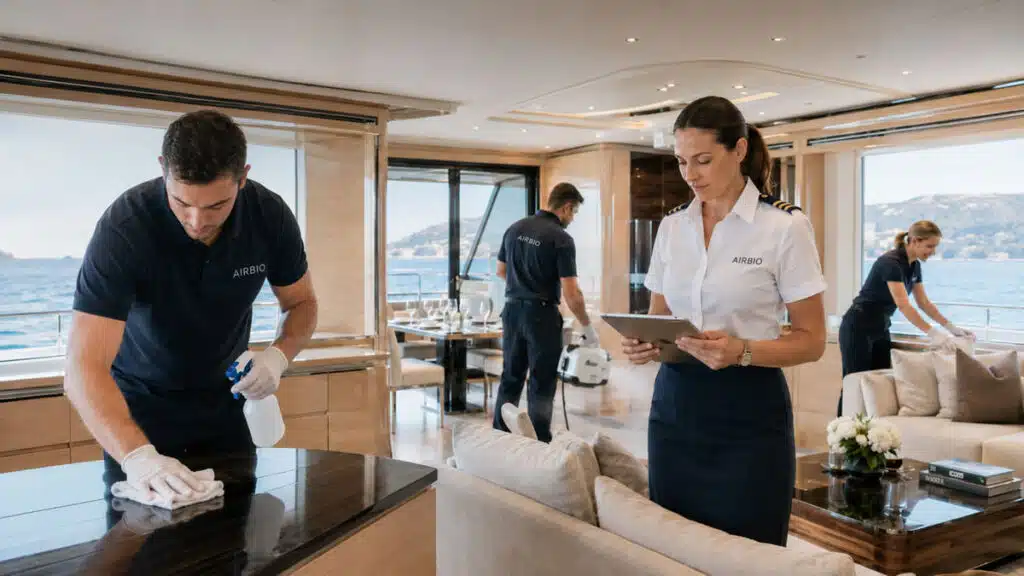
What we check before treating interiors
We walk the spaces with the chief stewardess, who knows the finishes and the products the interior team already uses. Our first concern is the materials: teak, lacquered joinery, leather, natural stone and fine fabrics each react differently to moisture and products.
We also check whether a smell or mould problem comes from the room itself or from something behind it, such as the fan coil, a drain or a leak, so the right service is applied.
- Materials and finishes in each space: teak, lacquer, leather, stone, fabrics
- High-touch surfaces in cabins, saloons, heads and crew mess
- Soft furnishings, mattresses, curtains and carpets
- Signs of humidity and mould, including lockers and behind panels
- Fan coils and grilles serving the spaces to be treated
- Possible odour sources: drains, bilges, fabrics or air system
- Which spaces can be emptied and closed for ozone treatment
How we sanitize yacht interiors
Products and methods are chosen for each material. Where we are unsure how a finish will react, we test on a hidden area first.
Protection
Floors, delicate furniture and electronics are covered and masked. Items that the crew prefer to handle themselves are removed before we start.
Dust and debris removal
Surfaces and soft furnishings are vacuumed, and dust is removed from grilles, lockers and hidden corners, so sanitization works on clean surfaces.
Surface sanitization
High-touch and hard surfaces are sanitized with products compatible with each finish, applied in controlled quantities to protect teak, lacquer, leather and fabrics.
Air system
Where agreed, the fan coils and grilles serving the space are cleaned and sanitized at the same time, so the air does not bring dust straight back.
Ozone for closed spaces
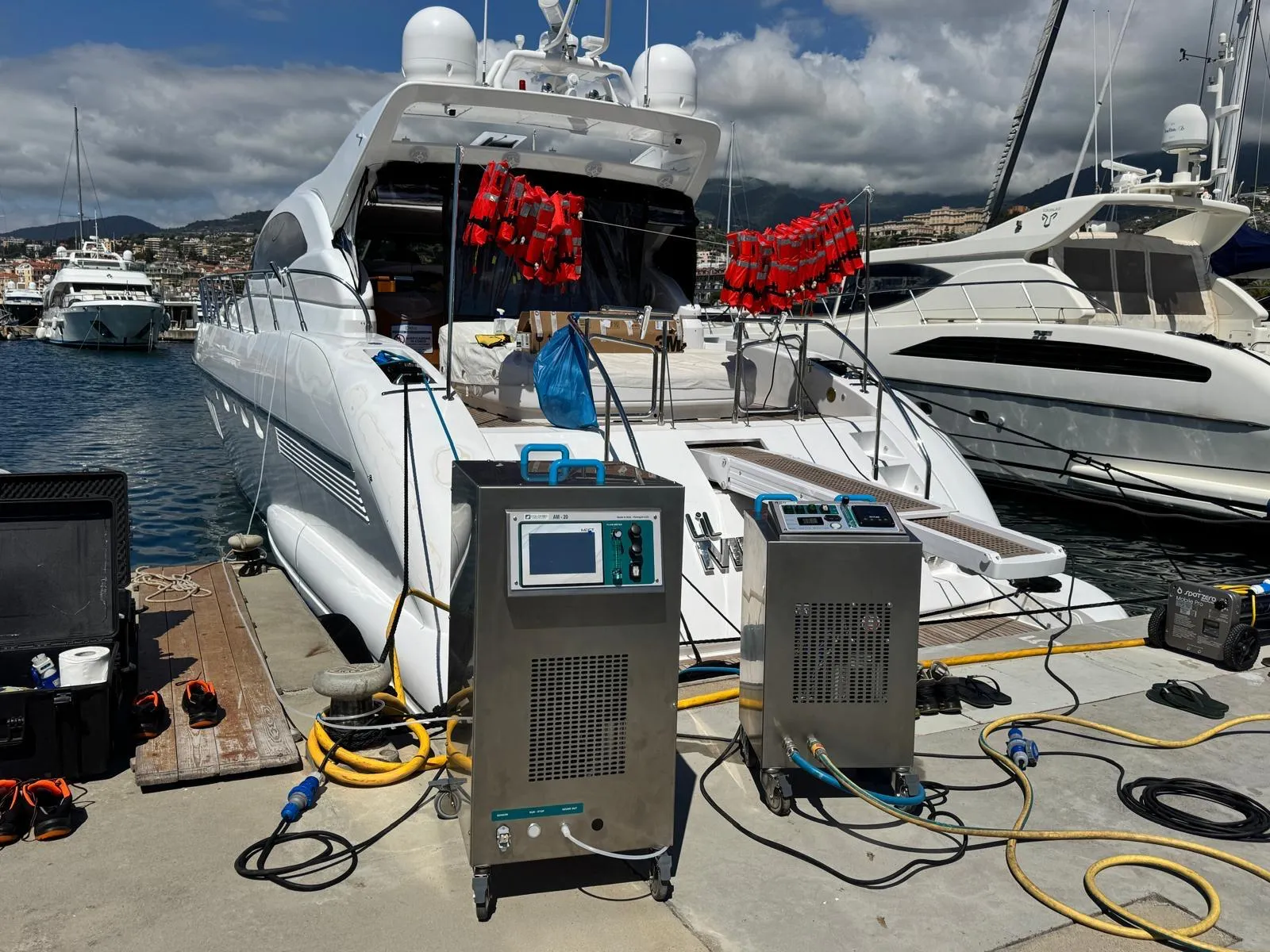
Where appropriate, the empty and closed space is treated with ozone using the AM-20 mobile generator, then ventilated before anyone re-enters.
Handback and report
Spaces are checked with the chief stewardess and handed back. You receive a report with photos, areas treated and methods used.

A cabin air grille and headlining: before and after
Illustrative images of a cabin ceiling grille and the surrounding headlining, before and after sanitization. They are not photographs of a specific job.
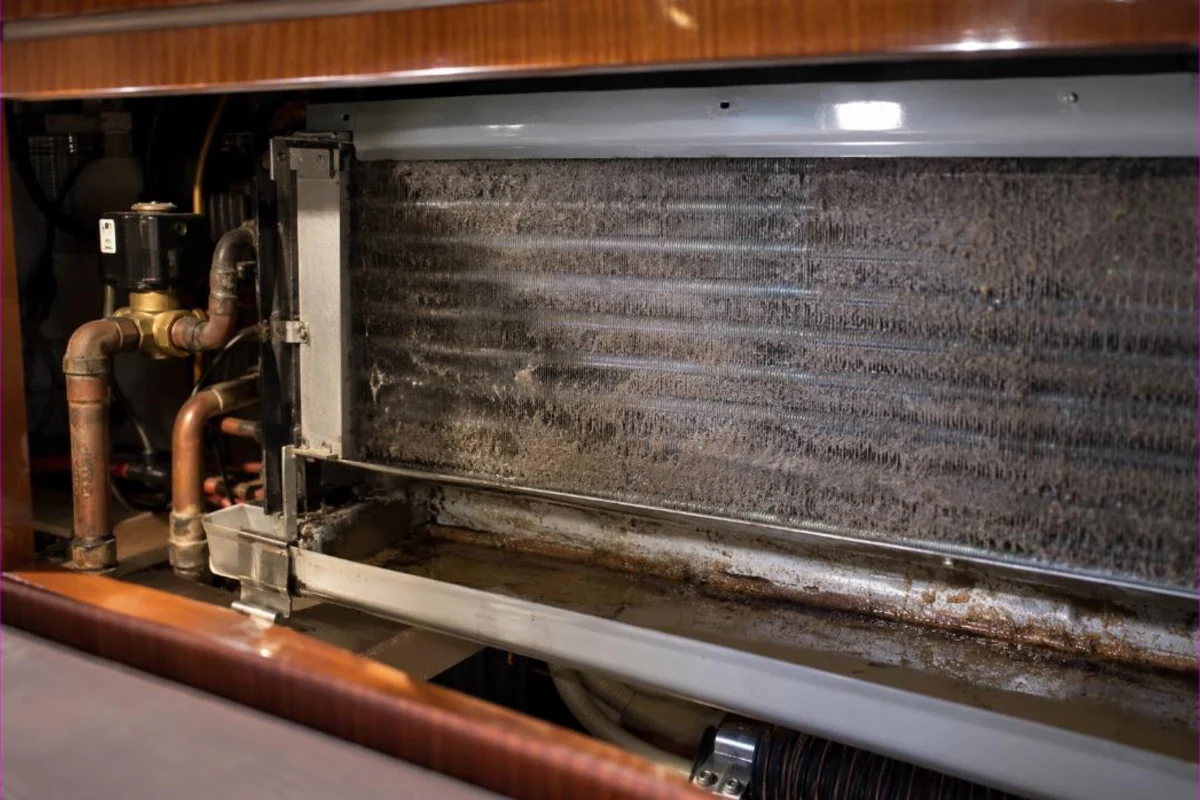
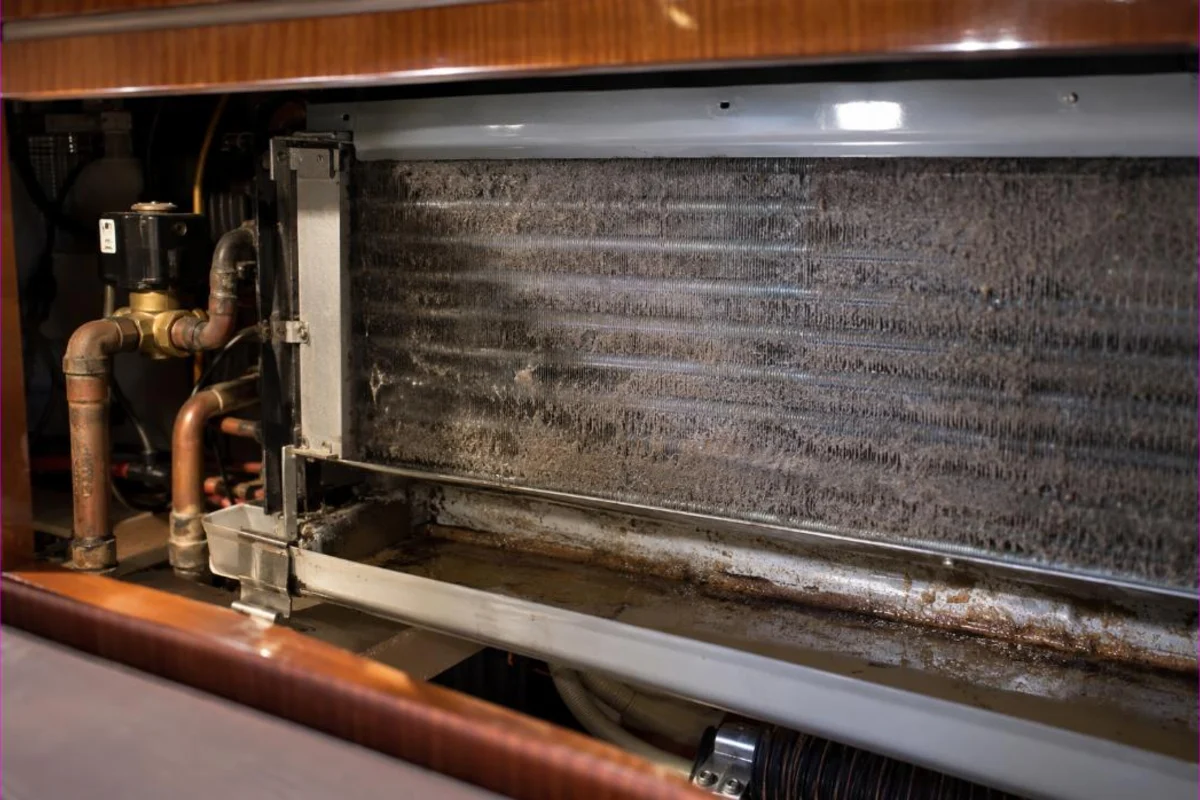
Illustrative visual showing the type of condition we find and the result we work towards. Photos of real AirBio Marine jobs are shown in the gallery below and in every client report.
AirBio Marine on board and on the quay
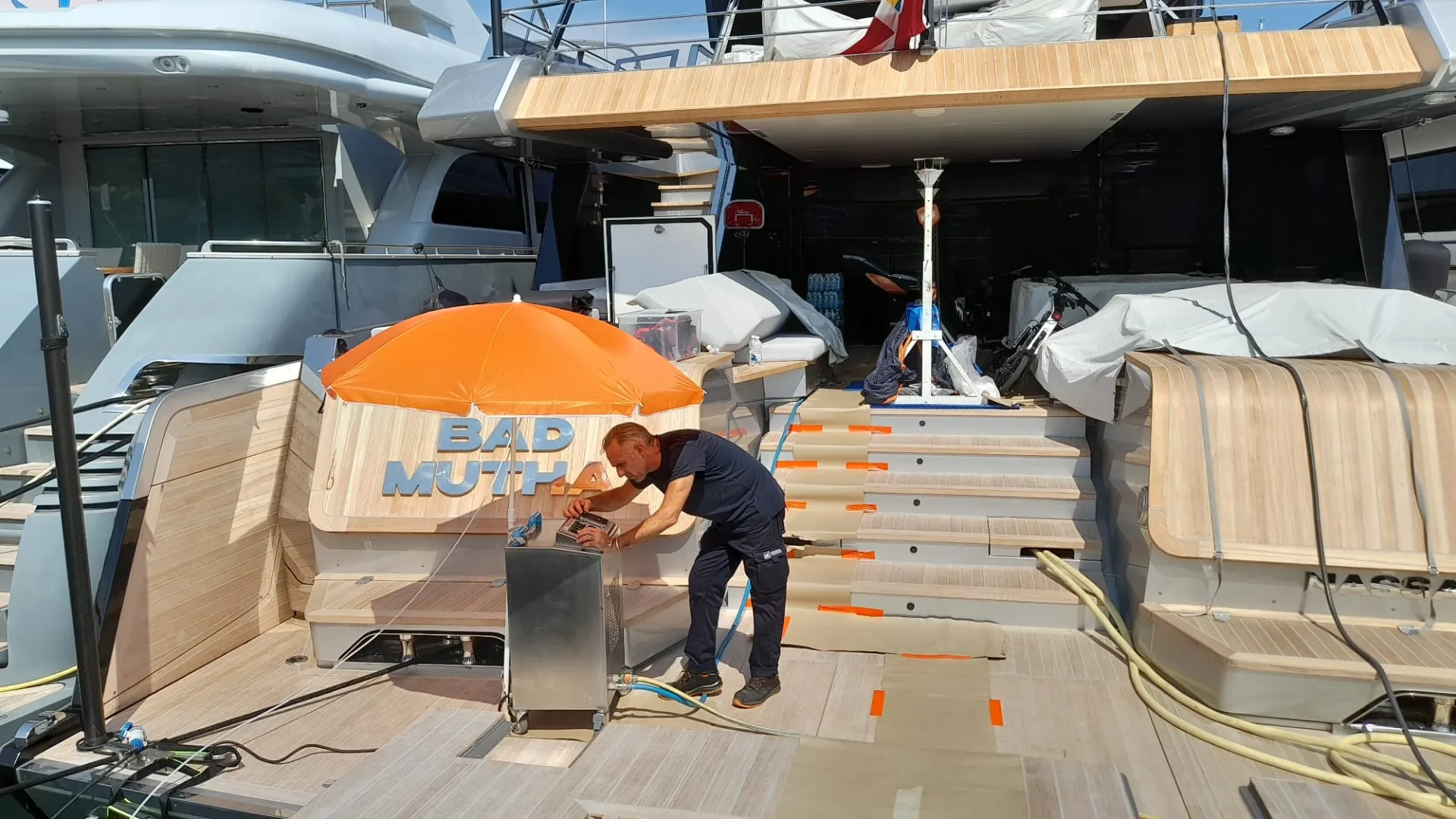
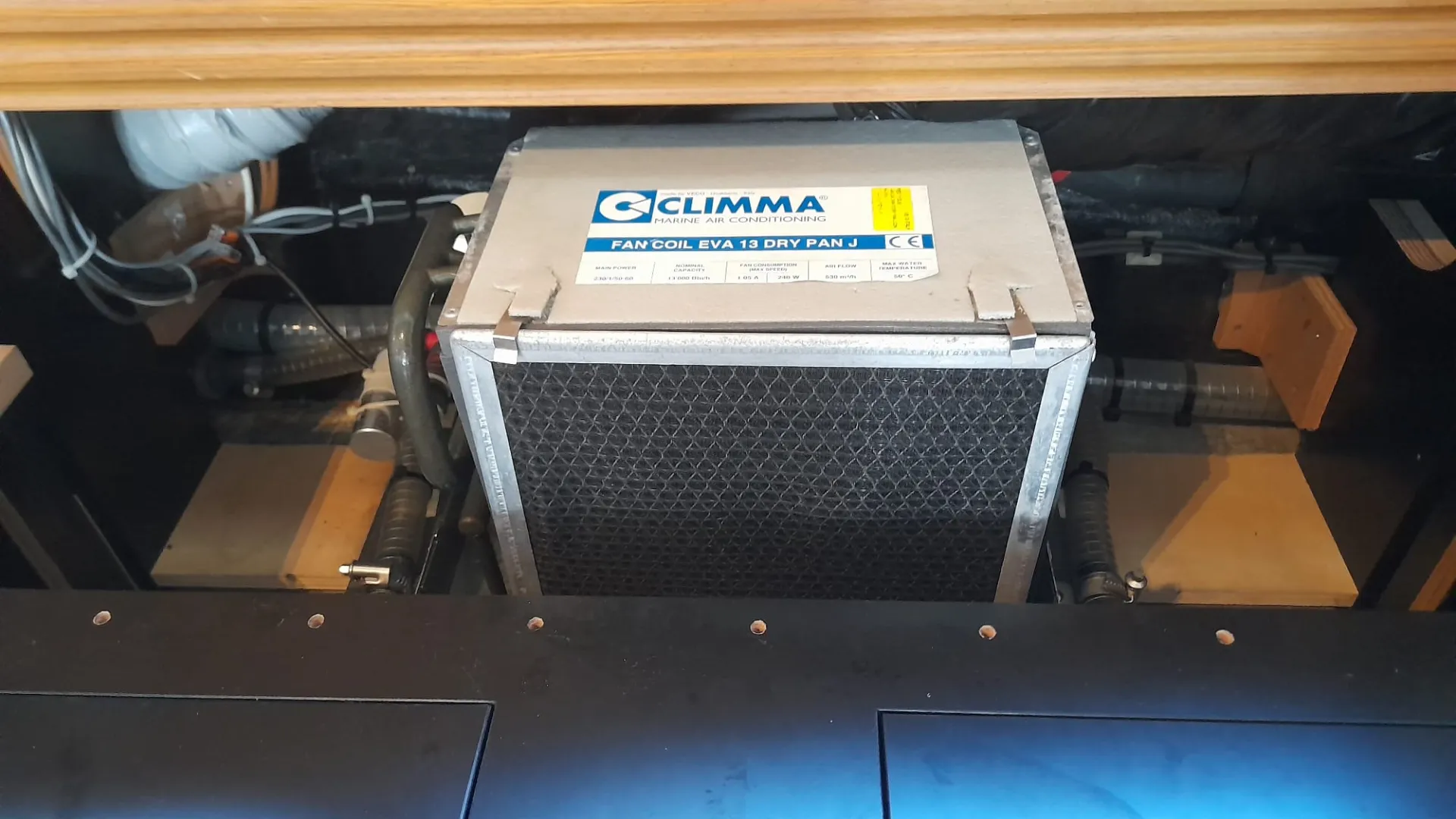
Photos from real AirBio Marine jobs: equipment staged on the quay, a technician on a protected aft deck and a cabin fan coil opened for cleaning.
What you receive
Technical report
Spaces treated, methods and products used, and any areas left untreated with the reason.
Photos by space
Before and after photos of the areas and components treated.
Material notes
Finishes that needed special care and products to avoid in future.
Source findings
Any link found between smells or mould and the air system, drains or leaks.
Recommendations
Ventilation, humidity control and cleaning suggestions for the interior team.
One report for the yacht's technical history
Every job closes with a written report: what was inspected, what was found, what was treated, photos before and after, readings where taken and recommendations for the next check. Useful for the captain, the management company, the next survey and the next season.
Who this service is for
Gets a deeper sanitization of cabins and shared areas, carried out with the same care for finishes that her team applies every day.
Can respond to a persistent smell, mould or an illness on board with a documented intervention rather than repeated routine cleaning.
Receives a report for the file and can combine interior work with air system cleaning in one planned visit.
Knows that private cabins and saloons have been sanitized without compromising delicate teak, lacquer, leather or fabrics.
Where we sanitize yacht interiors
We work in marinas and yards along the Italian Riviera and Tuscany, and in other Mediterranean ports on request.
Monaco
Spain
and beyond
Wherever you are in the Mediterranean, we can be there.
Interior sanitization: frequently asked questions
What does yacht interior sanitization cover?
It covers cabins, saloons, crew mess, heads and other living areas: high-touch surfaces such as handles, switches and taps, hard surfaces, and soft furnishings such as upholstery, curtains and carpets. Where appropriate, closed spaces are also treated with ozone. It is usually combined with cleaning of the fan coils or ducts that serve those spaces.
Is it safe for teak, lacquer, leather and fabrics?
We choose products and methods for each material and apply them in controlled quantities, because excess moisture and aggressive products can damage delicate finishes. We agree the approach with the chief stewardess, who knows the yacht's materials, and where a reaction is uncertain we test on a hidden area first before treating visible surfaces.
How does ozone treatment work in a cabin?
Ozone is a reactive form of oxygen that helps sanitize air and surfaces and reduce odours in a closed space. The cabin must be empty of people, pets and plants during treatment. Afterwards the space is ventilated before anyone goes back in. It is used as part of a treatment, not as a substitute for removing dirt or the source of a smell.
Why combine interior work with HVAC cleaning?
Air conditioning recirculates the air of each space, together with whatever is inside the fan coils and ducts. If the room is sanitized but the system is dirty, dust and odours can return quickly. Treating the fan coils and grilles serving the space at the same time makes the result of the interior work last longer.
Can you help after an illness on board?
After a guest or crew illness on board, on request, we can sanitize the affected cabin, bathroom and shared areas and, where relevant, the air system serving them. The work is general hygiene and risk reduction and is documented in a report. We do not provide medical advice or diagnosis.
What if the smell or mould keeps coming back?
A returning problem usually means the source is outside the room surfaces: a fan coil, a drain, a leak or humidity behind panels. In that case our odour removal or mould remediation services look for and deal with the cause, rather than treating the visible effect again.
Related services
Yacht Odour Removal & Source Investigation
Bad Smells on a Yacht? Find the Source, Not a Cover-Up.
Yacht Mould & Condensation Remediation
Removing the visible mark is only one part of the job.
Yacht Fan Coil Deep Cleaning
A new filter does not clean the coil, tray and drain behind it.
Mould on a Yacht
Wiping the spots away is easy. Stopping them coming back is not.
Tell us about the yacht
Yacht length, marina, systems and what you have noticed on board. A technician reads the message and calls you back to plan the survey.
"*" indicates required fields
Where we work
Italian Riviera and Tuscany marinas and yards — Viareggio, La Spezia, Portofino, Genoa, Sanremo, Livorno, Argentario — and other Mediterranean ports on request.
Documented work
Every job ends with a technical report and photos for the yacht's records.
Not sure where the problem starts?
Let the technical team assess it onboard.
In marina, at the yard or during lay-up. We tell you what needs treating — and what doesn’t.
+39 0584 433 198Expertise.
Peace of mind.