

Condensation on a Yacht: Why It Happens and How to Stop It Causing Mould
Water where it shouldn't be: how to trace it before it becomes mould.
A yacht is a warm, lived-in space surrounded by cold water, so some condensation is normal. The trouble starts when it keeps coming back in the same places and never dries. This guide explains where it forms, what may be behind it and when it is worth getting a specialist's view.
yacht experience
How condensation shows up on board
Condensation appears on the coldest surfaces first. These are the places crews usually spot it.
Fogged or wet windows and portholes
Water beads on the inside of glass in the morning, running down onto frames, sills and curtains.
Damp hull liners behind furniture
Wall and hull panels in lockers, wardrobes and behind beds feel cold and damp, sometimes with small dark spots.
AC outlets dripping
Drops forming on or around air-conditioning grilles and falling onto bedding, desks or floors.
Wet condensate trays and drains
Trays under fan coils that are always full, or a damp smell near the units. The water may not be draining away.
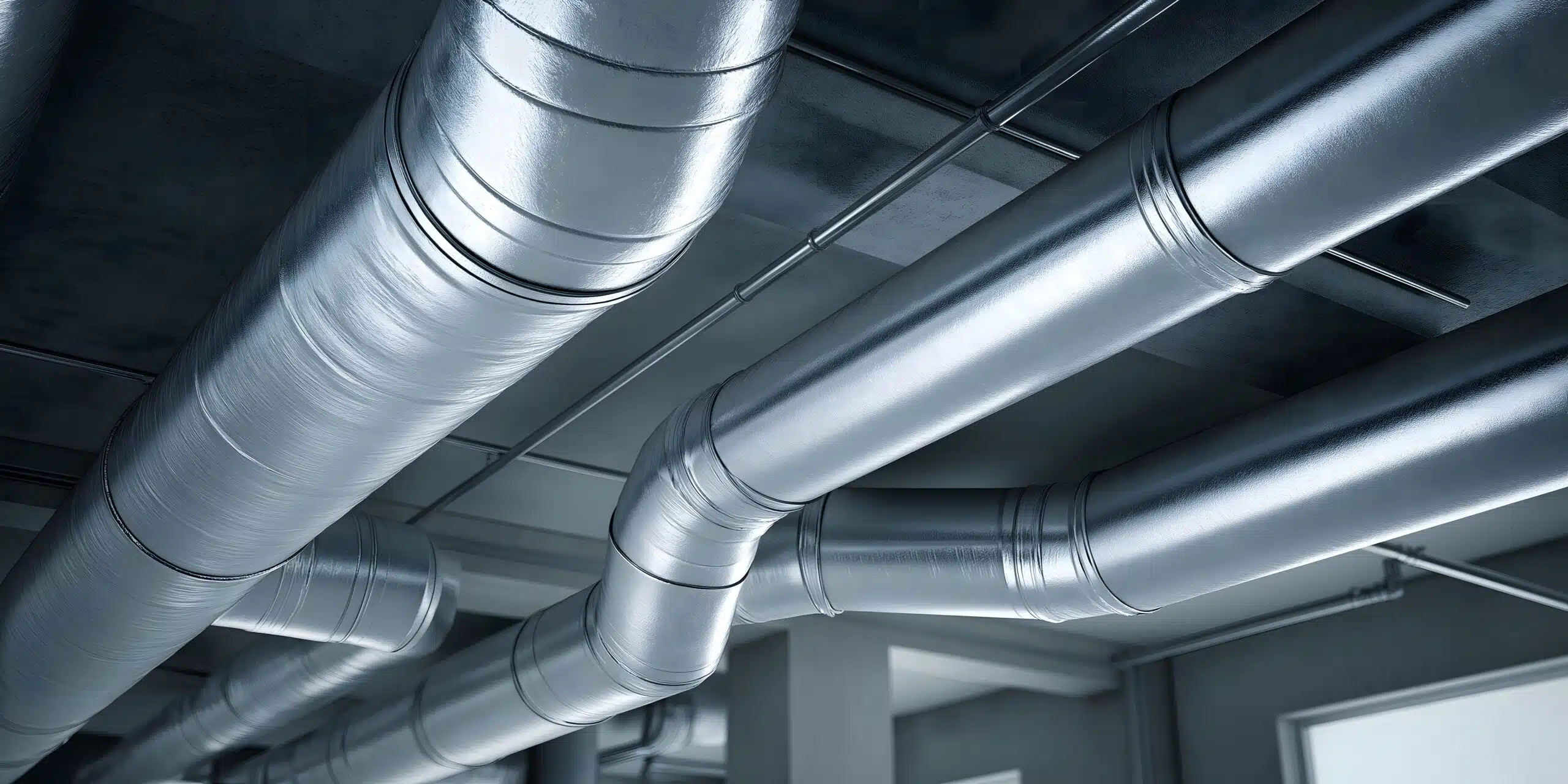
Why a yacht is so prone to condensation
Air always holds some water as vapour. When warm, humid air touches a surface colder than its dew point — the temperature at which vapour turns back into liquid — water appears on that surface. On a yacht, the hull and windows are cooled by the sea and the night air, while inside there are showers, cooking, laundry and people breathing.
Air conditioning helps by cooling and drying the air, but it also creates cold spots of its own. Chilled air leaving a grille can cool the grille below the dew point of the cabin air, so it drips. Inside each fan coil, the coil is designed to collect condensation, which must drain away through the tray. If that drain is slow, the unit becomes a permanent pool of water.
Condensation by itself is just water. The problem is repetition: surfaces that are wet every night and never fully dry give mould the moisture it needs. Behind panels and in closed lockers, that can go on for months before anyone sees it.
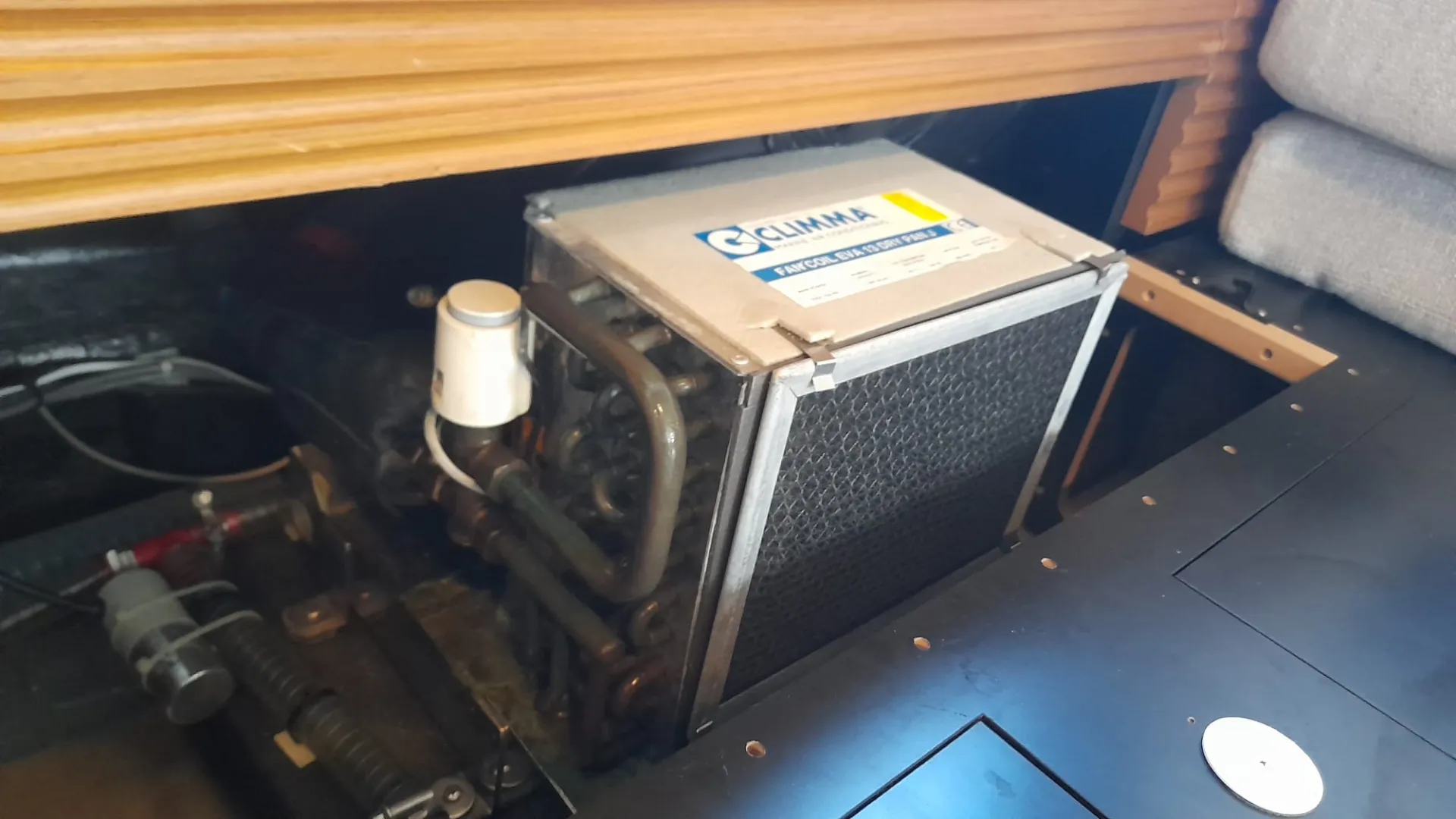
What may be keeping surfaces wet
Condensation usually has more than one driver. These are the ones worth ruling in or out.
Mould already growing on damp surfaces
Dark spots on liners, silicone joints or behind furniture may indicate that moisture has been present long enough for mould to grow.
Yacht Mould & Condensation RemediationBlocked condensate trays and drains
Sludge in fan coil trays can stop water draining, keeping the unit and nearby panels permanently damp.
Yacht Fan Coil Deep CleaningDirty coils that dehumidify poorly
A coil covered in dust cools and dries the air less effectively, leaving cabins more humid.
Yacht Fan Coil Deep CleaningCold, uninsulated duct sections
Ducts carrying chilled air through warm voids can sweat on the outside and wet ceilings or insulation.
Yacht HVAC & Air Duct CleaningDamp air system spreading musty smells
When moisture sits in the air side of the system, a musty smell may travel with the airflow.
Yacht AC / Split CleaningHow to map condensation on board
The goal is to find patterns: which areas, what time of day, and under which settings.
- Walk the yacht early in the morning and note every wet window, liner and grille, cabin by cabin.
- Open wardrobes and lockers on hull sides and feel the panels for cold, damp surfaces.
- Check fan coil trays, where visible, for standing water or slime.
- Place an inexpensive hygrometer (humidity meter) in problem cabins and note readings morning and evening.
- Note whether cabins are kept closed with the AC off for long periods, then cooled hard.
- Look at silicone joints, window frames and headlinings for dark spots or staining.
When condensation needs more than a cloth and better habits
Good ventilation, sensible temperature settings and keeping doors open in unused cabins solve a lot of condensation. When the same areas stay wet despite this, the cause is often inside the air system or behind panels, where crews cannot easily look.
AirBio Marine inspects fan coils, trays and accessible duct sections, checks for mould behind liners where access allows, and treats the affected areas. The report with photos shows where moisture was found, what was cleaned and sanitized, and what can be done to stop it coming back.
- Dark spots have appeared on liners, joints or fabrics.
- Drips from AC grilles are regular, not occasional.
- Condensate trays are always full or smell musty.
- A cabin smells damp even after airing.
- The yacht is about to go into or come out of lay-up.
When condensation turns into mould
Illustrative images to help recognise the issue, not documentary proof of a specific job.

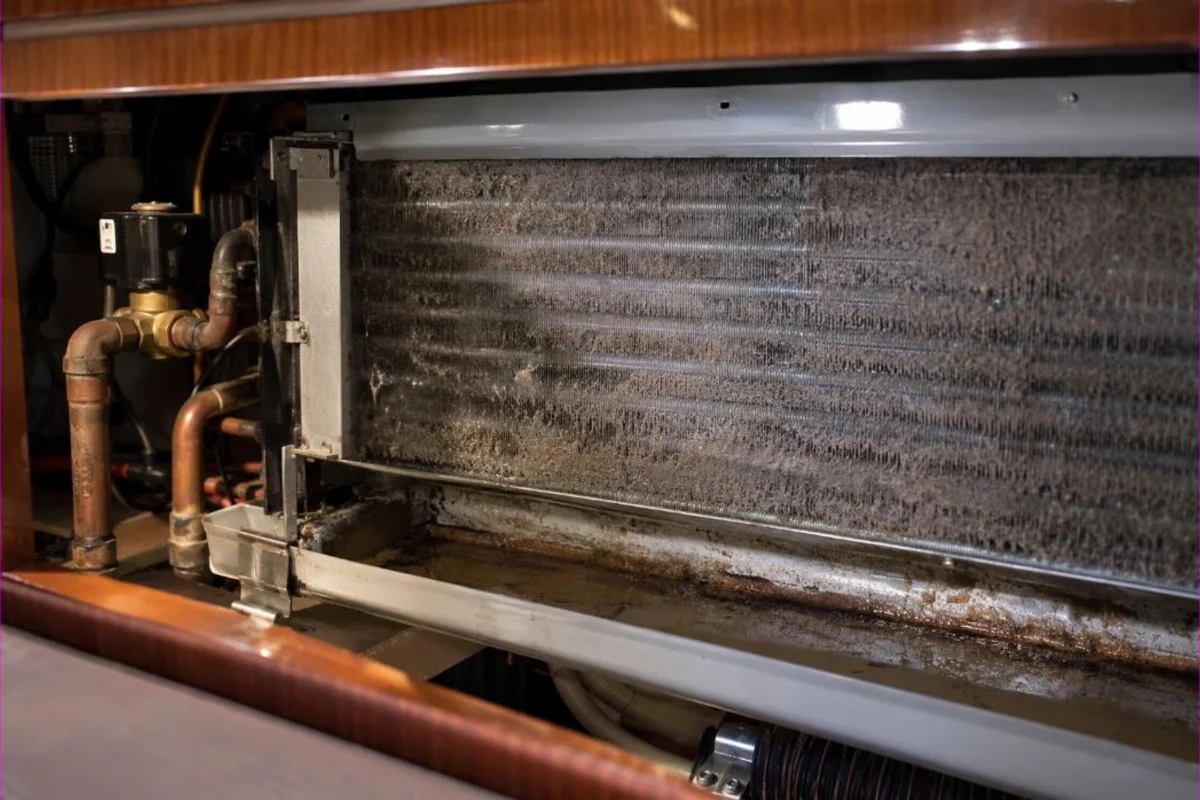
Illustrative visual showing the type of condition we find and the result we work towards. Photos of real AirBio Marine jobs are shown in the gallery below and in every client report.
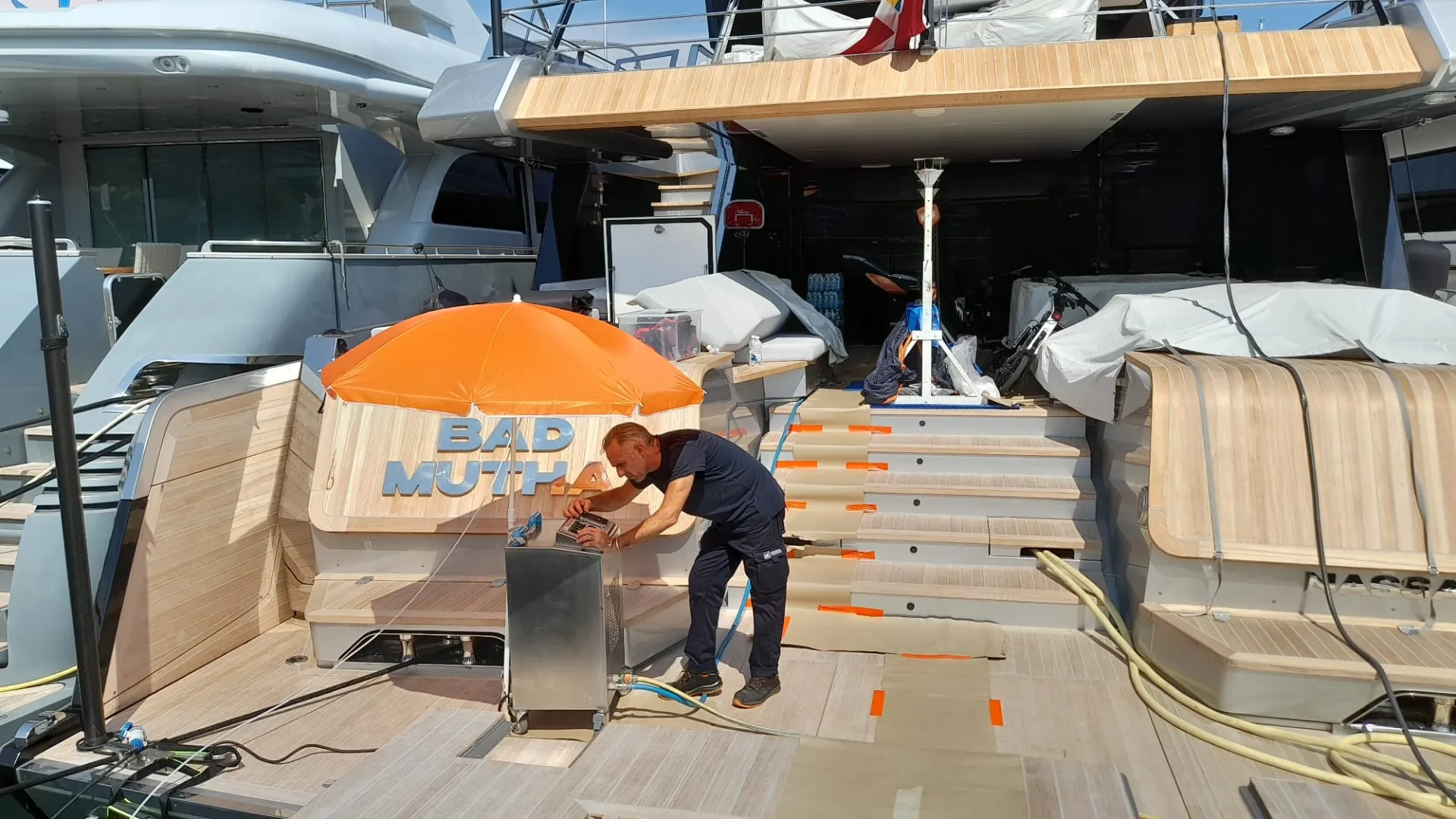
Condensation on yachts: common questions
Is some condensation on a yacht normal?
Yes. A yacht has cold surfaces, such as hull sides and windows, next to warm humid air from people, showers and cooking. Occasional condensation on glass on a cool morning is expected. It becomes a concern when the same surfaces are wet every day, when water collects behind furniture, or when dark spots or musty smells start to appear.
Why do the air-conditioning grilles drip water?
Chilled air can cool the grille below the dew point of the surrounding cabin air, so moisture forms on it and drips. This may happen more in very humid weather or when cabin doors are left open to warm air. Dirty coils, blocked drains or poorly insulated duct ends can make it worse and should be inspected.
Will a dehumidifier solve condensation on board?
A dehumidifier can reduce humidity in a cabin and is useful during lay-up or in closed areas. It does not fix a blocked condensate tray, a dirty coil or a cold duct sweating inside a ceiling. If condensation keeps returning in the same places, it is worth finding out whether the air-conditioning system is part of the cause.
How do I know if condensation has already caused mould?
Look for dark grey, black or green spots on liners, silicone joints, window frames and fabrics, especially in lockers and behind furniture. A persistent musty smell is another sign. Some mould is hidden behind panels, so an inspection may be needed. Avoid scrubbing suspected areas yourself, as this can spread spores.
Can condensation problems be dealt with during lay-up?
Lay-up is often a good time, because cabins are empty and panels can be accessed without disturbing guests. It is also the period when closed yachts are most exposed to damp. AirBio Marine can inspect and treat fan coils, trays and affected surfaces in marina, at the yard or during lay-up, planned with the crew.
Related services
Yacht Mould & Condensation Remediation
Removing the visible mark is only one part of the job.
Yacht Fan Coil Deep Cleaning
A new filter does not clean the coil, tray and drain behind it.
Yacht HVAC & Air Duct Cleaning
Cleaner airflow starts inside the system, not at the vent.
Yacht AC / Split Cleaning
The smell may start deeper inside the system.
Tell us about the yacht
Yacht length, marina, systems and what you have noticed on board. A technician reads the message and calls you back to plan the survey.
"*" indicates required fields
Where we work
Italian Riviera and Tuscany marinas and yards — Viareggio, La Spezia, Portofino, Genoa, Sanremo, Livorno, Argentario — and other Mediterranean ports on request.
Documented work
Every job ends with a technical report and photos for the yacht's records.

Not sure where the problem starts?
Let the technical team assess it onboard.
In marina, at the yard or during lay-up. We tell you what needs treating — and what doesn’t.
+39 0584 433 198Expertise.
Peace of mind.