
Yacht Fan Coil Deep Cleaning
A new filter does not clean the coil, tray and drain behind it.
Fan coils are the units hidden in each cabin that cool, dehumidify and move the air. We open them, clean the filter housing, coil, condensate tray and drain line, then sanitize and document every unit, for captains, chief engineers, yacht managers and interior teams.
yacht experience
How dirty fan coils show up in the cabins
The interior team is usually the first to notice. The problem is often reported as a cabin issue, but the source may sit inside the fan coil that serves that cabin.
Where dirt builds up inside a fan coil

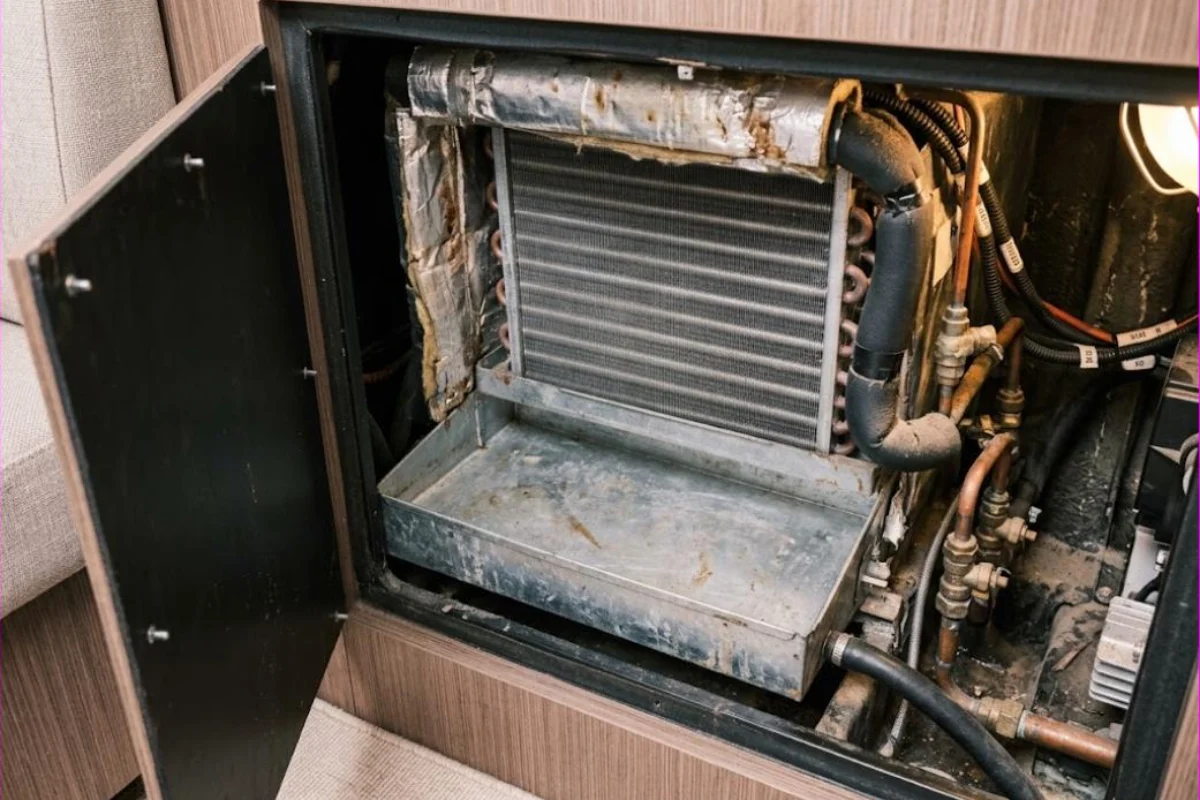
A fan coil draws cabin air in through a grille and a filter, pushes it across a coil (a block of thin metal fins with chilled water running through tubes) and blows it back into the cabin. As warm, humid air touches the cold fins, moisture condenses and drips into a condensate tray, which empties through a small drain line.
That combination — dust, moisture and darkness — is where problems start. Dust that passes the filter sticks to the wet fins. The tray may hold standing water and biological residue, and biofilm (a slimy layer of bacteria that sticks to wet surfaces) can form in the tray and drain line. If the drain is partly blocked, water backs up and the unit stays wet.
Cleaning the grille or replacing the filter only deals with the first step of this path. The coil, the tray and the drain are behind it, and they need the unit opened to be reached.
Cabin air enters through the return grille, carrying dust and fibres.
Catches larger particles; fine dust still passes through.
Cold wet fins cool the air and trap passing dust.
Collects water from the coil; can hold residue and biofilm.
Small line that empties the pan; blockages keep the unit wet.
Treated air returns to the cabin through the supply vent.
What builds up inside a split unit
Dust reaches the evaporator coil and settles on the wet fins, on the blower wheel and in the condensate tray. In a humid environment this mixture stays damp for most of the season.
The video shows a full internal clean of a split unit. The same components exist in a yacht air handler or fan coil, in a tighter space and with salt-laden air passing through them.
Signs a fan coil needs more than a filter change
These signs do not confirm a dirty unit on their own, but they are good reasons to open the fan coil and look.
Filter clogs quickly
A filter that turns grey soon after replacement may indicate a heavily loaded unit.
Dust on the coil fins
A felt-like layer on the fins reduces airflow and holds moisture.
Standing water in the tray
Water that does not drain can be associated with a blocked or contaminated line.
Recurring cabin smell
A musty note returning after housekeeping may start inside the unit.
Weak or noisy airflow
Less air, or a fan working harder, can point to dirt on the coil or fan.
Condensation around the unit
Damp panels or carpet nearby should be inspected before damage spreads.
Not sure what your systems actually need?
Tell us the yacht, what the crew has noticed and where she is now: a technician calls you back within 24 hours and plans the survey around your programme.
What we check on each fan coil
We agree with the chief engineer which units to open and in which order, so cabins can be handed back to the interior team one at a time. Each unit is opened and photographed before any cleaning.
The inspection tells us how far the contamination goes: whether it stops at the filter, reaches the coil, or continues into the tray and drain line. That decides the level of cleaning each unit needs.
- Filter condition, fit and bypass gaps around the frame
- Dust and residue on the front and back of the coil fins
- Condensate tray: standing water, sludge, biological residue
- Drain line flow and signs of blockage or contamination
- Fan wheel and housing for dust build-up
- Insulation and panels around the unit for moisture
- Photos of every unit before work starts
How we deep clean yacht fan coils
The sequence is the same on every unit, so the report can be compared cabin by cabin and season by season.
Protection of the cabin
Carpets, joinery and soft furnishings around the unit are covered and masked before the grille is removed.
Opening the unit
Grille, filter and access panels are removed so the coil, tray and drain are fully reachable.
Mechanical cleaning
Filter housing, coil fins and fan are cleaned with brushing and vacuum extraction, taking care not to bend the fins.
Tray and drain
The condensate tray is emptied and cleaned, and the drain line is cleared and flushed so water can run away freely.
Sanitization
Cleaned surfaces are sanitized with products suited to marine HVAC components, followed by ozone treatment of the closed cabin where agreed.
Checks and report
We check drainage and airflow, photograph each unit after cleaning and record everything in the technical report.
A fan coil coil and tray before and after
Illustrations of typical conditions, not photos of a specific yacht. Your report contains real photos of your own units.
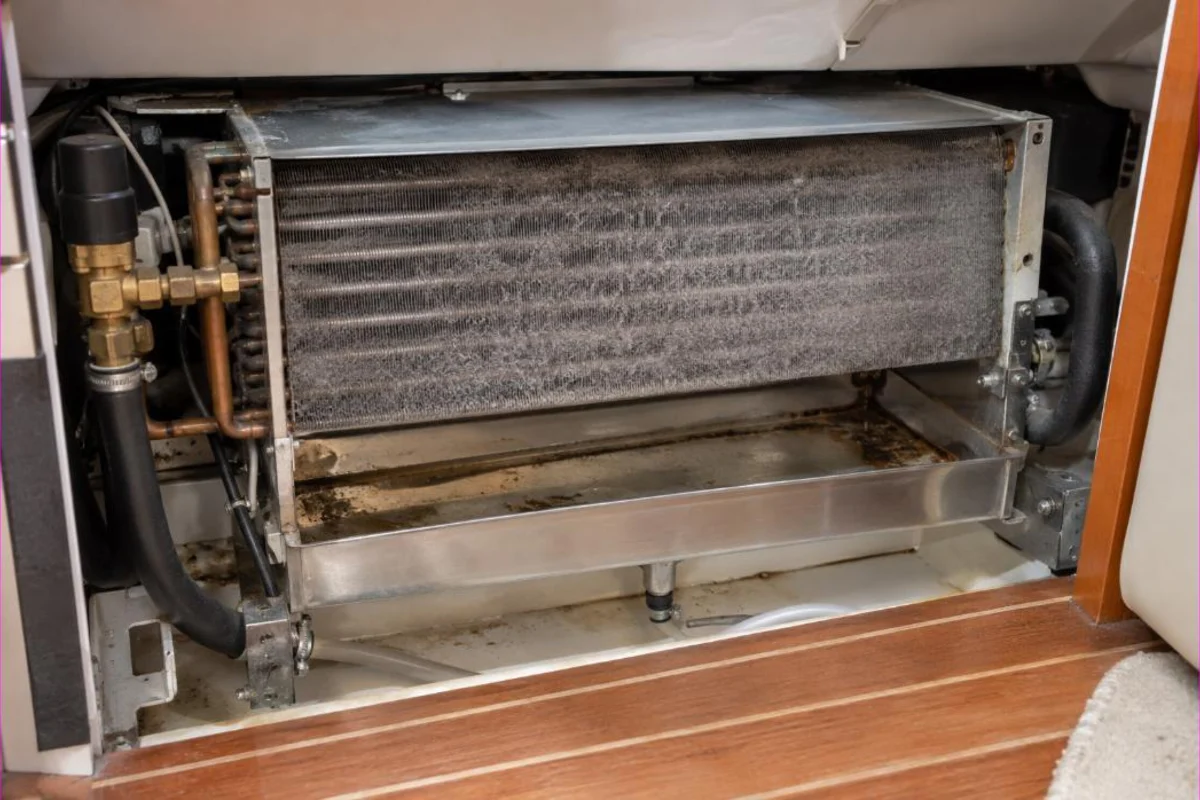
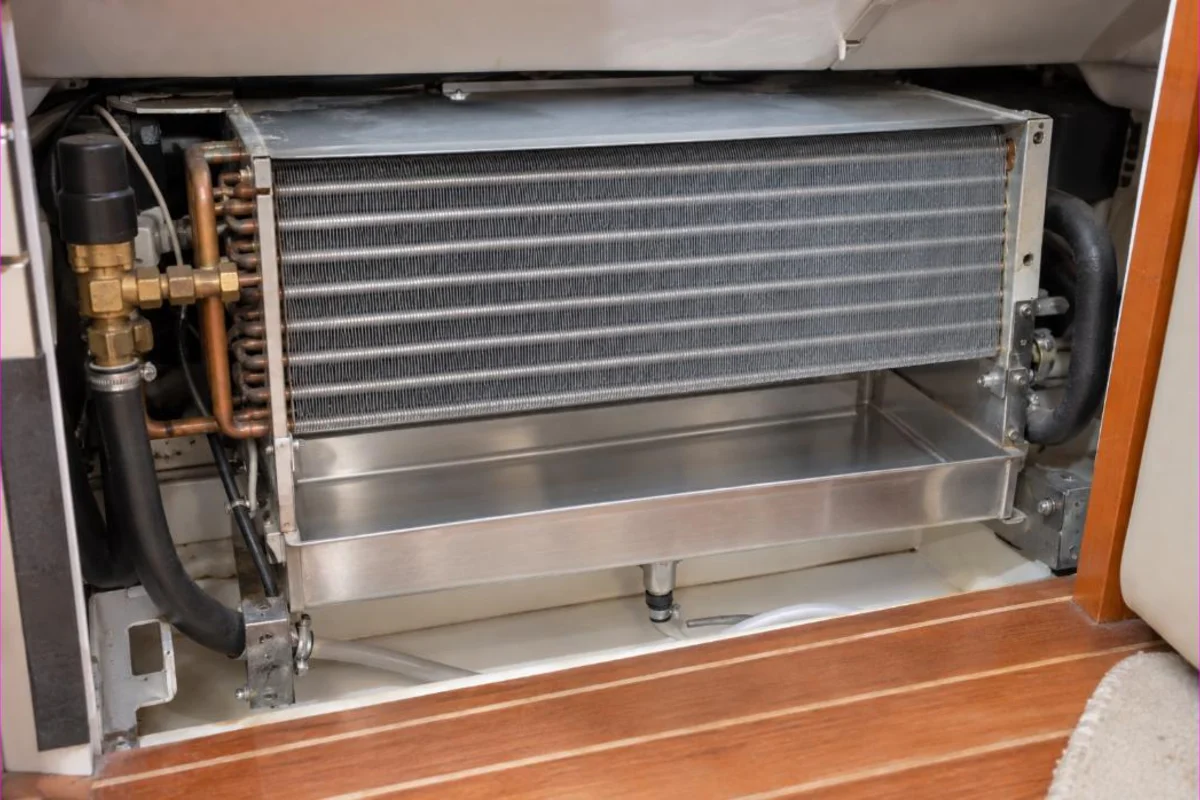
Illustrative visual showing the type of condition we find and the result we work towards. Photos of real AirBio Marine jobs are shown in the gallery below and in every client report.
Fan coils we open and clean on board
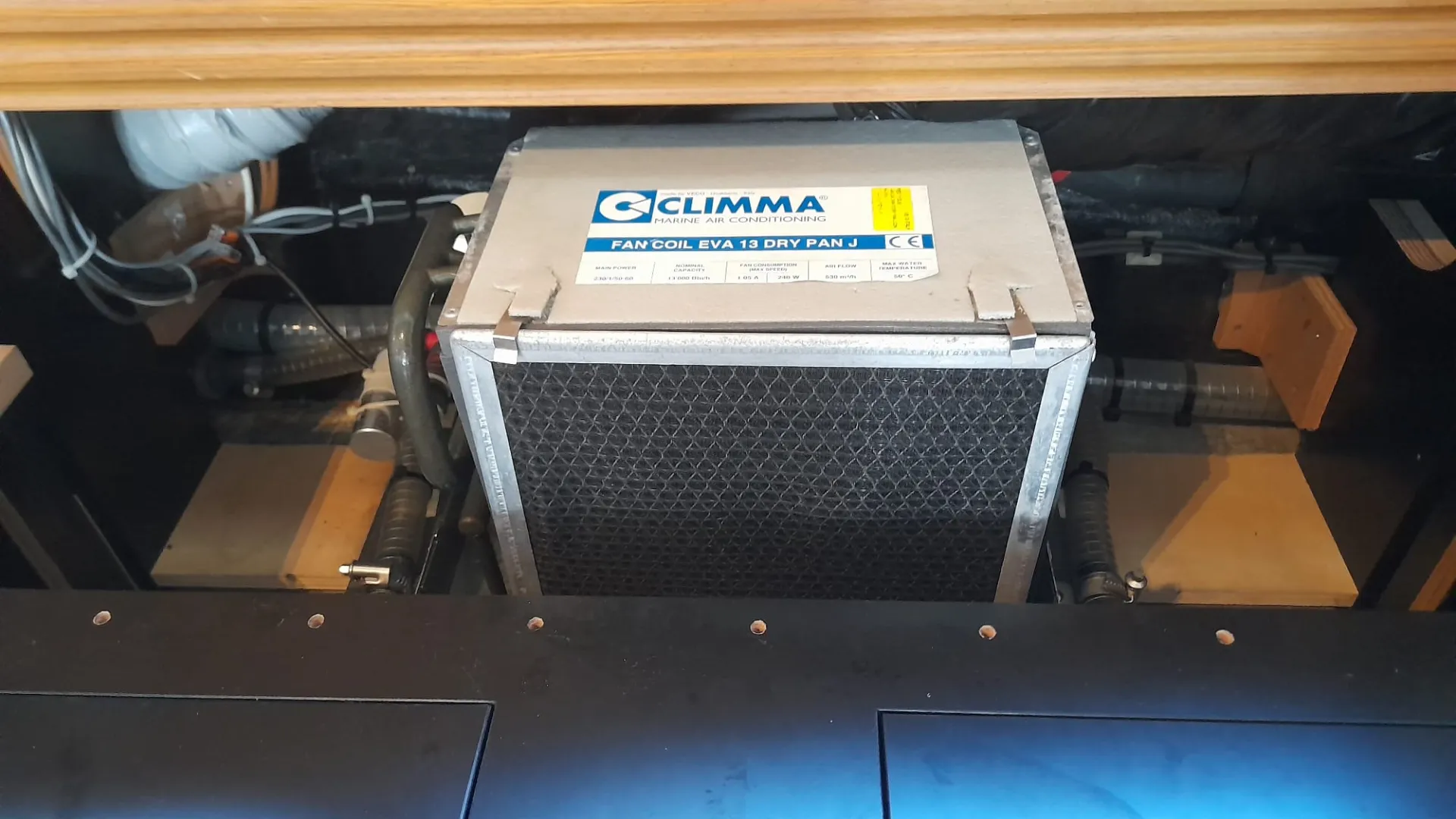
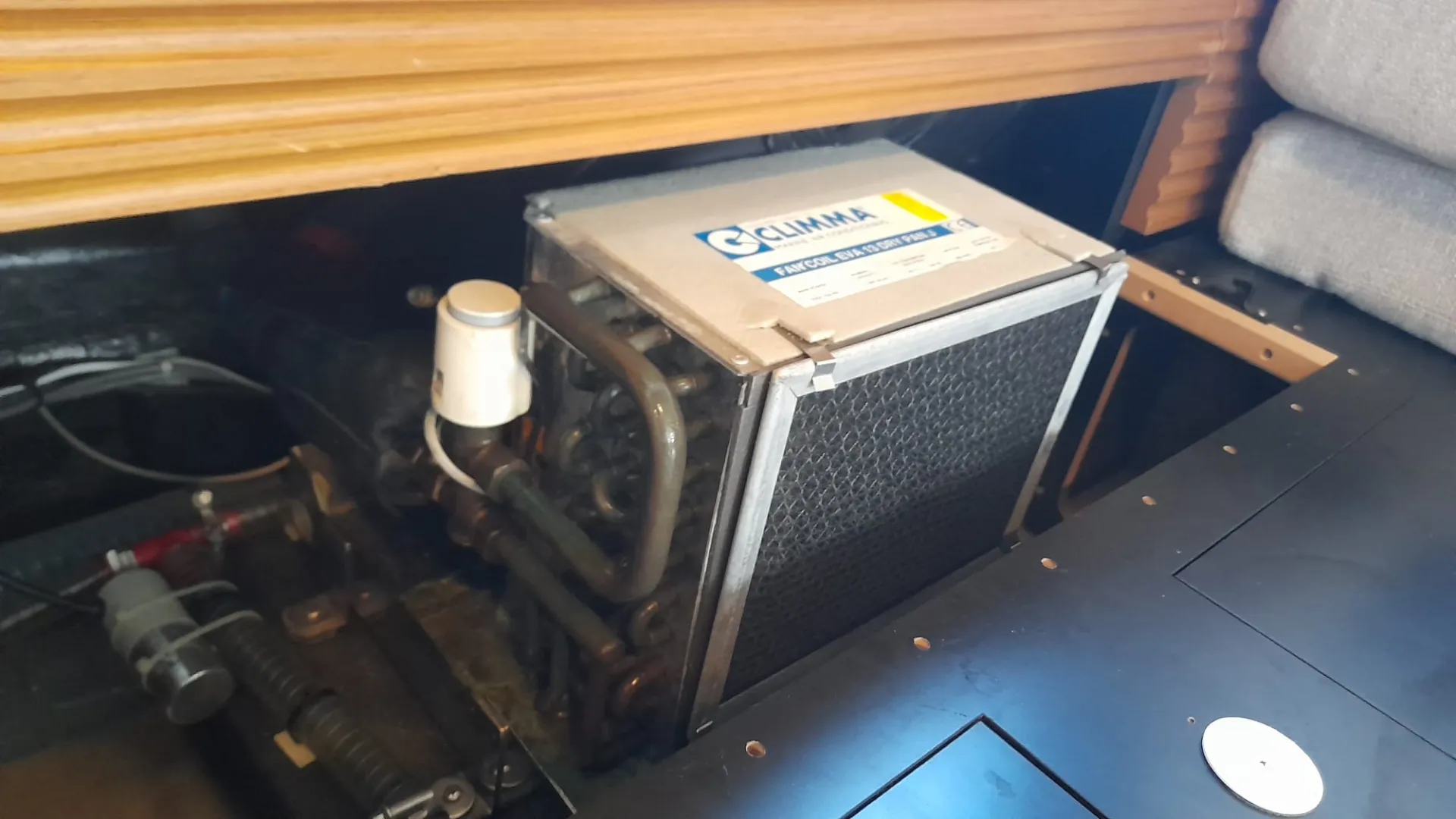
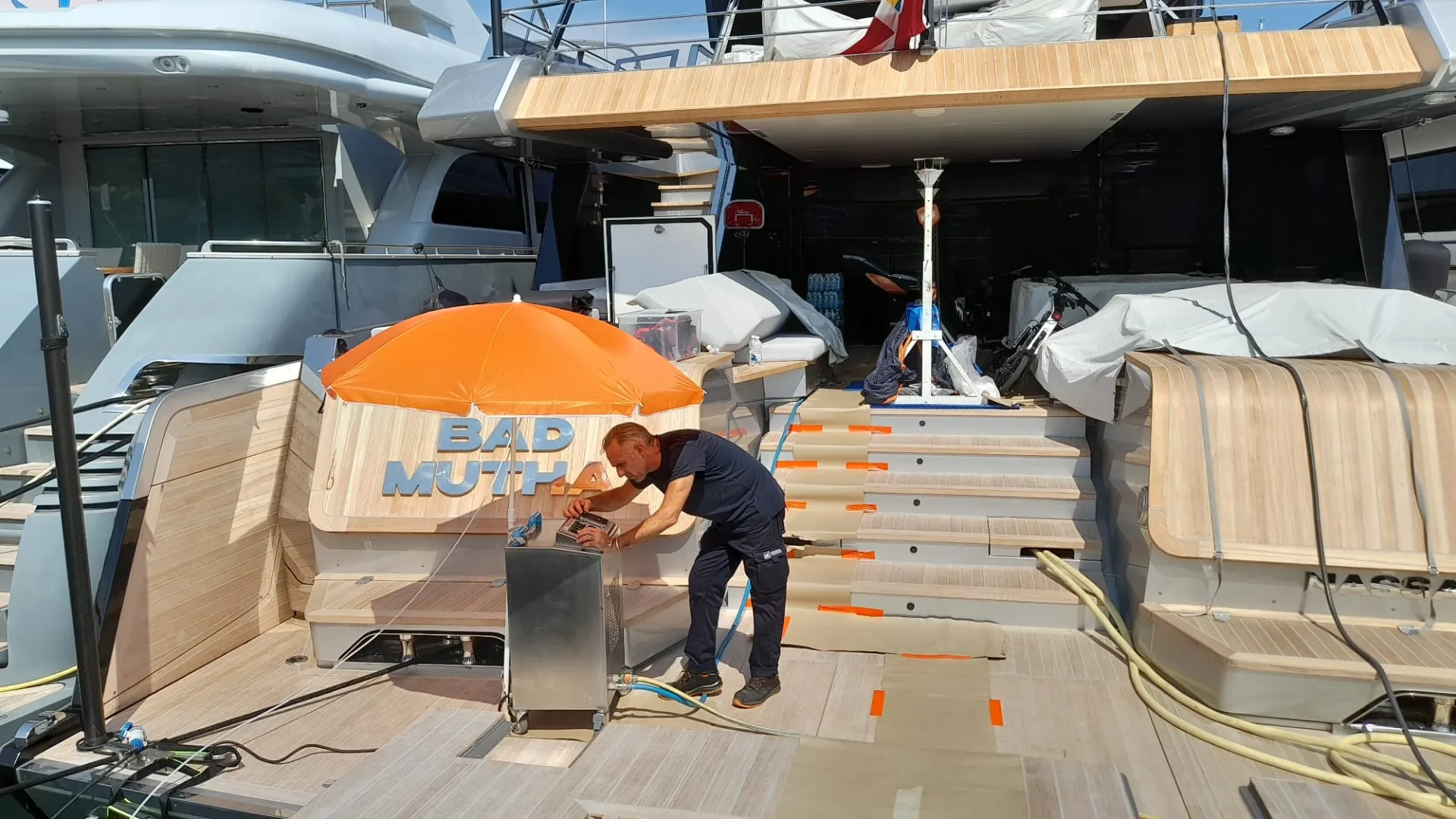
Real photos from AirBio Marine jobs: a marine fan coil in a cabin floor, the same type of unit from the side, and our units on the quay.

Verified reviews on Trustpilot
What you receive
Unit-by-unit record
Each fan coil listed by cabin or location, with its condition and the work carried out.
Photos of every unit
Before and after photos of filter, coil, tray and drain for each unit treated.
Technical report
Methods and products used, areas sanitized and any readings taken.
Faults flagged
Damaged fins, leaking valves or poor drain falls noted for the chief engineer.
Maintenance plan
Suggested cleaning intervals for filters and units, based on how the yacht is used.
One report for the yacht's technical history
Every job closes with a written report: what was inspected, what was found, what was treated, photos before and after, readings where taken and recommendations for the next check. Useful for the captain, the management company, the next survey and the next season.
Who this service is for
When a cabin complaint keeps coming back, you get the units opened, cleaned and documented, planned around the yacht's programme.
You receive a unit-by-unit record with photos, faults flagged and drain lines cleared, which supports your planned maintenance.
The report gives you evidence of what was done on each unit, useful for the owner, budgets and applicable requirements.
Cabins are protected during the work and handed back clean, so the interior team is not left fighting a smell that starts inside the unit.
Where we clean yacht fan coils
We work in marinas and yards across the Italian Riviera and Tuscany, and in other Mediterranean ports on request.
Monaco
Spain
and beyond
Wherever you are in the Mediterranean, we can be there.
Book the survey before your next movement
We work in the main Mediterranean marinas and refit yards, with documented results and lab analysis where required.
Yacht fan coil cleaning: questions
Is replacing the filter enough to keep a fan coil clean?
Replacing the filter is good routine maintenance, but it only deals with the first step of the air path. Fine dust passes the filter and settles on the wet coil fins, and the condensate tray and drain line can hold water and biological residue. These parts are behind the filter and need the unit opened to be cleaned. That is why a smell can remain after a new filter is fitted.
What is a condensate tray and why does it matter?
The condensate tray, or drain pan, sits under the coil and collects the water that forms when humid cabin air meets the cold fins. It empties through a small drain line. If the tray does not drain fully, water stands in it and residue builds up, which can support biofilm and musty odours. Cleaning the tray and clearing the drain line is a core part of a fan coil deep clean.
How do I know which fan coil is causing a cabin smell?
If the smell is limited to one cabin, the fan coil serving that cabin should be inspected first. If several cabins smell, the cause may be shared, for example in the ductwork or a common area. We open the units, photograph what we find and compare them, rather than guessing from outside. The inspection shows where contamination is and how far it goes.
Will cleaning damage the coil fins?
Coil fins are thin and bend easily, so we clean them with brushing and vacuum extraction suited to the fin spacing, working in the direction of the fins. Fins that were already bent before our work are photographed and noted in the report. If a unit shows damage that needs repair, we flag it for the chief engineer rather than attempt repairs outside our scope.
Can fan coils be cleaned while guests are on board?
Work is normally done in cabins that are empty, because each unit is opened and the space is protected and, where agreed, treated with ozone. Between charters, during lay-up or at the yard are the easiest times. We plan the order of cabins with the captain and chief stewardess so that the rest of the yacht can keep running.
How often should yacht fan coils be deep cleaned?
It depends on how many hours the system runs, the climate, how long the yacht sits closed and what the inspection finds. We do not apply one fixed interval to every yacht. After the first job, the report includes a recommended maintenance plan based on the condition of your units, which the chief engineer can build into planned maintenance.
Related services
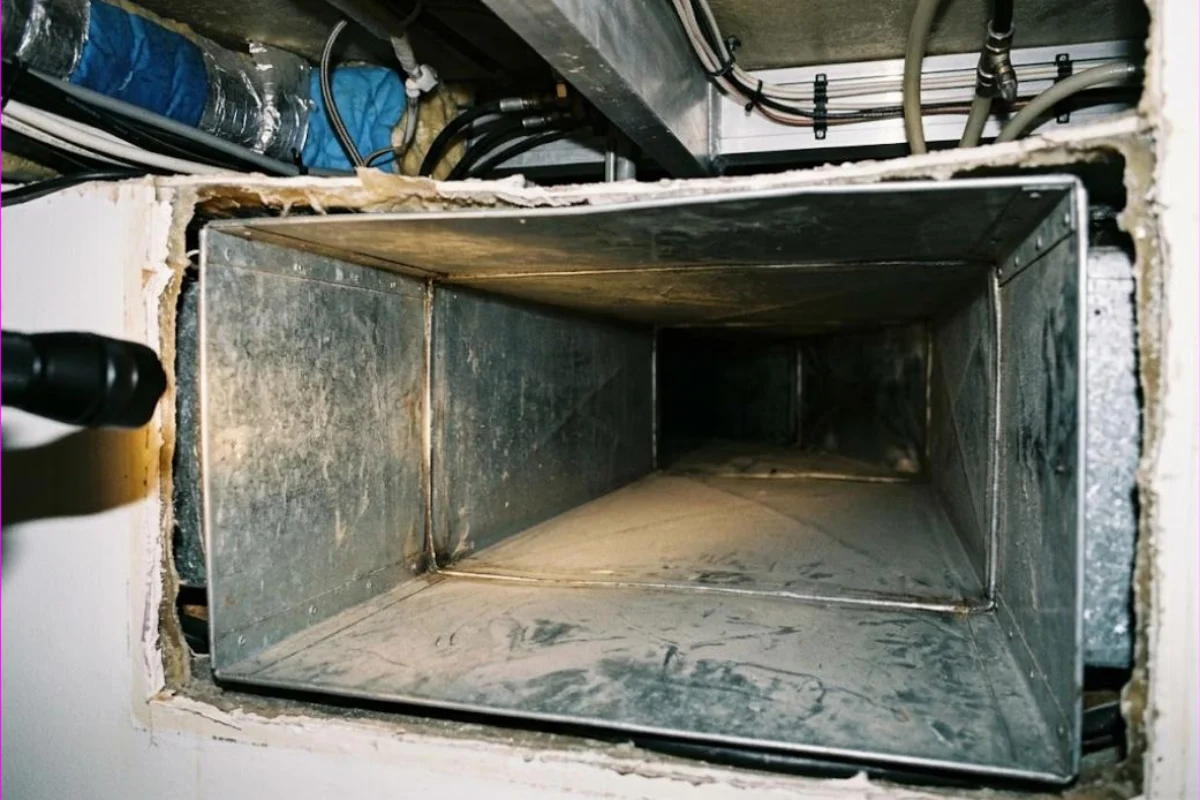
Yacht HVAC & Air Duct Cleaning
Cleaner airflow starts inside the system, not at the vent.
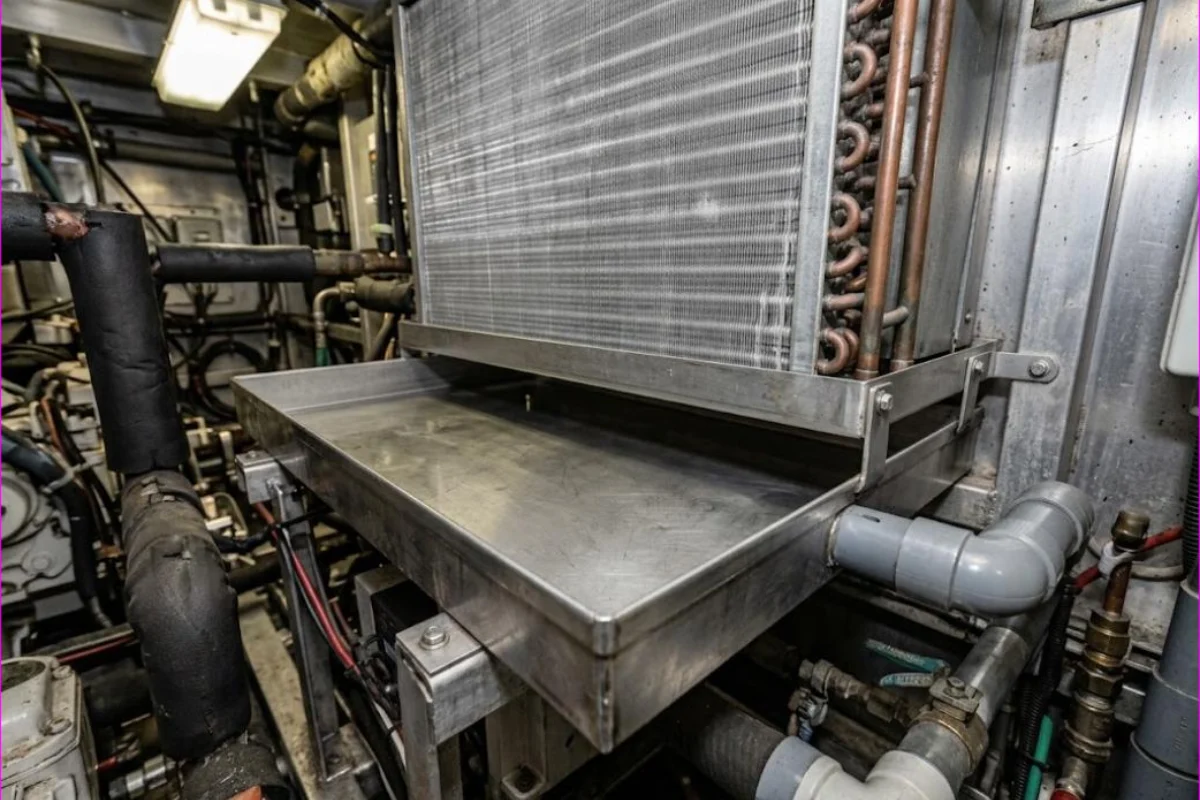
Yacht AC / Split Cleaning
The smell may start deeper inside the system.
Yacht Odour Removal & Source Investigation
Bad Smells on a Yacht? Find the Source, Not a Cover-Up.

Dirty Fan Coils on a Yacht
How to recognise a fan coil that needs attention before guests notice.
Tell us about the yacht
Yacht length, marina, systems and what you have noticed on board. A technician reads the message and calls you back to plan the survey.
"*" indicates required fields
Where we work
Italian Riviera and Tuscany marinas and yards — Viareggio, La Spezia, Portofino, Genoa, Sanremo, Livorno, Argentario — and other Mediterranean ports on request.
Documented work
Every job ends with a technical report and photos for the yacht's records.

Not sure where the problem starts?
Let the technical team assess it onboard.
In marina, at the yard or during lay-up. We tell you what needs treating — and what doesn’t.
+39 0584 433 198Expertise.
Peace of mind.