
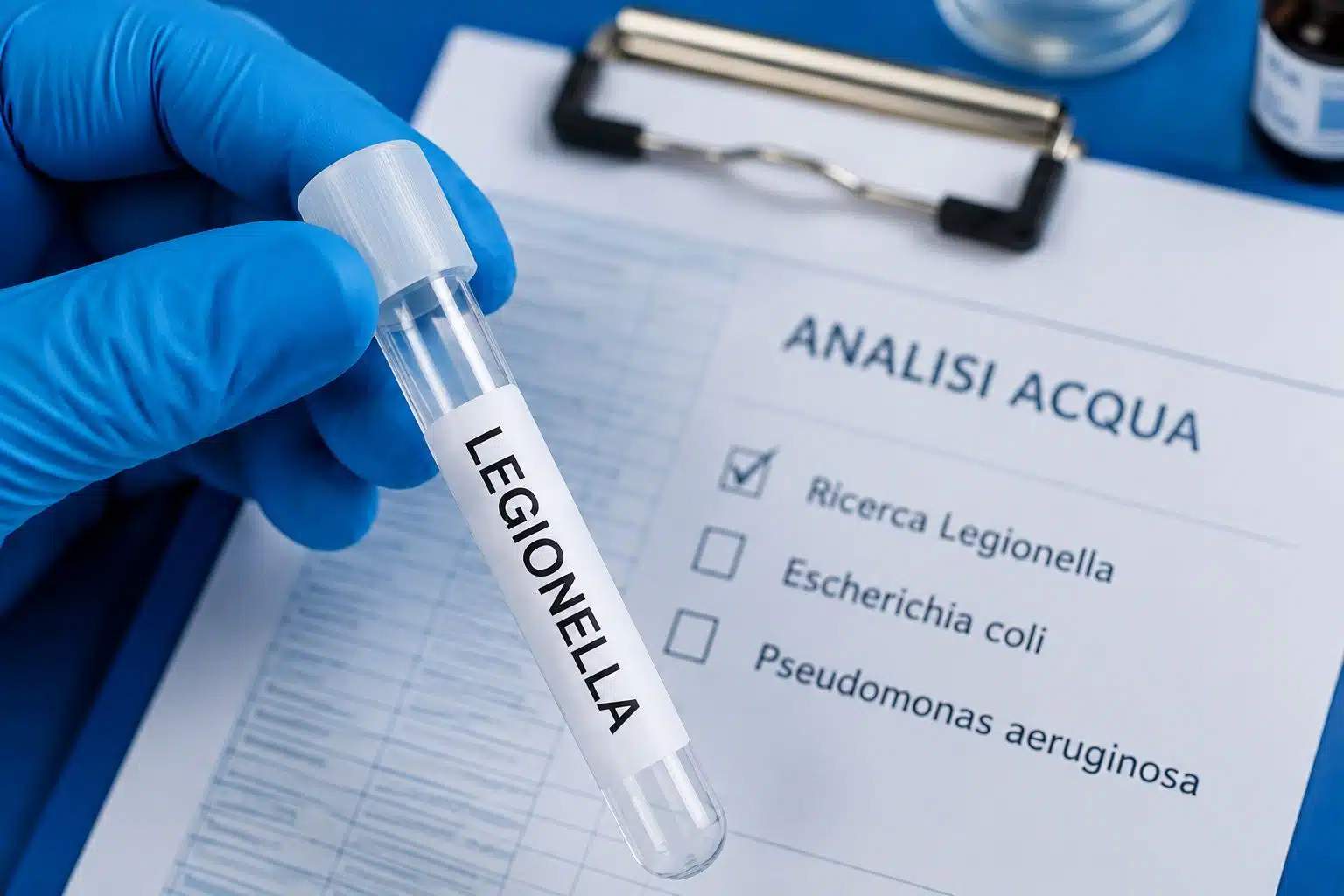
We Have a Positive Legionella Result on Board: What Now?
A calm, practical guide for captains, engineers and managers after a positive sample.
A positive Legionella result is a reason to act in an organised way, not to panic. This page explains what the result means, where Legionella tends to grow on a yacht, what the crew can check today and when a specialist treatment and re-test make sense.
yacht experience
How a Legionella problem shows up on board
Legionella cannot be seen, smelled or tasted. Most crews find out through paperwork, not through anything they notice in the water.
A lab report marked "positive"
A routine or pre-charter sample comes back above the detection limit. The report usually lists which outlet or tank the sample came from.
Management company asks for action
The yacht manager or flag-state surveyor may ask for a corrective plan, a treatment record and a follow-up sample.
Outlets that are rarely used
Guest cabins closed for weeks, a crew shower out of use, a deck shower used twice a season. These can be associated with higher counts.
Hot water that is only lukewarm
If the hot water at some taps never gets properly hot, the system may be sitting in a temperature range where bacteria multiply more easily.
What Legionella is and where it grows on a yacht
Legionella is a group of bacteria that lives naturally in water. In small numbers it is common. The concern starts when it multiplies inside a man-made water system and is then breathed in as a fine mist, for example from a shower head or a whirlpool bath. Drinking water is not the usual route; inhaling tiny droplets (aerosol) is.
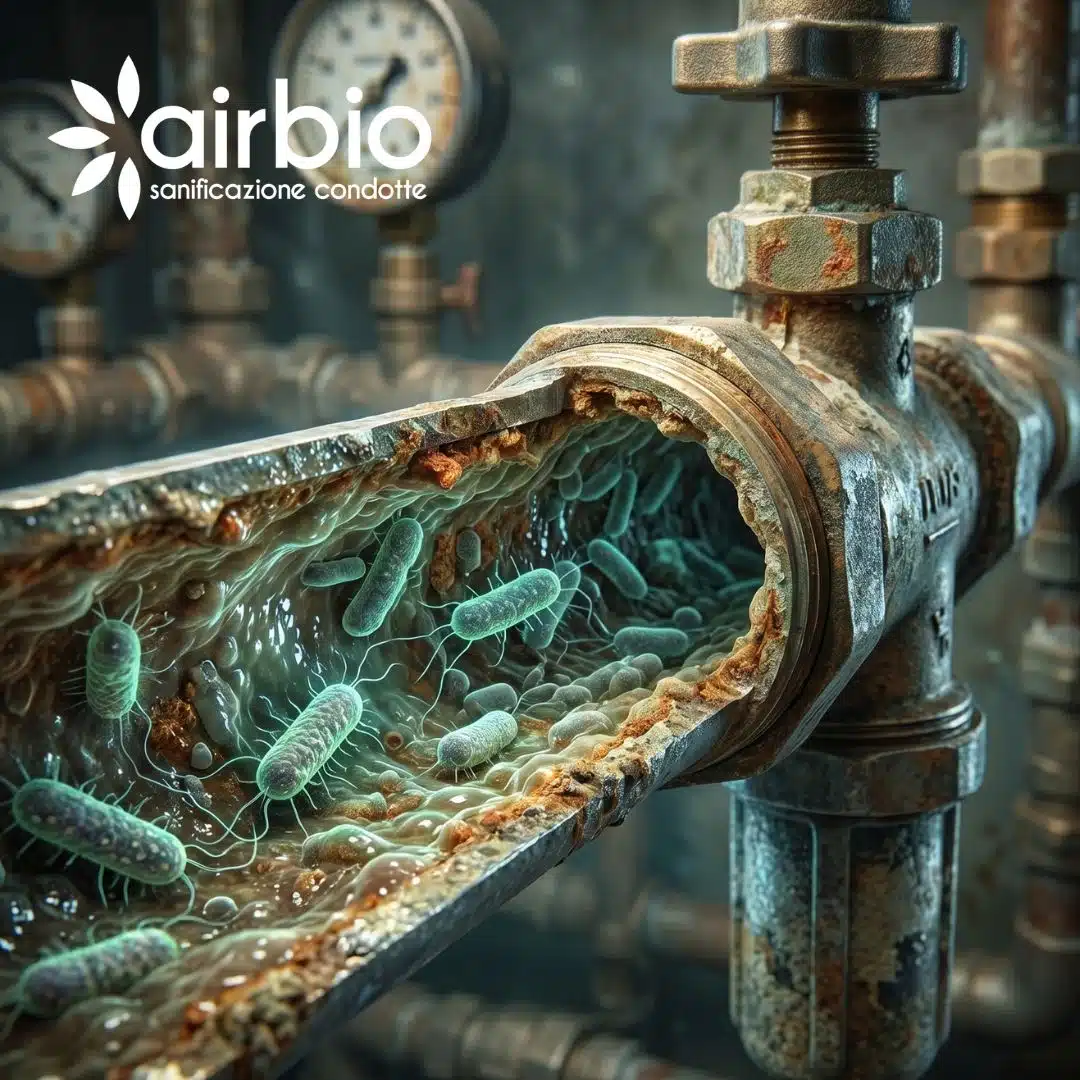
It grows best in lukewarm, still water — roughly 20–45 °C is the range most commonly cited. On a yacht that describes many places: hot water lines that cool down between uses, calorifiers (the onboard hot water tanks) that are not hot enough, dead legs (pipe sections that lead nowhere or to a removed fitting), and tanks after a long lay-up.
Legionella also hides in biofilm — a slimy layer of bacteria that sticks to the inside of pipes, tanks and shower hoses. Biofilm protects the bacteria from normal chlorine levels, which is why a single flush or a dose of chlorine does not always change the next result.
A positive result tells you that Legionella was present in that sample, on that day. It does not tell you on its own how widespread it is, or whether it will come back. That is why the response is usually a combination of investigation, treatment and re-sampling.
Why the sample may have come back positive
Usually it is a mix of factors rather than one fault. These are the most common on board:
Stagnant water in unused outlets
Showers and taps that are not run regularly let water sit and warm up in the pipe. This may allow bacteria to multiply between uses.
Yacht Fresh-Water System SanitizationBiofilm inside pipes and hoses
Once biofilm is established, it can keep releasing bacteria into the water even after chlorination. It often needs a targeted treatment to break it down.
Legionella Remediation for YachtsCalorifier temperature too low
If the hot water tank is set low to save energy, or the heating element is weak, the water may stay in the growth range for long periods.
Legionella Remediation for YachtsTank sediment and long storage
Fresh water tanks that are rarely emptied can collect sediment, which feeds bacteria and makes the whole system harder to keep clean.
Yacht Fresh-Water Tank CleaningDead legs after a refit
Pipework left in place after a cabin or galley change can hold still water permanently and re-seed the rest of the system.
Yacht Fresh-Water System SanitizationSensible first steps while you organise the next move
These are simple, low-risk actions the crew can take and note down. They help whoever investigates the system next.
- Read the lab report carefully: note which outlet, tank or line the positive sample came from and the date it was taken.
- Tell the captain and the management company, and follow their procedure. Anyone on board who feels unwell should follow medical guidance.
- Consider restricting use of the showers linked to the positive sample until the plan is agreed, as advised by your management company.
- Check the calorifier thermostat setting and measure the hot water temperature at the nearest and furthest outlets.
- List outlets that have not been used for a week or more, including guest cabins, crew areas, deck showers and the jacuzzi.
- Note any recent work on the water system: refit, new pipes, removed fittings, tank repairs or a long lay-up.
When professional treatment and re-sampling make sense
After a positive result, most management companies expect a documented response: an investigation of the system, a treatment and a follow-up sample analysed by an accredited laboratory. This is where specialists help, because testing and sanitization are two different jobs. A test tells you what is in the water; a treatment is what changes it.
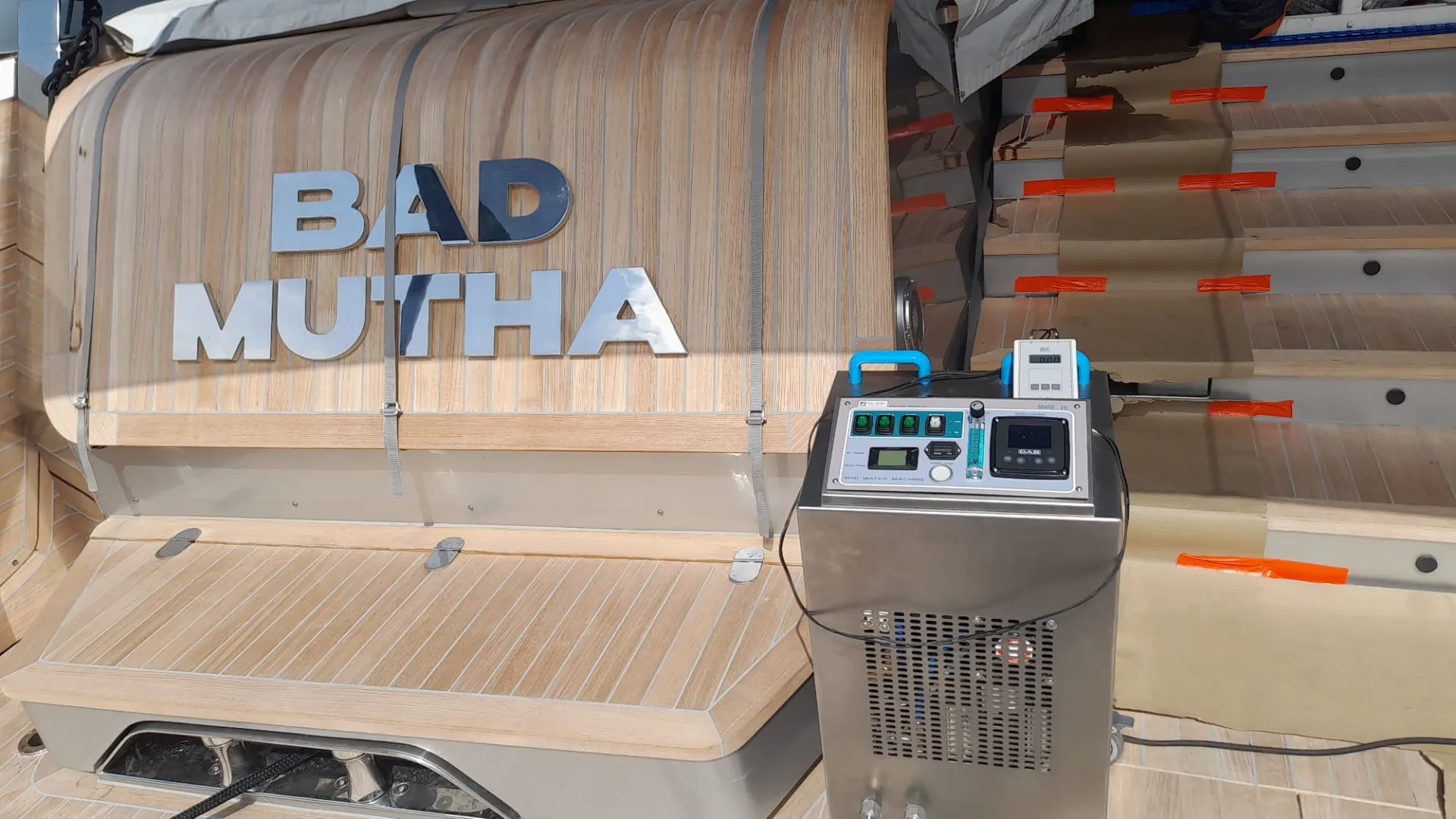
AirBio Marine uses high-concentration ozonated water, pushed through tanks, pipes and outlets, to break down biofilm, then measures residuals and arranges re-sampling. No treatment can promise that Legionella will never return, so the aim is to reduce the risk and keep it under control with a maintenance plan.
- The positive result came from more than one outlet, or from a tank or calorifier.
- A previous chlorination or flush did not change the next result.
- Guests or a charter are due on board and you need a documented treatment record.
- The yacht has just come out of lay-up or refit and the water system has been still for weeks.
- Your management company or surveyor has asked for a corrective action plan.
Legionella on yachts: common questions
Is a positive Legionella result on a yacht dangerous?
A positive result means Legionella was found in that sample, so it should be taken seriously and handled in an organised way. The risk mainly comes from breathing in fine water droplets, for example from showers. Follow your management company's procedure, restrict affected outlets if advised, and make sure anyone who feels unwell follows medical guidance. Then plan an investigation, treatment and follow-up sampling.
Can we just flush the system with chlorine?
Chlorination may lower the count temporarily, but Legionella often survives inside biofilm, the slimy layer on the inside of pipes and hoses. If the biofilm is not broken down, the next sample can come back positive again. A targeted treatment of tanks, lines and outlets, followed by re-sampling, gives a clearer picture of whether the situation has actually improved.
Does one negative sample after treatment mean the problem is solved?
No. A negative sample shows that Legionella was not detected in that sample on that day. It is good news, but it does not guarantee the future. Water systems change with use, temperature and stagnation. That is why follow-up sampling at agreed intervals and simple routines, such as running unused outlets and keeping hot water hot, matter after any treatment.
What is the difference between Legionella testing and Legionella remediation?
Testing means taking water samples from chosen points and having an accredited laboratory analyse them. It tells you what is there. Remediation is the treatment of the system itself: tanks, pipes, calorifier and outlets, aimed at breaking down biofilm and reducing contamination. After a positive result you usually need both, in that order: treat, then test again.
Can the treatment be done while the yacht is in marina?
In most cases, yes. AirBio Marine plans water-system work with the captain and chief engineer and can operate in marina, at the yard, during lay-up or between charters. The units stay on the quay or deck, interiors are protected, and the timing depends on the size of the system and the yacht's schedule, which is agreed after an onboard survey.
Related services
Legionella Remediation for Yachts
A positive result is not a reason to treat only the tap where it was detected.
Legionella Testing for Yachts
A structured sampling plan, accredited lab analysis and results explained clearly.
Yacht Fresh-Water System Sanitization
From tank to shower head: the whole fresh-water network, treated as one system.
Yacht Water Sampling & Analysis
Objective data on your onboard water, collected properly and explained clearly.
Tell us about the yacht
Yacht length, marina, systems and what you have noticed on board. A technician reads the message and calls you back to plan the survey.
"*" indicates required fields
Where we work
Italian Riviera and Tuscany marinas and yards — Viareggio, La Spezia, Portofino, Genoa, Sanremo, Livorno, Argentario — and other Mediterranean ports on request.
Documented work
Every job ends with a technical report and photos for the yacht's records.
Not sure where the problem starts?
Let the technical team assess it onboard.
In marina, at the yard or during lay-up. We tell you what needs treating — and what doesn’t.
+39 0584 433 198Expertise.
Peace of mind.