
Water System and Fan Coils Treated on a Motor Yacht
Both the fresh water system and the air conditioning were dealt with during the same yard stop, alongside the quay.
The owner wanted the yacht handed back with the water system treated and the air conditioning clean, without moving her and without a long shutdown. We worked from the quay for the water side and opened the fan coils below decks for the air side, protecting the teak and the interior throughout.
The job in four lines
Vessel
A planing motor yacht, alongside in a Mediterranean marina. Name and port withheld at the owner’s request.
Water side
Tanks, distribution lines and outlets treated from the quay, plus the deck spa pool.
Air side
Air conditioning fan coils opened, coils and filters cleaned, drain pans checked.
Timing
Both systems in the same stop, so the yacht was not out of service twice.
Treated from the quay, dosed on deck
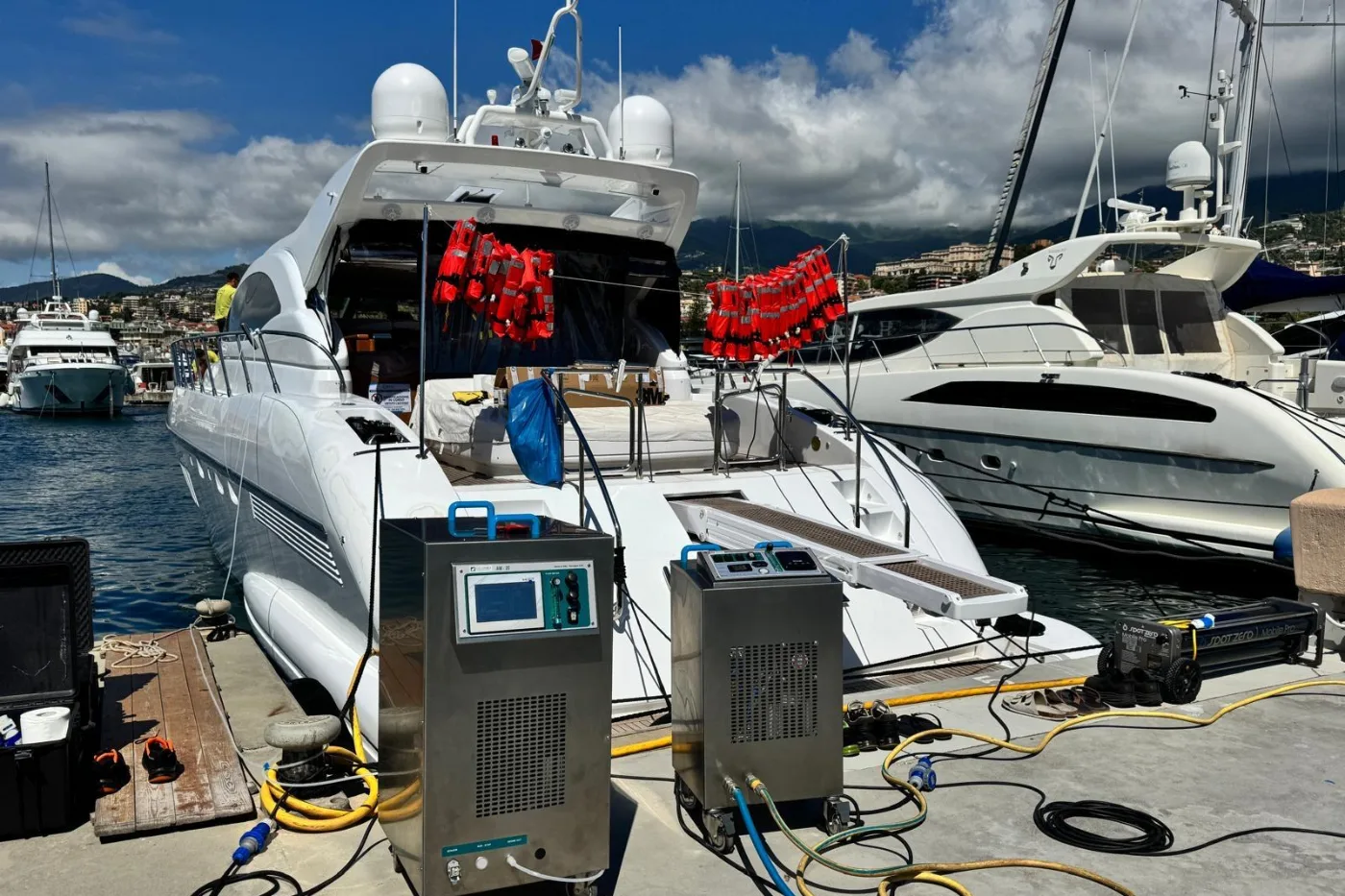
The heavy equipment stayed ashore. Only the hoses and a small dosing unit came aboard, and the deck was covered before anything was moved onto it.
Two units were set up on the quay and connected to the yacht’s fresh water system. Treated water was then pushed through the network so that it reached the tanks, the distribution lines and every outlet, including the ones the crew rarely opens.
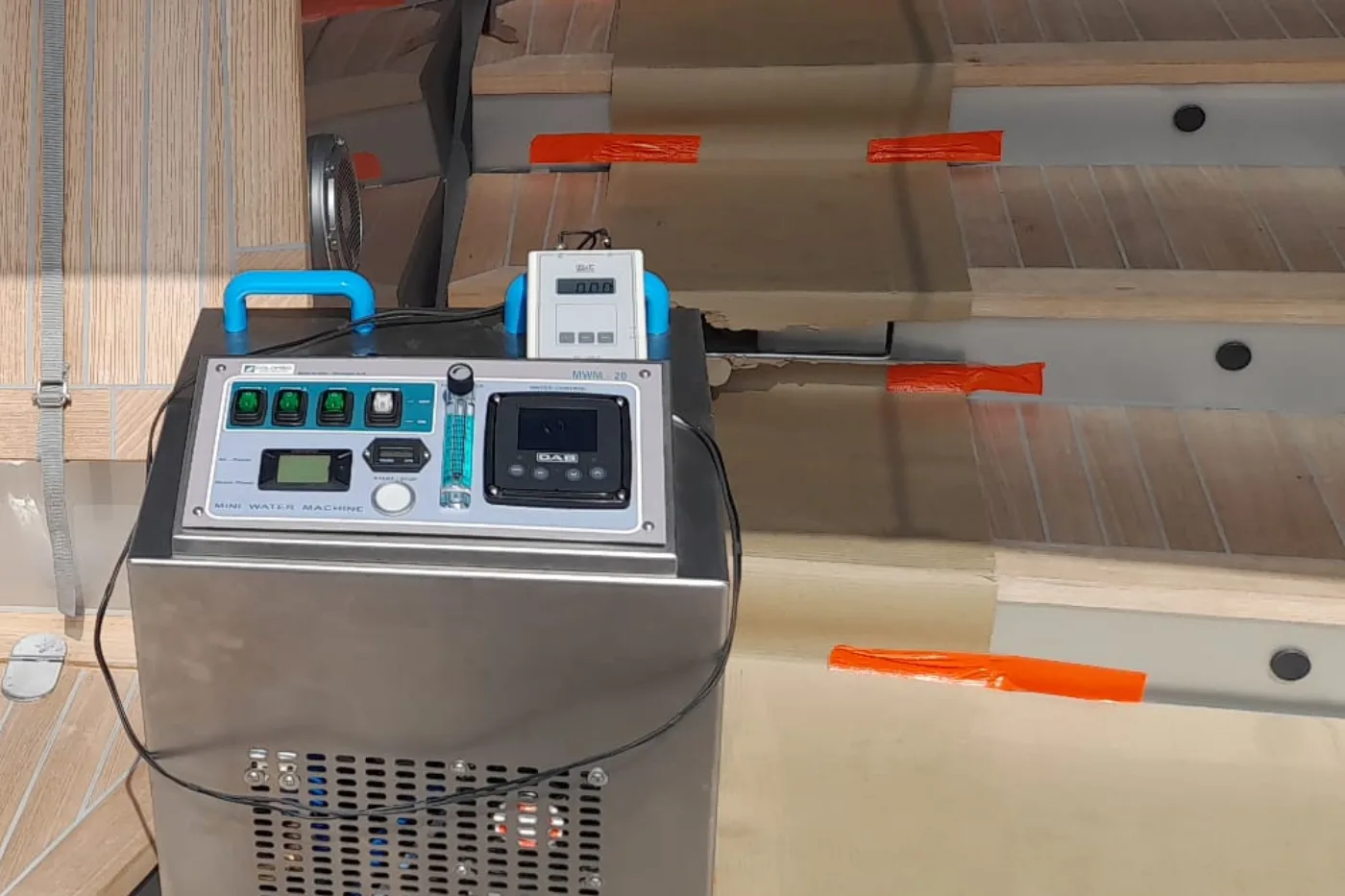
On the aft deck, a compact dosing unit controlled what was going into the system while the work ran. Keeping it there rather than in a technical space meant the crew could see the readout and the job could be stopped at any moment.
The teak and the bathing platform steps were covered with protective paper and tape for the whole intervention. Nothing was dragged across a bare deck.
The fan coils were opened, not just sprayed
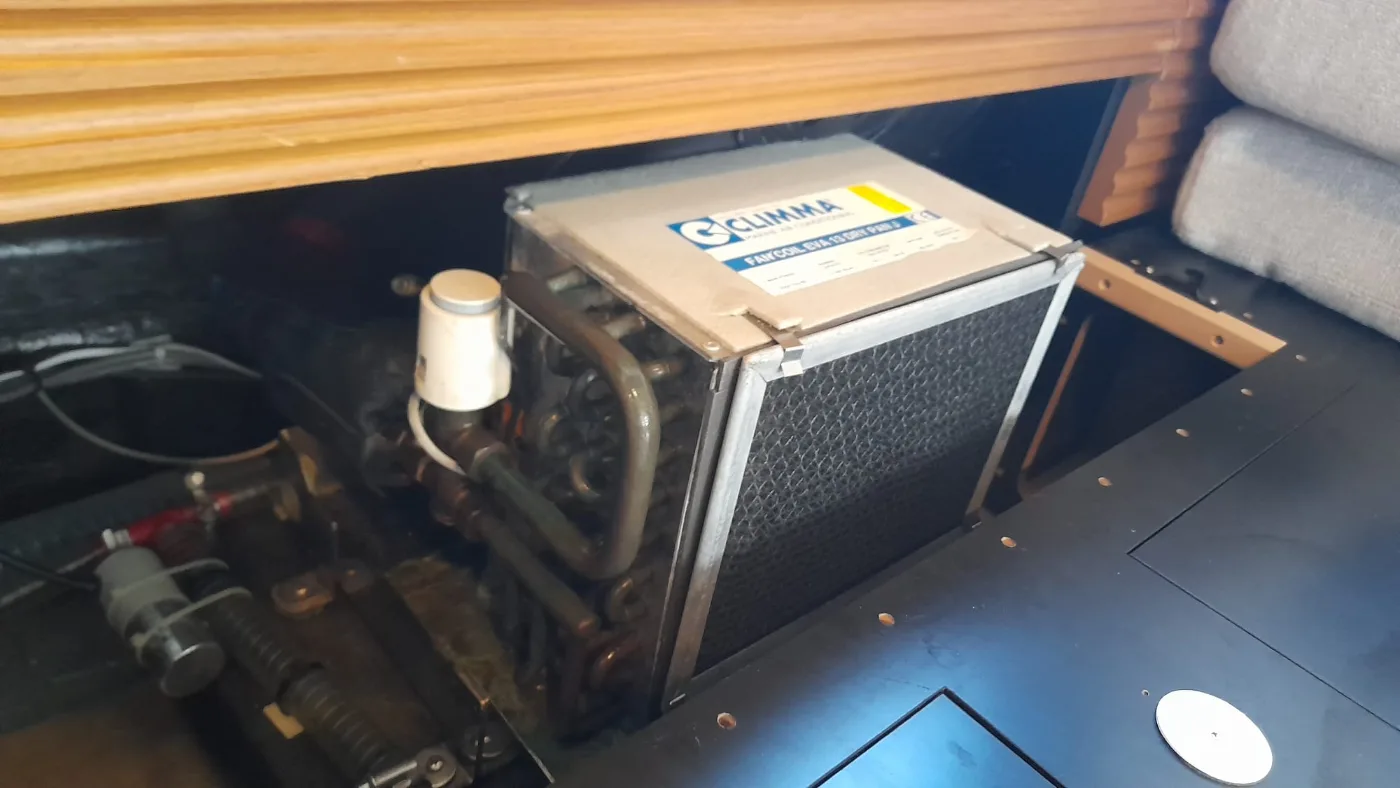
On this yacht the air conditioning units sit under the joinery, behind removable panels. Until those panels come off, nobody knows what the coil actually looks like.
Each unit was uncovered in turn. The filter, the coil and the condensate tray were inspected and cleaned, and the flexible ducts around the unit were checked at the same time. A coil that is clogged with dust moves less air, works harder and stays damp for longer after the compressor stops — which is where the smell of an air conditioning system usually starts.
The panels were refitted as they were found. The cabins were left ready for use the same day.
The deck spa pool was refilled and measured
A spa pool on deck is warm, aerated and used by guests. It gets its own check rather than being lumped in with the rest of the water system.
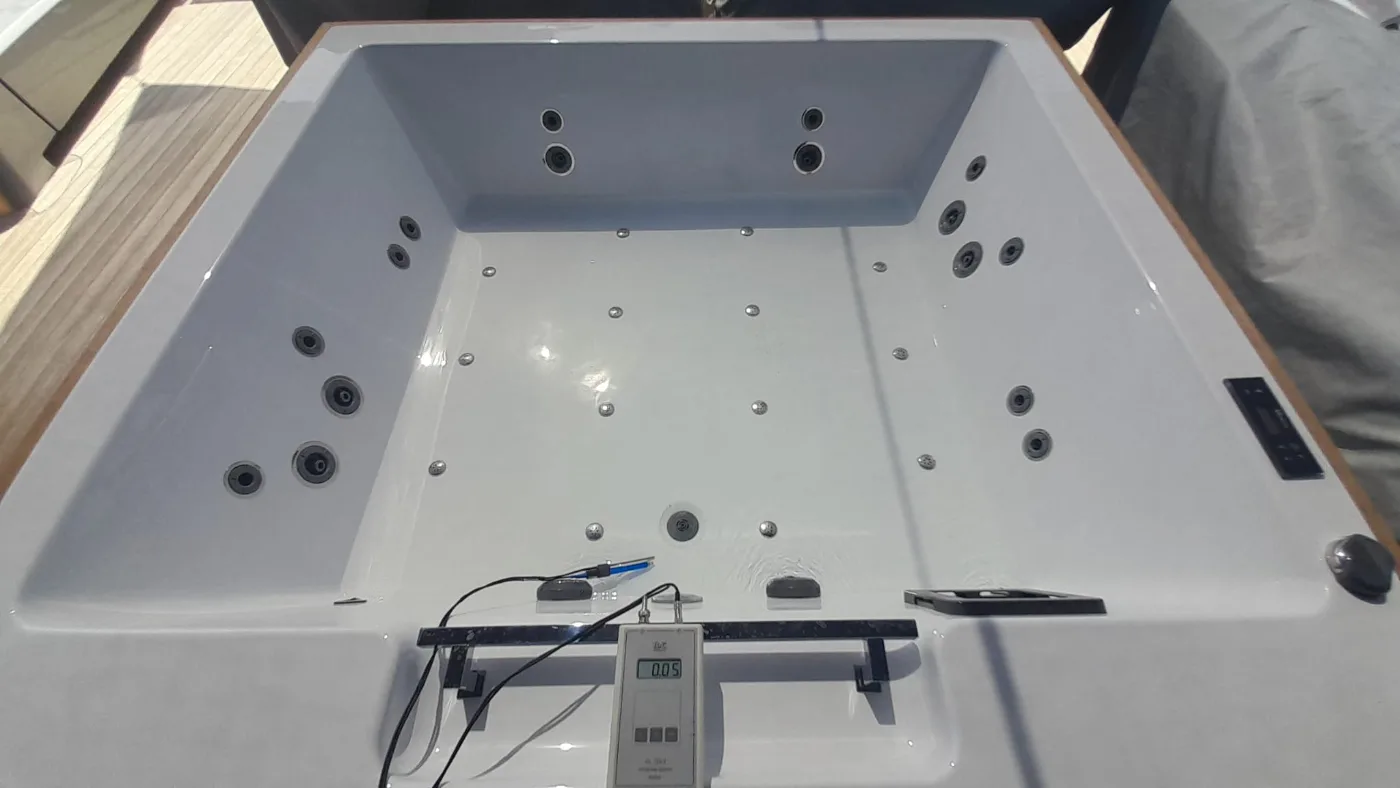
Once the pool had been drained, cleaned and refilled from the treated system, a hand-held analyser was set on the rim and the water was read directly. The reading is taken in front of the crew, so whoever signs for the yacht sees the number rather than being told about it.
The same logic applies to the rest of the boat: a job is finished when it has been measured, not when the equipment is back in the van.
What is actually on the coil
Dust, salt and skin cells settle on a wet coil and stay there. The unit keeps running, the cabin keeps cooling, and the only sign anything is wrong is a smell in the first minutes after start-up and a fan that seems noisier than it used to be.
Cleaning the filter helps, but the filter is not where the deposit sits. The coil behind it is, and reaching it means opening the unit.
This video shows general air conditioning cleaning work, not a recording of this job.
The services behind this job

Fan coil cleaning
Units opened, coils and filters cleaned, condensate trays checked — cabin by cabin.
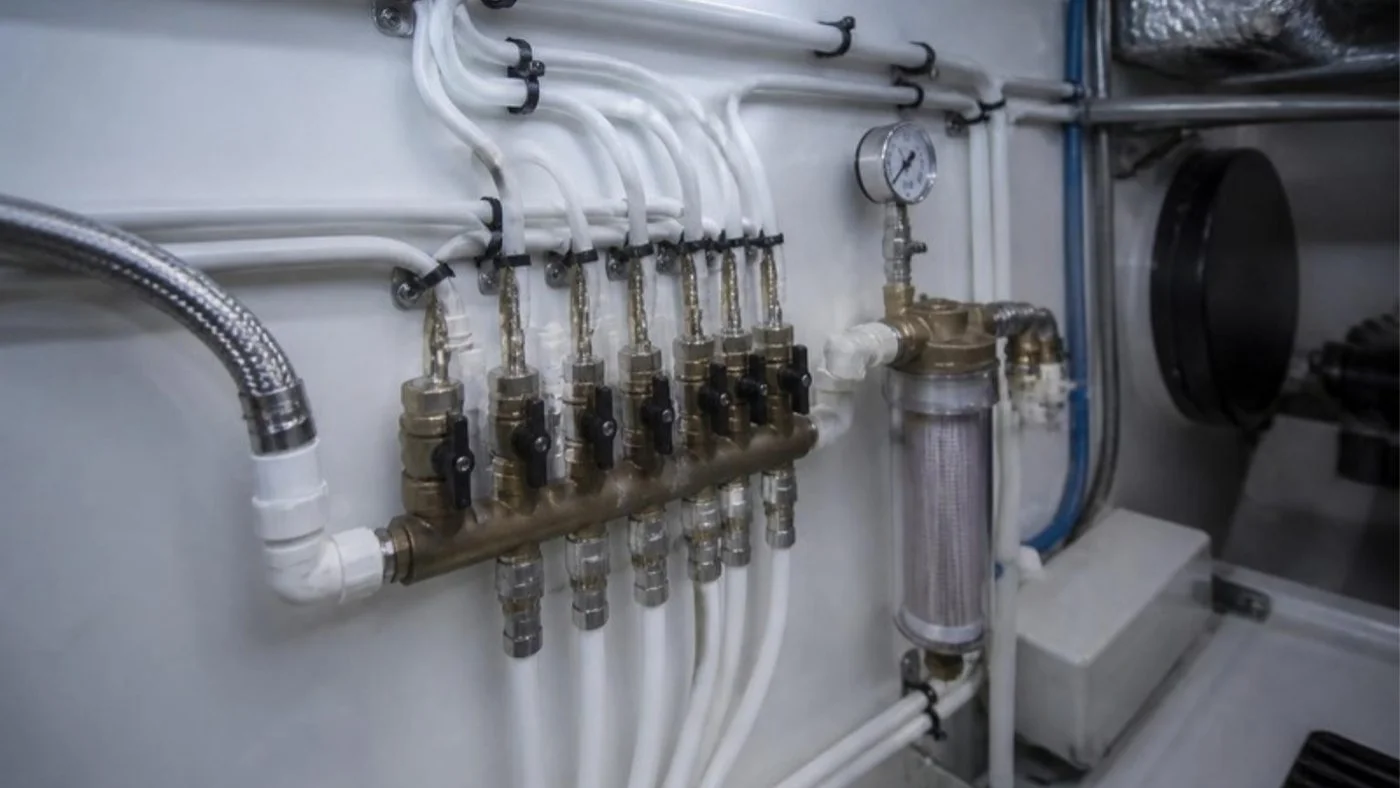
Water system sanitization
Tanks, lines and outlets treated as one network, then checked.
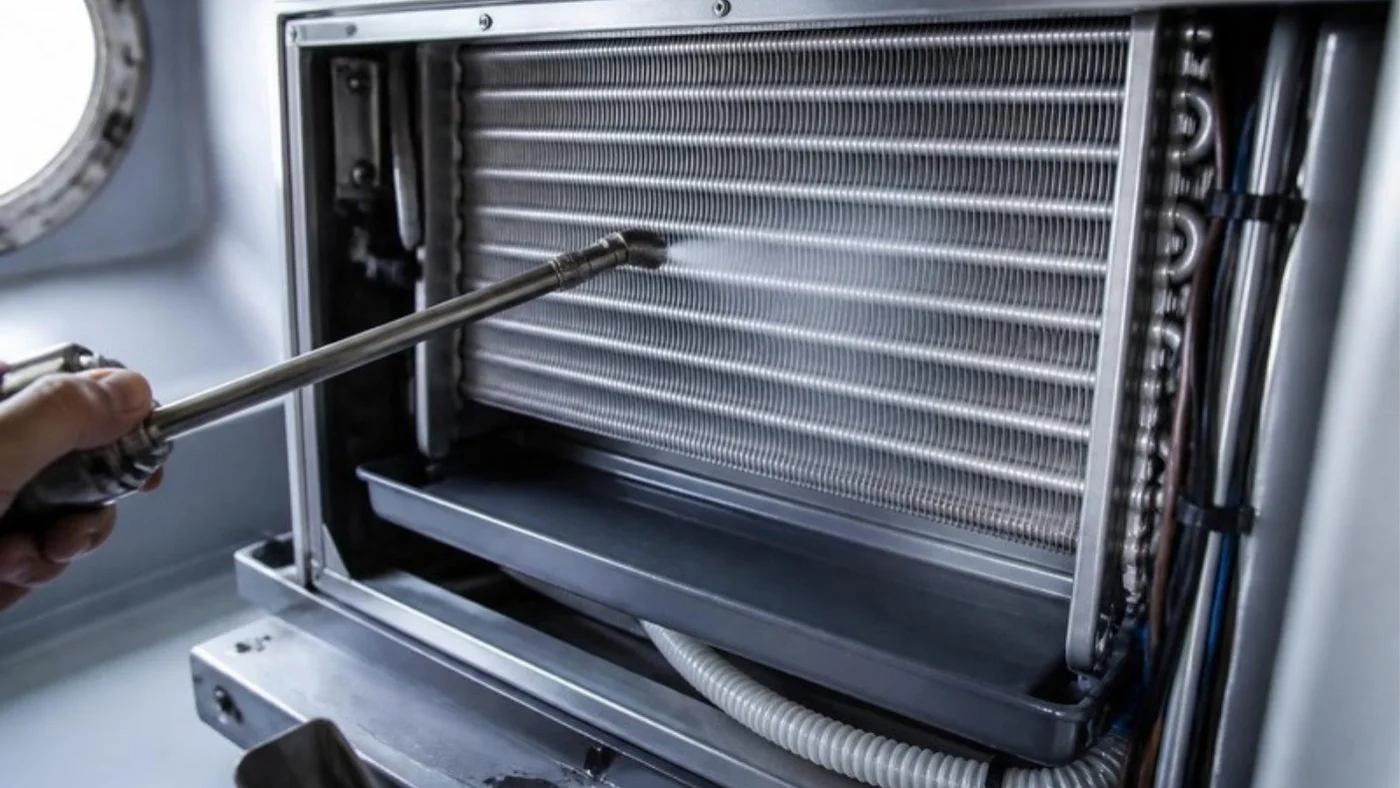
Air conditioning sanitization
For when the smell comes back every time the system is switched on.
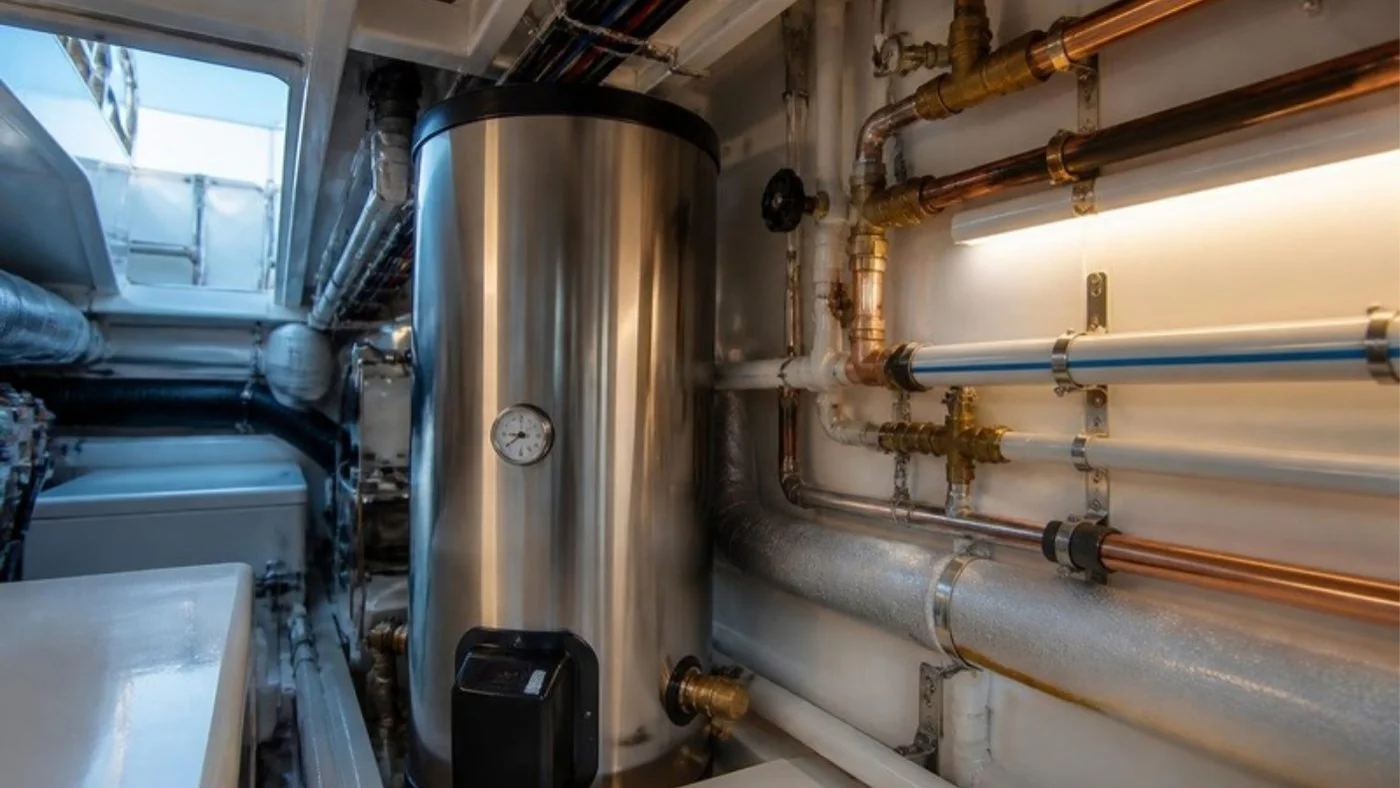
The other case study
Legionella on a shipyard water system: survey, sampling, ozone treatment and verification.
Water and air in the same stop?
Tell us the yacht, what the crew has noticed and where she is now: a technician calls you back within 24 hours and plans both sides around your programme.
Book an onboard survey
The more you tell us (yacht length, marina, systems, symptoms), the better we prepare the survey.
"*" indicates required fields
Where we work
Italian Riviera and Tuscany marinas and yards — Viareggio, La Spezia, Portofino, Genoa, Sanremo, Livorno, Argentario — and other Mediterranean ports on request.
Documented work
Every job ends with a technical report and photos for the yacht’s records.