
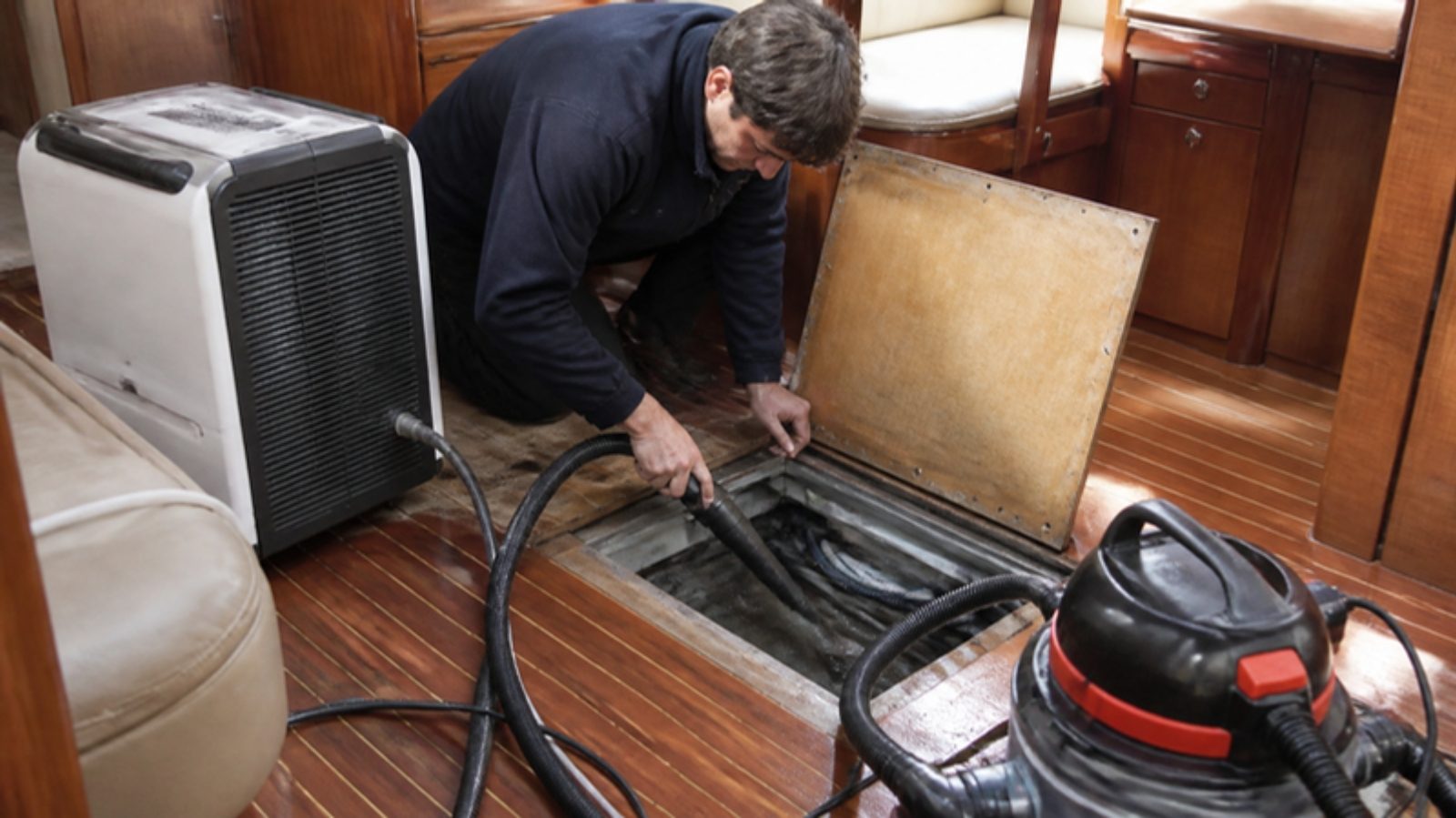
After a burst pipe or a flood on board: what to dry, clean and throw away
Speed matters after water gets into a yacht interior. Here is what CDC and EPA advise for homes, and how we read it for a boat.
When a pipe bursts or water gets below the floor, mould can start quickly. We found no guide written for yacht interiors, so this page uses CDC and EPA advice for homes and says clearly where it is our own reading.
Why speed matters
A leaking pipe, a failed hose or a flooded bilge can wet carpets, panels, headlinings and insulation. Wet materials that stay wet start to grow mould and to smell.
The guides we use are for houses, not boats. Materials on a yacht are different, and contaminated water such as bilge or sewage water is a special case. Our notes say which is which. For anything serious, ask a surveyor.
What CDC and EPA say
CDC, for homes, says to dry the home and everything in it as quickly as you can, within 24 to 48 hours if you can. It says to throw away anything wet with flood water that cannot be cleaned and dried completely in that time.
EPA says absorbent or porous materials, such as ceiling tiles and carpet, may have to be thrown away if they become moldy. It says to scrub mould off hard surfaces with detergent and water and to dry completely, and to fix leaks as soon as possible.
The key points from CDC and EPA
Both guides are written for homes, not for yachts.
Had a leak or a flood?
Tell us what happened. We will suggest what to do first.
The points to remember
Stop the water first. Shut the source and remove standing water.
Dry fast. Open lockers, lift floor panels, and use air movement and dehumidifiers. CDC says not to use fans once mould has started to grow, because fans may spread it.
Decide what to throw away. Following CDC, anything that cannot be cleaned and dried in the time above should go. On a yacht this often means carpet backing, soft furnishings and some insulation. A surveyor can advise on panels and structure.
What to dry and what to throw away
For hard surfaces, CDC and EPA advise cleaning with water and detergent, removing all visible mould, and drying right away. CDC also warns never to mix bleach with ammonia, because it makes toxic vapours.
CDC says to wear at least an N95 respirator, goggles and protective gloves before entering mouldy areas. Good air flow and a clear way out matter in a small space like a yacht locker.
Water that came from the bilge or from sewage is different. We did not find a source on these for yachts, so we treat them with extra care and advise a professional clean.
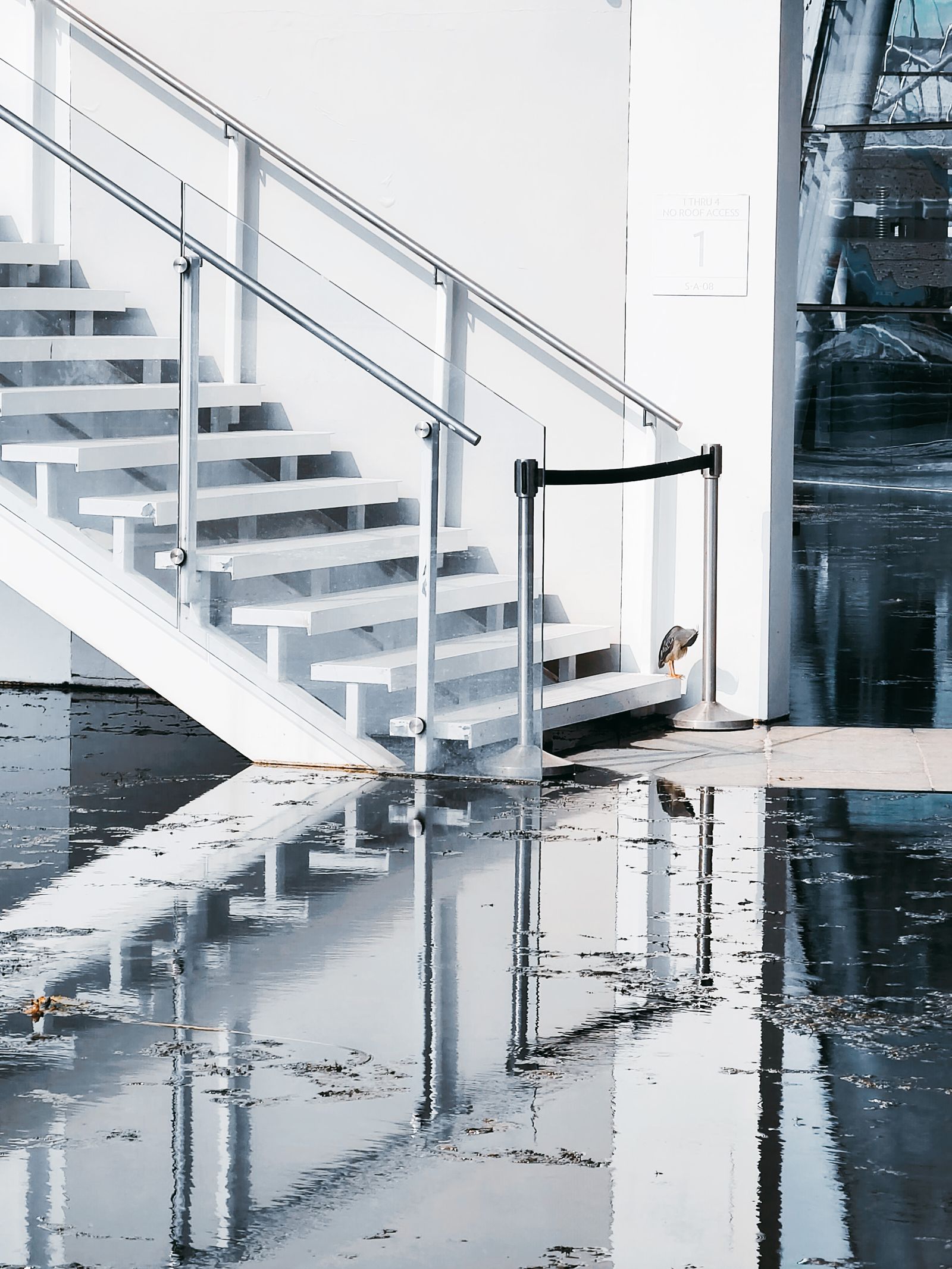

The first two days decide the outcome. After that, the cost of the clean-up goes up.
Francesco Colombo
CEO · AirBio Marine, a division of AirBio (Ekonore S.r.l.)
Book a water damage cleanVerified reviews on Trustpilot
Cleaning and safety
Take photos and notes for your insurer as soon as it is safe to do so. Then remove the wet material and dry the space, and check again after a few days. If a smell or a stain returns, moisture is still there.
Related pages: mould on a yacht and condensation in cabins.
How we clean after water damage, step by step
Five steps. We report what we find and what we could not reach.
Find and note
We find wet areas and record them with photos.
Remove what cannot be saved
Wet soft items and materials that cannot be dried are taken out.
Dry
We help you dry the space and check it again.
Clean and sanitize
Hard surfaces are cleaned, then sanitized.
Report
You get photos and a list of anything that needs repair.
If something is still damp after a week, it is not fixed. Look for the source again.
Francesco Colombo
CEO · AirBio Marine, a division of AirBio (Ekonore S.r.l.)
Speak to our teamA simple routine
Watch for a musty smell that returns, dark spots on a headlining or in a corner, panels that feel soft or damp, peeling paint, and condensation on the same spot every morning.
Warning signs
Keep photos, dates and receipts. Note what was thrown away and why. Write down when the space was checked dry.
Questions
How fast must I dry things?
CDC, for homes, says within 24 to 48 hours if you can. Throw away what cannot be cleaned and dried in that time.
Can I use fans?
CDC says fans help after water is removed but before mould appears. It says not to use fans if mould has already started to grow, because they may spread it.
What should I wear?
CDC says at least an N95 respirator, goggles and protective gloves before entering mouldy areas.
Can I use bleach?
CDC warns never to mix bleach with ammonia. For hard surfaces, CDC and EPA advise detergent and water and drying right away.
Do these guides apply to yachts?
They are written for homes. We use them as the best sources we found and say so.
Can AirBio Marine help?
Yes. We inspect, clean and sanitize after water damage and give you a photo report.
References
- CDC — Homeowner's and renter's guide to mold cleanup after disasters. For homes.
- US EPA — Mold cleanup in your home. For homes.
Water got into the interior?
We inspect, clean and sanitize, and show you the photos.
Speak to a marine technicianRelated on AirBio Marine
Ready to clean after water damage?
Inspection, cleaning and a photo report, at the berth.
Verified reviews on Trustpilot
Tell us about the yacht
Yacht length, marina, systems and what you have noticed on board. A technician reads the message and calls you back to plan the survey.
"*" indicates required fields
Where we work
Italian Riviera and Tuscany marinas and yards — Viareggio, La Spezia, Portofino, Genoa, Sanremo, Livorno, Argentario — and other Mediterranean ports on request.
Documented work
Every job ends with a technical report and photos for the yacht's records.