
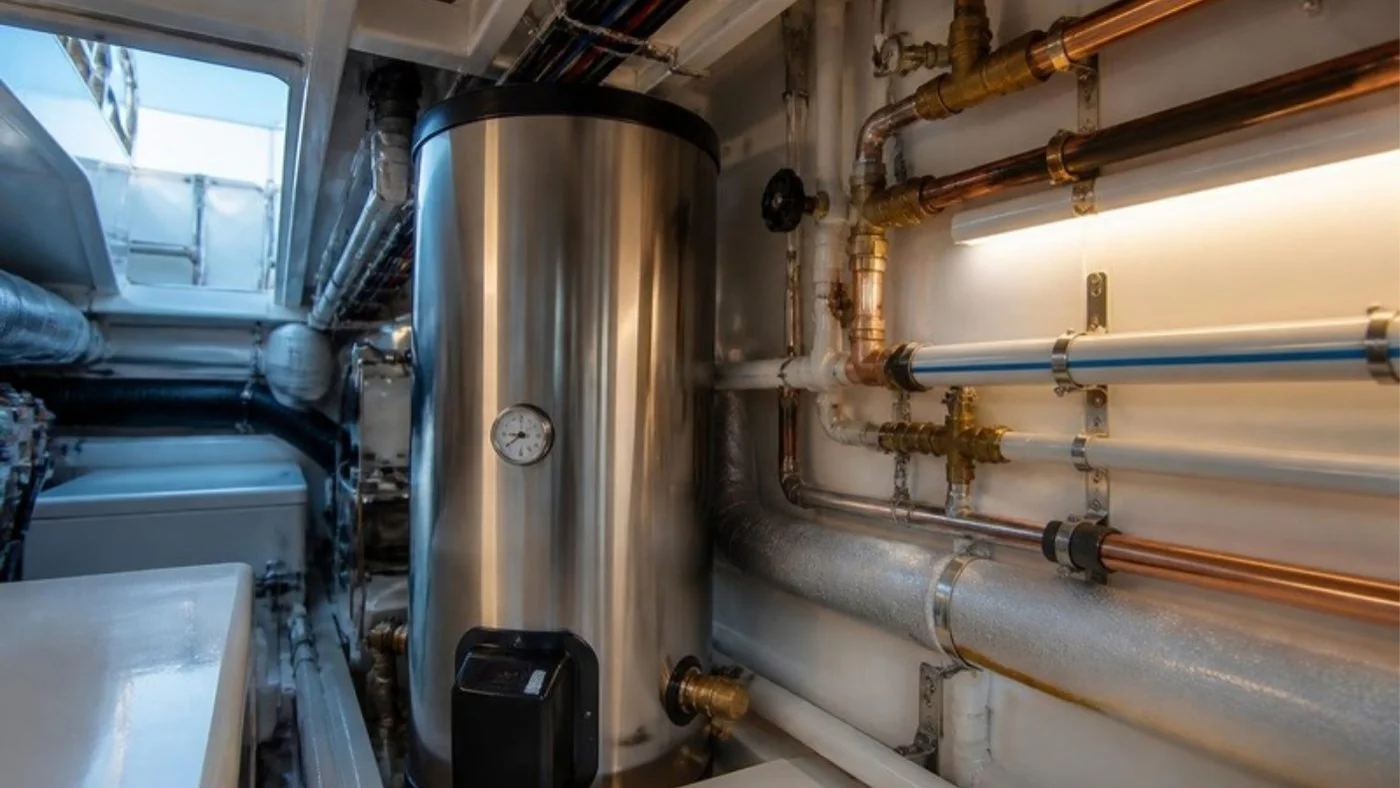
Legionella Treatment on a Shipyard Water System
A yacht builder in Massa, Tuscany, with a large water network and many branches that were rarely used.
The yard needed to know whether Legionella was present in its water system and, if so, to have it dealt with across the whole network — not just at the tank. We surveyed the system, sampled it, treated it with ozone at high concentration and sampled it again to check the result.
The job in four lines
Client
A shipyard in Massa, Tuscany, that builds luxury yachts.
System
The yard’s fresh water network: storage, distribution and a large number of outlets.
Treatment
Ozone (O₃) at high concentration, distributed across the whole network.
Verification
Water sampled before and after, analysed by an accredited laboratory.
A big network with parts nobody used
A shipyard is not a house. The water system serves sheds, offices, changing rooms and boats under construction, so it has many outlets and long runs of pipe.
Some of those branches are used every day. Others are opened once a month, or less. Water that sits still in a warm pipe is the condition bacteria like best, and Legionella pneumophila is one of the bacteria that can establish itself there. Temperature swings along the network make it easier still: parts of the system sit in the range where the bacterium grows rather than dies.
The yard could not tell from the tap whether that was happening. Water that looks clear and smells of nothing can still carry a load that only a laboratory will find. That is why the first step was measuring, not treating.
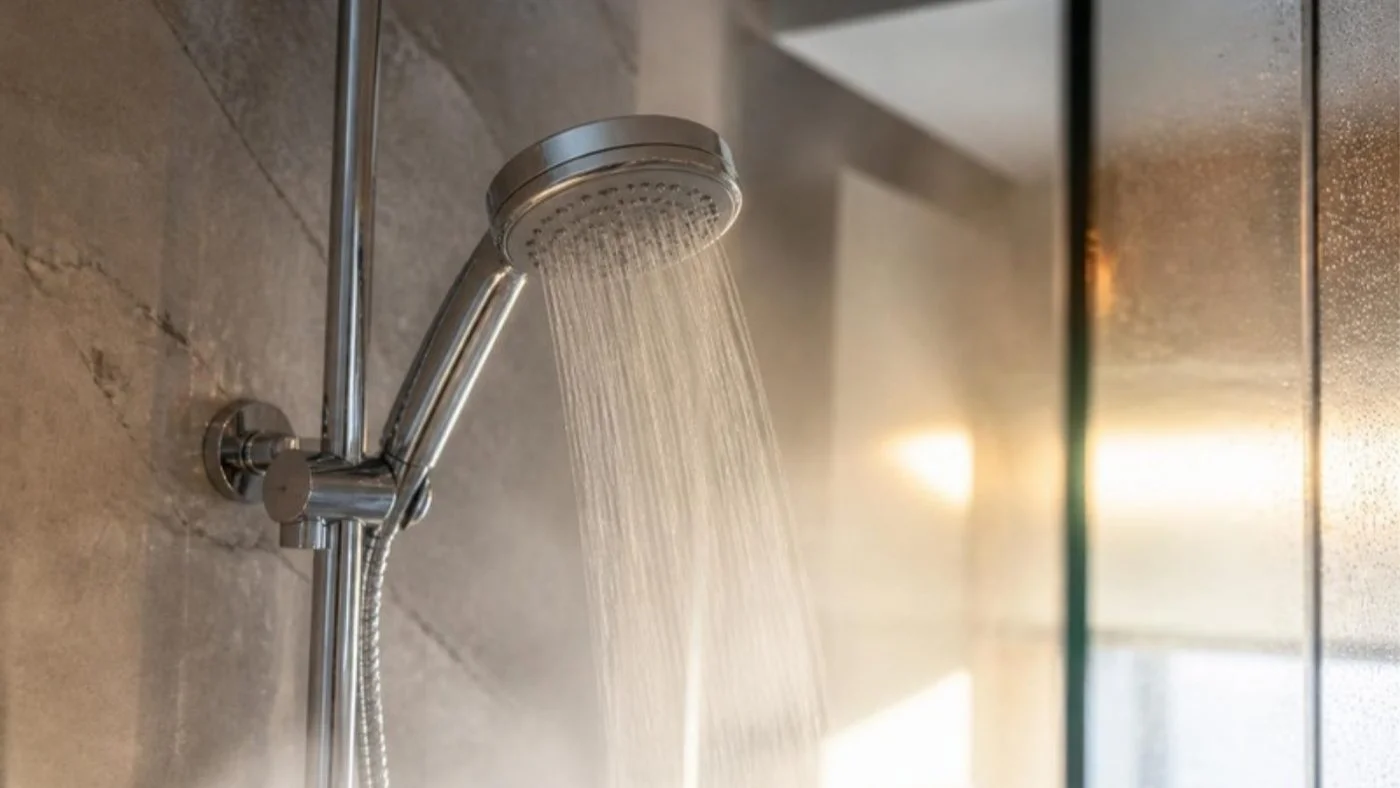
Six steps, in this order
Nothing here is optional. Skip the survey and you sample the wrong points; skip the second round of samples and you have no proof the work landed.
Technical survey
We walked the network with the yard: where water is stored, how it is heated, which outlets are in daily use and which are almost never opened.
Critical points identified
The survey produced a written list of the points that matter — dead legs, low-flow branches, the hot water side — so sampling would not be random.
Sampling and laboratory analysis
Water was collected at those points and sent to an accredited laboratory, alongside chemical and physical readings taken on site.
Ozone treatment at high concentration
The system was treated with ozone dissolved in water at high concentration. Ozone reverts to oxygen, so nothing is left in the pipes to rinse out afterwards.
Distributed across the whole network
The treatment was pushed through the entire system, branch by branch, so the rarely used runs were reached and not just the main line.
Verification sampling
The same points were sampled again after the work and analysed by the same laboratory. That report is what closed the job.
Why stagnant branches are the weak point
Legionella does not arrive from outside and settle everywhere at once. It grows where water sits still at a temperature it likes, most often inside a film on the pipe wall that ordinary flushing does not remove.
That is why treating only the tank rarely works: the tank gets clean, the branch that feeds a rarely used sink does not, and within weeks the network is back where it started. The treatment has to travel the same path the water travels.
This video is general information about Legionella in water systems, not a recording of this job.
A treated system and a document to prove it
The follow-up samples, taken at the same points and analysed by the same accredited laboratory, confirmed the network had been remediated.
Network remediated
The treatment reached the whole system, including the branches that are opened rarely, not only the main distribution line.
Written evidence
Before and after reports from an accredited laboratory, with the sampling points listed, so the same checks can be repeated later.
Nothing left in the pipes
Ozone breaks down into oxygen. There is no chemical residue to flush and no taste or smell carried over into the water.
“Personale molto efficiente, professionali, esperti nella risoluzione della Legionella.”
Five-star review left by the client on Trustpilot. In English: efficient staff, professional, expert at resolving Legionella.
Legionella on a water system: frequently asked questions
Why treat the whole network instead of just the tank?
Because the bacteria rarely sit only in the tank. They establish themselves in the film on the pipe wall, above all in branches that are opened rarely and where water stays still and lukewarm. Treating the tank alone leaves those branches untouched, so the network is back where it started within weeks.
Why ozone and not chlorine?
Ozone breaks down into oxygen once it has worked, so nothing has to be flushed out of the pipes afterwards and no taste or smell is carried over into the water. Chlorine leaves a residue that has to be rinsed and can react with the materials in some systems. The choice is made case by case, after the survey.
How do you know the treatment worked?
By sampling the same points again after the work and sending them to the same accredited laboratory. Without that second round of samples there is no evidence, only a claim.
Does the yard have to stop working during the treatment?
Only the parts of the water system being treated are out of use, and for a limited window. The sequence is planned around the yard so the interruption falls where it costs least.
Does this apply to a yacht as well as a shipyard?
The method is the same — survey, sample, treat the whole network, sample again. What changes is the scale and the layout: on board there are fewer outlets but tighter spaces, a calorifier and often a deck spa pool that needs its own check.
Where this comes from
Nothing here is our own invention. These are the public references behind the way we survey, sample and treat a water system. We say plainly which one is law, which is guidance and which is a laboratory method, because they are not the same thing and they do not all apply to every vessel.
WHO — Guide to Ship Sanitation, 3rd edition (2011)
The World Health Organization reference for water, air and food hygiene on board vessels. It is guidance, not law, and it is what most port health authorities work from.
ECDC — Legionnaires’ disease: facts
The European Centre for Disease Prevention and Control on how the bacterium behaves and which man-made water systems it multiplies in.
Directive (EU) 2020/2184 on the quality of water intended for human consumption
EU law setting quality standards for drinking water and introducing risk assessment of domestic distribution systems. It governs the water supplied ashore; whether and how it applies on a private vessel depends on flag and port state rules.
ISO 11731:2017 — Water quality: enumeration of Legionella
The laboratory method used to count Legionella in a water sample. Worth asking which method a laboratory used before comparing two reports.
The services behind this job
Legionella testing
A sampling plan written for your yacht, accredited lab analysis and results explained in plain language.
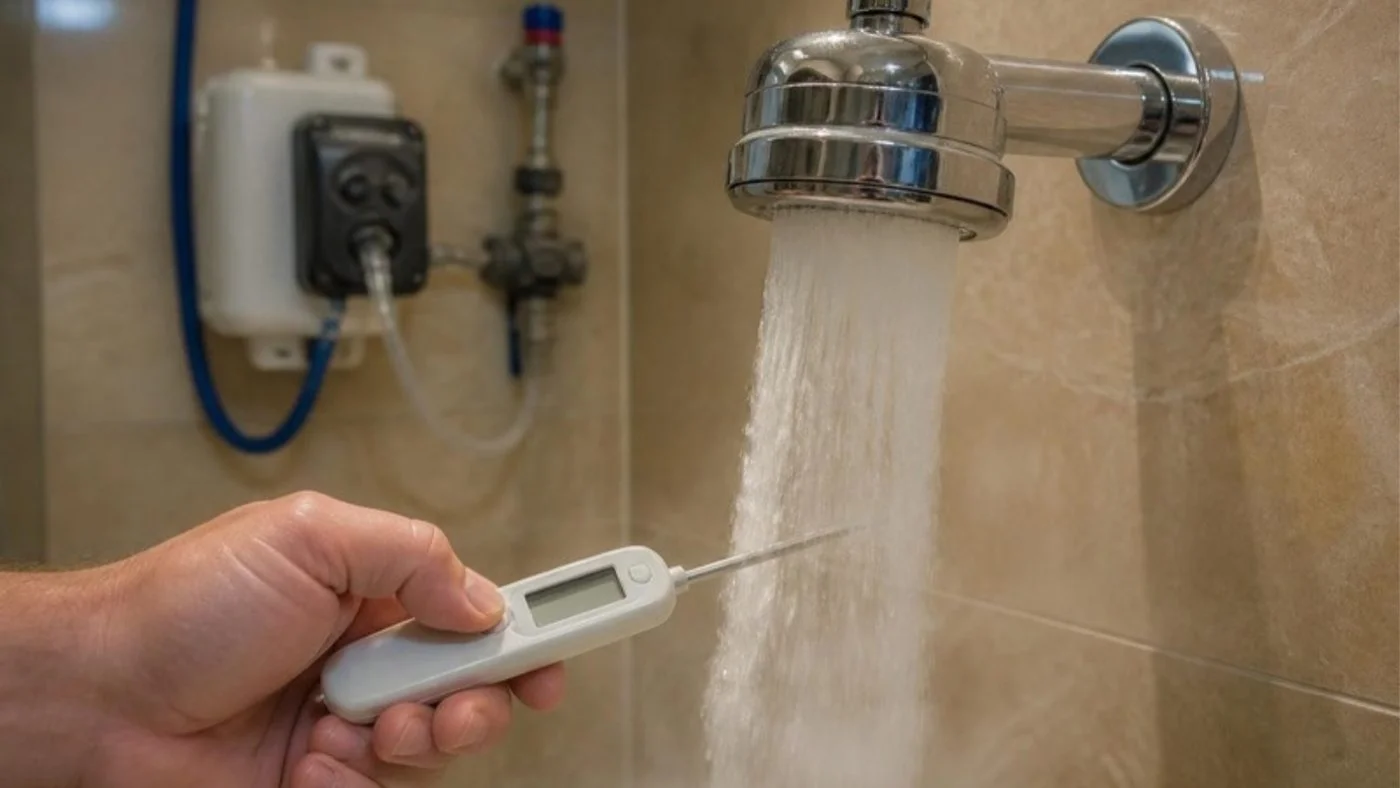
Legionella remediation
What happens when a sample comes back positive: treatment across the whole network, then verification.
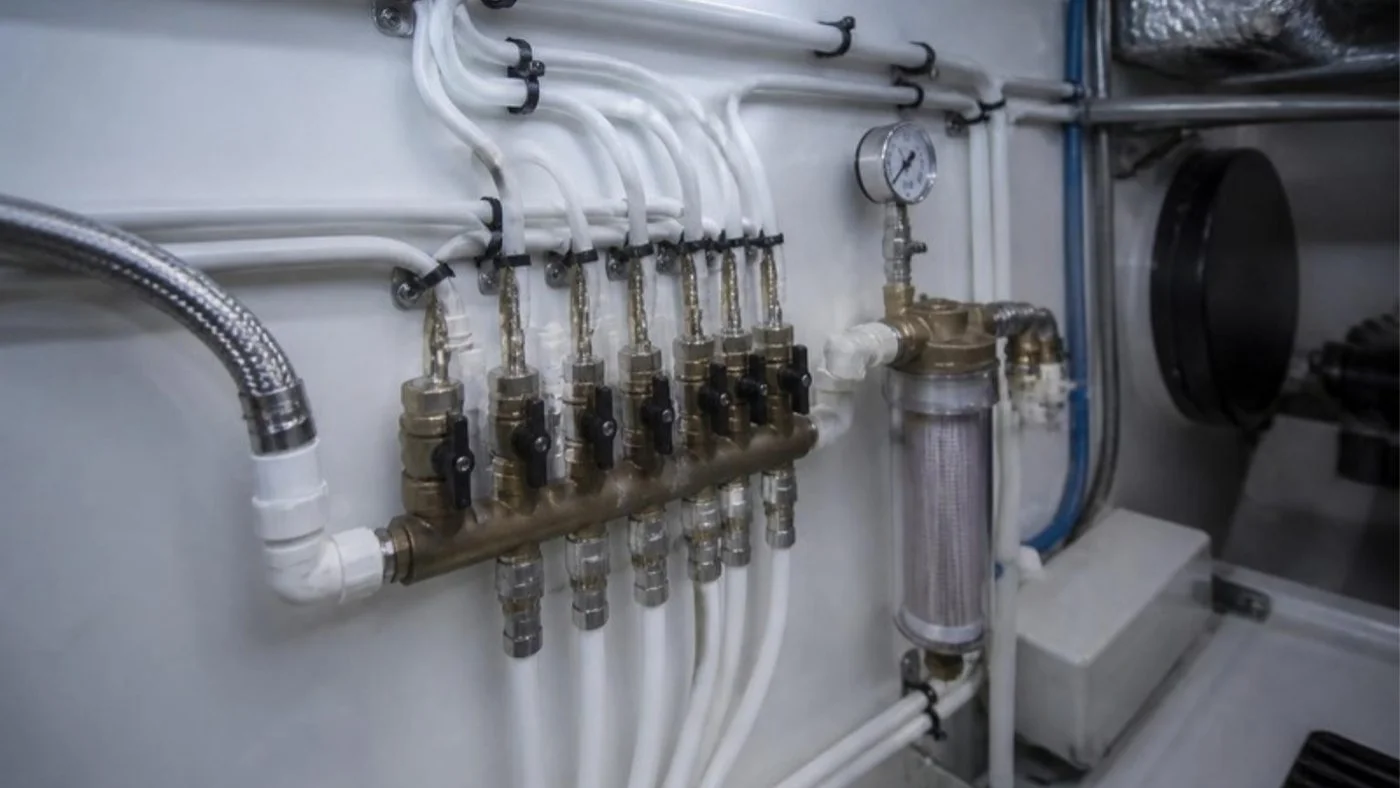
Water system sanitization
Routine treatment of tanks, lines and outlets, planned around the yacht’s programme.
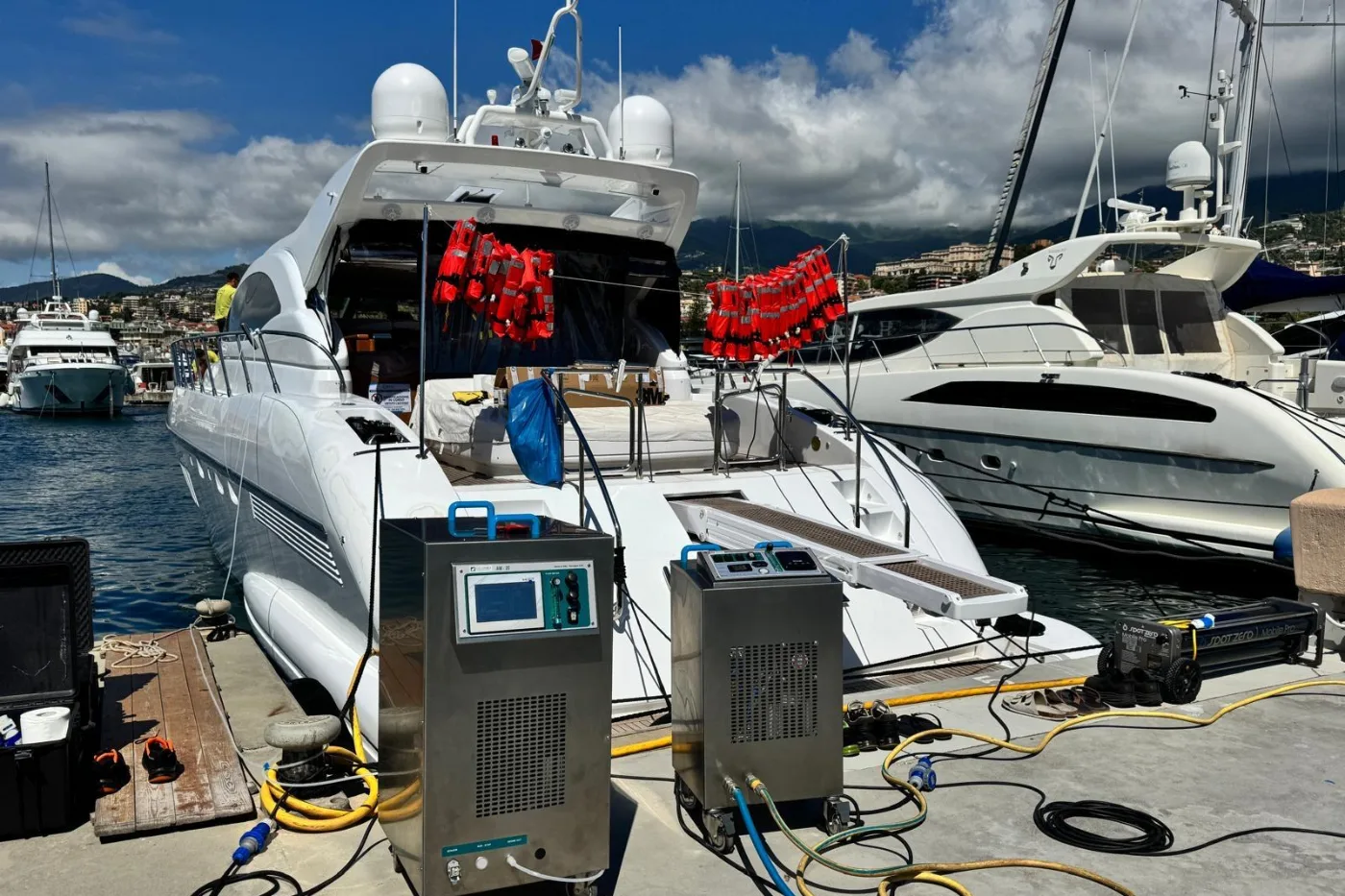
The other case study
Water system and air conditioning treated on a motor yacht during the same stop.
Do you know what is in your water system?
Tell us the yacht or the yard, what you have noticed and where she is now: a technician calls you back within 24 hours.
Book an onboard survey
The more you tell us (yacht length, marina, systems, symptoms), the better we prepare the survey.
"*" indicates required fields
Where we work
Italian Riviera and Tuscany marinas and yards — Viareggio, La Spezia, Portofino, Genoa, Sanremo, Livorno, Argentario — and other Mediterranean ports on request.
Documented work
Every job ends with a technical report and photos for the yacht’s records.