
HACCP on a yacht: food safety from the galley to the table
HACCP is a way to find where food can go wrong and to control those points. Here are its seven principles in plain words.
HACCP sounds technical, but the idea is simple: find the points where food can become unsafe, control them, and write it down. This guide follows the WHO Guide to Ship Sanitation.
What HACCP means
HACCP stands for Hazard Analysis and Critical Control Points. It is a system used in the food industry. Instead of only checking the finished dish, you look at every step: buying, storing, preparing, cooking, serving and cleaning.
Whether a yacht must have a formal HACCP plan depends on its flag, its use and any charter rules. We do not decide that here. This page explains the system, so you can talk about it with your surveyor or flag authority.
What the WHO guide says
The WHO Guide to Ship Sanitation describes HACCP for ships. It starts with preparation steps: put a team together, describe the food, say how it will be used, draw a flow diagram of the process, and confirm the diagram on site.
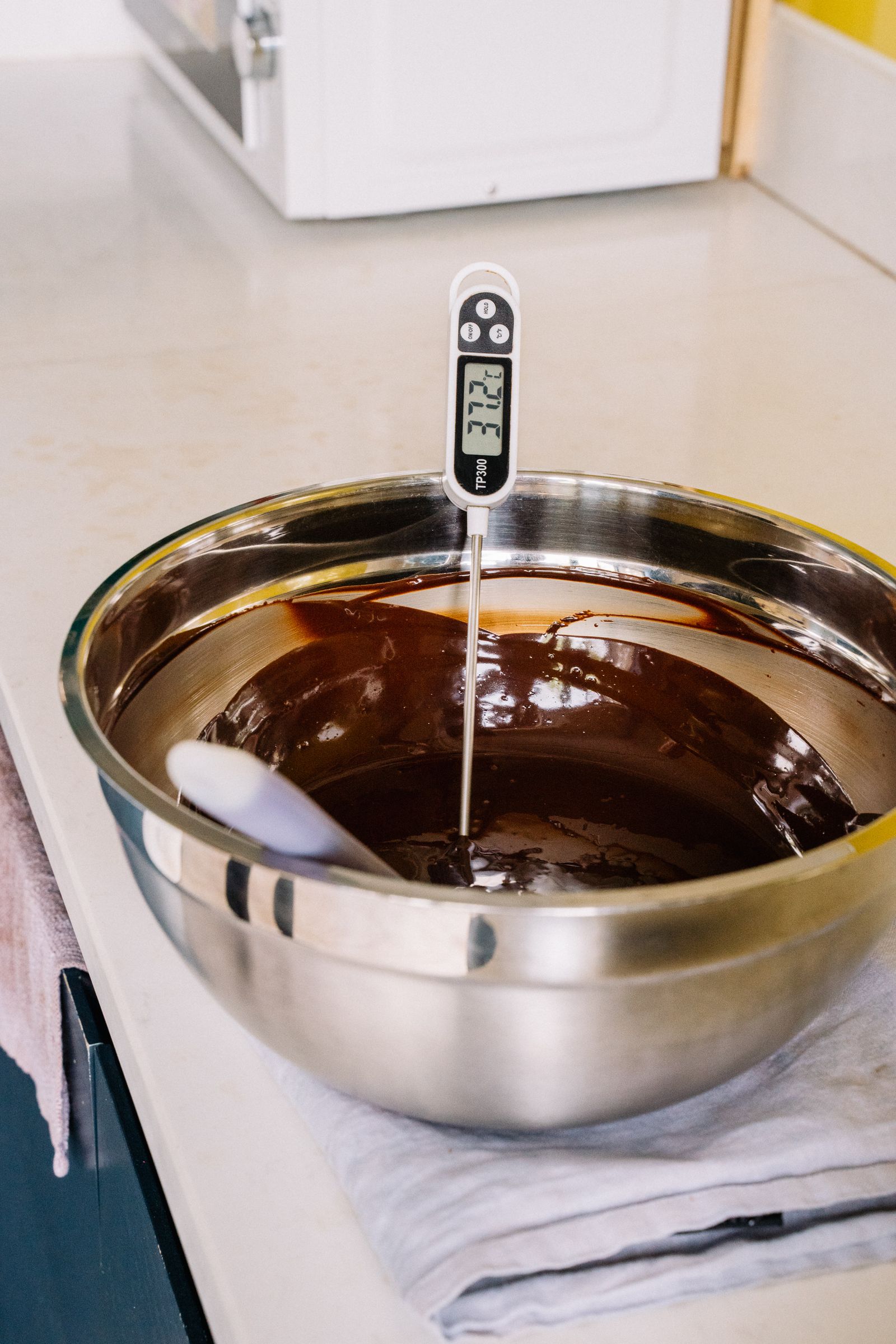
Then it lists seven principles. It also says ship operators must have systems to control temperature, with devices checked at regular intervals and tested for accuracy.
The key points from the WHO guide
From the food chapter of the Guide to Ship Sanitation.
Want the galley checked?
Tell us how the yacht is used. We will suggest a routine.
The seven principles
- Hazard analysis. List what could go wrong and how to control it.
- Critical control points. Decide the steps that must be controlled, such as cooking and cold storage.
- Critical limits. Set the limit for each, for example a temperature and a time.
- Monitoring. Measure at set times and compare with the limit.
- Corrective actions. Decide in advance what you do if a limit is missed.
- Verification. Check by audits and sampling that the system works.
- Records. Write it all down.
These are the WHO guide principles in our own short words.
Where it applies on a yacht
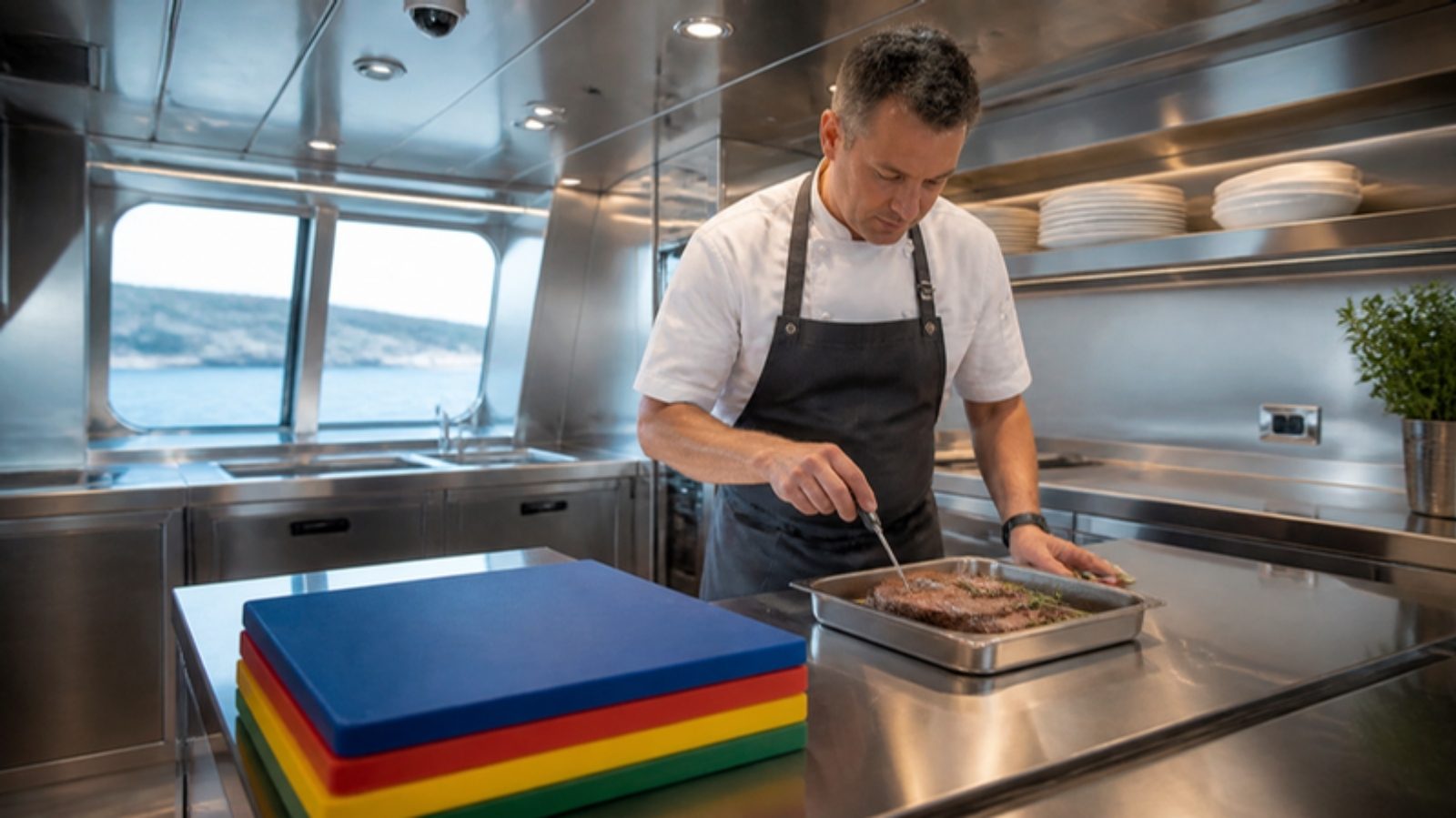
A yacht galley is a small kitchen with a changing crew and guests who may have allergies. The same steps still apply: receiving food, storing it, preparing it, cooking and cooling it, serving it, and cleaning up.
Storage is often the weakest point. See our guide to fridges, cold rooms and the provisions store.
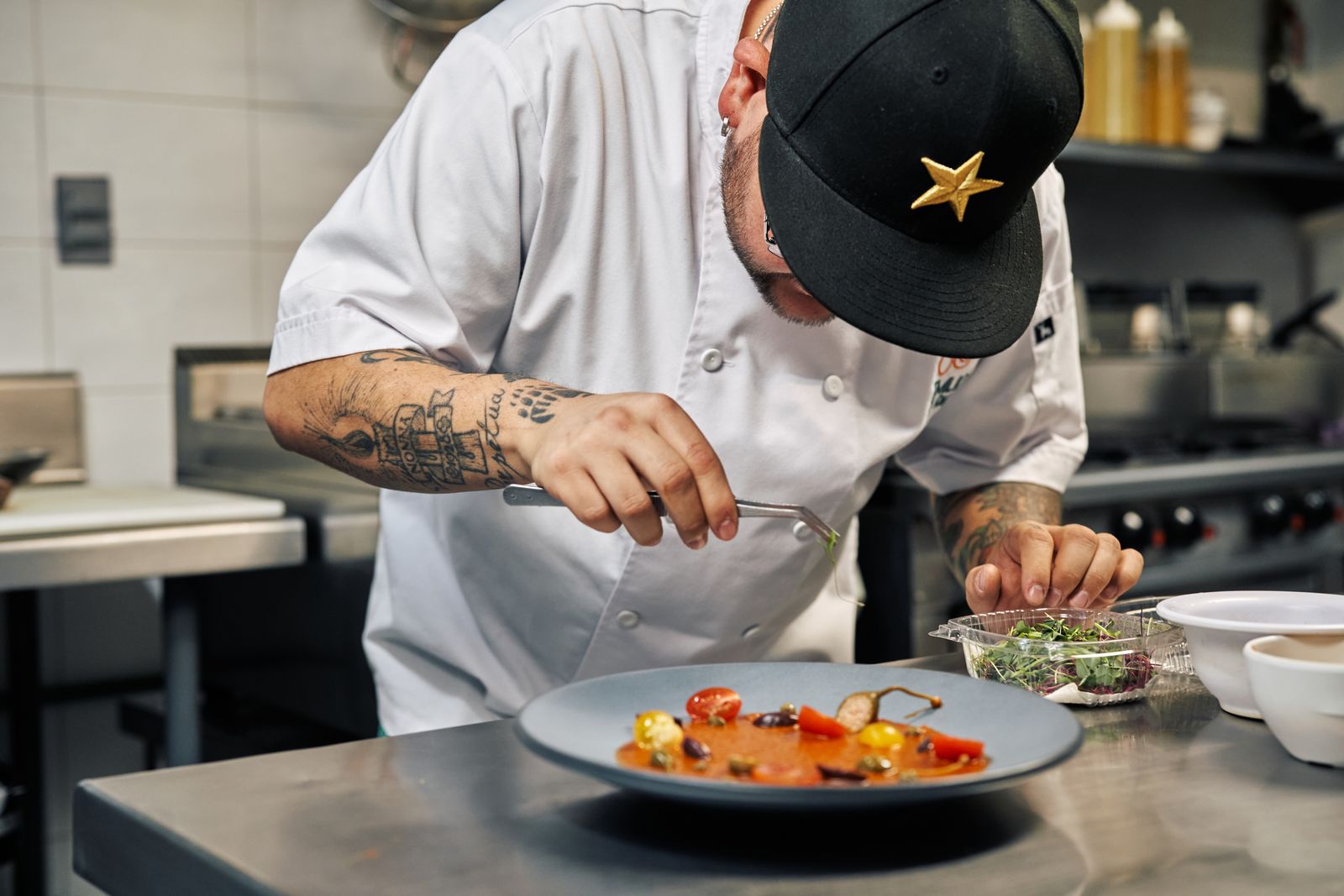

A food safety plan is only as good as its records. If it is not written down, it did not happen.
Francesco Colombo
CEO · AirBio Marine, a division of AirBio (Ekonore S.r.l.)
Book a galley and stores cleanVerified reviews on Trustpilot
How to start
Begin small. Draw the path of one common dish, from the store to the table. Mark where it could be unsafe. Decide how you will control each point, and start a simple log. You can grow the plan later.
A qualified food safety adviser or your flag authority can tell you what your yacht needs. We clean and sanitize; we do not write food safety plans.
How we support your food safety routine, step by step
Five steps. We clean and sanitize; your team keeps the records.
Walk the food path
We look at receiving, storage, prep and serving areas.
Check what can be seen
Surfaces, seals, drains, filters and signs of pests.
Clean and sanitize
Food areas cleaned, then sanitized with suitable products.
List the fixes
We note what needs repair or a new routine.
Report
Photos and a short list of actions for your log.
Start with one dish, one route, one log. Then build from there.
Francesco Colombo
CEO · AirBio Marine, a division of AirBio (Ekonore S.r.l.)
Speak to our teamA simple routine
Watch for missing temperature readings, a thermometer nobody has tested, raw food stored above cooked food, a galley cleaned only when guests are due, and staff who do not know what to do if a fridge fails.
Warning signs
Keep the plan, the logs and the cleaning records together. Update the plan when the menu, the crew or the equipment changes.
Questions
What does HACCP stand for?
Hazard Analysis and Critical Control Points.
How many principles does the WHO guide list?
Seven: hazard analysis, critical control points, critical limits, monitoring, corrective actions, verification and records.
Does every yacht need a HACCP plan?
It depends on the flag, the use of the yacht and any charter rules. Ask your flag authority or surveyor.
Are temperature checks part of it?
Yes. The WHO guide says devices must be checked at regular intervals and tested for accuracy.
Who writes the plan?
A qualified food safety adviser can help. We clean and sanitize; we do not write food safety plans.
Can AirBio Marine clean the galley?
Yes. We clean and sanitize galleys and food stores, and give you a photo report.
References
- World Health Organization — Guide to Ship Sanitation, 3rd edition (2011), chapter 3: Food.
Want the galley checked before the season?
We inspect, clean and sanitize, and show you the photos.
Speak to a marine technicianRelated on AirBio Marine
Ready to clean the galley?
Inspection, cleaning and a photo report, at the berth.
Verified reviews on Trustpilot
Tell us about the yacht
Yacht length, marina, systems and what you have noticed on board. A technician reads the message and calls you back to plan the survey.
"*" indicates required fields
Where we work
Italian Riviera and Tuscany marinas and yards — Viareggio, La Spezia, Portofino, Genoa, Sanremo, Livorno, Argentario — and other Mediterranean ports on request.
Documented work
Every job ends with a technical report and photos for the yacht's records.