
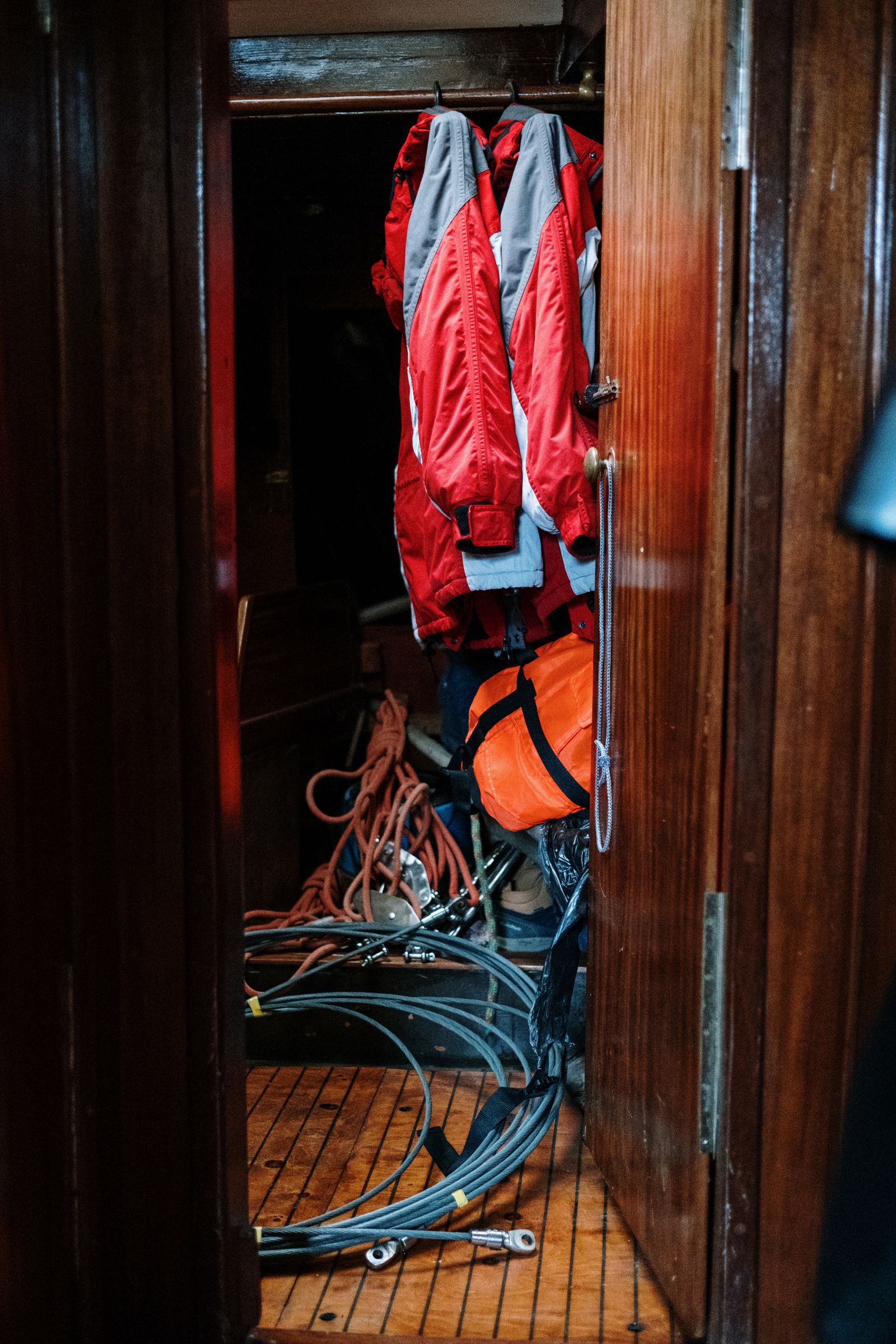
Yacht Crew Cabins: What MCA Guidance Says About Air
Crew cabins are often below deck, small and damp. We read the UK MCA guidance on crew accommodation and explain what it says about air, in plain words.
The MCA guidance on crew accommodation says air systems must be easy to clean and keep air at a satisfactory temperature and humidity. Here is what that means, and what we could not confirm for yachts.
Why crew cabins need attention
Guest cabins are checked before every trip. Crew cabins are lived in all year, often by two people, and they sit low in the hull near the engine room, laundry and galley.
That mix of use and position makes damp and stale air more likely. It is also why mould and smells are often found there first.
What the MCA guidance says
The UK Maritime and Coastguard Agency publishes MGN 481 on crew accommodation under the Maritime Labour Convention 2006. We read it as guidance for UK registered commercial ships.
On ventilation it says that air-conditioning systems must keep the air at a satisfactory temperature and relative humidity, with enough air changes. It adds that systems should allow easy cleaning and disinfection, and that power must be available at all times.
The key points from the MCA guidance
From MCA Marine Guidance Note MGN 481 on crew accommodation.
Book an onboard survey
Photos and a clear list of what needs attention.
The points to remember
Temperature and humidity. The guidance asks for both to be satisfactory, not just temperature.
Air changes. The air in a cabin needs to be renewed. The guidance does not give a number in the part we read.
Cleanable systems. Systems should make cleaning and disinfection easy. A unit that cannot be reached cannot be kept clean.
What we could not confirm. MGN 481 is written for commercial ships. Which rules apply to your yacht depends on its size, use and flag. Ask your flag state or class society.
Why crew cabins have more problems
From our work on yachts, crew cabins often share the same problems: a fan coil that is hard to reach, a drain tray that stays wet, and little drying after laundry. This is our field view, not a finding from the guidance.
Cold surfaces drip when warm, humid air touches them. Our guide to condensation in cabins explains how this starts. Damp walls and lockers are where mould appears: see mould and moisture control on yachts.


Crew cabins deserve the same attention as guest cabins. The crew live there every day.
Francesco Colombo
CEO · AirBio Marine, a division of AirBio (Ekonore S.r.l.)
Book a cabin air checkVerified reviews on Trustpilot
What the guidance does not tell us
The guidance covers the basics of accommodation: heating, ventilation, berths and mess rooms. It is not a hygiene manual, and it does not tell you how often to clean a fan coil.
For general ship hygiene see the WHO Guide to Ship Sanitation. For the legal picture on yachts, see our page on hygiene rules and good practice.

Our method
How we check a crew cabin, step by step
Ask the crew
They know where it smells, drips or feels damp.
Look at the fan coil
Filter, coil, tray and drain.
Check walls and lockers
Behind furniture and inside storage.
Clean what can be cleaned
Surfaces, filters and coils.
Report
Photos and a list of repairs the crew or yard should do.
Ask the crew where it smells. They usually know.
Francesco Colombo
CEO · AirBio Marine, a division of AirBio (Ekonore S.r.l.)
Speak to our teamA simple routine
This is an example. Adjust it to your yacht.
Weekly. Air the cabin, check for damp and wipe cold surfaces.
Monthly. Check the fan coil filter and the drain.
Each season. Inspect fan coils and look behind lockers and furniture.
Warning signs
Call for help if you see one of these:
- A musty smell that returns.
- Black or green spots on walls, ceiling or lockers.
- Water drops on pipes or ceilings.
- A fan coil that drips or whistles.
- Clothes and bedding that feel damp.
Questions
Does the MCA require air conditioning in crew cabins?
In the guidance we read, where air conditioning is fitted it must keep air at a satisfactory temperature and humidity, with enough air changes. We did not confirm what applies to a given yacht.
Does MGN 481 apply to yachts?
It is written for UK registered commercial ships. Yachts have different rules by size, use and flag. Ask your flag state or class society.
Are crew cabins really worse than guest cabins?
We did not find a study that compares them. In our experience crew cabins have more damp and mould problems, because they are used all year and sit low in the hull.
Does the guidance say how often to clean the fan coil?
Not in the part we read. It says systems must be easy to clean. Ask the maker for the interval.
What is the first sign of a problem?
A smell that returns, or damp on a cold surface. Look at the fan coil and the area around it.
Do you inspect crew cabins?
Yes. Tell us when you request a survey and we include them, with photos.
References
- UK MCA — MGN 481 (M+F): Crew accommodation, MLC 2006. Written for UK registered commercial ships.
- WHO — Guide to Ship Sanitation, 3rd edition (2011).
Talk to us before the season
Tell us the yacht, the port and what worries you. We reply with a plan.
Request a surveyRelated on AirBio Marine
Want a second pair of eyes on board?
We inspect, clean where needed and send a photo report.
Verified reviews on Trustpilot
Tell us about the yacht
Yacht length, marina, systems and what you have noticed on board. A technician reads the message and calls you back to plan the survey.
"*" indicates required fields
Where we work
Italian Riviera and Tuscany marinas and yards — Viareggio, La Spezia, Portofino, Genoa, Sanremo, Livorno, Argentario — and other Mediterranean ports on request.
Documented work
Every job ends with a technical report and photos for the yacht's records.