
Air Quality on Ships: What a 2025 Cruise Ship Study Measured
A University of Surrey team measured the air on a cruise ship. We explain what they found in plain words and what it can and cannot tell a yacht.
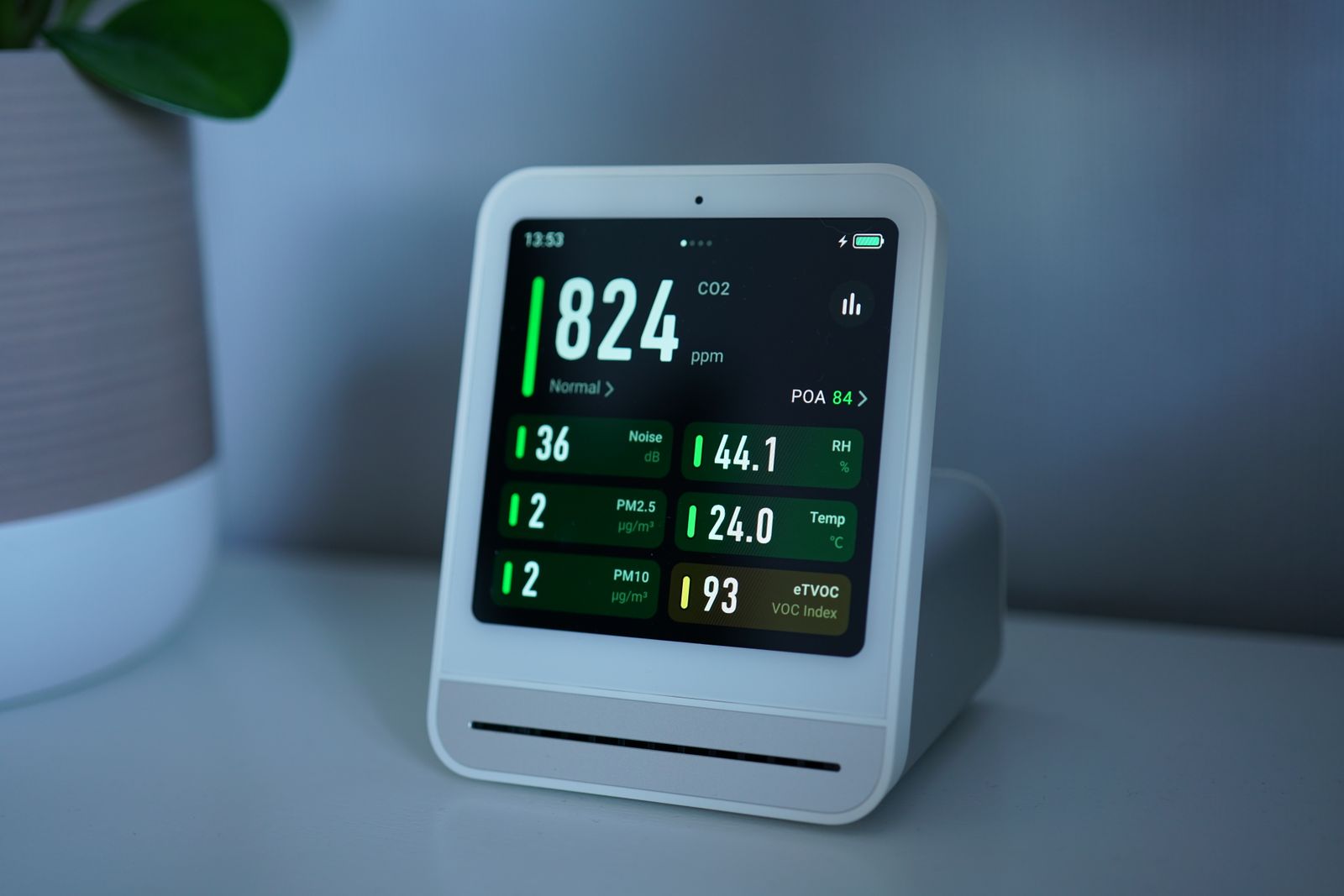
One recent study measured carbon dioxide, temperature and humidity in nine places on a cruise ship. It is not about yachts, but it shows how air can differ from room to room.
Why measure the air on a ship
Air on board is shared between many rooms and moves through ducts and fan coils. If a room feels stuffy, many people think the air conditioning is "too weak". Measuring gives a better answer than guessing.
Carbon dioxide, or CO2, is a simple signal. People breathe it out, so it rises when many people are in a room and little fresh air comes in.
What the study did
The study is by Ho Yin Wickson Cheung and colleagues, including the Global Centre for Clean Air Research at the University of Surrey, and appeared in the journal Population Medicine in 2025. They monitored nine environments on a cruise ship with low-cost CO2 sensors and also recorded temperature and humidity. From these they worked out air change rates and an estimate of infection risk.
The key points from the study
From the published summary of the 2025 Population Medicine paper.
Book an onboard survey
Photos and a clear list of what needs attention.
The points to remember
Most areas were fine. CO2 mainly stayed between 400 and 1200 ppm, which the authors describe as generally satisfactory.
Dining areas were the exception. They recorded CO2 above 2000 ppm, because of many people and limited ventilation.
Cabins and the theatre were highly over-ventilated. The authors say this suggests room to save energy while keeping the air safe.
What we could not confirm. We read the published summary, not the full paper. The numbers above are from that summary.
What it means for a yacht
A yacht is far smaller than a cruise ship, with fewer people and different systems. The numbers do not carry over. The idea does: air quality depends on how many people use a room, how much fresh air arrives and how clean the system is.
Dust on filters and coils slows airflow. See filters, MERV and HEPA and fan coil drain trays.


If a room feels stuffy, look at the system before blaming the weather. Dirty filters and coils are common causes.
Francesco Colombo
CEO · AirBio Marine, a division of AirBio (Ekonore S.r.l.)
Book an air system checkVerified reviews on Trustpilot
What it cannot tell us
The study is about one ship and one time. It did not look at cleaning, mould, or how a particular unit is maintained. It also does not set a legal limit for yachts.
For the wider rules on ship hygiene, the WHO Guide to Ship Sanitation is a general reference for regulators and ship operators. We did not find a yacht-specific CO2 limit.
Our method
How we check the air system on board, step by step
Ask what people notice
Smell, stuffy rooms, damp, dust: we start with what the crew sees.
Inspect the unit
Filters, coil, drain tray and the air path.
Look at the ducts and grilles
Dust, residue and damage.
Clean what can be cleaned
Filters, coils, trays and grilles.
Report
Photos and a clear list of what to do next.
Measuring first saves guesswork.
Francesco Colombo
CEO · AirBio Marine, a division of AirBio (Ekonore S.r.l.)
Speak to our teamA simple routine
This is an example. Adjust it to your yacht.
Monthly. Look at filters and clean or replace them as the maker advises.
Each season. Have the fan coils, coils and drain trays inspected.
After a refit or a long lay-up. Check the system before people live on board again. See cleaning after a refit.
Warning signs
Call for help if you see one of these:
- A room that feels stuffy even when the air conditioning runs.
- A musty smell when the unit starts.
- Water or stains near a fan coil.
- Dust blowing from the grilles.
- Black marks on the ceiling or around vents.
Questions
What is CO2 used for in air quality checks?
CO2 is breathed out by people. When it rises, it shows that little fresh air is coming into a room compared to the number of people in it.
What did the 2025 study find?
On the cruise ship, CO2 mainly stayed between 400 and 1200 ppm. Dining areas went above 2000 ppm. Cabins and the theatre were highly over-ventilated.
Is this study about yachts?
No. It is about a cruise ship. We use it to explain the idea, not to set numbers for a yacht.
Is there a legal CO2 limit for yachts?
We did not find one. Ask your flag state or class society for the rules that apply to your yacht.
Can dirty filters change the air in a room?
Dust on filters and coils can slow the airflow. We cover this in our guide to filters and fan coils.
Do you measure CO2 on board?
We inspect and clean the air system and report what we find. Tell us your concern when you request a survey.
References
- Cheung H.Y.W. et al. — Monitoring of IAQ at a mass-gathering cruise ship to assess ventilation performance and disease transmission risk, Population Medicine, 2025. We read the summary.
- WHO — Guide to Ship Sanitation, 3rd edition (2011).
Talk to us before the season
Tell us the yacht, the port and what worries you. We reply with a plan.
Request a surveyRelated on AirBio Marine
Want a second pair of eyes on board?
We inspect, clean where needed and send a photo report.
Verified reviews on Trustpilot
Tell us about the yacht
Yacht length, marina, systems and what you have noticed on board. A technician reads the message and calls you back to plan the survey.
"*" indicates required fields
Where we work
Italian Riviera and Tuscany marinas and yards — Viareggio, La Spezia, Portofino, Genoa, Sanremo, Livorno, Argentario — and other Mediterranean ports on request.
Documented work
Every job ends with a technical report and photos for the yacht's records.