
Yacht Galley Extraction Ducts: What the Rules Ask For and Why Grease Matters
Grease is fuel, and a galley duct runs through the accommodation. Here is what SOLAS asks for on galley exhaust ducts and what that means for cleaning.
SOLAS regulation II-2/9.7.5.1 requires galley range exhaust ducts that pass through accommodation, service or control spaces to have inspection hatches, a grease trap, fire dampers, a fixed means of extinguishing a fire inside the duct and remote controls. The USCG guideline that explains it sets no cleaning frequency.
Why grease in a duct is a fire risk
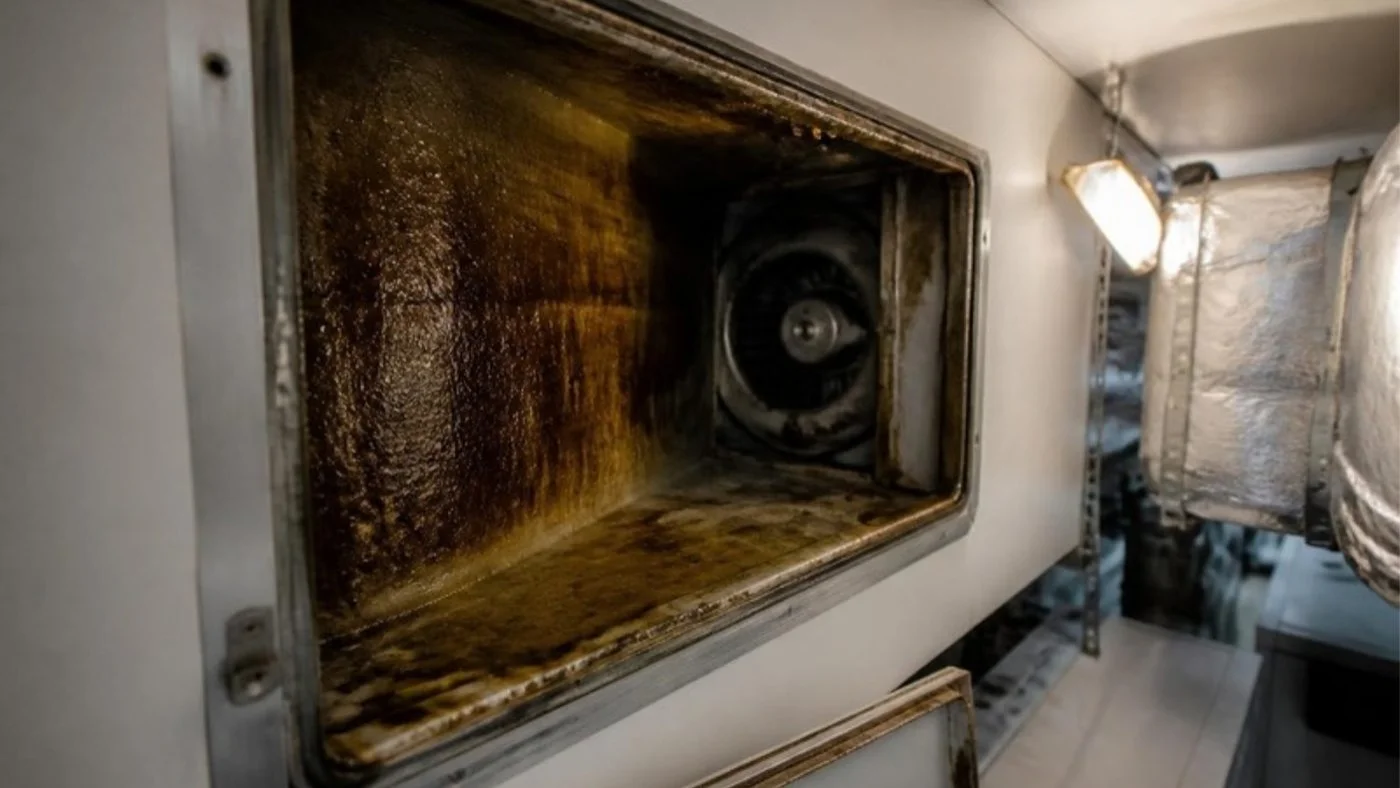
Cooking throws fine grease into the air. The extraction hood, filters and duct carry it away, and some of it settles on the way. Over time a film builds up inside the duct.
That film burns. In a galley, the duct often runs through crew and guest areas, which is why the rules treat it as a fire-safety item and not only a smell problem.
What SOLAS asks for
The clearest written source is a US Coast Guard Marine Safety Center guideline on galley range and grease duct structure. It explains SOLAS II-2/9.7.5.1 (previously II-2/32.1.9.4). SOLAS applies to ships in international service, so whether it applies to a given yacht depends on size, use and flag. Ask the yacht’s class society or flag administration.
- Exhaust ducts from galley ranges must be built to the structural requirements of SOLAS paragraphs 9.7.2.1.2.1 and 9.7.2.1.2.2.
- Where the duct passes through accommodation, service or control spaces, it needs inspection hatches.
- A grease trap must be fitted in the exhaust duct.
- The duct needs fire dampers, a fixed means of extinguishing a fire inside it, and remote control arrangements.
- The guideline covers equipment where grease can enter the exhaust, such as grills, ranges, cooktops, fryers and pizza ovens.
Five features the rule expects in a galley duct
From the US Coast Guard MSC guideline SOLAS-07 (2016) on SOLAS II-2/9.7.5.1.
Not sure when your galley duct was last opened?
Tell us about the galley. We will suggest what to inspect first, at your berth.
The features at a glance
The guideline is about how the duct is built and protected. It does not set a cleaning interval, and we will not invent one here. What the rule does make possible is inspection: hatches exist so that someone can look inside and clean.
For how often, follow the yacht’s own maintenance plan, the insurer and the class society or flag requirements, and let the amount of cooking on board decide how quickly grease builds up.
What to look at in your galley
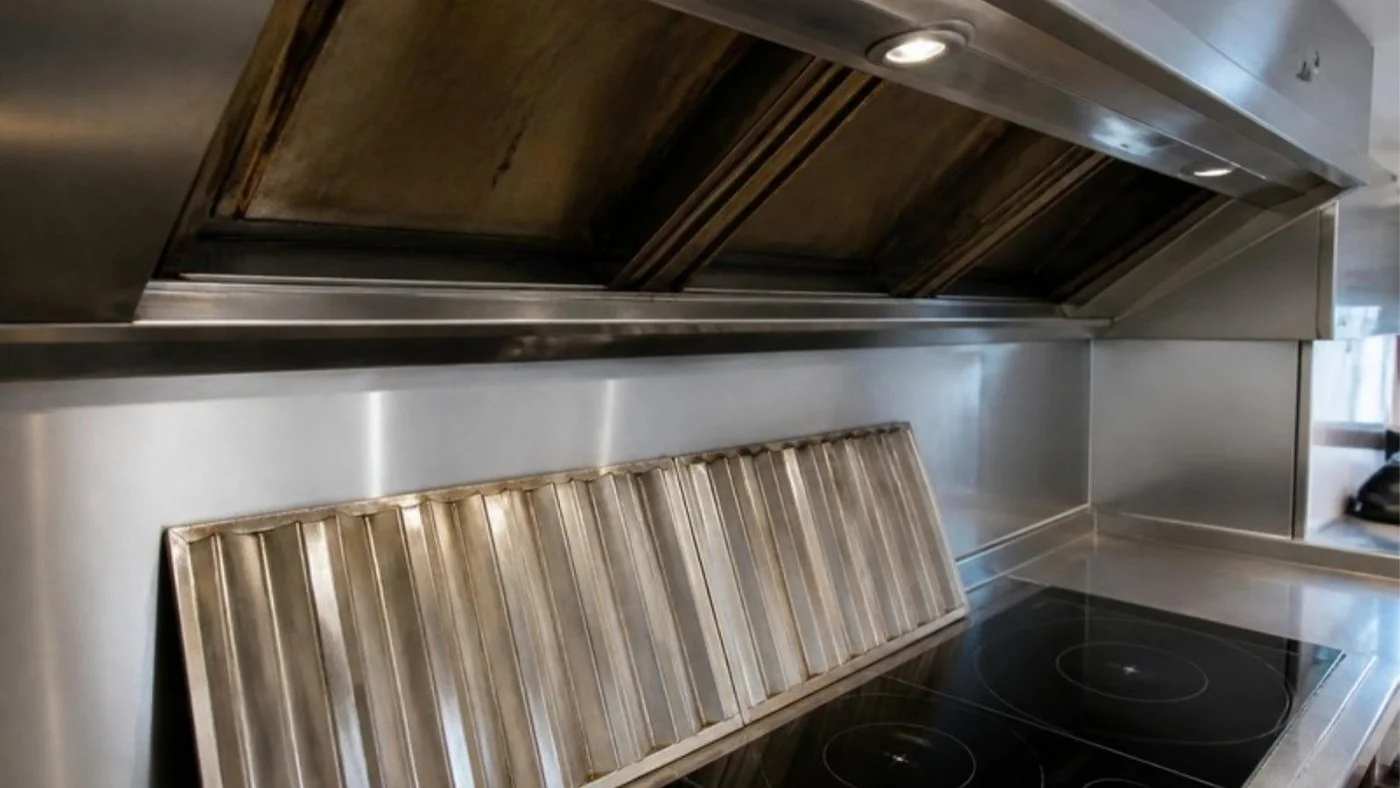
Hood and filters. Baffle filters catch most grease. When they are clogged, more grease goes into the duct.
Inspection hatches. Check that they can be reached and opened, and that they are not painted shut or blocked by joinery.
Grease trap and drain. Check the trap is not full and that grease is not pooling in the duct.
Fire dampers. Their check is a job for a qualified fire-safety technician, not a cleaner.
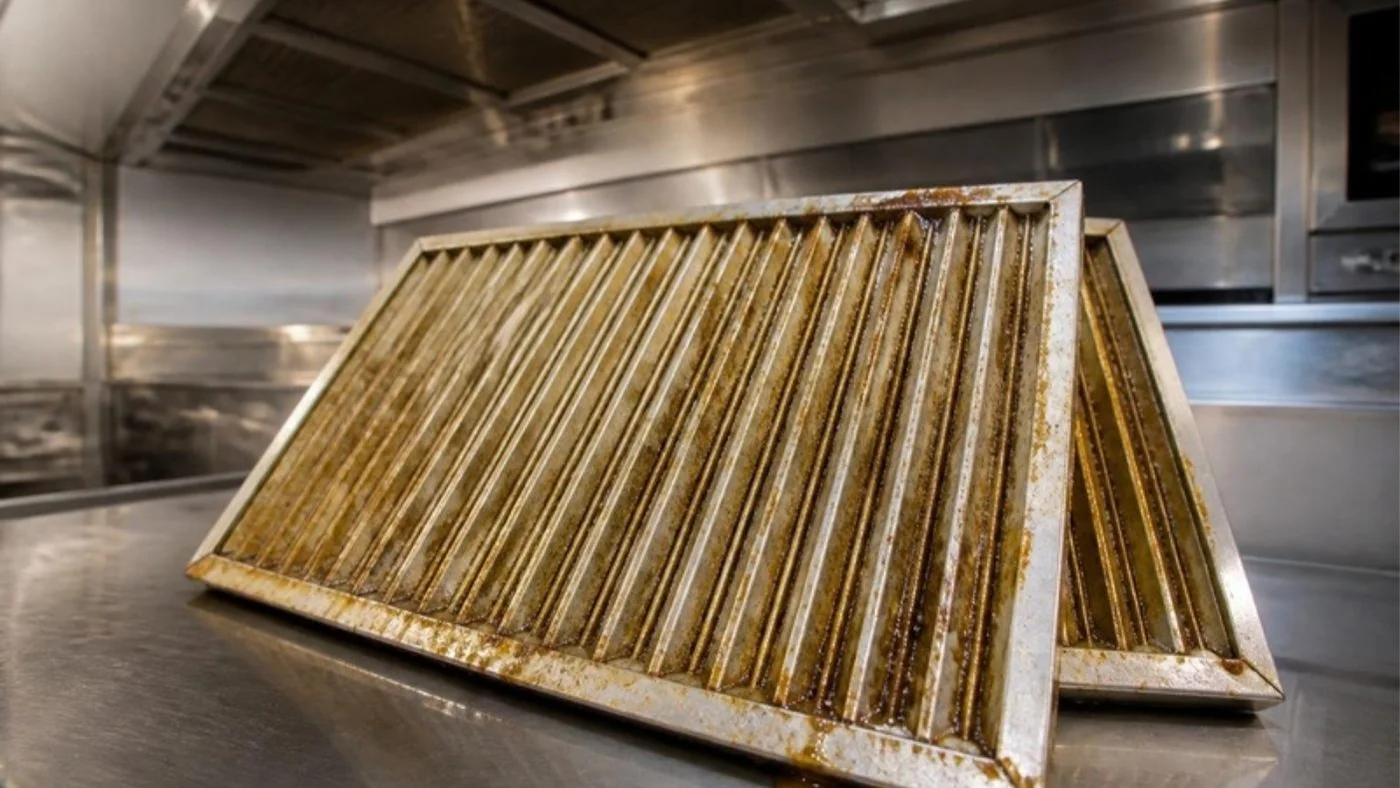

Chefs notice the smell, but the grease that matters is out of sight, inside the duct. We open the hatches, photograph what is there and show the crew.
Francesco Colombo
CEO · AirBio Marine, a division of AirBio (Ekonore S.r.l.)
Book a duct inspectionVerified reviews on Trustpilot
What a duct clean covers
A duct clean removes grease from the hood, filters, hatches and the duct run, so that the metal is visible again. The work is done in sections, with the cooking area protected.
We also record what we found and photograph the duct before and after. See our extraction duct cleaning and galley hood cleaning services.
How we clean a yacht galley extraction system, step by step
Five steps, planned with the chef and the crew.
Protect the galley
Surfaces, equipment and food areas are covered and the cooking is stopped.
Remove the filters
Baffle filters and the hood are taken out for cleaning.
Open the hatches
Access points are opened and the grease is photographed before cleaning.
Clean the duct run
Grease is removed section by section, including the trap area.
Refit and report
Everything is refitted, hatches are closed and a report with photos is issued.
We clean and document. The fire-safety systems themselves stay with the qualified technicians who certify them.
Francesco Colombo
CEO · AirBio Marine, a division of AirBio (Ekonore S.r.l.)
Speak to our teamA sample routine
A starting point, to be adjusted with the chef, the insurer and the class or flag rules.
- Daily or after each service: wipe the hood and check that filters are in place.
- Regularly: remove and wash baffle filters. Heavier cooking means more often.
- At planned intervals: open the hatches and look inside the duct.
- When grease is visible: book a duct clean.
Warning signs
- Grease dripping from the hood or hatches.
- A stale cooking smell in the galley or nearby cabins.
- Filters that are greasy again within days.
- Hatches that nobody has opened for a long time.
Our page on galley grease odours explains the likely causes.
FAQ
What does SOLAS require for galley exhaust ducts?
SOLAS II-2/9.7.5.1, as explained in the US Coast Guard guideline, expects inspection hatches, a grease trap, fire dampers, a fixed means of extinguishing a fire in the duct and remote control arrangements.
Does the guideline say how often a duct must be cleaned?
No. The guideline does not state a cleaning frequency. Follow the yacht’s maintenance plan, insurer and class or flag requirements.
Does SOLAS apply to my yacht?
It depends on size, use and flag. Ask the yacht’s class society or flag administration.
Why are there inspection hatches?
So the duct can be looked into and cleaned where it passes through accommodation, service or control spaces.
Do you check the fire-suppression system?
No. We clean and document. Fire dampers and fixed extinguishing systems are checked by qualified fire-safety technicians.
Is a duct clean only about smell?
No. The smell is a sign, but the main concern is grease that can burn inside the duct.
Sources
- US Coast Guard Marine Safety Center — Guideline for review of galley range and grease duct structure (SOLAS-07, 2016), explaining SOLAS II-2/9.7.5.1.
Want your galley ducts opened and checked?
We inspect, clean and photograph the galley extraction system at the berth and give you a report.
Speak to a marine technicianRelated on AirBio Marine
Ready to get your galley duct checked?
Inspection, cleaning and a photo report, done at the berth.
Verified reviews on Trustpilot
Tell us about the yacht
Yacht length, marina, systems and what you have noticed on board. A technician reads the message and calls you back to plan the survey.
"*" indicates required fields
Where we work
Italian Riviera and Tuscany marinas and yards — Viareggio, La Spezia, Portofino, Genoa, Sanremo, Livorno, Argentario — and other Mediterranean ports on request.
Documented work
Every job ends with a technical report and photos for the yacht's records.