

Yacht Back in Service: A Hygiene Checklist After Winter or a Long Lay-Up
Water that has stood still, air that has not moved and filters that were never checked. A practical checklist for the first weeks of the season.
Standing water is the main worry when a vessel returns to use. CDC and EPA guidance written for buildings after a long shutdown says to flush the whole system, keep hot water hot, check the water quality and write down every step. The WHO ship guide adds tank cleaning and disinfection.
Why a lay-up changes the risk
During a winter lay-up, water sits in tanks and pipes, air handling stops and filters collect dust. Nothing is wrong yet, but the conditions that allow bacteria and mould to grow are all there.
That is why the first weeks of the season are the moment to check and clean, before guests and crew rely on the systems again.
What the guidance says
The clearest written guidance on restarting after a long shutdown comes from the CDC (Guidance for Reopening Buildings After Prolonged Shutdown or Reduced Operation, 22 September 2020) and the EPA (Maintaining or Restoring Water Quality in Buildings with Low or No Use). Both are written for buildings, not vessels, so use them as a model and adapt them to the yacht and its water safety plan.
- Flush the plumbing to replace the water that has been standing, starting at the entry point and working through the system in sections, cold water before hot.
- Keep water heaters at or above 140°F (60°C), and aim for hot water at the tap of at least 120°F (about 49°C) when flushing, where feasible.
- Check water quality, such as temperature, pH and disinfectant level, and look for stable readings.
- For long stagnation, consider professional disinfection and cleaning of storage tanks and heaters.
- Write every step in the maintenance records.
For tanks, the WHO Guide to Ship Sanitation asks for cleaning and disinfection at each dry or wet dock, or every two years. Details are in our tank inspection guide.
Four points to remember
From CDC and EPA guidance for buildings and the WHO Guide to Ship Sanitation.
Planning the spring recommissioning?
Tell us about the vessel and its lay-up. We will suggest what to check first.
The key points
A useful order for the first week: water first, then air, then the galley. Each step is simple, but skipping one means the problem shows up later.
If the yacht had a refit, add a post-refit clean, because dust and residues from the work end up in the same systems.
What to check first
Water tanks. Open, look, and clean if there is sediment or film. See the tank guide linked above.
Taps and showers. Run every outlet, including guest cabins that stayed closed all winter.
Water heaters. Check the temperature setting and that hot water really arrives hot at the outlet.
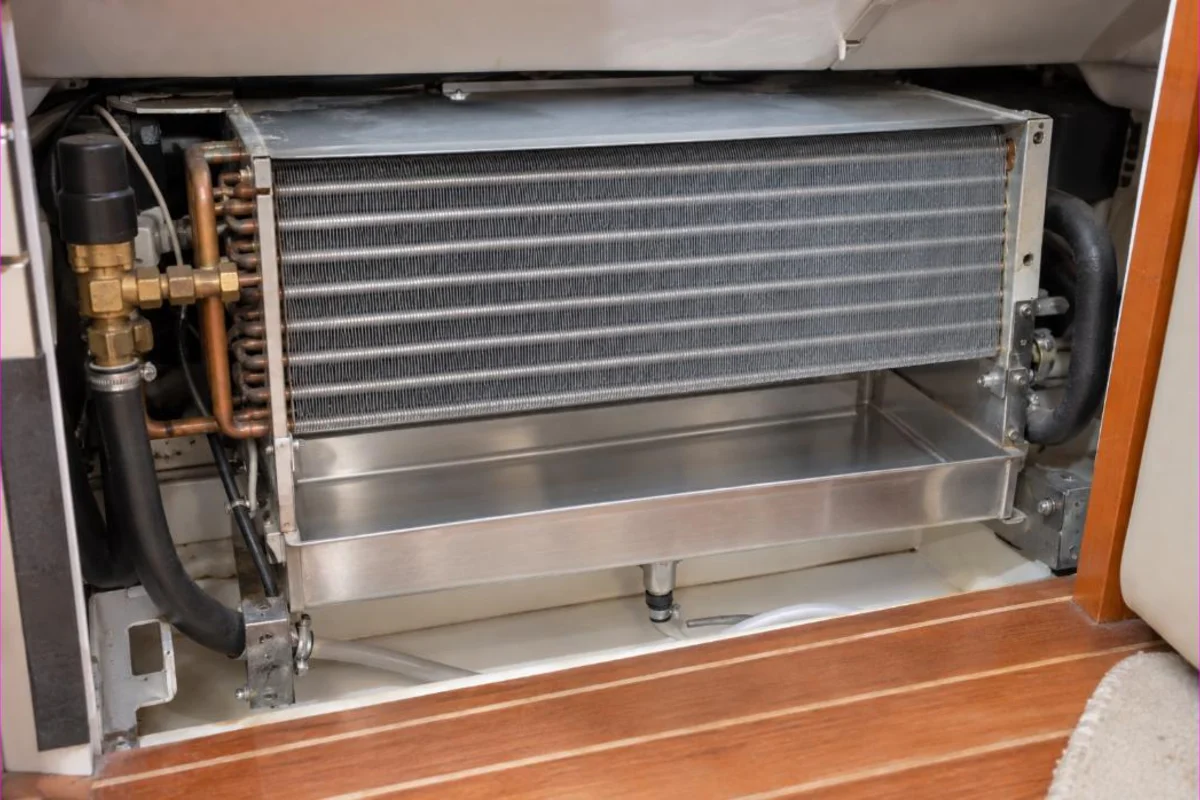
Air conditioning. Check filters, coil and drain tray before running the units. Our AC cleaning schedule explains how often.


The start of the season is when a yacht is easiest to fix. Nobody is on board, the systems are stopped, and we can reach everything. A week now saves a lot of trouble in August.
Francesco Colombo
CEO · AirBio Marine, a division of AirBio (Ekonore S.r.l.)
Plan a pre-season visitVerified reviews on Trustpilot
What a pre-season clean covers
A pre-season clean covers the water system, the air conditioning and, where used, the galley hood and duct. Everything is documented, so the yacht’s file shows what was done and when.
See our pre-season sanitization and after-winter lay-up pages.
How a pre-season hygiene visit works
Five steps, planned around the crew’s launch schedule.
Survey
We look at tanks, water outlets, air units and galley, and note what needs work.
Water
Tanks are inspected, cleaned and disinfected where needed, then the system is flushed.
Air
Filters, coils and drain trays are cleaned before the units run.
Galley
Filters, hood and ducts are checked and cleaned if greasy.
Report
Every step and finding is written down for the yacht’s file.
We give the captain a simple written record of what we found and did, so the next handover starts from facts.
Francesco Colombo
CEO · AirBio Marine, a division of AirBio (Ekonore S.r.l.)
Speak to our teamA sample checklist
A starting point. Adjust it to the vessel and its water safety plan.
- Before recommissioning: inspect tanks and clean if needed.
- First run: flush every outlet, cold first, then hot.
- Water heater: check the setting and hot water at the tap.
- Air units: clean filters and check coils and trays.
- Galley: check filters and hood for grease.
- Record: write down dates, readings and actions.
Warning signs
- Water that is cloudy, smells or tastes different after the first flush.
- A musty smell when the air conditioning first runs.
- Hot water that never gets properly hot.
- Grease on galley filters or hatches.
See our pages on water smells and AC smells for likely causes.
FAQ
What should I do first when a yacht comes out of winter lay-up?
Inspect the water tanks, then flush every outlet, cold water first and then hot, and clean the air conditioning filters and coils before running the units.
What water heater temperature do the guidelines mention?
The EPA guidance for buildings says to keep water heaters at or above 140°F (60°C), with hot water at the tap of at least 120°F (about 49°C) when flushing, where feasible.
Do the CDC and EPA guidelines apply to yachts?
They are written for buildings. They are a useful model, but the yacht’s own water safety plan and class or flag rules come first.
How often should tanks be cleaned?
The WHO Guide to Ship Sanitation says at every dry dock or wet dock, or every two years, whichever comes first.
Should I test the water?
Checking temperature, pH and disinfectant level is recommended, and a laboratory sample is the way to confirm the result. See our water sampling service.
Why write everything down?
Both the CDC and EPA guidance recommend documenting the steps. A record makes the next handover easier.
Sources
- US Centers for Disease Control and Prevention — Guidance for Reopening Buildings After Prolonged Shutdown or Reduced Operation (22 September 2020).
- US Environmental Protection Agency — Maintaining or Restoring Water Quality in Buildings with Low or No Use.
- World Health Organization — Guide to Ship Sanitation, chapter 2: Potable water.
Want your yacht ready for the season?
We inspect and clean water, air and galley systems at the berth, and give you a written record.
Speak to a marine technicianRelated on AirBio Marine
Ready to get your yacht back in service?
Water, air and galley checked and cleaned, with a written record.
Verified reviews on Trustpilot
Tell us about the yacht
Yacht length, marina, systems and what you have noticed on board. A technician reads the message and calls you back to plan the survey.
"*" indicates required fields
Where we work
Italian Riviera and Tuscany marinas and yards — Viareggio, La Spezia, Portofino, Genoa, Sanremo, Livorno, Argentario — and other Mediterranean ports on request.
Documented work
Every job ends with a technical report and photos for the yacht's records.