
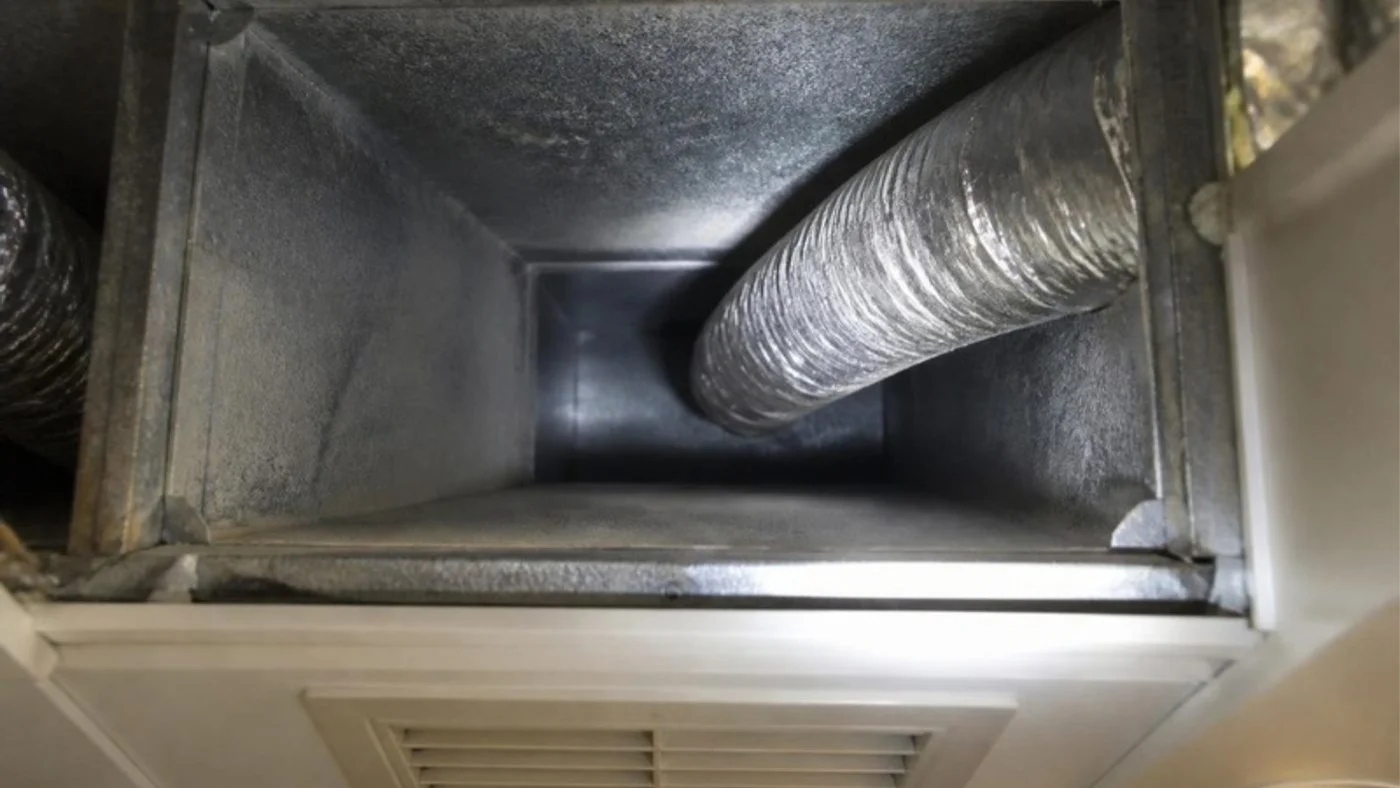
Yacht Air Duct Cleaning: When It Is Worth Doing and When It Is Not
Duct cleaning is not a routine job. The EPA says clean when there is a reason, and lists three. Here is how to tell, and what a proper clean involves.
The US EPA does not recommend routine air duct cleaning. It says cleaning is worth considering in three cases: visible mould growth inside ducts, a vermin infestation, or ducts so clogged with dust and debris that particles are released into the space. The NADCA standard describes how the work should be done.
Why not clean every year
Ducts carry the air from the air handler to every cabin. Dust settles inside them, as it does anywhere. A light layer is normal and does not mean the system needs cleaning.
What matters is whether something is growing, living or building up in there. On a yacht, where ducts are narrow and often wet from condensation, that is worth checking. But cleaning for its own sake does not always help, so it is better to look first.
What the guidance says
The clearest sources are the US EPA and the trade body NADCA. The EPA page is written for homes and NADCA’s for buildings in general, so use them as a model for a yacht.
- Not routine: the EPA does not recommend routine duct cleaning, only cleaning as needed. It says a light amount of dust in ducts is not known to pose a health risk.
- Proof of benefit: the EPA says duct cleaning has never been shown to prevent health problems, and that studies have not conclusively shown that dirty ducts raise particle levels in a home.
- Do it properly: the EPA says providers should follow NADCA’s standards. NADCA describes an inspection first, then removal of the source of contamination using HEPA vacuums and specialised brushes, covering ducts, registers, grilles, diffusers, heat exchangers and drip pans.
- Mould: NADCA says mould remediation should follow the ANSI/IICRC S520 standard. The EPA says not to run an air system that is known or suspected to have mould, because it could spread it.
- Smell: NADCA notes that debris and mould in ducts can cause unpleasant odours.
Three reasons the EPA gives for cleaning
From the US EPA guidance on duct cleaning (written for homes).
Wondering what is inside your ducts?
Tell us about the system. We will suggest how to inspect it first.
The three reasons
A useful order is: look, decide, clean, prove. Cleaning is the middle step, not the first.
On ships the UK MCA’s note MGN 38 (M+F) also covers air conditioning systems, in relation to Legionella. It says the note identifies the main danger areas within the system.
What to check on a yacht
Access. Can the ducts be reached through hatches or removable panels?
Wet spots. Look for dampness near the air handler, coils and drain trays. See our AC cleaning schedule.
Visible growth. Dark spots at grilles and diffusers can point to growth inside.
Smell. A musty smell that returns after the filters are changed.
Mould in the cabin. If mould is on walls or headlinings, check the air system too. See our mould guide.
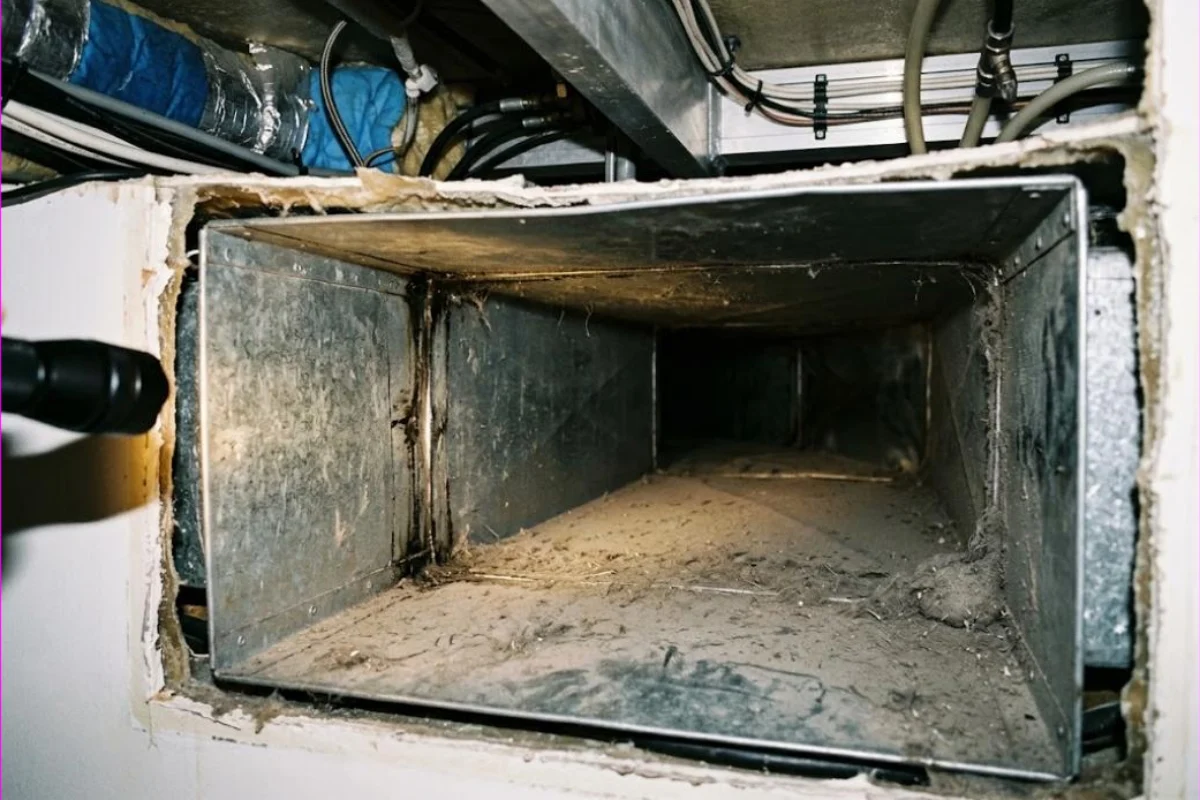

We would rather tell a customer that a duct does not need cleaning than sell a clean nobody needs. The photos decide, not the calendar.
Francesco Colombo
CEO · AirBio Marine, a division of AirBio (Ekonore S.r.l.)
Book an air-system surveyVerified reviews on Trustpilot
What we do
We inspect the ducts with a camera through the existing access points, photograph what we find and tell you whether cleaning is needed. If it is, we remove the source of contamination from the ducts, grilles and diffusers, and sanitize where the situation calls for it.
See our HVAC air duct cleaning and fan coil cleaning services.
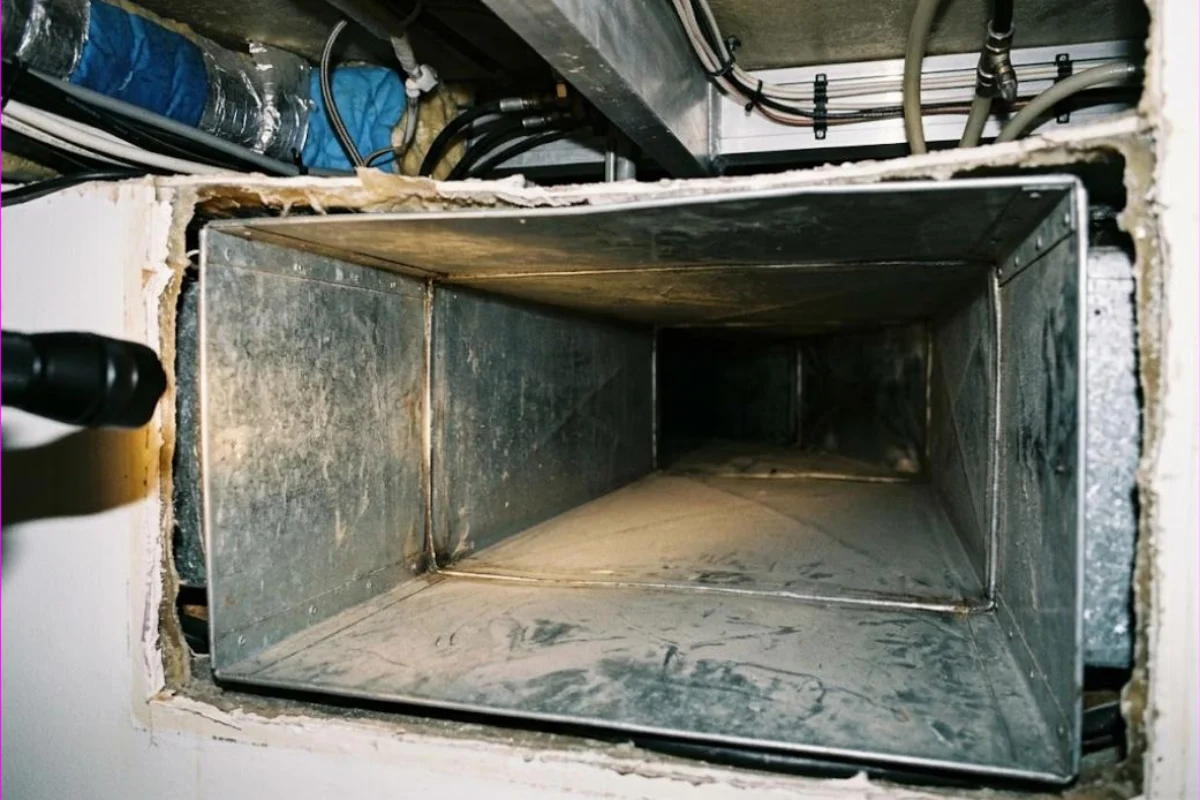
How we clean a yacht’s air ducts, step by step
Five steps, planned with the crew.
Inspect
We look inside with a camera and photograph the ducts.
Decide
We tell you whether cleaning is needed, and why.
Protect
Cabins and furniture are covered and the units are stopped.
Clean
Dust and debris are removed section by section.
Report
You receive photos before and after and a written summary.
When we do clean, we show the before and after. If it is not visible, it did not happen.
Francesco Colombo
CEO · AirBio Marine, a division of AirBio (Ekonore S.r.l.)
Speak to our teamA sample routine
A starting point built on the EPA and NADCA guidance. Adjust it to the vessel.
- Regularly: check filters, grilles and diffusers for dust and dark spots.
- At planned intervals: inspect the ducts through hatches or with a camera.
- If you see growth, vermin or heavy dust: book a clean.
- If you suspect mould in the system: stop the unit and call a specialist.
- Always: keep photos and reports on file.
Warning signs
- Dark spots or dust marks around grilles and diffusers.
- A musty smell that returns after filters are changed.
- Signs of rodents or insects near ducts.
- Dust that visibly blows out when the unit starts.
See also dirty yacht HVAC and yacht AC smells.
FAQ
Should yacht air ducts be cleaned every year?
The EPA does not recommend routine duct cleaning, only cleaning as needed. Inspect first and clean when there is a reason.
When is duct cleaning worth doing?
The EPA gives three cases: substantial visible mould growth, a vermin infestation, or ducts so clogged with dust and debris that particles are released into the space.
Does duct cleaning improve health?
The EPA says it has never been shown to prevent health problems.
What should a proper clean include?
NADCA describes an inspection and removal of the source of contamination with HEPA vacuums and brushes, covering ducts, registers, grilles, diffusers, heat exchangers and drip pans.
What if I suspect mould in the air system?
The EPA says not to run it, as that could spread mould through the vessel. Mould remediation should follow ANSI/IICRC S520, per NADCA.
Do these guides apply to yachts?
The EPA page is written for homes and NADCA’s for buildings. Use them as a model and adapt to the yacht.
Sources
- US Environmental Protection Agency — Should You Have the Air Ducts in Your Home Cleaned? (updated 2026): when cleaning is worth considering (written for homes).
- NADCA — Duct Cleaning and Indoor Air Quality: A Comprehensive Guide (2024): inspection, source removal, components, mould remediation standard.
- US Environmental Protection Agency — Mold Cleanup in Your Home: do not run a system suspected of mould.
- UK Maritime and Coastguard Agency — MGN 38 (M+F) Contamination of ships’ air conditioning by legionella (1998).
Not sure if your ducts need cleaning?
We inspect first, show you the photos and tell you honestly if a clean is needed.
Speak to a marine technicianRelated on AirBio Marine
Ready to check your air ducts?
Inspection, cleaning if needed, and a photo report, at the berth.
Verified reviews on Trustpilot
Tell us about the yacht
Yacht length, marina, systems and what you have noticed on board. A technician reads the message and calls you back to plan the survey.
"*" indicates required fields
Where we work
Italian Riviera and Tuscany marinas and yards — Viareggio, La Spezia, Portofino, Genoa, Sanremo, Livorno, Argentario — and other Mediterranean ports on request.
Documented work
Every job ends with a technical report and photos for the yacht's records.