
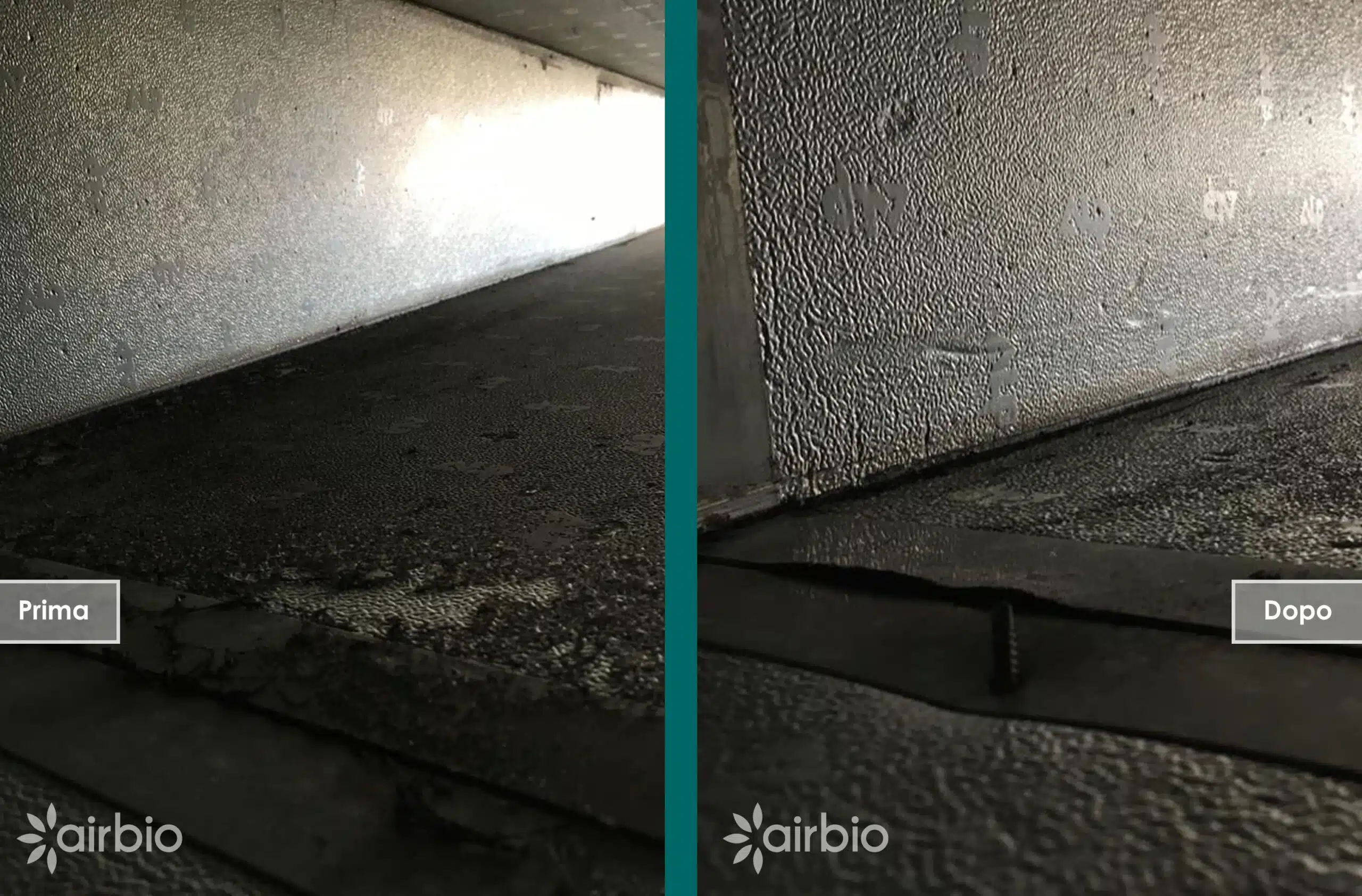
Supply Ducts Cleaned and Old Insulation Sealed at an Industrial Plant
Microorganisms inside the supply duct went from 29,000 to under 10 per 100 cm², measured before and after.
At the Fantoni plant in Osoppo, Italy, the supply ducts serving offices and production areas were dirty, and the mineral-wool lining inside them was breaking down and shedding fibres into the air. AirBio cleaned the system and sealed the lining in two three-day sessions.
The job in four lines
Site
Fantoni Spa, industrial plant with offices and production areas, Osoppo (Udine, Italy).
Problem
Contaminated supply ducts and a mineral-wool lining releasing fibres.
Work
Two sessions of three days: room units, duct cleaning, lining encapsulation, 9 new inspection doors.
Result
Swabs on the supply duct: over 99.9% fewer microorganisms.
Dirty ducts and a lining that was falling apart
The first swabs, taken on 28 April 2021, showed heavy contamination inside the supply duct.
This project was carried out ashore by AirBio, the company AirBio Marine belongs to. The same technicians, equipment, sanitizing method and end-of-job report are used on board yachts and superyachts.
The supply duct carried 29,000 microorganisms and 4,400 yeasts and moulds per 100 cm² of surface. On top of that, the mineral-wool insulation lining the inside of the ducts had become degraded and porous: it was releasing fibres into the air reaching people at work.
Cleaning alone would not have been enough. The lining had to be sealed so it could no longer shed fibres or trap dirt.
Two sessions, three days each
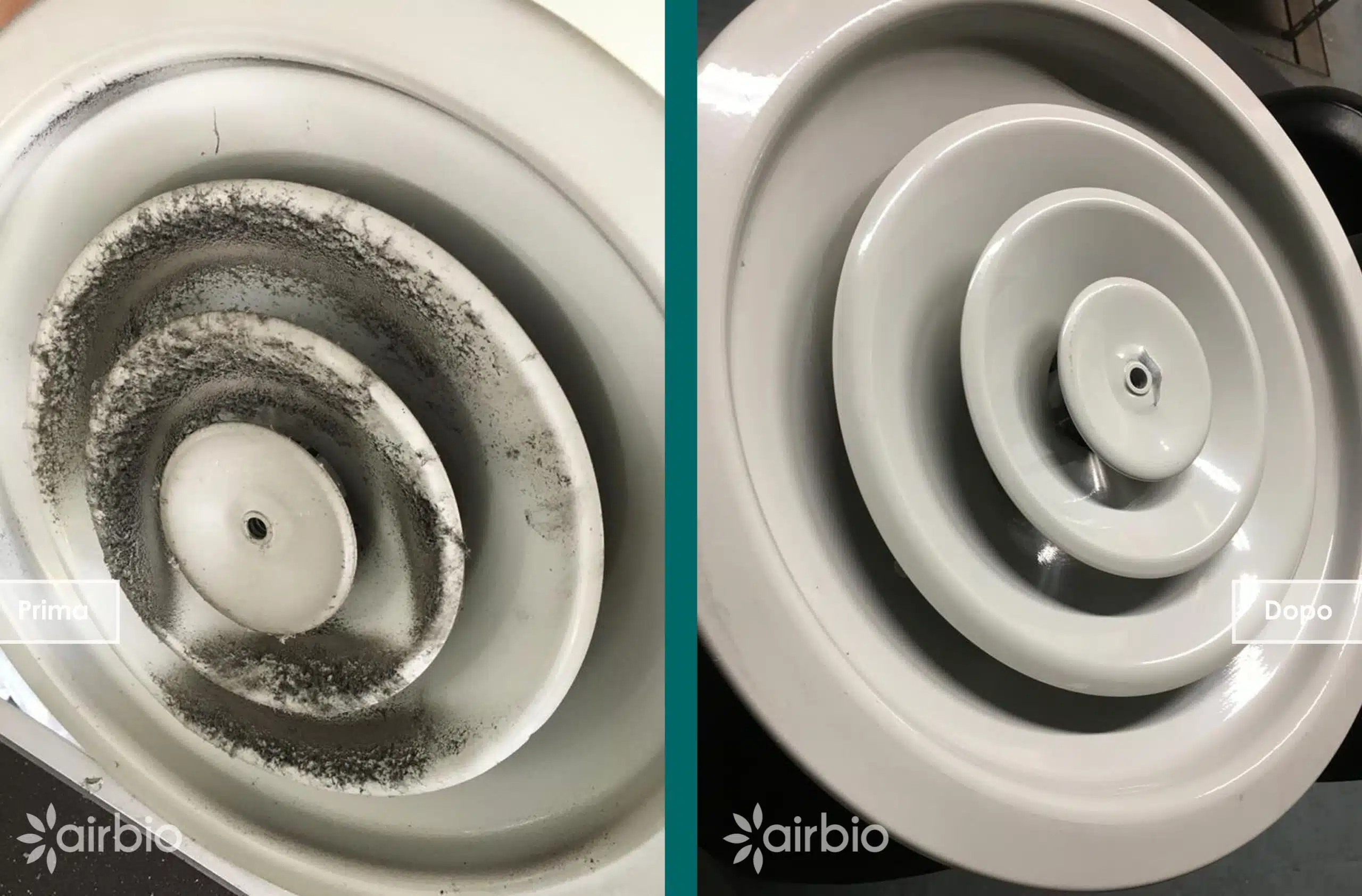
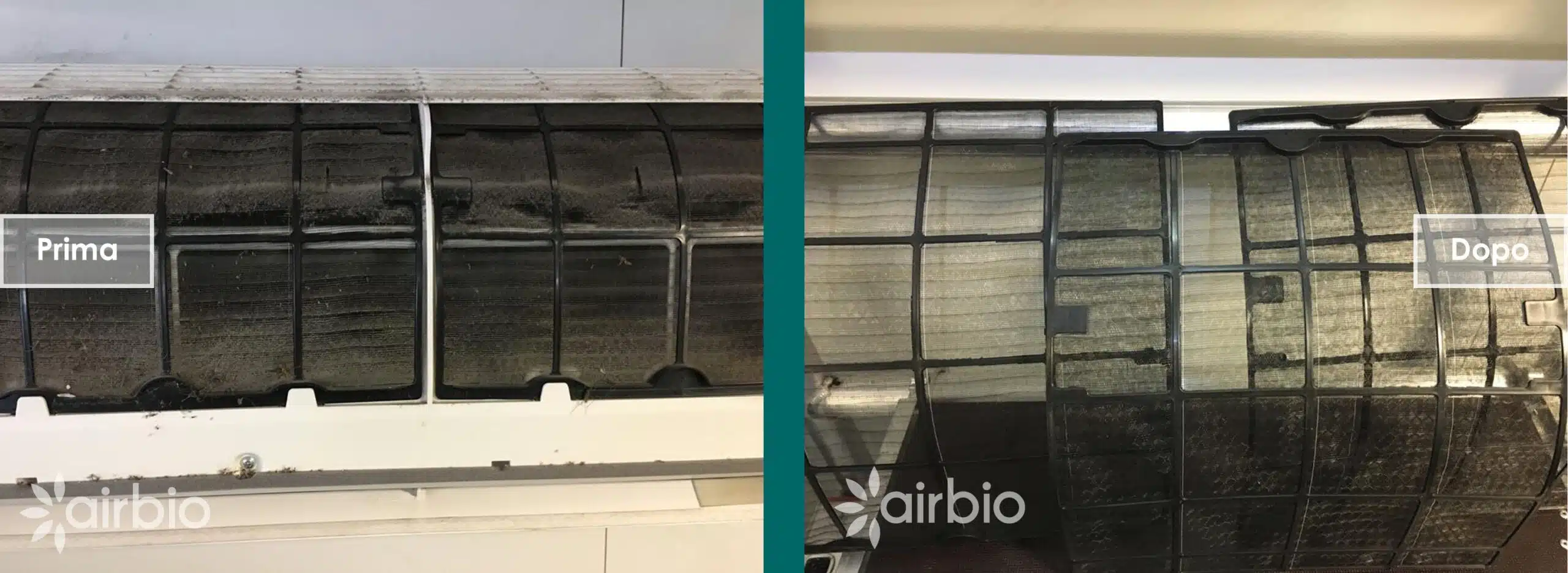
Phase 1: room units. Split units and fan coils were opened, their filters removed and sanitized, the inside sprayed with a specific detergent and rinsed, then treated with a virucidal, bactericidal and fungicidal product.
Phase 2: supply ducts. The inside walls of the supply ducts were coated with a resin that encapsulates mineral fibres, so the lining stays in place and the surface can be cleaned in future.
Access. Nine new inspection doors were fitted along the ducts, so the next checks can be done without cutting into the system.
Swabs before and after
| Sampling point | Parameter | Before (28/04/2021) | After (10/06/2021) | Reduction |
|---|---|---|---|---|
| Supply duct | Microorganisms (CFU per 100 cm²) | 29,000 | under 10 | over 99.9% |
| Supply duct | Yeasts and moulds (CFU per 100 cm²) | 4,400 | under 50 | over 98.8% |
Values as published in the AirBio case study. The client received an end-of-job technical report with system data, method, product data sheets, before and after photos, the verification result and the date of the next check.
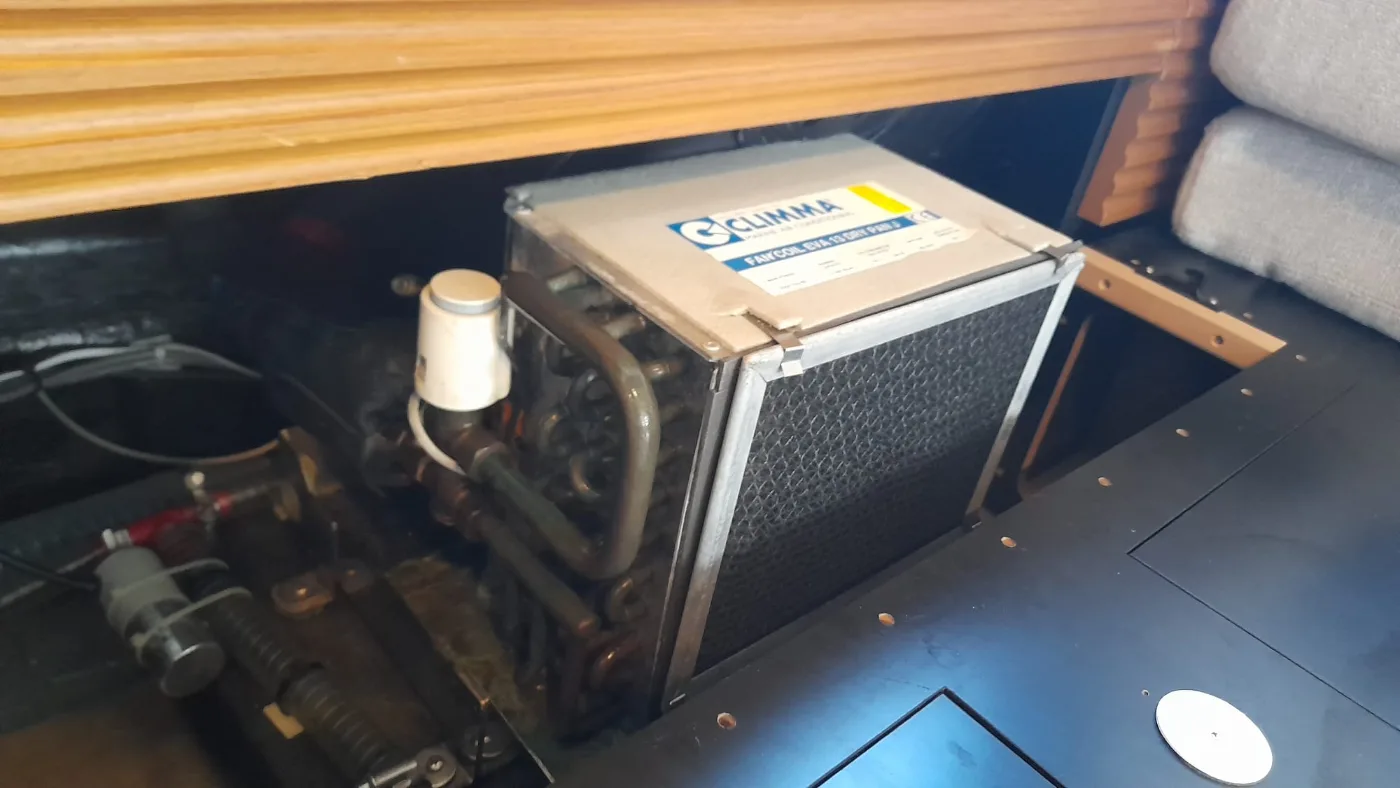
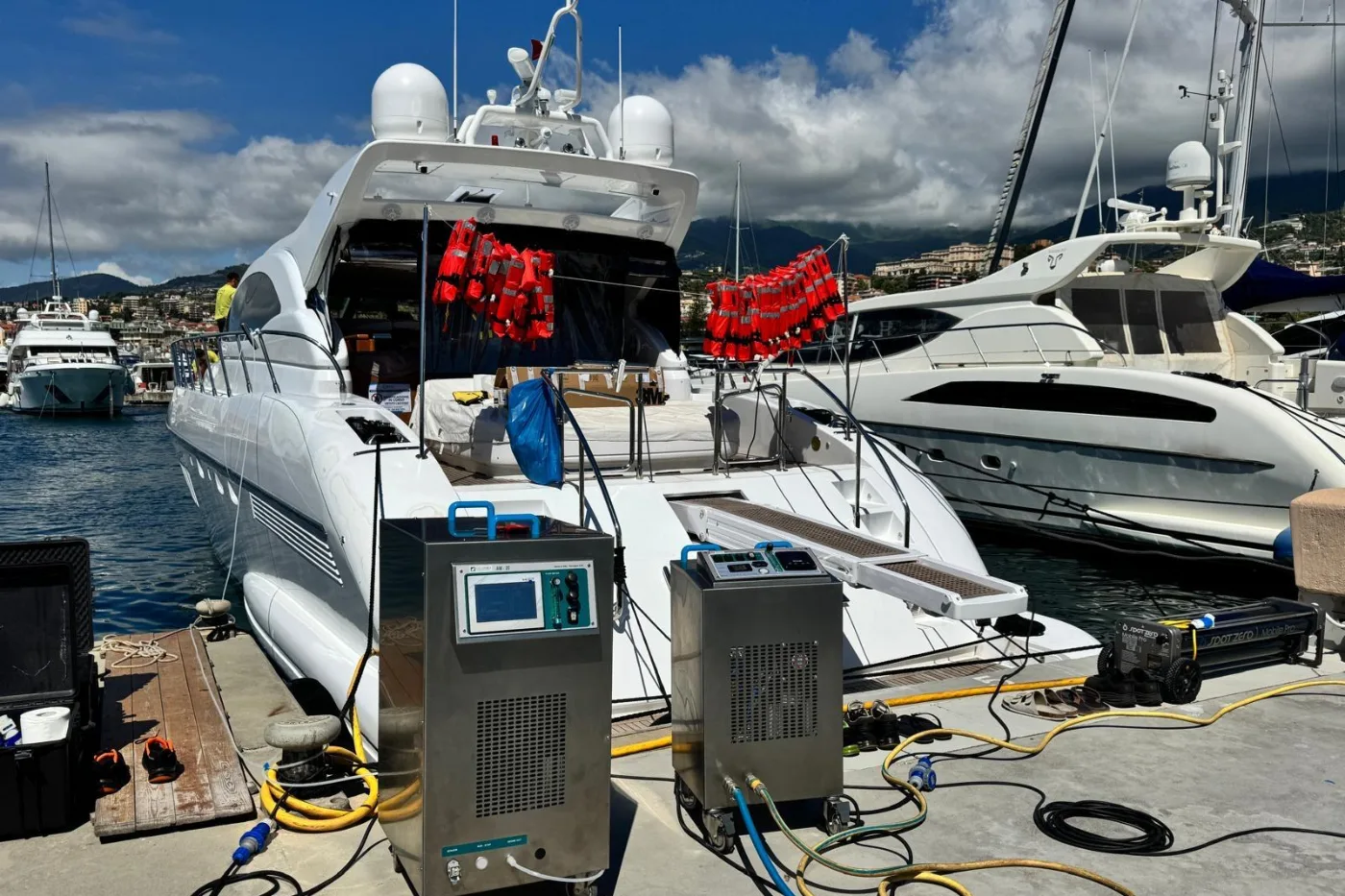
Lined ducts on board need the same care
- Many yachts have insulated or lined ducts behind ceilings and joinery. If the lining degrades, cleaning alone is not enough: it has to be sealed.
- Inspection doors fitted during a refit make every future duct check faster and cheaper.
- Swabs before and after give the captain and the management company a measured result for the yacht’s technical history.
- The best moment is a yard period, when panels are already open.
Questions about this case
Was this job done on a yacht?
No. It was carried out ashore by AirBio at an industrial plant. We publish it because the systems, the method, the team and the report are the same ones we use on yachts and superyachts.
Why seal the duct lining instead of replacing it?
Encapsulating the lining stops fibre release and gives a cleanable surface without dismantling the ducts. Replacement is far more invasive, especially behind finished interiors.
What is a CFU?
A colony-forming unit: a count of live microorganisms that grow from a surface sample. Fewer CFU per 100 cm² means a cleaner surface.
When should the next check be done?
The client was advised to check the air handling unit every year and repeat the duct work at least every two years.
Where these figures come from
All data on this page come from the original AirBio case study, published on airbio.it.
Sanificazione condotte aerauliche industriali: il caso Fantoni Spa
Description of the job, photos and swab results with dates.
The services behind this job
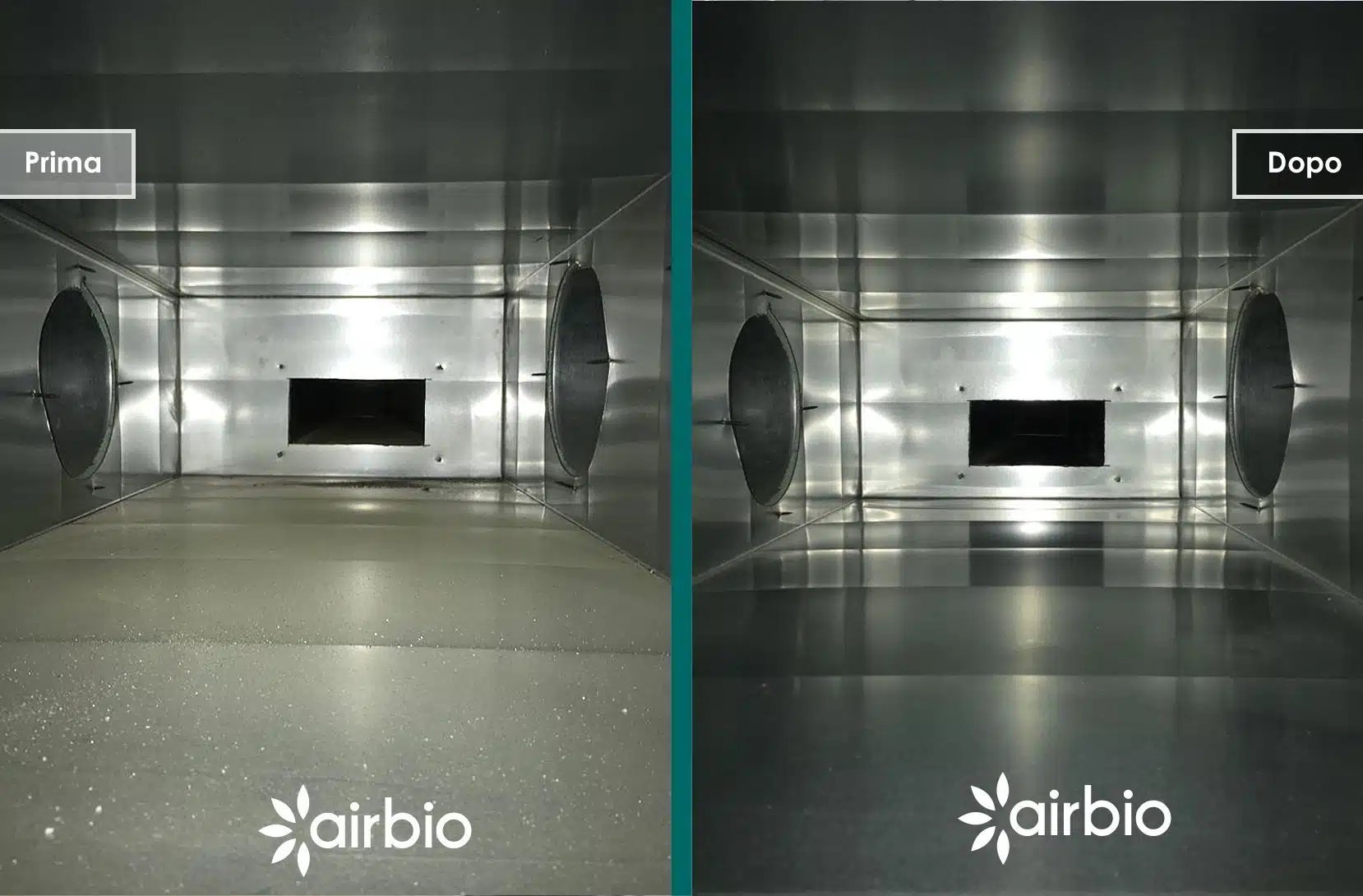
Medical centre: AHU, ducts and fan coils
Swabs before and after: over 99.9% fewer microorganisms.
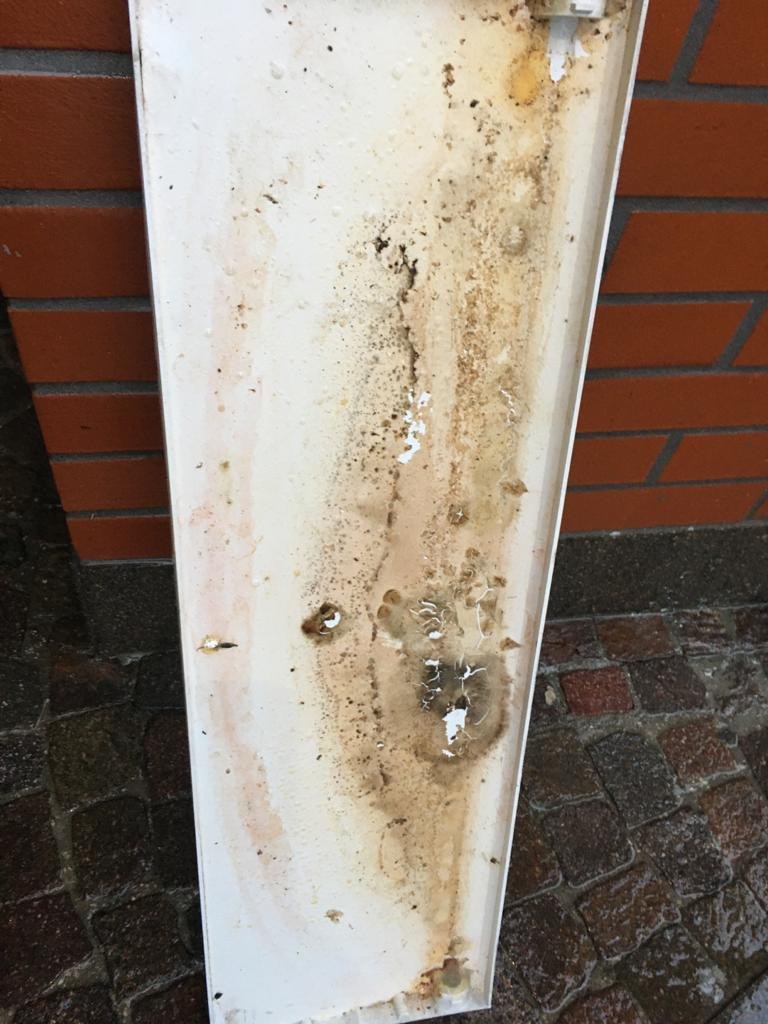
Diagnostic centre: fan coils and splits
Mould on panels and deposits in the condensate trays.
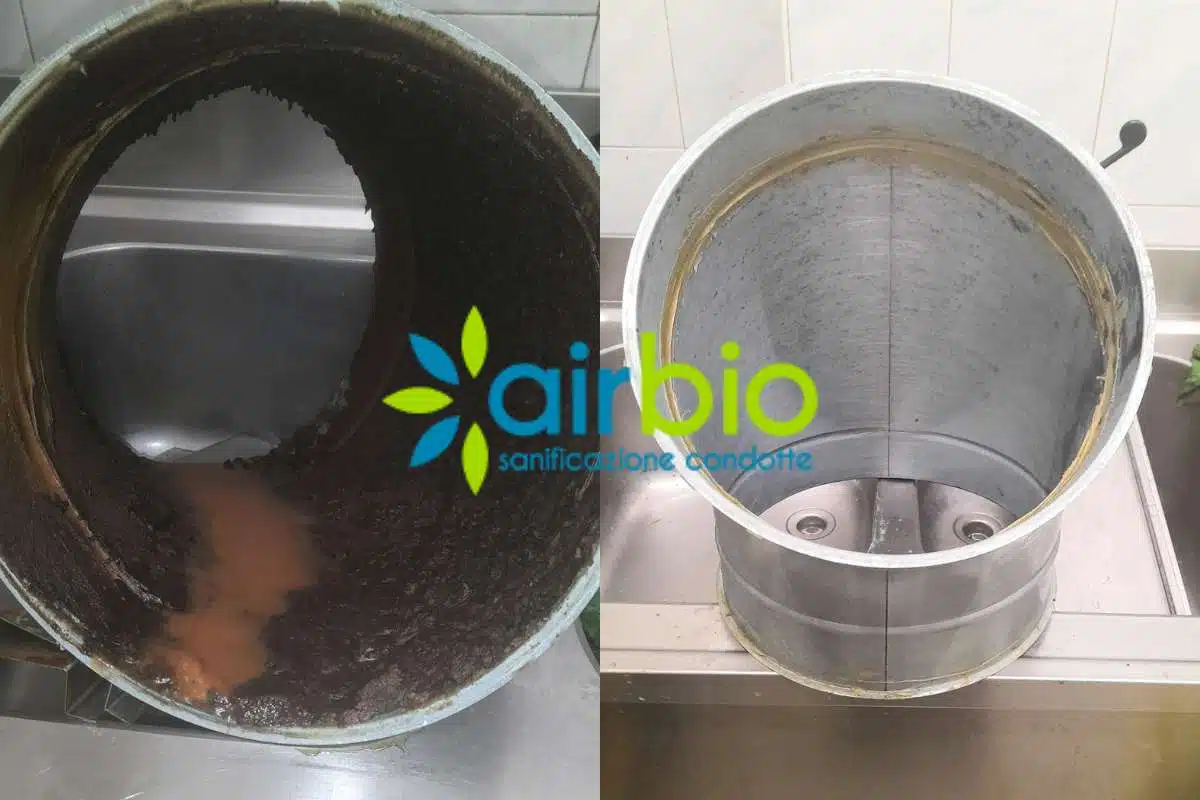
Professional kitchen: hoods, ducts and fan
A blocked extraction system brought back to work.
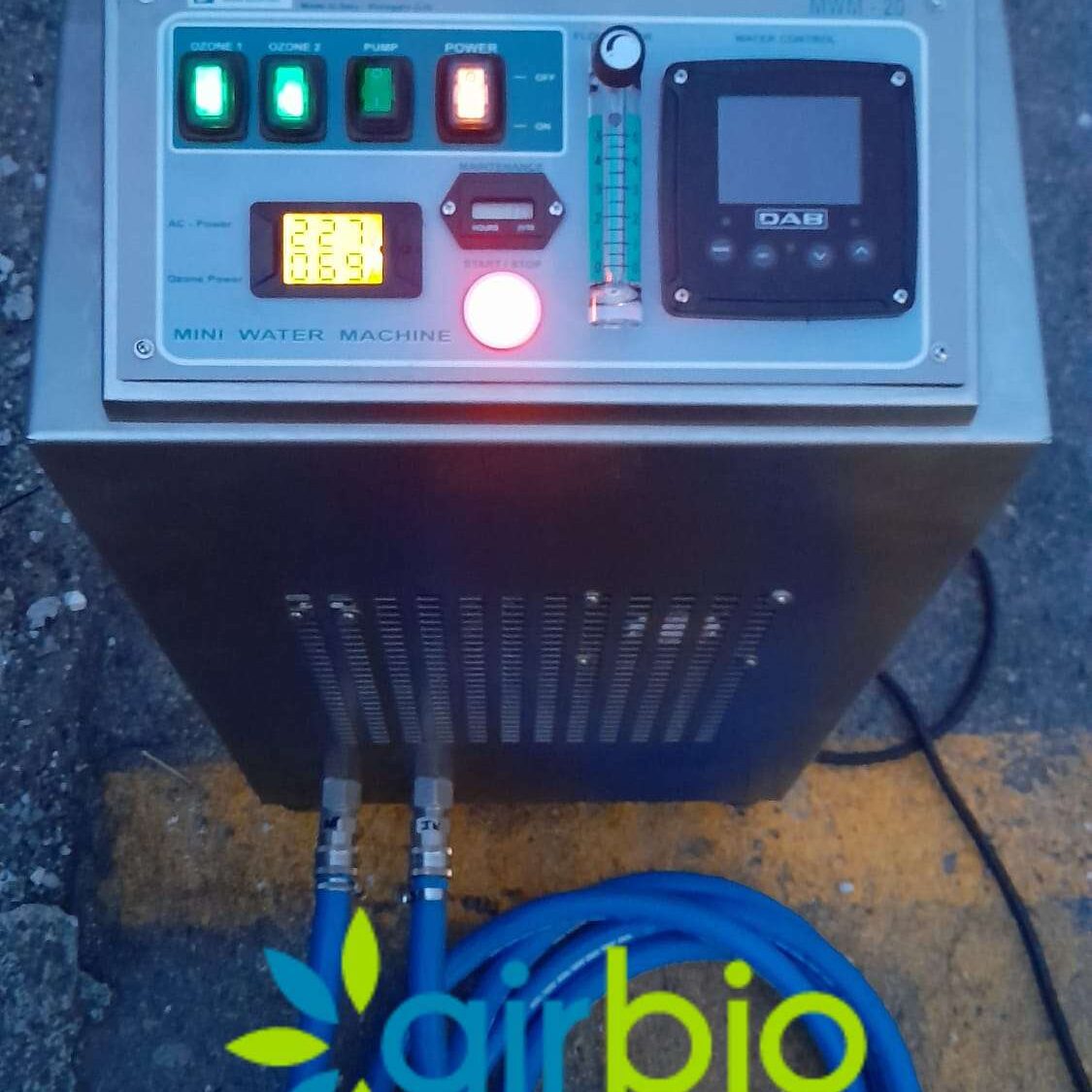
Motor yacht: water system and fan coils
Water and air treated during the same yard stop.
Water and air in the same stop?
Tell us the yacht, what the crew has noticed and where she is now: a technician calls you back within 24 hours and plans both sides around your programme.
Tell us about the yacht
Yacht length, marina, systems and what you have noticed on board. A technician reads the message and calls you back to plan the survey.
"*" indicates required fields
Where we work
Italian Riviera and Tuscany marinas and yards — Viareggio, La Spezia, Portofino, Genoa, Sanremo, Livorno, Argentario — and other Mediterranean ports on request.
Documented work
Every job ends with a technical report and photos for the yacht's records.