
Legionella Testing on a Yacht: What ISO 11731 Means in Plain Words
A Legionella result depends on how the sample is taken and how the laboratory counts it. Here is what the standard says and what the health bodies add.
ISO 11731:2017 is the international standard for counting Legionella in water by culture. Culture grows the bacteria on a plate, so it counts living Legionella, and it takes 7 to 14 days according to the US CDC. PCR gives a faster answer but cannot tell live bacteria from dead.
What a Legionella test tells you
A Legionella test does not tell you that the yacht is safe. It tells you what was in the water at the places and time you sampled. That is useful, but only when the samples are taken well and read properly.
For that reason, testing works best as part of a routine, not as a one-off. See our guide to Legionella on yachts for how the bacteria grow.
What the standard and the health bodies say
ISO 11731:2017 (Water quality: enumeration of Legionella) describes culture methods for isolating Legionella and estimating how many are in a water sample. It covers potable, industrial, waste and natural waters. The ISO page notes that not all Legionella species can be cultured, so the method may not recover every species present.
The US CDC (written for buildings) gives the practical picture for two methods:
- Culture: detects living bacteria of all Legionella species and gives isolates. It takes 7 to 14 days.
- PCR: detects genetic material, so it cannot tell live bacteria from dead ones. Results come in 2 to 48 hours and are given in genomic units.
- Sample volume: the CDC’s standard routine sample is 250 mL. Larger volumes and swabs can add information.
- Laboratory: the CDC cites ISO 11731 as a method standard and ISO/IEC 17025 for laboratory accreditation.
The 2017 European technical guidelines report culture results in colony-forming units per litre (cfu/l), and say PCR results in genome units per litre are not interchangeable with cfu/l.
Four points from the standard and the health bodies
From the ISO catalogue page, the US CDC and the 2017 European technical guidelines on Legionella.
Not sure how your last Legionella result was taken?
Send us the report. We will tell you what it shows and what is missing.
Culture and PCR side by side
Neither method is better for every job. Culture answers “is there living Legionella and how many”. PCR answers “is there Legionella DNA, and quickly”.
The CDC says PCR is useful for negative screening and for confirming that a treatment worked, and that culture is the method that shows living bacteria. If PCR is used to screen many samples, culture is used to follow up.
How a sample is taken
In an outbreak investigation setting, the CDC’s sampling procedure gives details you can also use as a model:
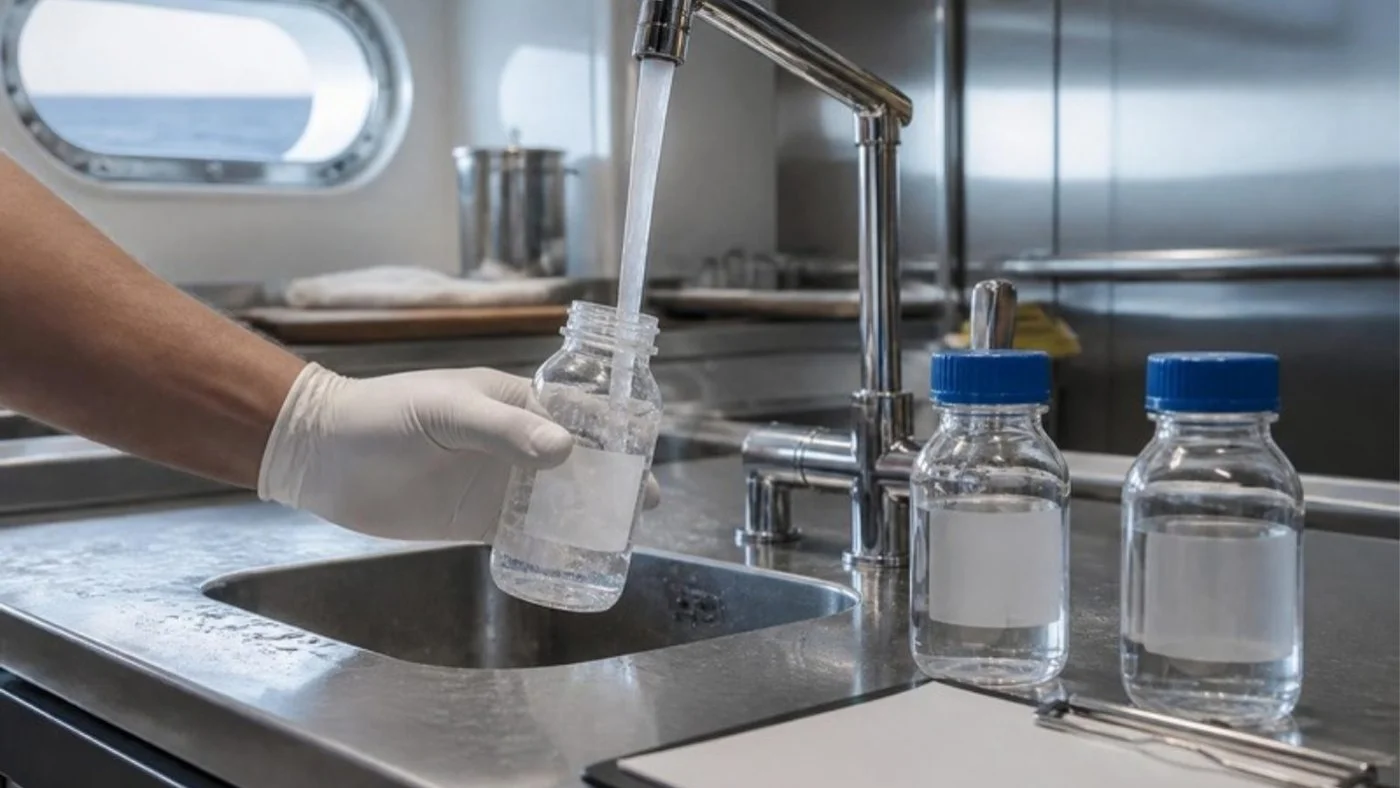
- Take a 1 litre bulk sample from the tap in a sterile bottle.
- Add sodium thiosulfate to neutralize any disinfectant in the water.
- Swab biofilm where needed and keep samples cool in a cooler with ice packs.
- Sample places such as showers, taps and hot water heaters.
Samples should represent the whole system, not only one tap. Our Legionella testing service plans the points with the crew.


A positive result is not a verdict on the crew. It is information. What matters is that the samples were taken well, and that someone acts on what they show.
Francesco Colombo
CEO · AirBio Marine, a division of AirBio (Ekonore S.r.l.)
Book Legionella testingVerified reviews on Trustpilot
What we do
We plan sample points on the hot and cold system, take sterile samples and send them to an accredited laboratory that follows ISO 11731. You receive the results with the sample points, temperatures and dates, so the next test can be compared.
If a result is positive, see our guide on what to do after a positive result.
How we test a yacht for Legionella, step by step
Five steps, agreed with the crew.
Plan the points
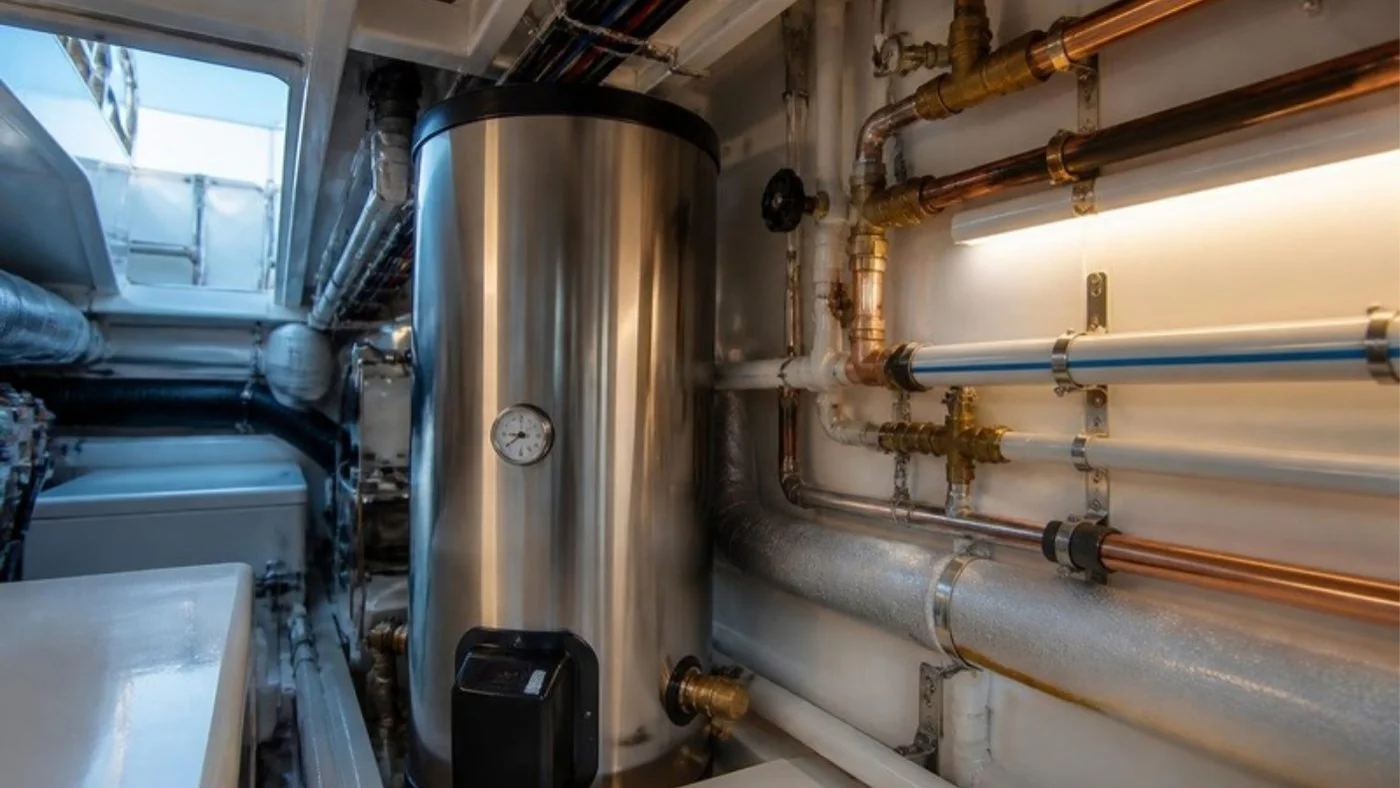
Calorifier, return, far outlets and showers are chosen with the crew.
Read temperatures
Temperatures are measured at each point and written down.
Sample
Sterile bottles are filled and neutralized where disinfectant is present.
Send
Samples go to an accredited laboratory the same day.
Report
Results are read with the crew and filed with the readings.
We would rather explain a result in a sentence than hand over a page of numbers nobody can use.
Francesco Colombo
CEO · AirBio Marine, a division of AirBio (Ekonore S.r.l.)
Speak to our teamA sample routine
A starting point. Set the schedule with the yacht’s management, class and charter requirements.
- Regularly: read temperatures at the calorifier, the return and far outlets.
- At planned intervals: take samples from representative points.
- After a long layup, repair or treatment: sample again after the system is back to normal.
- Always: write down the point, date, temperature and result.
Warning signs
- A result that has no sample point or date next to it.
- Hot water that never gets properly hot.
- A long layup with no flushing.
- A positive result with no re-test after treatment.
See our guide to hot water temperatures.
FAQ
What is ISO 11731?
The international standard for counting Legionella in water by culture. It covers potable, industrial, waste and natural waters.
How long does a culture result take?
The US CDC gives 7 to 14 days.
How fast is PCR?
The US CDC gives 2 to 48 hours, but PCR cannot tell live bacteria from dead.
Can I use PCR instead of culture?
They answer different questions. The CDC suggests PCR for screening and to confirm treatment, and culture to show living bacteria.
What volume of water is sampled?
The CDC’s standard routine sample is 250 mL. Larger volumes and swabs can add information.
Should the laboratory be accredited?
The CDC cites ISO/IEC 17025 for laboratory accreditation and ISO 11731 as a method standard.
Sources
- ISO — ISO 11731:2017 Water quality: enumeration of Legionella.
- US CDC — Routine Testing for Legionella (2025): culture and PCR, sample volume, laboratory accreditation (written for buildings).
- European Technical Guidelines for the Prevention, Control and Investigation of Infections Caused by Legionella species (ESGLI, 2017): cfu/l and genome units (buildings).
Want Legionella sampling done properly?
We plan the points, take sterile samples and send them to an accredited laboratory.
Speak to a marine technicianRelated on AirBio Marine
Ready to test for Legionella?
Sampling, laboratory analysis and a clear report, at the berth.
Verified reviews on Trustpilot
Tell us about the yacht
Yacht length, marina, systems and what you have noticed on board. A technician reads the message and calls you back to plan the survey.
"*" indicates required fields
Where we work
Italian Riviera and Tuscany marinas and yards — Viareggio, La Spezia, Portofino, Genoa, Sanremo, Livorno, Argentario — and other Mediterranean ports on request.
Documented work
Every job ends with a technical report and photos for the yacht's records.