
Legionnaires’ Disease on Ships: What Public-Health Bodies Say
How people catch it, why ships are treated as high-risk, and what the studies say about where cases on ships have come from. Sources are WHO, CDC and peer-reviewed research.
Scientific review by Linda Abenaim, Biologist ·
Legionnaires’ disease is caught by breathing in mist that contains Legionella bacteria. It is generally not spread from person to person. The WHO Guide to Ship Sanitation calls ships high-risk environments, and a review of ship-linked cases found that hot tubs were the most common source.
How people catch it
Legionella bacteria live naturally in water. They cause illness when they multiply in a warm, man-made water system and people breathe in tiny droplets from it, for example from a shower, a spray or a hot tub.
Drinking the water is not the usual route. The risk is in the mist. This article is not medical advice. For the wider picture on yachts, see our guide to Legionella on yachts.
What WHO and CDC say
The clearest ship-specific text is the WHO Guide to Ship Sanitation (2011). The others below are general public-health sources.
- CDC: people can get Legionnaires’ disease when they breathe in mist that contains the bacteria. In general it is not spread from person to person.
- WHO fact sheet: the most common route is inhaling contaminated aerosols from water. No direct human-to-human transmission has been reported. Sources listed include hot and cold water systems and whirlpool spas.
- WHO Guide to Ship Sanitation: ships are considered high-risk environments for Legionella. It points to showers and other fittings that make aerosols, and says many cases linked to ships have been associated with whirlpool spas.
- Temperatures (WHO ship guide): warm water between 25 °C and 50 °C favours growth. See our guide to hot water and Legionella.
The numbers behind ships
From a peer-reviewed review (2015) and a CDC report (2024).
Not sure if your yacht has been tested?
Tell us about the water and fittings. We will suggest what to sample.
The numbers behind ships
A 2015 systematic review in the Journal of Travel Medicine (Mouchtouri and Rudge) looked at Legionnaires’ disease in hotels and passenger ships. It found nine ship-associated events with 83 cases in total. Ship-associated cases were most commonly linked to hot tubs, 59 of the 83 cases (71.1%).
The review named the common problems: inadequate disinfection, maintenance and monitoring; water stagnation; poor temperature control; and poor ventilation.
In 2024 the CDC reported two outbreaks on cruise ships linked to outdoor hot tubs for private use, between November 2022 and July 2024. There were 12 cases, 10 people were hospitalised and none died. Legionella was found in six of ten hot tubs on one ship and in all eight on the other. The report says the cruise lines followed current CDC requirements, and that these were not enough to stop Legionella growing. These were large cruise ships, not yachts, but a deck jacuzzi works in the same way.
 Biologist
Linda Abenaim, Biologist at Ekonore / AirBio
Most people exposed to Legionella do not get ill. The risk is highest for older guests, smokers and people with weaker immune systems, which is why prevention on board aims to keep the bacteria low everywhere rather than reacting after someone falls ill.
Linda Abenaim · Biologist, Ekonore / AirBio
If a guest or crew member develops pneumonia-like symptoms after a trip, make sure the doctor knows about the onboard water and showers.
- Exposurebreathing in fine spray
- Higher riskolder, smokers, weaker immunity
- Preventionkeep the counts low
Where the risk sits on a yacht
Showers and taps. Spray makes mist. Showerheads should be cleaned and disinfected every six months, according to the WHO ship guide.
Jacuzzis and spa pools. Jets make mist and hot water is the right temperature for growth. See our guide to Legionella testing.
Calorifier and hot lines. Hot water that leaves the calorifier below 60 °C, or returns below 50 °C, is outside the WHO ship guide figures.
Rarely used cabins. Water that sits still warms up. The WHO guide says seldom-used fittings should be flushed for a few minutes regularly.
After a lay-up. The CDC guidance for cruise operators asks for flushing before service resumes.
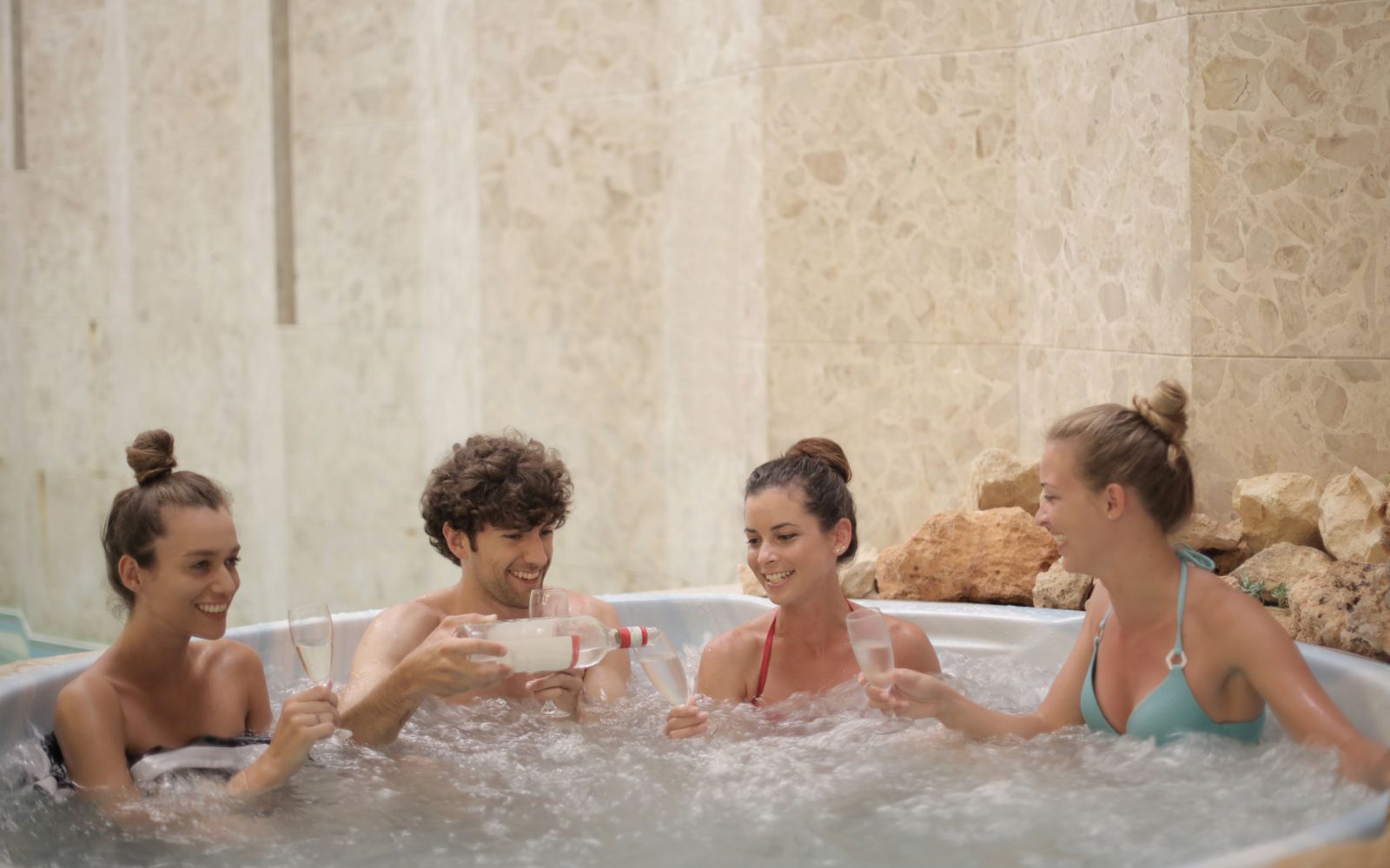

The risk is not in the glass of water. It is in the shower and the jacuzzi. That is where we look first.
Francesco Colombo
CEO · AirBio Marine, a division of AirBio (Ekonore S.r.l.)
Book a Legionella checkVerified reviews on Trustpilot
Reviews of La BioDisinfestazione | Ekonore Italia, the group AirBio Marine belongs to.
What we do
We test for Legionella in the water and the systems that make mist. If it is found, we can clean and disinfect the system and test again, so you can show the result.
See our Legionella testing and Legionella remediation services.

How we deal with Legionella on a yacht, step by step
Five steps, planned with the crew.
Survey
We map the water system and the places that make mist.
Sample
Samples are taken and sent to a laboratory.
Act
If needed, the system is cleaned and disinfected.
Re-test
We test again to see whether the action worked.
Report
You receive lab results, photos and a written summary.
Testing before and after is the only way to show that a fix worked. We keep both reports for you.
Francesco Colombo
CEO · AirBio Marine, a division of AirBio (Ekonore S.r.l.)
Speak to our teamA sample routine
A starting point built on the WHO ship guide and the CDC cruise guidance. Adjust it to the vessel and check with a specialist.
- Regularly: check hot and cold water temperatures at the calorifier and at the taps.
- Every six months: clean and disinfect showerheads (WHO ship guide).
- Weekly or as the plan says: flush seldom-used fittings for a few minutes.
- Jacuzzi: keep it treated and cleaned as the manufacturer and your water plan require. See the spa notes in the WHO ship guide.
- After lay-up: flush the whole system before guests come on board.
- Always: keep temperature logs and lab reports on file.
Warning signs
- Hot water that is only warm at the tap.
- A jacuzzi that has stood unused with water in it.
- A cabin shower that nobody has used for weeks.
- No record of the last Legionella test.
See also Legionella found on board and what a positive result means.
FAQ
How do people catch Legionnaires’ disease?
By breathing in mist that contains the bacteria, according to the CDC. It is generally not spread from person to person.
Why are ships treated as high-risk?
The WHO Guide to Ship Sanitation calls ships high-risk environments for Legionella, and points to showers, spas and warm water systems.
Where have ship-linked cases come from?
A 2015 review found nine ship-associated events with 83 cases, and 59 of them (71.1%) were linked to hot tubs.
Does this apply to private yachts?
The evidence we read comes from passenger and cruise ships. A yacht with a jacuzzi or a warm-water system has the same kind of risk, so the same controls make sense.
Is drinking the water dangerous?
The usual route is breathing in mist, not drinking. That does not make drinking water safe by default, which is why we also test it.
Is this medical advice?
No. If someone has symptoms after a trip, they should speak to a doctor.
Sources
- World Health Organization — Guide to Ship Sanitation, 3rd edition (2011), water chapter.
- World Health Organization — Legionellosis fact sheet.
- US Centers for Disease Control and Prevention — About Legionnaires’ disease.
- US CDC — Legionella guidance for cruise ship operators (2024).
- Mouchtouri VA, Rudge JW — Legionnaires’ Disease in Hotels and Passenger Ships: a Systematic Review of Evidence, Sources, and Contributing Factors. Journal of Travel Medicine, 2015.
- Lee S, Smith JC and others — Two Outbreaks of Legionnaires Disease Associated with Outdoor Hot Tubs for Private Use, Two Cruise Ships, November 2022 to July 2024. MMWR, 24 October 2024.
Worried about Legionella on board?
We test the water and the mist-making fittings, and show you the lab results.
Speak to a marine technicianRelated on AirBio Marine
Ready to test for Legionella?
Sampling, lab results and a written report, at the berth.
Verified reviews on Trustpilot
Reviews of La BioDisinfestazione | Ekonore Italia, the group AirBio Marine belongs to.
Tell us about the yacht
Yacht length, marina, systems and what you have noticed on board. A technician reads the message and calls you back to plan the survey.
"*" indicates required fields
Where we work
Italian Riviera and Tuscany marinas and yards — Viareggio, La Spezia, Portofino, Genoa, Sanremo, Livorno, Argentario — and other Mediterranean ports on request.
Documented work
Every job ends with a technical report and photos for the yacht's records.