
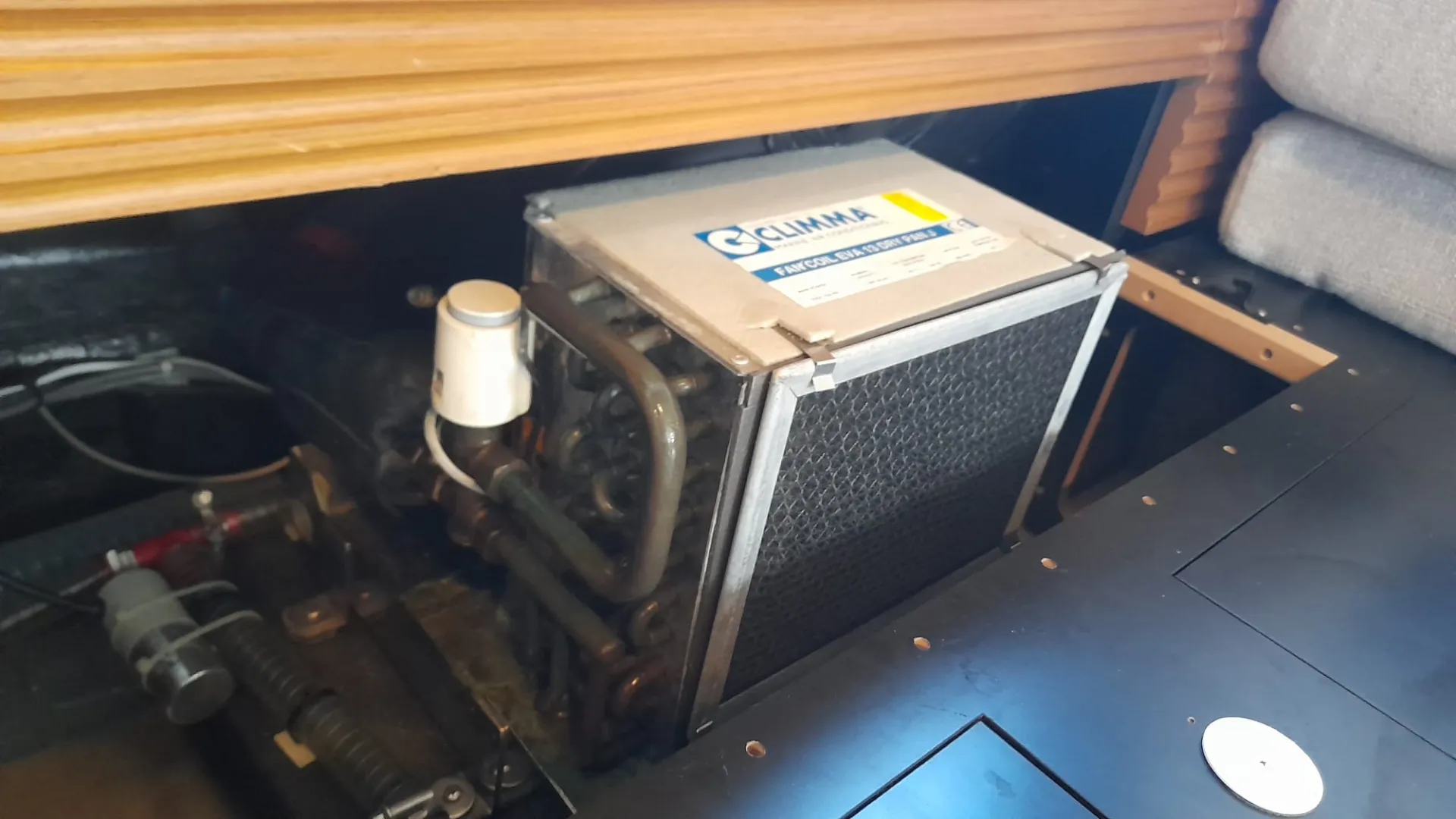
How Often Should a Yacht’s Air Conditioning Be Cleaned?
Filters, coils, condensate trays and drains all need regular attention. Here is what maritime guidance and public-health bodies say, and how to turn it into a routine for your vessel.
The UK Maritime and Coastguard Agency’s guidance note on ship air conditioning gives a clear benchmark: check the filters every week, and clean the system and wash through the condensate sump at least every three months. Keeping the air dry and the condensate trays clean does the rest.
Why cleaning frequency matters
Air conditioning does two jobs on a yacht: it cools the cabin and it pulls water out of the air. That water collects on the cooling coil and runs into a condensate tray. If the tray and the drain do not stay clean and free-draining, the water sits, and dirt and slime build up around it.
The US Environmental Protection Agency puts it simply: mould can grow on almost any organic material as long as moisture and oxygen are present. The US Centers for Disease Control and Prevention adds that any system holding non-sterile water can grow Legionella, which is why it asks for collection basins, condensate pans and cooling coils to be kept clean and free from biofilm. For the water-system side of this, see our guide to Legionella on yachts.
What the guidance says
The most direct guidance for vessels is the Maritime and Coastguard Agency’s Marine Guidance Note 38 on air conditioning systems on ships, dated April 1998. It is an older document, but it is still the clearest set of intervals written for ships. It asks for:
- Weekly inspection of filters, washed or replaced as needed.
- The condensate sump washed through with a disinfecting solution at intervals of no more than three months.
- An overall clean of the system at intervals of no more than three months.
- Plenum insulation examined at refit periods.
- Cooling-coil air speed kept at or below 2 metres per second unless an effective moisture eliminator is fitted, so water is not carried into the air stream.
These are a benchmark, not a promise that a yacht is safe. A vessel that is used hard in hot, humid weather, or that sits idle at the berth, may need shorter intervals. Any disinfecting product should be chosen by a qualified technician to suit the materials in the unit.
The four figures behind a good routine
Taken from the Maritime and Coastguard Agency and the US Environmental Protection Agency.
Not sure when your fan coils were last opened?
Tell us about the vessel and its cabins. We will suggest what to inspect first, at your berth.
The humidity number to watch
Mould needs moisture. The EPA advises keeping indoor relative humidity below 60 percent, and ideally between 30 and 50 percent. It also notes that mould will grow on any duct surface that stays wet, because dust and dirt give it food.
On a yacht this is why a working dehumidifying cycle, sealed and insulated pipework and a drain that empties fully all matter as much as the cleaning itself.
The parts that need attention
Filters. They catch dust before it reaches the coil. A clogged filter cuts airflow and lets dirt pass. The MCA asks for a weekly look.
Cooling coil. Cold, wet fins collect dust and slime. The CDC asks for coils to be kept clean and free from biofilm.
Condensate tray and drain. The EPA recommends a double-sloped, non-corroding drain pan so water cannot stand and stagnate. A blocked drain turns the tray into a small pond.
Insulation and ducts. Damp insulation and dirty ducts hold smells long after the coil is clean.


A cabin that keeps smelling is rarely a cabin problem. We would rather open the unit and look than replace a filter and hope.
Francesco Colombo
CEO · AirBio Marine, a division of AirBio (Ekonore S.r.l.)
Book a fan coil surveyVerified reviews on Trustpilot
What a proper clean covers
Changing the filter alone does not reach the coil, the tray or the drain line. A proper clean opens the unit, cleans the filter housing, coil, condensate tray and drain line, then sanitizes and records the result.
At AirBio Marine we work unit by unit, protect the cabin first, and give the yacht a written record of what was found and done. See our fan coil deep cleaning service for the full process.
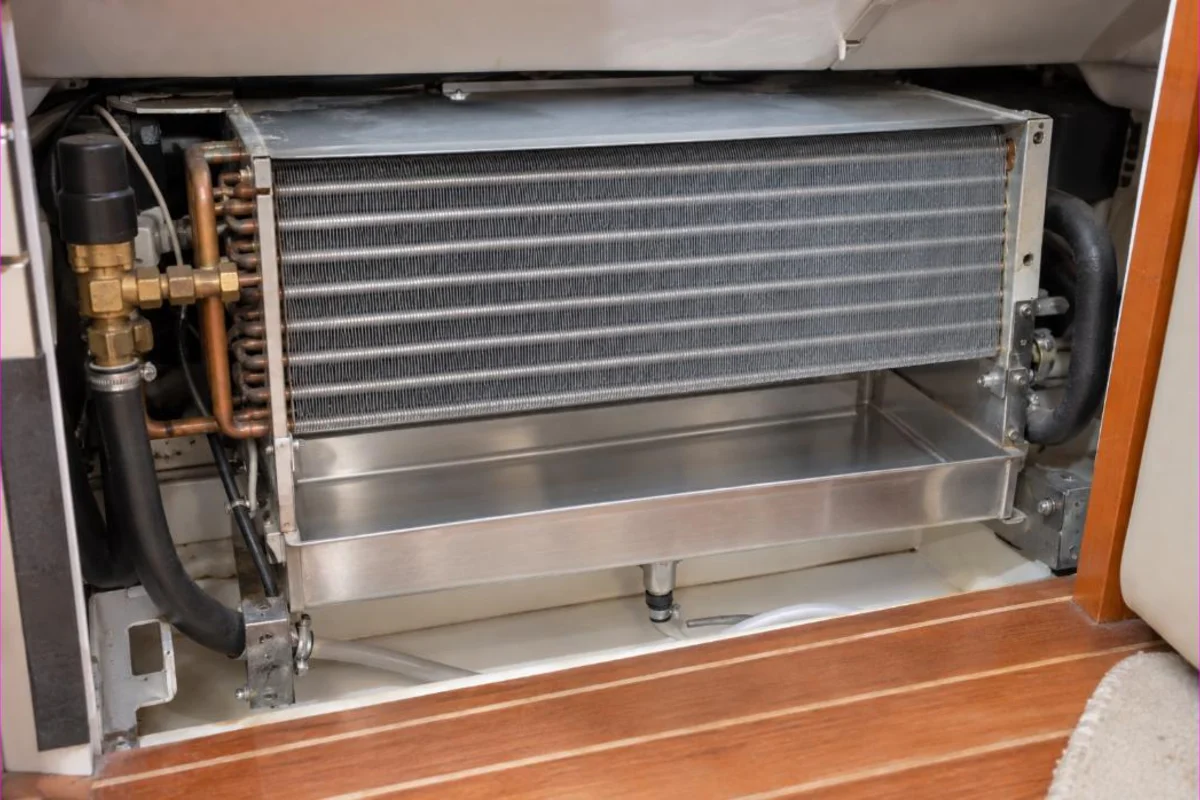
How we clean a yacht fan coil, step by step
Five steps, repeated for every unit on board.
Protect the cabin
Carpets and joinery around the unit are covered and masked before anything is opened.
Open the unit
The panel is removed and the coil, tray and blower are inspected and photographed.
Clean coil and blower
Fins and blower wheel are cleaned mechanically, not just wiped.
Clear tray and drain
The condensate tray is cleaned and the drain line checked so water runs away freely.
Sanitize and report
The unit is sanitized, and each unit is recorded in a report for the yacht’s file.
A cleaning routine only works if it is written down and followed, unit by unit. That is why every yacht we work on gets a record of what we found and what we did.
Francesco Colombo
CEO · AirBio Marine, a division of AirBio (Ekonore S.r.l.)
Speak to our teamA sample routine
Built on the guidance above. Adjust it to how the yacht is used, and to the climate it sails in.
- Every week: inspect the filters; wash or replace them if needed (MCA).
- At least every three months: clean the system and wash through the condensate sump (MCA), including the coil, tray and drain line (CDC).
- At every refit: examine the plenum insulation (MCA).
- All the time: keep cabin humidity below 60 percent, ideally 30–50 percent (EPA).
Warning signs: bring the clean forward
- A filter that clogs again quickly.
- Dust on the coil fins.
- Standing water in the tray.
- A smell that returns in the same cabin.
- Weak or noisy airflow.
- Condensation around the unit.
If a smell is the main problem, our page on why a yacht’s air conditioning smells walks through the likely causes.
Frequently asked questions
How often should yacht air conditioning filters be checked?
The Maritime and Coastguard Agency’s guidance note for ships asks for a weekly inspection, with filters washed or replaced as needed.
How often should the condensate tray and drain be cleaned?
The same guidance asks for the condensate sump to be washed through with a disinfecting solution at intervals of no more than three months. It describes a 50 ppm super-chlorinated solution, but it is a 1998 note, so the product should be chosen by a qualified technician to suit the unit’s materials.
Can Legionella grow in air conditioning?
The CDC states that any system or equipment containing non-sterile water can grow Legionella, and asks for collection basins, condensate pans and cooling coils to be kept clean and free from biofilm.
What humidity should cabins be kept at?
The EPA advises keeping indoor relative humidity below 60 percent, and ideally between 30 and 50 percent.
Is changing the filter enough?
No. A new filter does not reach the coil, the condensate tray or the drain line, which is where slime and standing water collect.
What does a fan coil deep clean include?
The unit is opened, and the filter housing, coil, condensate tray and drain line are cleaned. The unit is then sanitized and documented.
Sources
- UK Maritime and Coastguard Agency — MGN 38 (M+F): Air Conditioning Systems on Ships (April 1998): filter inspection, condensate sump and overall cleaning intervals, coil air speed.
- US Environmental Protection Agency — Mold Course, Chapter 2 (moisture and relative humidity).
- US Environmental Protection Agency — HVAC systems, Indoor Air Quality Design Tools for Schools (drain pans and wet surfaces).
- US Centers for Disease Control and Prevention — Controlling Legionella in Other Devices (condensate pans, coils, biofilm).
Want your fan coils opened and checked?
We clean, sanitize and document every unit at the berth, and hand you the record for the vessel’s file.
Speak to a marine technicianRelated on AirBio Marine
Ready to put your air conditioning on a schedule?
Inspection, deep cleaning and a written record for every unit, done at the berth.
Verified reviews on Trustpilot
Tell us about the yacht
Yacht length, marina, systems and what you have noticed on board. A technician reads the message and calls you back to plan the survey.
"*" indicates required fields
Where we work
Italian Riviera and Tuscany marinas and yards — Viareggio, La Spezia, Portofino, Genoa, Sanremo, Livorno, Argentario — and other Mediterranean ports on request.
Documented work
Every job ends with a technical report and photos for the yacht's records.