

Ozone and UV on Yachts: What the Official Guidance Says
Ozone and UV are often sold as a cure for smells and germs. This guide reads what the US EPA says about each, in plain words, and what it leaves open.
Ozone and UV light can both be useful tools, but each has limits. We read the EPA pages on ozone air cleaners and on UV water treatment and explain what they say, and what we could not confirm.
Why people ask about ozone and UV
Owners and captains hear that ozone "kills everything" and that UV "makes water safe". There is some truth in both, but neither is a simple answer.
The sources we use are US EPA pages. Both are written for buildings and water utilities, not for yachts, so we point out where a yacht may differ.
What EPA says about ozone
The EPA page on ozone generators is about devices sold as air cleaners. It says ozone can damage the lungs when breathed in. In its words, relatively low amounts can cause chest pain, coughing, shortness of breath and throat irritation, and ozone may make asthma worse.
The EPA also says that at levels that do not exceed public health standards, ozone has little potential to remove indoor air contaminants. It states that no federal agency has approved these devices for use in occupied spaces, and it notes that when ozone reacts with other chemicals indoors it can create harmful by-products.
The key points from the EPA
From the EPA page on ozone generators and the EPA UV disinfection guidance manual.
Book an onboard survey
Photos and a clear list of what needs attention.
The points to remember
Ozone and people. The EPA advises against ozone generators in occupied spaces. Stay out of a room while ozone is being produced there.
Ozone and safe levels. The EPA says that at safe levels ozone does little to remove contaminants. Any use at higher levels is a decision for trained people, in empty spaces, following the maker's safety instructions.
UV and water. UV works on microbes in the water that passes in front of the lamp. It does not clean the pipes or tanks.
What we could not confirm. We did not find a source that sets safe doses, times or re-entry rules for ozone in yacht cabins. For that reason we give no figures here.
What EPA says about UV
The EPA UV disinfection guidance manual says UV inactivates Cryptosporidium, Giardia and viruses. It points out that UV is useful against some microbes, such as Cryptosporidium, that resist common disinfectants like chlorine.
It also says that, unlike chemical disinfectants, UV leaves no residual in the water that can be monitored. The UV dose depends on lamp intensity, flow rate and how clearly UV passes through the water, called UV transmittance. Particles and dissolved matter lower it.
In plain words: UV treats the water that passes the lamp, but does not protect what is downstream. Biofilm in pipes needs cleaning, not just lamps. See why biofilm comes back.
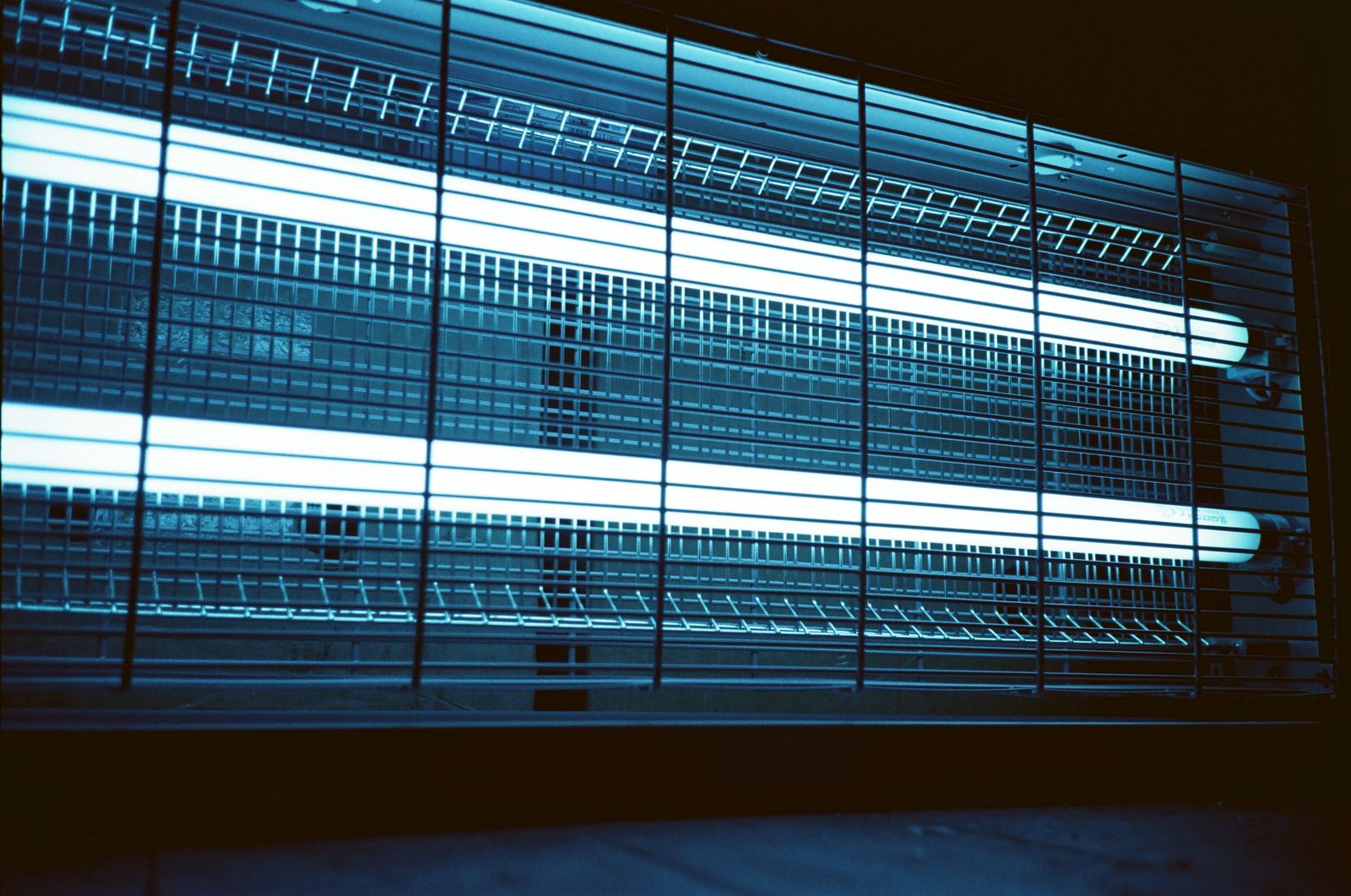

A strong tool is not a plan. First find the cause, then clean, then decide if anything more is needed.
Francesco Colombo
CEO · AirBio Marine, a division of AirBio (Ekonore S.r.l.)
Ask about our methodVerified reviews on Trustpilot
Where each one fits
Water. UV can be one step in a treatment line, along with filters and, when used, a disinfectant that stays in the water. Which combination suits a yacht depends on the system and the source. Our guide to chlorine, UV, ozone and silver compares them.
Air and surfaces. The EPA page tells us that ozone is not a way to clean the air while people are present. After an outbreak, disinfection plans should follow public health advice: see outbreak disinfection on yachts.
Our method
How we think about a treatment, step by step
Find the cause
A smell or contamination has a source. We look for it first.
Clean before disinfecting
Dirt and grease shield microbes. Cleaning comes first.
Choose the tool
We pick the method for the material and the problem.
Keep people out
Occupied rooms are not treated with ozone. We follow the product and safety instructions.
Check and report
We ventilate, check the result and send a photo report.
If a seller promises that one machine fixes everything, ask which source says so.
Francesco Colombo
CEO · AirBio Marine, a division of AirBio (Ekonore S.r.l.)
Speak to our teamA sensible approach
This is our general approach, not a rule for every yacht.
1. Find and remove the source of the smell or contamination.
2. Clean surfaces, filters and coils.
3. Fix water, humidity and ventilation problems.
4. Only then decide if a further step, such as UV in the water line or a treatment in an empty space, makes sense.
5. Check the result: smell, photos and, for water, a laboratory test.
Warning signs
Be careful if you see one of these:
- A promise that one device kills "100%" of germs in every space.
- A recommendation to run ozone while people are on board.
- No instructions on ventilation and re-entry.
- A smell that comes back soon after treatment: the source is still there.
- UV used in water that looks cloudy or dirty.
Questions
Is ozone safe to use on a yacht?
The EPA says ozone can harm the lungs and advises against ozone generators in occupied spaces. Any use should be in empty spaces, with the right safety steps and ventilation afterwards.
Does ozone kill bacteria and viruses?
The EPA says that at levels that meet public health standards, ozone has little potential to remove contaminants such as viruses, bacteria or mould. Do not rely on it as a cure-all.
Does UV make water safe on its own?
The EPA manual says UV inactivates Cryptosporidium, Giardia and viruses in water that passes the lamp. It leaves no residual, and it depends on clear water. It does not clean pipes or tanks.
Can UV replace chlorine?
They work differently. UV leaves no disinfectant in the water, while chlorine does. Which one suits a yacht depends on the system. Ask your naval architect or a water treatment specialist.
Are these EPA pages written for yachts?
No. One is about home and office air cleaners, the other about drinking water plants. We use them for the basic facts and say where a yacht may differ.
Do you give ozone doses or times here?
No. We did not find a published source for safe doses or re-entry times on yachts, so we do not state figures in this guide.
References
- US EPA — Ozone generators that are sold as air cleaners. Written for homes and offices.
- US EPA — Ultraviolet Disinfection Guidance Manual (2006). Written for drinking water systems.
Talk to us before the season
Tell us the yacht, the port and what worries you. We reply with a plan.
Request a surveyRelated on AirBio Marine
Want a second pair of eyes on board?
We inspect, clean where needed and send a photo report.
Verified reviews on Trustpilot
Tell us about the yacht
Yacht length, marina, systems and what you have noticed on board. A technician reads the message and calls you back to plan the survey.
"*" indicates required fields
Where we work
Italian Riviera and Tuscany marinas and yards — Viareggio, La Spezia, Portofino, Genoa, Sanremo, Livorno, Argentario — and other Mediterranean ports on request.
Documented work
Every job ends with a technical report and photos for the yacht's records.