
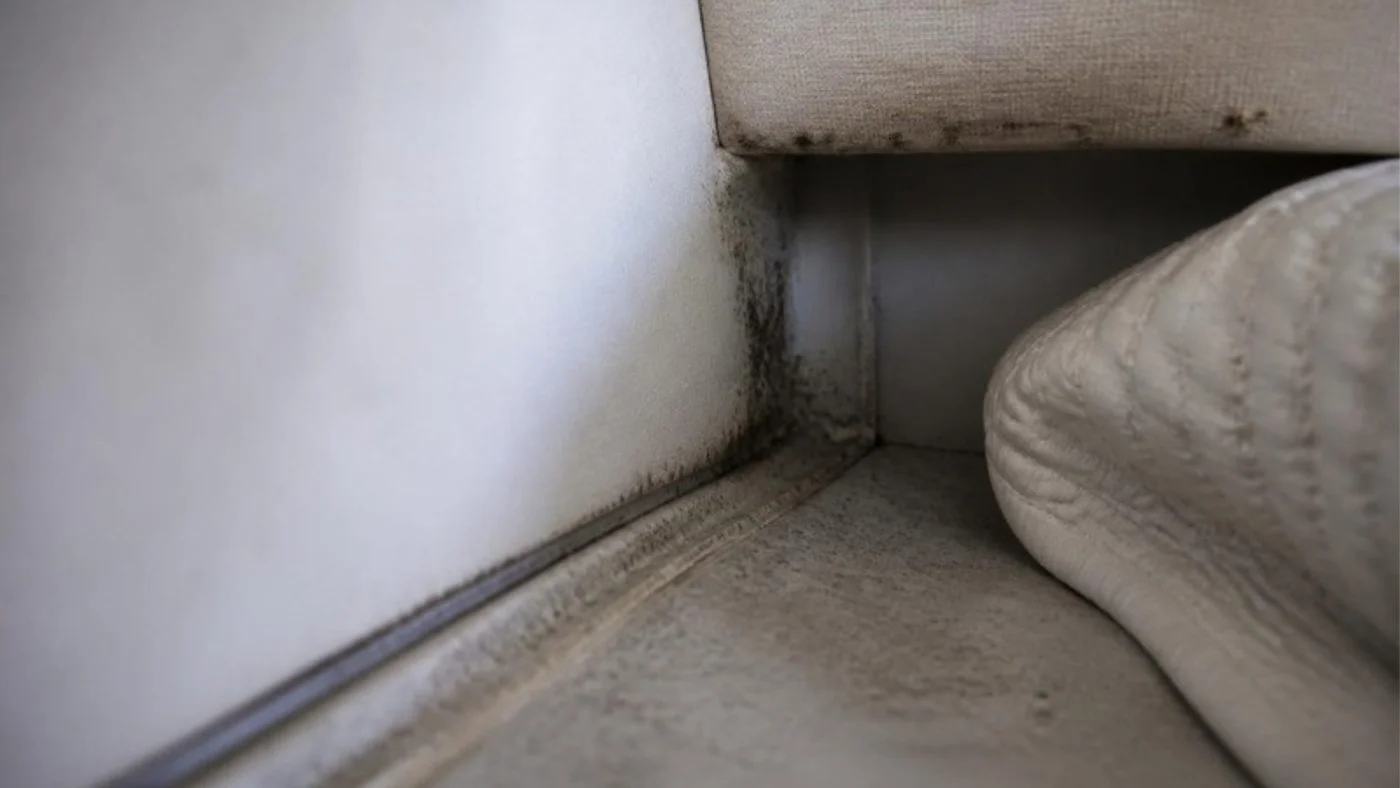
Mould on a Yacht: Why It Grows and When to Call a Professional
Mould needs moisture and nothing else. The EPA and WHO both say the same thing: control the moisture and you control the mould.
The US EPA says the key to mould control is moisture control. It advises keeping indoor relative humidity below 60 percent, ideally between 30 and 50 percent, and drying wet materials within 24 to 48 hours. For patches larger than about 10 square feet, or when the air system is affected, it suggests professional help.
Why mould grows
Mould spreads by tiny spores that are always in the air. They only grow where a surface stays wet. On a yacht, that can be a cabin corner behind a locker, a headlining above a hatch, a bilge-side wall, or the cold side of a hull where moist air turns to water.
That is why cleaning a patch and leaving the moisture in place rarely lasts. If you would like to see the symptom side, our page on mould on a yacht covers what you can see and smell.
What the guidance says
The clearest sources are the US EPA and the WHO. Both are written for homes and buildings, not vessels, so use them as a model and apply them to the yacht.
- Moisture is the key: the EPA says the key to mould control is moisture control, and that no mould grows without water or moisture.
- Humidity: keep relative humidity below 60 percent, ideally 30 to 50 percent.
- Drying time: if wet or damp materials are dried within 24 to 48 hours, mould in most cases will not grow.
- Health: mould can trigger allergic reactions and asthma attacks in susceptible people, and can irritate the eyes, skin, nose, throat and lungs of others too.
- WHO (2009): dampness and mould in buildings are linked with more respiratory symptoms, allergy and asthma. Preventing persistent dampness is the most important way to avoid health effects.
For crew accommodation on commercial ships, the UK MCA’s note MSN 1844 (M) also asks for insulation against condensation and a ventilation system in enclosed accommodation. It applies to seagoing ships in commercial operation.
Four numbers to remember
From the US EPA guidance on mould, moisture and mould cleanup.
Seeing mould on board?
Tell us where and how big. We will suggest what to do first.
The key numbers
Humidity is the number worth watching. The band below shows how it maps to risk, using the EPA figures.
A cheap humidity meter in each cabin, checked and written down, tells you more than the smell test does.
Where to look on a yacht
Cold surfaces. Hull sides, hatch frames and behind lockers, where warm air meets cold metal or fibreglass.
Headlinings. Leaks from hatches and deck fittings show up first above the headlining.
Air conditioning. Wet coils and drain trays keep the air damp. See our AC cleaning schedule.
Closed cabins. A shut cabin with no air moving can hold damp for weeks.
After a leak. Any wet material should be dried within 24 to 48 hours.


Cleaning mould without fixing the moisture is like mopping with the tap running. We start by finding where the water comes from, then we clean.
Francesco Colombo
CEO · AirBio Marine, a division of AirBio (Ekonore S.r.l.)
Book an air-system surveyVerified reviews on Trustpilot
What we do
For a small patch on a hard surface, the EPA says to scrub with detergent and water and dry completely. Porous materials such as ceiling tiles and carpet may have to be thrown away if they become mouldy.
The EPA suggests professional help when the patch is larger than about 10 square feet, when there is extensive water damage, when the water was contaminated, or when the air system is known or suspected to be affected. It also says not to run the air system if it is suspected of mould, as that could spread it.
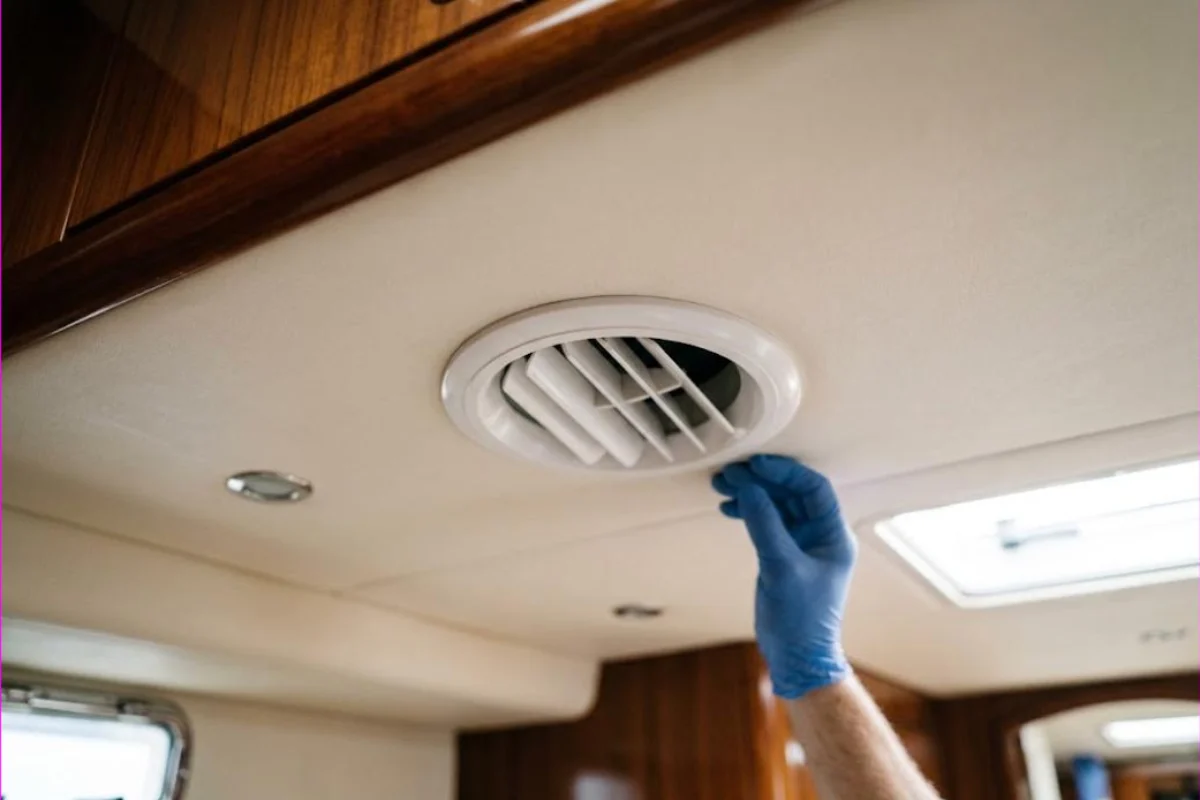
How we remove mould from a yacht, step by step
Five steps, planned with the crew.
Find the moisture
We trace the source first: leak, condensation or air conditioning.
Contain the area
Doors, vents and surfaces are protected so spores do not spread.
Remove and clean
Mould is removed from hard surfaces and mouldy soft materials are set aside for the owner to decide.
Sanitize and dry
The surface is sanitized and dried completely.
Report and prevent
You receive a report with photos, humidity readings and advice.
A humidity reading on the report is worth a lot. The crew can check it again next month.
Francesco Colombo
CEO · AirBio Marine, a division of AirBio (Ekonore S.r.l.)
Speak to our teamA sample routine
A starting point built on the EPA figures. Adjust it to the vessel.
- Regularly: read humidity in each cabin, and write it down.
- After any leak or spill: dry the area within 24 to 48 hours.
- Regularly: open lockers and check the headliner and cold surfaces.
- At planned intervals: clean AC filters, coils and drain trays.
- When a patch grows beyond about 10 square feet: call a professional.
Warning signs
- A musty smell that returns after cleaning.
- Dark spots on headlinings, lockers or cold surfaces.
- Damp cushions or clothing in closed cabins.
- Humidity readings above 60 percent.
See also condensation on yachts and mould remediation.
FAQ
What does mould need to grow?
Moisture. The EPA says no mould grows without water or moisture.
What humidity level should I aim for?
The EPA says keep relative humidity below 60 percent, ideally 30 to 50 percent.
How fast should wet materials be dried?
Within 24 to 48 hours, in which case mould in most cases will not grow, says the EPA.
When should a professional be called?
The EPA suggests it when the patch is larger than about 10 square feet, there is extensive water damage, the water was contaminated, or the air system is known or suspected to be affected.
Can I clean mould myself?
For a small patch on a hard surface, the EPA says to scrub with detergent and water and dry completely.
Do these guidelines apply to yachts?
The EPA and WHO documents are written for homes and buildings. They are a good model, but the yacht’s own plan and class rules come first.
Sources
- US Environmental Protection Agency — A Brief Guide to Mold, Moisture and Your Home (updated 2026): moisture control, humidity, drying time, health effects (written for homes).
- US Environmental Protection Agency — Mold Cleanup in Your Home: when to seek professional help, cleaning hard and porous surfaces (written for homes).
- World Health Organization Europe — WHO guidelines for indoor air quality: dampness and mould (2009).
- UK Maritime and Coastguard Agency — MSN 1844 (M), MLC Crew Accommodation (2014): insulation against condensation and ventilation.
Mould that keeps coming back?
We find the moisture, remove the mould and give you a report with photos and humidity readings.
Speak to a marine technicianRelated on AirBio Marine
Ready to get rid of it for good?
Moisture source, mould removal and a written report, at the berth.
Verified reviews on Trustpilot
Tell us about the yacht
Yacht length, marina, systems and what you have noticed on board. A technician reads the message and calls you back to plan the survey.
"*" indicates required fields
Where we work
Italian Riviera and Tuscany marinas and yards — Viareggio, La Spezia, Portofino, Genoa, Sanremo, Livorno, Argentario — and other Mediterranean ports on request.
Documented work
Every job ends with a technical report and photos for the yacht's records.