
A Captain’s Yearly Hygiene Calendar for a Yacht
One page for the year: what to check before the season, during it, and at lay-up. Every interval that comes from a source says so. The rest are our suggestions.
The written intervals we found are few: showerheads every six months and a hot-water leaving temperature of 60 °C in the WHO Guide to Ship Sanitation, a ship sanitation certificate valid for a maximum of six months under the IHR, and no fixed interval at all for galley ducts or air ducts. This calendar puts those together and marks the rest as good practice.
How to use this calendar
A hygiene routine fails when it lives in one person’s head. A calendar on the wall, with dates and initials, does not.
This one follows the year of a typical yacht: before the season, during it, and at lay-up. It links to our detailed guides for each topic. It is a starting point for the captain and the chief engineer, and it should be adjusted to the vessel, its flag and its charter terms.
Where the intervals come from
We separate three things: what a source says, what a source leaves open, and what is our suggestion. The sources are the WHO Guide to Ship Sanitation (for ships), the International Health Regulations, the US CDC and the US EPA (for buildings).
- Written interval: showerheads cleaned and disinfected every six months (WHO ship guide).
- Written figures: hot water leaving the calorifier at 60 °C or more and returning at no less than 50 °C, cold water below 25 °C (WHO ship guide).
- Written figure: a ship sanitation certificate is valid for a maximum of six months (IHR, Article 39).
- No fixed interval: galley duct cleaning (SOLAS gives none) and air duct cleaning (the EPA says not routine, only when needed).
- Good practice: everything else on the calendar. It is our suggestion, not a rule.
The intervals that come from sources
WHO Guide to Ship Sanitation, IHR (2005) and US EPA.
Need a yearly hygiene plan?
Tell us about the yacht. We will suggest a calendar.
The intervals in numbers
The year has three phases. The tasks below sit in one of them.
The CDC guidance for cruise operators asks for the potable water system to be flushed before service resumes, and for the hot water to reach its maximum temperature when flushing. It is written for cruise ships, but the logic holds for a yacht that has been standing.
A year on board
Before the season. Flush all lines. Check hot and cold temperatures. Sample the drinking water. Inspect the air handlers, filters and drain trays. Check the galley hood and filters. See our back-in-service checklist.
In season. Measure chlorine and temperature at the taps. Keep spa readings. Flush cabins that are rarely used. Wash galley filters as the chef needs. See jacuzzis, spa pools and showers.
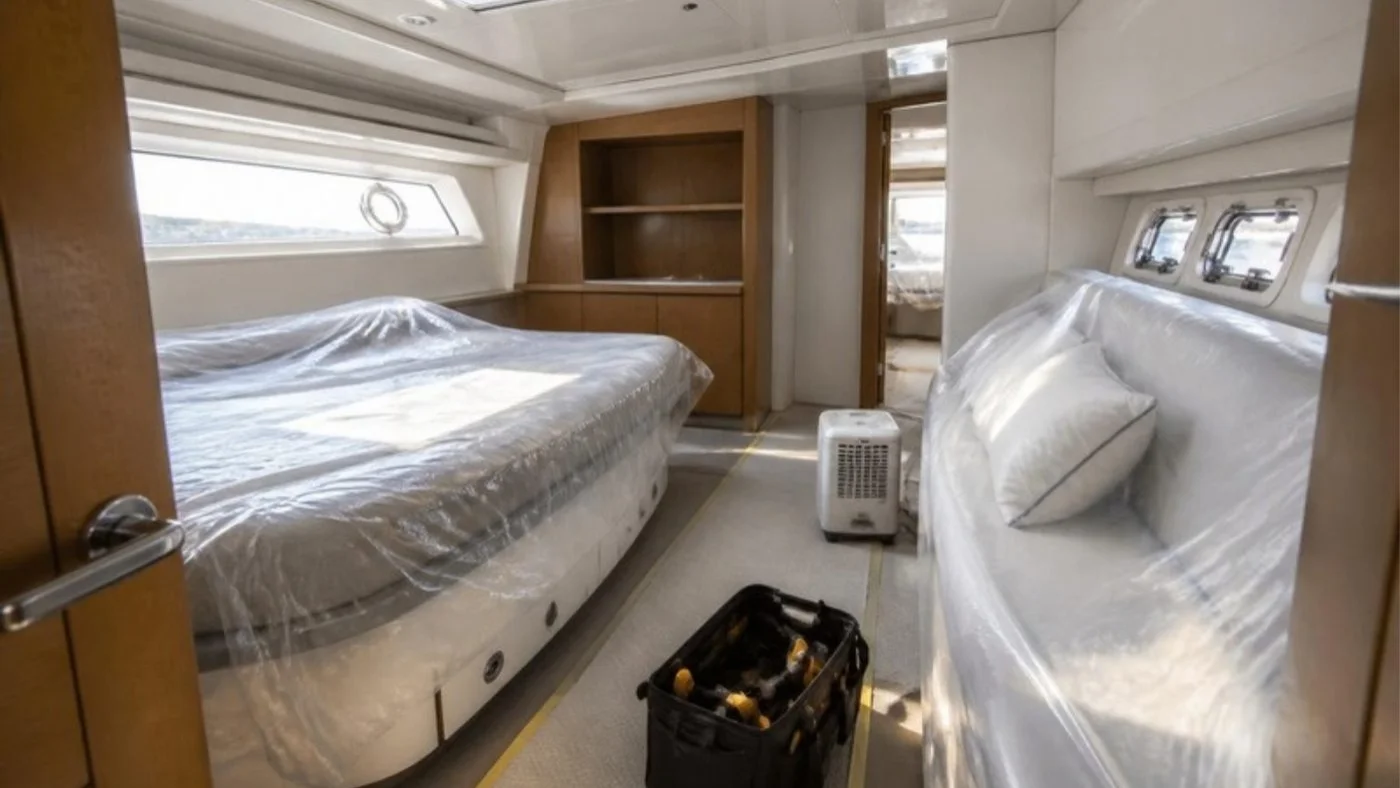
At lay-up. Clean the tanks, drain what should be drained, and protect the interior from damp. See our mould guide.
After a refit. See post-refit cleaning.


A calendar is only useful if the crew can follow it. We keep it short, dated and honest about what is a rule and what is a suggestion.
Francesco Colombo
CEO · AirBio Marine, a division of AirBio (Ekonore S.r.l.)
Build a calendar with usVerified reviews on Trustpilot
Reviews of La BioDisinfestazione | Ekonore Italia, the group AirBio Marine belongs to.
What we do
We can help with any line of the calendar: sampling the water, sanitizing tanks and lines, cleaning air handlers and ducts, cleaning the galley hood, and preparing the yacht for a port inspection. We do not choose the schedule for you. We suggest one and record what was done.
See our pre-season sanitization and water sampling services.
How we build a hygiene calendar with a captain, step by step
Five steps, planned with the crew.
Review
We look at the yacht, its systems and how it is used.
Map
We list the water, air, galley and interior tasks.
Set
We suggest a date for each task and mark the source or the reason.
Do
We carry out the tasks that need a specialist.
Record
You receive a written log to keep on board.
We record every visit in the same log, so next year’s captain starts from facts, not from memory.
Francesco Colombo
CEO · AirBio Marine, a division of AirBio (Ekonore S.r.l.)
Speak to our teamThe calendar
Items marked (WHO) or (IHR) come from those sources. The others are good practice. Adjust to the vessel.
- Before the season: flush all water lines and let hot water reach its full temperature when flushing (CDC cruise guidance).
- Before the season: sample the drinking water, and check the residual and temperatures at the taps. Hot water should leave the calorifier at 60 °C or more and return at no less than 50 °C (WHO).
- Before the season: inspect air handlers, filters and drain trays. Clean ducts only if there is a reason (EPA).
- Before the season: inspect the galley hood, filters and duct hatches. No fixed interval exists in SOLAS, so set one with the chef.
- Every six months: clean and disinfect showerheads (WHO).
- Every six months: check whether your ship sanitation certificate, if you hold one, is still valid. The IHR maximum is six months.
- In season, regularly: measure chlorine and temperature at the taps, log the spa readings, and flush seldom-used fittings.
- Tanks: the WHO ship guide asks for tanks to be inspected, cleaned and disinfected at dry-dock or wet-dock, or every two years. See our tank guide.
- At lay-up: protect the interior from damp and check for condensation.
- Always: keep photos, readings and lab reports together.
Gaps to close
- No dated record of the last water test.
- A galley hood nobody has opened.
- A jacuzzi with no readings.
- A certificate that has expired.
See also hygiene rules on yachts and Ship Sanitation Certificates.
FAQ
What should a yacht hygiene calendar include?
Water, air, galley and interior tasks, split into before the season, in season and at lay-up, with a date, a person and a record for each.
Which intervals come from a written source?
Showerheads every six months and the hot water temperatures come from the WHO Guide to Ship Sanitation. The six-month maximum validity of a ship sanitation certificate comes from the IHR. Other intervals in the calendar are good practice.
How often should air ducts be cleaned?
The US EPA does not recommend routine duct cleaning. It says to clean when there is a reason, such as visible mould, vermin or heavy dust and debris.
How often should the galley hood be cleaned?
SOLAS gives no interval. Land kitchens use timetables from monthly to yearly, depending on cooking volume. Set one with the chef.
How often should the water tanks be cleaned?
The WHO ship guide says tanks should be inspected, cleaned and disinfected at dry-dock or wet-dock, or every two years. See our tank guide.
Is this a legal requirement?
No. It is a planning tool. Check what your flag, class and charter terms require.
Sources
- World Health Organization — Guide to Ship Sanitation, 3rd edition (2011), water chapter: temperatures, showerheads, tanks.
- World Health Organization — International Health Regulations (2005), Article 39: certificate validity.
- US Centers for Disease Control and Prevention — Legionella guidance for cruise ship operators (2024): flushing before service resumes.
- US Environmental Protection Agency — Should You Have the Air Ducts in Your Home Cleaned?: duct cleaning only when needed (homes).
- International Maritime Organization — Resolution MSC.365(93) (2014): SOLAS II-2 Regulation 9, galley exhaust ducts.
Want a hygiene calendar for your yacht?
We review the yacht, suggest dates for each task and keep a written log with you.
Speak to a marine technicianRelated on AirBio Marine
Ready to plan the year?
A review, a dated calendar and a written log, at the berth.
Verified reviews on Trustpilot
Reviews of La BioDisinfestazione | Ekonore Italia, the group AirBio Marine belongs to.
Tell us about the yacht
Yacht length, marina, systems and what you have noticed on board. A technician reads the message and calls you back to plan the survey.
"*" indicates required fields
Where we work
Italian Riviera and Tuscany marinas and yards — Viareggio, La Spezia, Portofino, Genoa, Sanremo, Livorno, Argentario — and other Mediterranean ports on request.
Documented work
Every job ends with a technical report and photos for the yacht's records.