

How Often Should a Yacht’s Fresh-Water Tanks Be Inspected and Disinfected?
Tanks are where every drop of water on board begins. Here is what the WHO Guide to Ship Sanitation says about how often to inspect them, how to disinfect them and what to do afterwards.
The WHO Guide to Ship Sanitation says potable water tanks should be inspected, cleaned and disinfected at every dry dock or wet dock, or every two years, whichever comes first. Disinfection means raising free residual halogen to at least 50 mg/l for 4 hours, then flushing with potable water.
Why tanks deserve their own routine
Every tap, shower and washing machine on a yacht is fed from the same place. Water sits in the tank between fills, and anything that gets in there, such as sediment, slime or a contaminated fill, travels to every outlet.
That is why the tank has its own inspection and disinfection routine, separate from the pipework. For the pipework side, including hot-water temperatures and Legionella, see our guide to Legionella on yachts.
What the WHO guide says
The clearest written standard for vessels is the WHO Guide to Ship Sanitation, chapter 2 on potable water. It is written for ships, so a yacht’s own flag, class and water safety plan decide the final details. Its main points on tanks are:
- Inspect, clean and disinfect tanks at each dry dock or wet dock, or every two years, whichever comes first.
- Disinfect by raising free residual halogen to at least 50 mg/l for 4 hours, or by another procedure recognized by WHO.
- After contamination or repair, the tank should be cleaned, disinfected and flushed with potable water before it goes back into service.
- Build and place tanks so they are protected from contamination from inside or outside, ideally in rooms without sources of heat or dirt.
- Fit sample cocks on each tank, pointing downwards.
- Keep a chlorine residual, typically around 0.5–1 mg/l free chlorine as water enters the distribution or storage system.
Four figures from the WHO guide
Taken from the WHO Guide to Ship Sanitation, chapter 2 (potable water).
Not sure when your tanks were last opened?
Tell us about the vessel and its tanks. We will suggest what to inspect first, at your berth.
The three-step tank clean
A tank clean follows the same order every time: look, disinfect, flush. Only after that does the tank go back into service.
The WHO adds that a procedure other than 50 mg/l for 4 hours can be used if WHO recognizes it. The right product also depends on the tank material, so it should be chosen by a qualified technician.
What to check in and around the tank
Location. A tank should be protected from contamination from outside and inside, ideally in a room without heat sources or dirt.
Sample cocks. The WHO asks for a sample cock on each tank, pointing downwards so it does not pick up contamination.
Filling line. The filling line should sit a suitable distance above the top of the tank and be marked in blue and labelled “POTABLE WATER FILLING”.
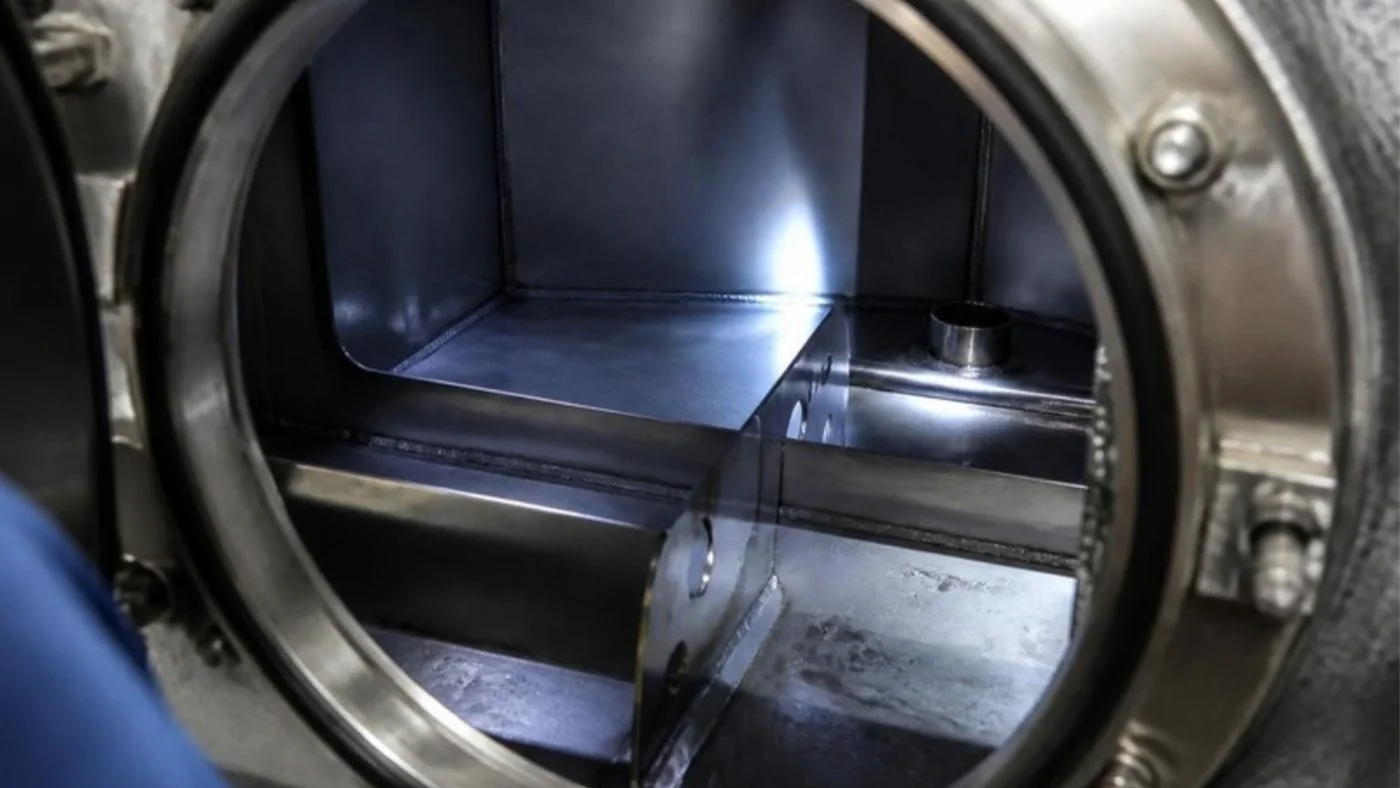
Inside. Through the inspection hatch, a technician looks for sediment and film on the bottom, corners, walls and baffles.

A tank is the one part of the system that every drop passes through. If it is clean, everything after it starts from a better place. If it is not, no tap can fix that.
Francesco Colombo
CEO · AirBio Marine, a division of AirBio (Ekonore S.r.l.)
Book a tank inspectionVerified reviews on Trustpilot
What a proper tank clean covers
A proper clean empties the tank, removes sediment, cleans the walls and baffles by hand, sanitizes, then rinses, flushes and refills. The result is written down for the yacht’s file.
At AirBio Marine we sanitize with ozonated water or an approved disinfectant, depending on the tank material. See our fresh-water tank sanitization service for the full process.

How we clean a yacht fresh-water tank, step by step
Five steps, agreed with the crew before we start.
Isolate and drain
The tank is isolated from the system and drained in agreement with the crew.
Open and remove sediment
We open the hatch and remove sediment from the bottom, corners and baffles.
Clean mechanically
Walls, baffles and fittings are cleaned by hand to loosen deposits and biofilm.
Sanitize
Ozonated water or an approved disinfectant, chosen to suit the tank material.
Flush, refill and report
The tank is rinsed, flushed and refilled, and every step is recorded.
We open the hatch, look, and show the crew what we find. A clean tank is easy to prove: every step is written down in a report for the yacht’s file.
Francesco Colombo
CEO · AirBio Marine, a division of AirBio (Ekonore S.r.l.)
Speak to our teamA sample routine
Built on the WHO guidance above. Adjust it to the vessel and its water safety plan.
- At every dry dock or wet dock, and at least every two years: inspect, clean and disinfect the tanks.
- After any contamination or repair: clean, disinfect and flush before use.
- At every fill: use the marked potable-water filling line and check the chlorine residual of the incoming water.
- If in doubt: take a sample from the tank sample cock and have it tested by a laboratory.
Warning signs
- Cloudy water, or a glass that clears from the bottom up.
- A smell or taste that was not there before.
- Sediment or slime seen through the hatch.
- A tank that has been open, repaired or left partly empty for a long time.
Our pages on tank contamination, cloudy water and water smells explain the likely causes.
FAQ
How often should yacht fresh-water tanks be cleaned and disinfected?
The WHO Guide to Ship Sanitation says at each dry dock or wet dock, or every two years, whichever comes first.
What disinfectant strength does the WHO guide describe?
At least 50 mg/l of free residual halogen held for 4 hours, or another procedure recognized by WHO, followed by flushing with potable water. A qualified technician should choose the product to suit the tank material.
Should a tank have a sample point?
Yes. The WHO asks for sample cocks directly on each tank, pointing downwards to avoid contamination.
What chlorine level should the incoming water have?
The WHO guide gives a typical figure of around 0.5–1 mg/l of free chlorine, or 1 mg/l for chloramines, as water enters the distribution or storage system.
Where should a tank be located?
It should be built and placed so it is protected from contamination from inside or outside, ideally in a room with no heat sources or dirt.
Is cleaning the tank enough?
No. The tank is only the start. Hot-water temperatures, dead legs and outlets matter too. See our guide to Legionella on yachts.
Sources
- World Health Organization — Guide to Ship Sanitation, chapter 2: Potable water (section 2.2.3 and guidance notes): tank inspection interval, disinfection at 50 mg/l for 4 hours, flushing, tank location, sample cocks, filling line, chlorine residual.
Want your fresh-water tanks opened and checked?
We clean, sanitize and document every tank at the berth, and hand you the report for the vessel’s file.
Speak to a marine technicianRelated on AirBio Marine
Ready to put your water tanks on a schedule?
Inspection, cleaning, sanitizing and a written record, done at the berth.
Verified reviews on Trustpilot
Tell us about the yacht
Yacht length, marina, systems and what you have noticed on board. A technician reads the message and calls you back to plan the survey.
"*" indicates required fields
Where we work
Italian Riviera and Tuscany marinas and yards — Viareggio, La Spezia, Portofino, Genoa, Sanremo, Livorno, Argentario — and other Mediterranean ports on request.
Documented work
Every job ends with a technical report and photos for the yacht's records.